Metropolis

Doxology Service for October 28th, 1940, National Celebration in Stockholm

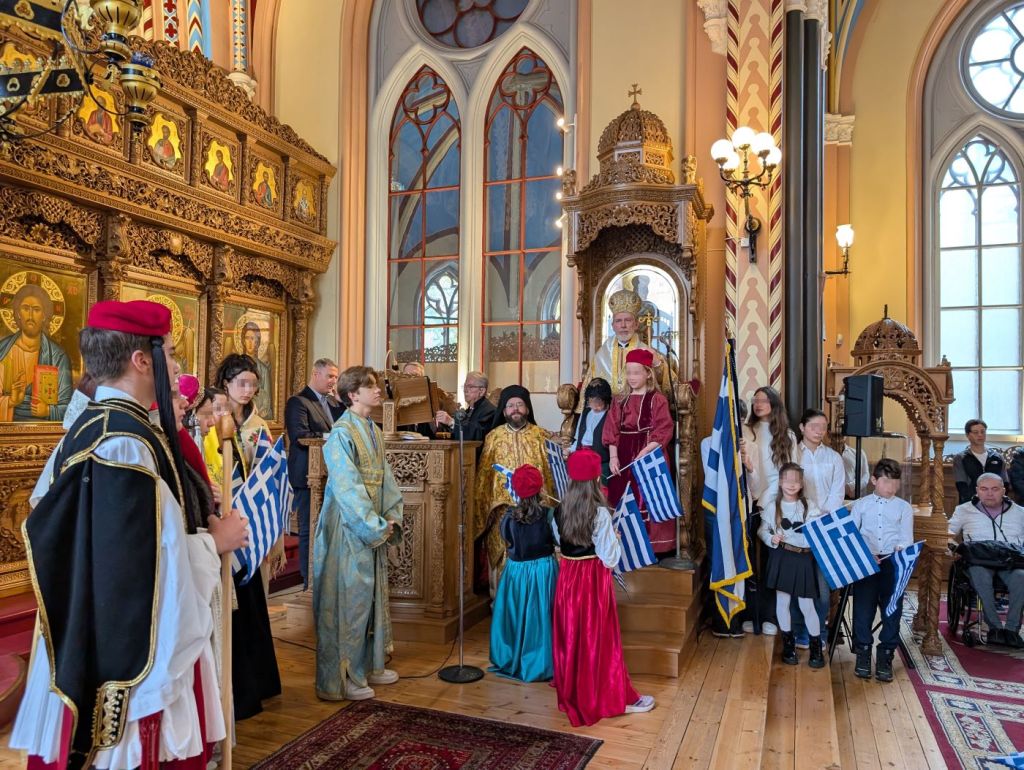
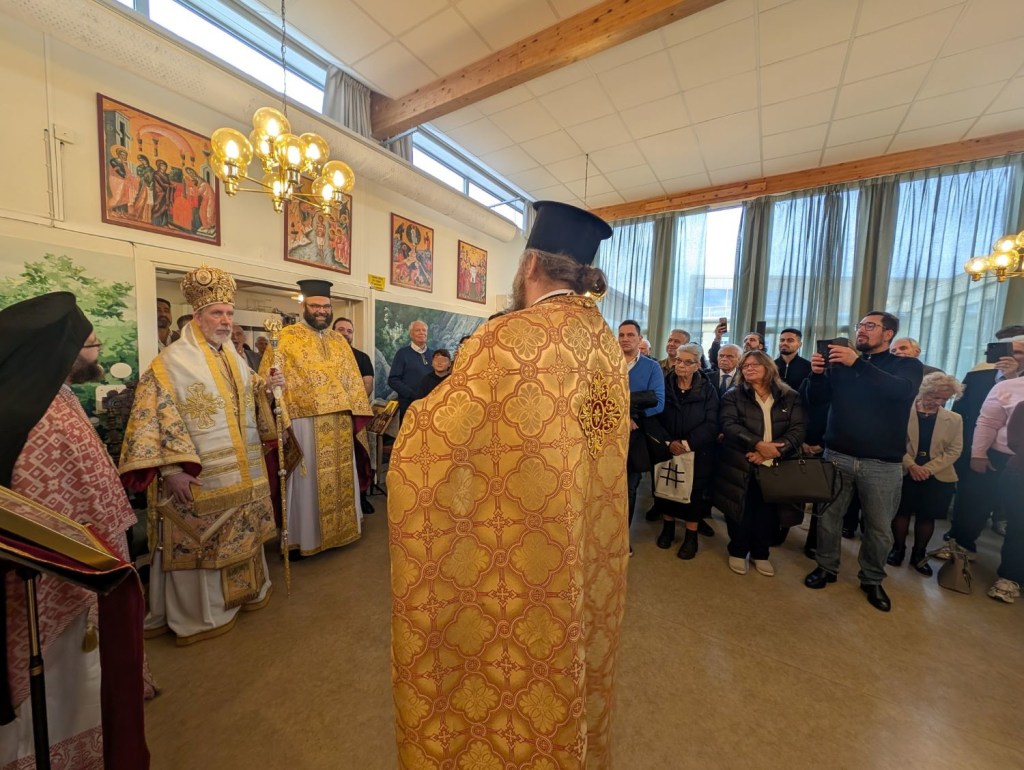
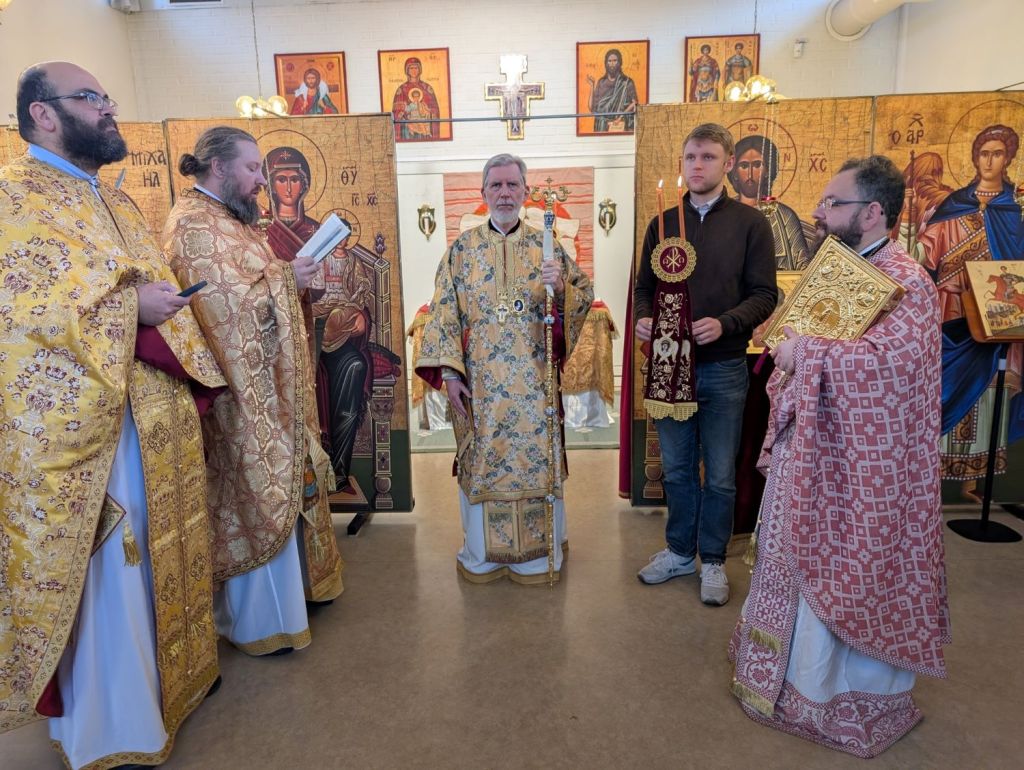
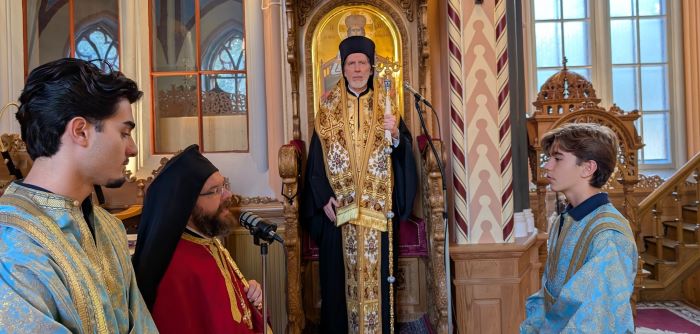
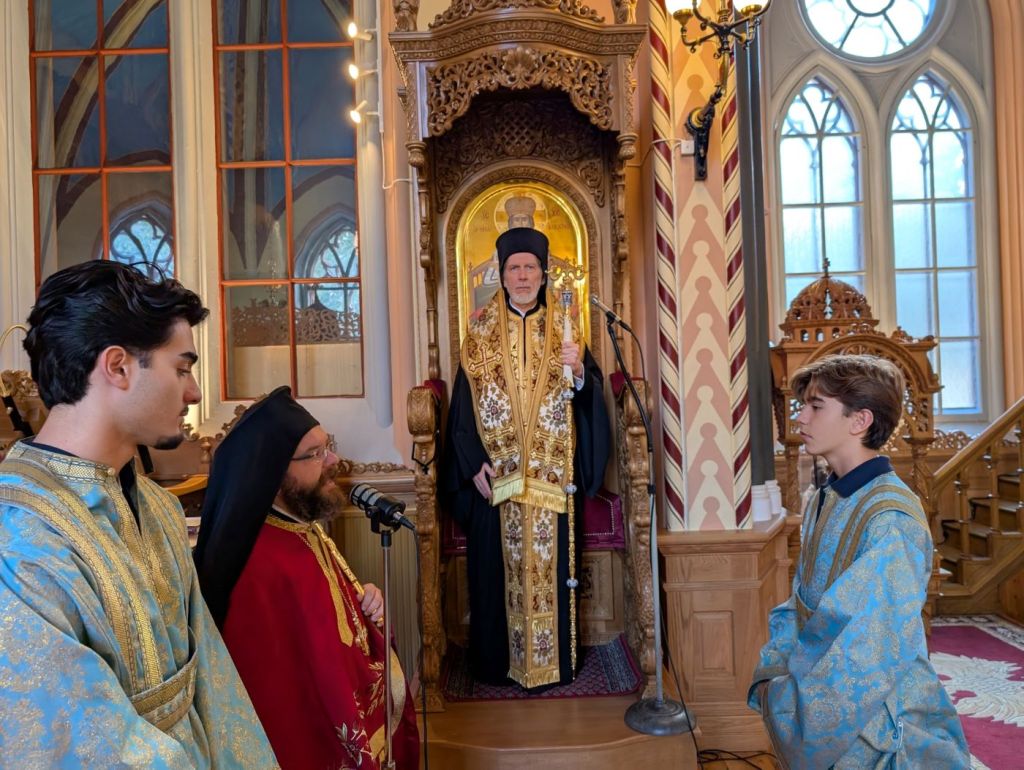
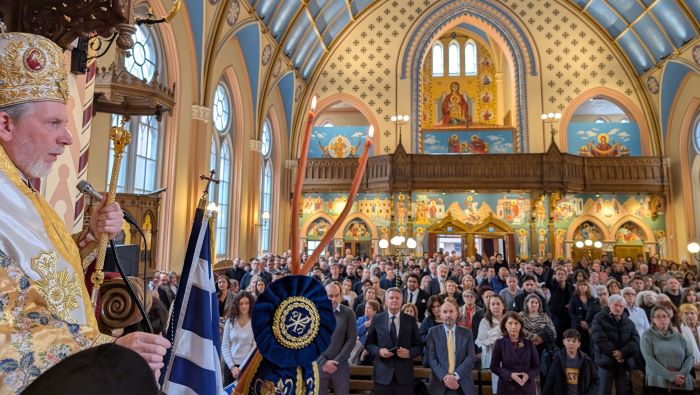
On Sunday, October 26, 2025, His Eminence Metropolitan Cleopas of Sweden and All Scandinavia celebrated the Divine Liturgy at the Cathedral of Saint George in Stockholm, assisted by the Cathedral’s Pastor, the Very Reverend Archimandrite Bartholomew Iatridis.

Following the dismissal of the Divine Liturgy, a Doxology (Thanksgiving) Service was held, attended by Her Excellency Mrs. Aikaterini Fontoulaki, Ambassador of Greece to Sweden; the Presidents of the two Greek Schools of Stockholm, the Honorable Mr. Petros Anastasiadis and Mr. Fotis Panitsas; a large number of children; and a devout and enthusiastic congregation.

At the conclusion of the Doxology, Her Excellency the Ambassador read the message of the Deputy Minister of Foreign Affairs of Greece, responsible for Greeks Abroad, His Excellency Mr. Ioannis Michail Loverdos.

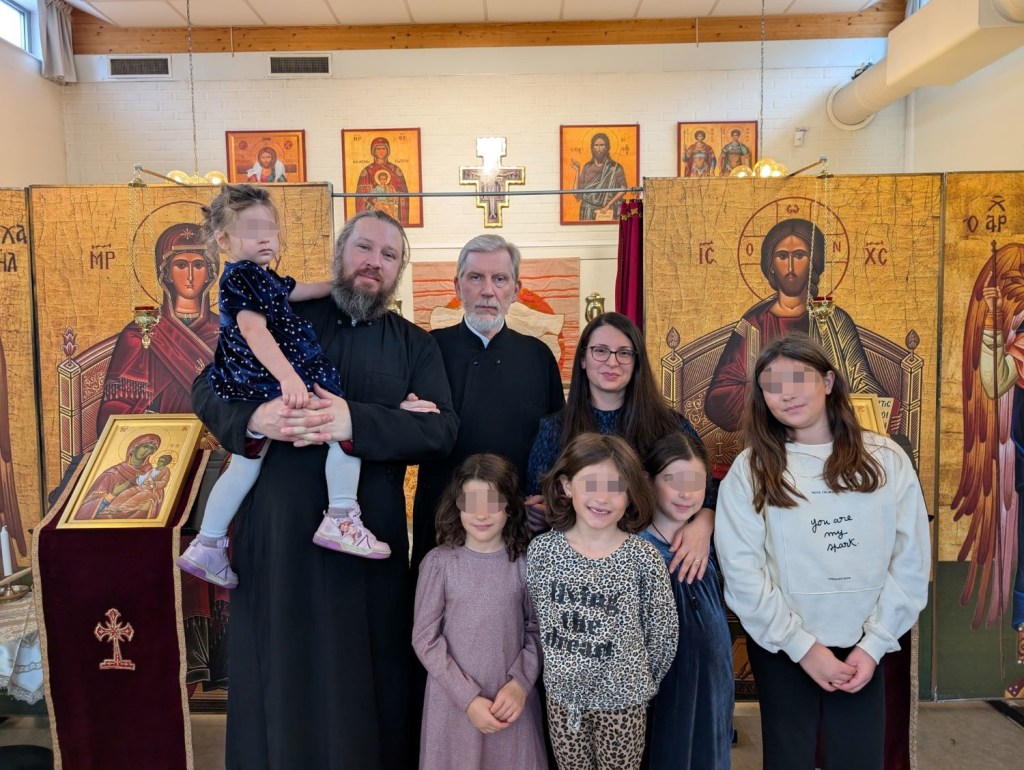
Metropolitan Cleopas then delivered an address appropriate to the occasion, speaking about the multiple meanings of the day and of the National Holiday. He congratulated those present, and particularly the children, who through their participation and traditional costumes conveyed the spirit and message of the double celebration. He offered special thanks to Mrs. Alexandra Zorpidou, who consistently takes care of the traditional attire of both young and old, as well as to the Lyceum of Greek Women of Stockholm.
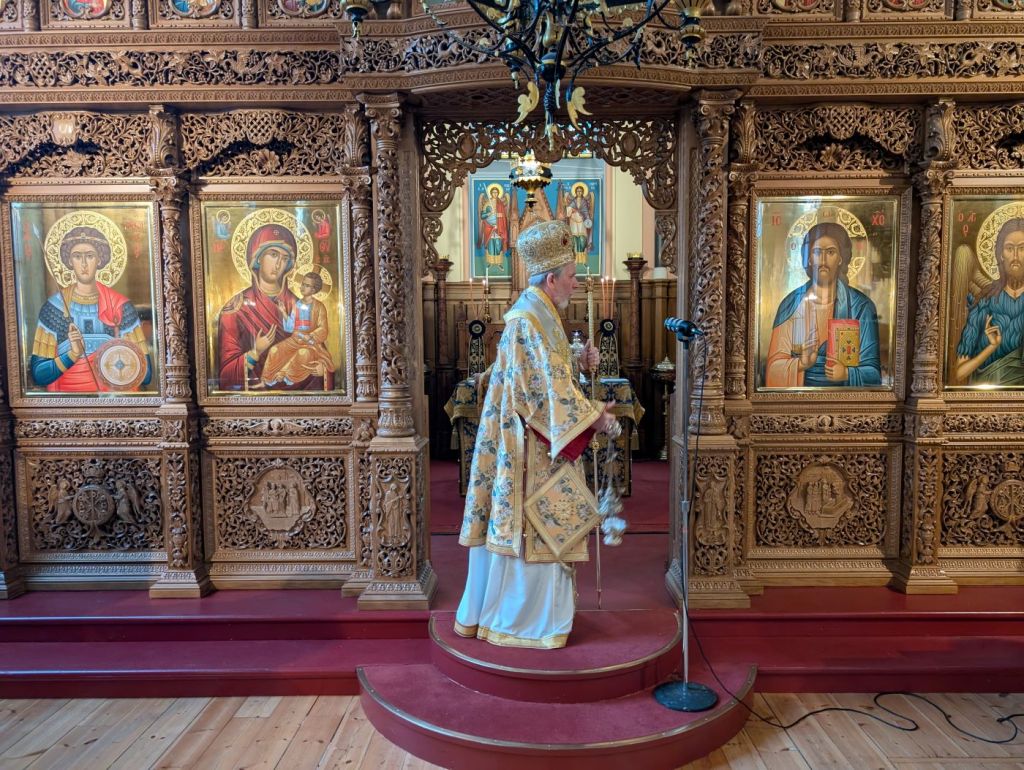
His Eminence stated the following in his homily:

“Your Excellency Ambassador of Greece Ms. Fountoulaki,
Very Reverend Father Bartholomeos,
Honored Chanters,
Dearly beloved Brothers and Sisters in Christ,
Our beloved children,

Today’s Gospel reading presents the moving account of the healing of the demon-possessed man of Gadarens. Christ meets a man tormented and broken, who had lost both reason and peace. He lived in isolation among the tombs, without communion with others.

Yet in the midst of his despair, Christ approaches him with love. With a single word, He casts out the demons, and the man stands forth ‘clothed and in his right mind.’

This miracle reveals the profound theology of freedom, that Christ came into the world to liberate the human person not only from physical slavery, but above all from spiritual captivity.

The greatest bondage is not only external oppression, but the enslavement of the soul to passions, fear, and hopelessness.

The delivered man wishes to follow Christ, but the Lord tells him: ‘Return to your home and proclaim all that God has done for you.’ Preach salvation through your life itself. Thus, he becomes a newly-called disciple — a new missionary!

Within this message of spiritual freedom, our Holy Church also celebrates today the Anniversary of October 28, 1940. Then too, our nation confronted the most ruthless form of bondage — dark and inhuman.

The powers of that age sought to enslave a small country, to strip away its freedom, dignity, and soul. Yet just as Christ dispelled the darkness from the Gadarene, so too He illumined the heart of the Greek people, and the sacred word ‘NO’ (‘OXI’) resounded: the ‘NO’ of faith and freedom.

With a prayer on their lips, the Cross on their chest, and the flag in their hands, the Greeks stood upright in the face of the threat of darkness. They fashioned immortality out of sacrifice, ignoring the reckless, the cynical and the toxic, as well as the opportunists of their time. Faith in Christ preserved the nation’s freedom.

Today, many still suffer slavery — not with chains, but with addictions, sins, fears, and despair. Our age has many ‘Gadarenes’ — people without peace, without direction, without God.

Yet, every time a Greek struggles for what is just, stands with dignity amid trials, because that flame lives again.

In every field, Greeks continue to write history: In diplomacy and the arts, in culture and education, in scientific research and in athletics.

From Olympic stadiums to laboratories, the Greek spirit shines — in the leaps of Miltos Tentoglou, in the gold medal of Myriokephalitaki, in Paralympic champion Nasos Gavelas, in the world-champion Alexandris sisters, in Stefanos Douskos and Manolos Karalis, in Milena Kontou & Valia Lykomitrou, in Maria-Louiza Gika, and in Yiannis Poubouridis, European boxing champion; in the National Basketball Team with its Eurobasket bronze medal; in the scientists of Aristotle University of Thessaloniki who created the world’s fastest AI processor; and in the two 17-year-old Greek girls crowned champions in the Microsoft World Informatics Competition, Eleni Karakasidou and Argyro Petsa.

And for all who struggle passionately on the track of life, the Greek ideal of ‘noble striving’ lives and inspires.

Times may change, but one truth remains: Greece has never ceased to inspire. Small in size, yet immeasurable in the power of her soul.

Please allow me to conclude with the timely words spoken in this very Cathedral by His All-Holiness Ecumenical Patriarch Bartholomew, on August 21, 1993:

“When you left your ancestral homeland and journeyed to foreign lands, you crossed the borders of Greece — but you did not cross the borders of Hellenism nor of Orthodoxy. The Greek State has borders. Hellenism does not, just as culture and freedom have no borders. And Orthodoxy has no borders, just as love and truth have no borders. For this reason, although you may be far from Greece, you nevertheless continue to be a living part of Hellenism and of Orthodoxy, under the Ecumenical care of the centuries-old sacred institution of the Ecumenical Patriarchate.

Those Greek emigrants of antiquity were the first to spread Greek civilization far beyond metropolitan Greece. Later, through the conquests of Alexander the Great, this civilization was extended deep into the East, as far as the heart of Asia, and southward into the lands of Africa.

Rome also came to conquer Greece; yet, in the end, it was conquered by Greek civilization and became the vehicle for its spread to the lands of Western Europe. In this way, Greek civilization became universal, and the Greek language became the global means of communication among peoples.

Upon these foundations the modern European civilization was built. And for this reason, we see that most of the fundamental concepts of contemporary culture are expressed in European languages with Greek words, such as theology, philosophy, poetry, politics, economy, physics, mathematics.

Even the Swedish word for church, ‘Kyrka,’ derives from the Greek ‘Kyriakon,’ meaning ‘the House of the Lord.’

And even the two opposing concepts that dominate modern reality at the end of the twentieth century are expressed with Greek words: ‘technology’ and ‘ecology.’

Rejoice in the Lord, and ‘if it is possible, as far as it depends on you, live in peace with all people’ (Romans 12:18): live in peace with your fellow Greeks, live in peace with the other Orthodox and Christians in this Land, live in peace with all. And may our Patriarchal blessing and the grace of our Savior Jesus Christ be with you all, brethren and children.”

(Vasileios Th. Stavridis, Professor of the Holy Theological School of Halki, “The Patriarch in Sweden (August 20-24, 1993), History of the Church of Sweden, Ecumenical Patriarchate – Church of Sweden, Holy Metropolis of Sweden,” Epektasis Publications, pp. 59–65.)

Today, therefore, as we honor October 28th, the Holy Protection of the Theotokos, and Saint Demetrios the Myrrh-Bearer, let us bow our heads with reverence to the memory of those who sacrificed themselves — and let us look forward to a future that calls us to prove ourselves worthy of them.

Let us say our own ‘NO’ in our own time: No to indifference, No to violence, No to injustice. And let us say our own ‘YES’: Yes to knowledge, Yes to creativity, Yes to humanity.

For Hellenism is not only a history we read — it is a flame we carry in our hands.

Long live October 28th!

Long live our Nation!

Long live our Greek Diaspora in Scandinavia!

Congratulations to our children in their traditional costumes! May they always be blessed!”

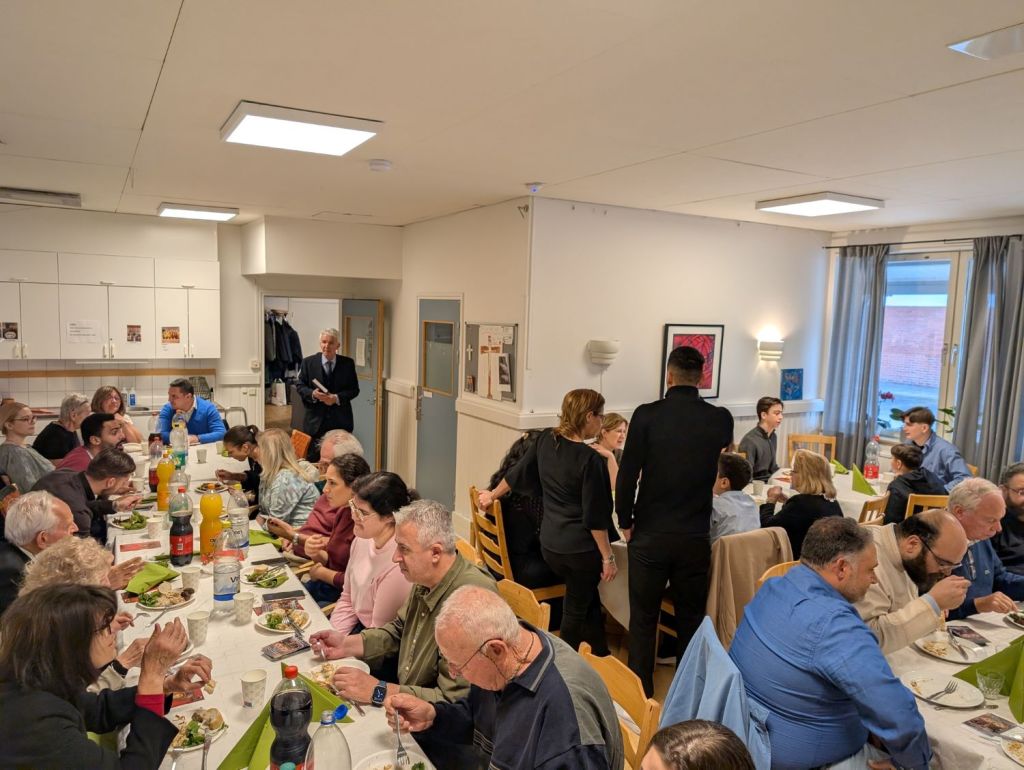
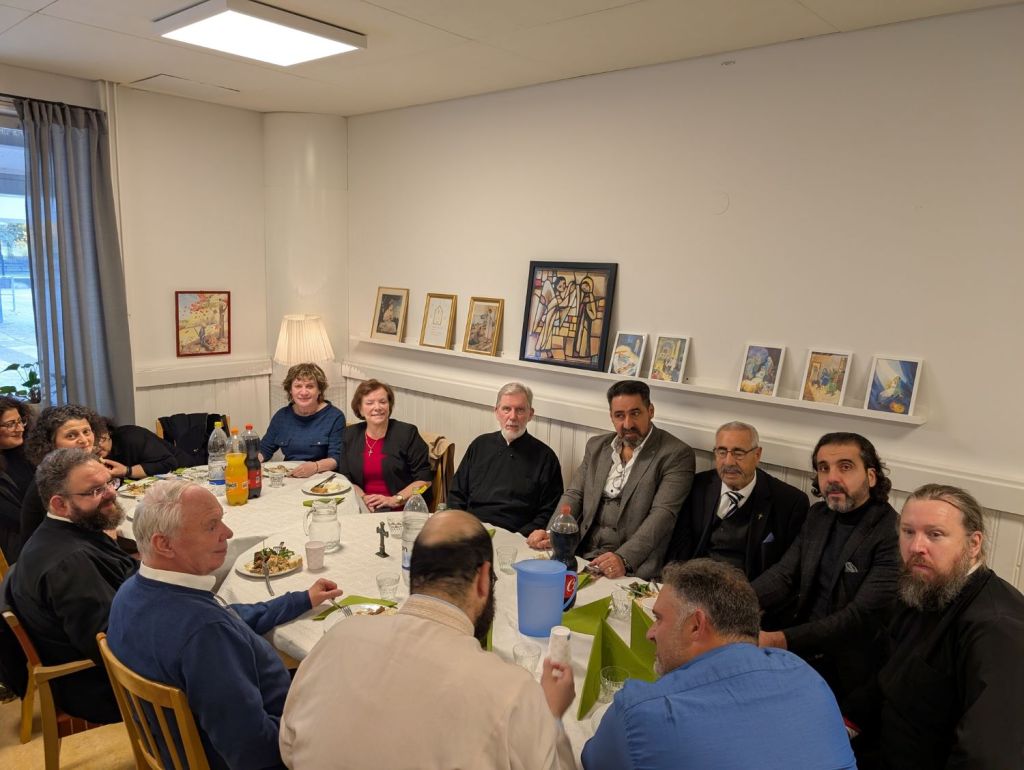
After the service, the dignitaries and many parishioners gathered in the Cathedral’s adjoining Fellowship Hall, where coffee and refreshments were offered by the Cathedral’s Philoptochos Ladies Society.

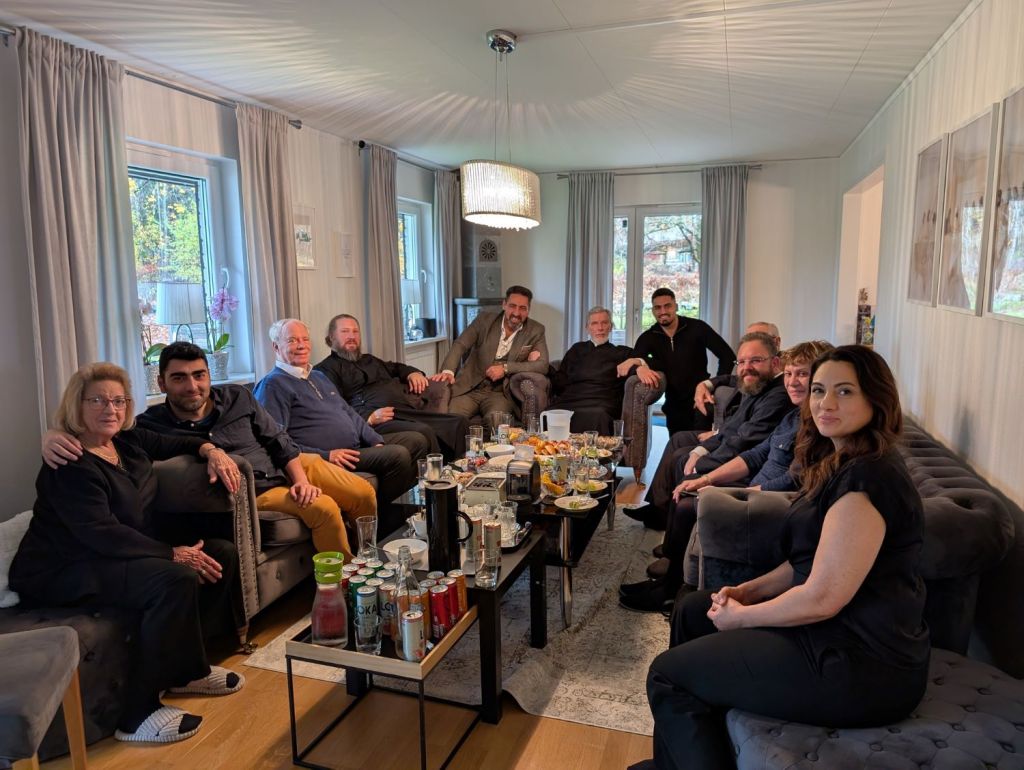
During the fellowship hour, a conversation took place between His Eminence Metropolitan Cleopas and the Presidents of the two Greek Schools of Stockholm. His Eminence announced that within the week he would formally invite them to attend an upcoming Sunday Divine Liturgy, to address the congregation and present the history and work of their schools; thus expressing the unwavering support of our local Church for the Greek-educated youth of our Omogeneia/Greek Community at large, in Scandinavia, and our shared commitment to the preservation and promotion of our Greek-Orthodox heritage, culture and history.

Metropolis

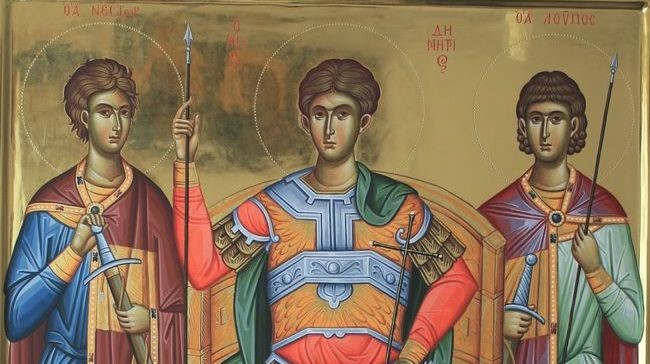
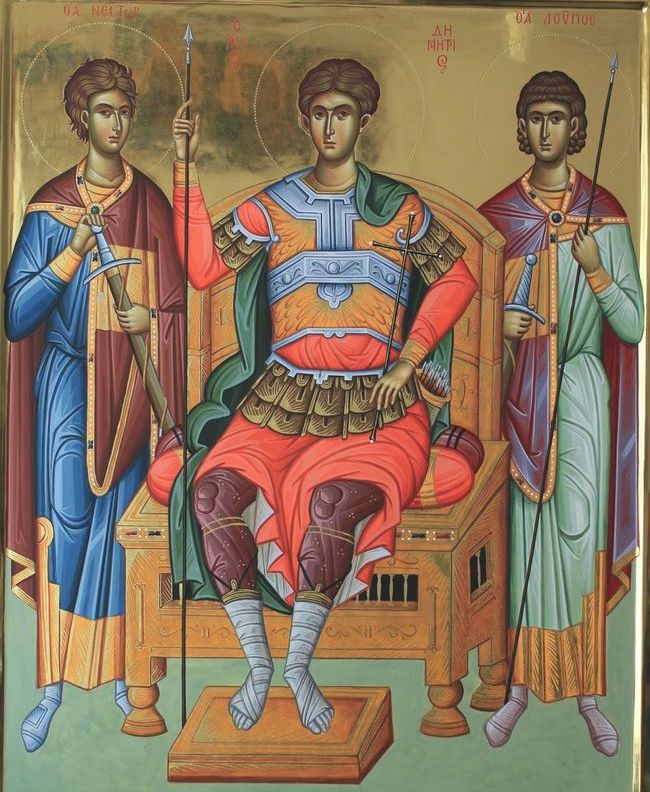
Metropolitan Cleopas of Sweden’s Homily on St. Demetrios the Myrrh-Streamer, Sts. Demetrios and Nestor Parish, Örebro

Örebro, Saturday, October 25, 2025

Very Reverend and Rev. Fathers,

Dearly Beloved Brothers and Sisters in Christ,

Today, with reverence and great joy, we celebrate St. Demetrios of Thessaloniki, the glorious martyr and myrrh-streamer, whose steadfast faith continues to shine as a beacon of hope for the entire Church.

St. Demetrios was still a young man when he confessed Christ before the rulers of this world. His youth was not an obstacle but a strength — a heart aflame with pure devotion, unburdened by fear, focused on the Kingdom of God with the clarity that the Gospel brings.

The Church therefore honors him as a special guardian and protector of young people. Through his life we see that holiness is not the achievement of old age alone; sanctity applies to all age groups.

He could have chosen personal comfort, pursued worldly honor, or remained silent in order to save himself. But instead, he used his gifts and position to lift others up, to encourage the righteous, and to proclaim the truth even when it placed him in danger. He inspired the youth of Thessaloniki then — and continues to inspire young people today — to serve others, to protect those who are vulnerable, and to radiate Christ’s love in a world often filled with confusion and hardship.

His sacrifice — pierced by spears for the sake of the Gospel — reveals a vision not limited by earthly life, but filled with eternal purpose. More than seventeen centuries have passed since his martyrdom, yet his memory is alive because true love never fades, and true faith never dies.

His holy myrrh, which has flowed from his relics through the ages, reminds us that God glorifies those whose hearts are steadfast in love.

St. John Chrysostom calls the martyrs “friends of Christ,” who follow Him faithfully even unto death.

St. Basil the Great teaches us that the martyrs “prefer virtue to life and death to sin,” a truth we see embodied in St. Demetrios.

St. Gregory Palamas praises him as “the mighty defender of Thessaloniki and an unshakable tower for the faithful.”

Young and old alike — let us look to St. Demetrios and allow his example to give shape and direction to our own calling: to be courageous in faith, committed to service, filled with compassion, and unashamed to proclaim Christ in our lives.

May the youth of our parish especially find in him a true friend and heavenly protector — someone who understands their struggles and calls them to greatness, rooted in Christ’s love.

As we honor St. Demetrios today, we also express heartfelt gratitude to our beloved pastor, the Rev. Oikonomos Fr. George Arvanitidis, who guides this flock with faithfulness, and genuine love. Father, we thank you for your dedicated ministry to Christ’s Holy Church and for nurturing our spiritual growth. May the Lord grant you many blessed years and continue to strengthen you in every good work.

To the faithful of this parish and to those who have traveled from other cities and Oslo, to share in this celebration, your presence is a treasured gift. Thank you for honoring St. Demetrios and for uniting your prayers with ours as one family of Christ across distances and nations. Amen!

Metropolis

3rd Catechumens’ Meeting Held at the Stockholm Cathedral

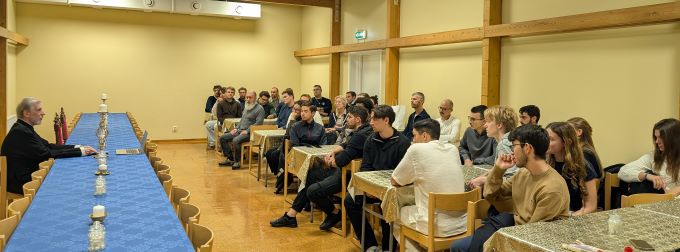
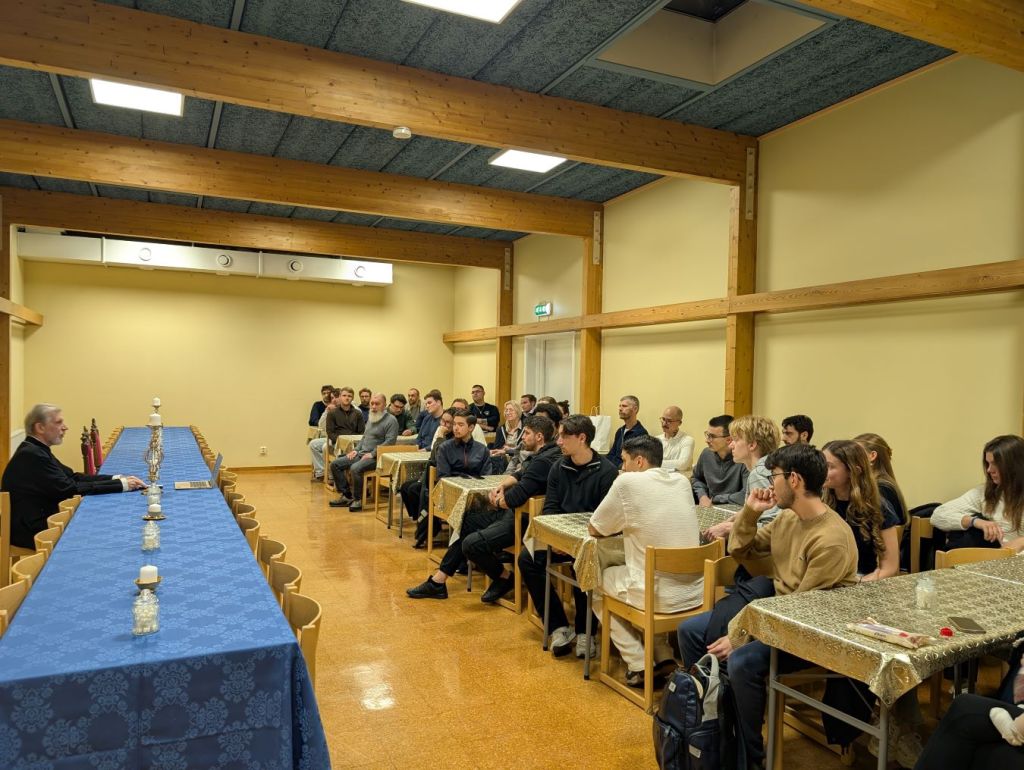
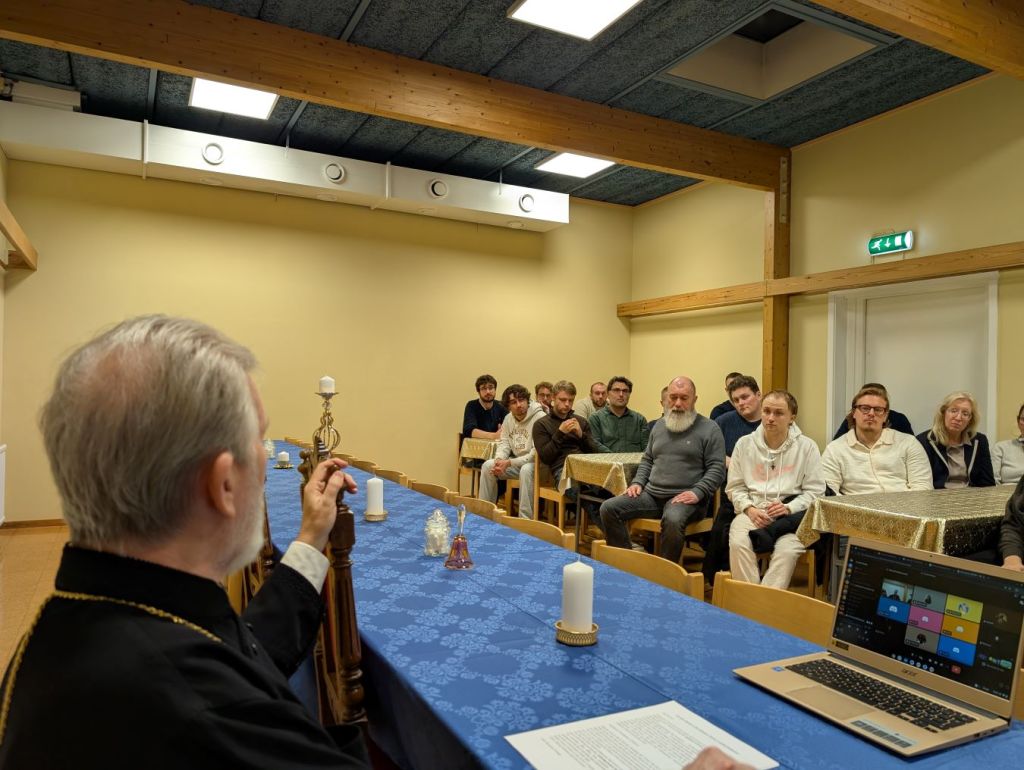
Stockholm, Sweden — October 23, 2025. On Thursday evening, His Eminence Metropolitan Cleopas of Sweden and All Scandinavia hosted the third meeting of the Catechumens of the Holy Metropolis of Sweden at the Cathedral of St. George in Stockholm (Birger Jarlsgatan 92, 11420 Stockholm).

His Eminence once again served as the keynote speaker and delivered his remarks in English, reflecting the diverse backgrounds of the Catechumens who are preparing to join the Orthodox Church from various countries.

The topic of the session was “The Missionary Work of the Church Throughout the World.” Due to the high level of engagement and the large number of questions submitted by participants, His Eminence presented only the introductory part of his address.

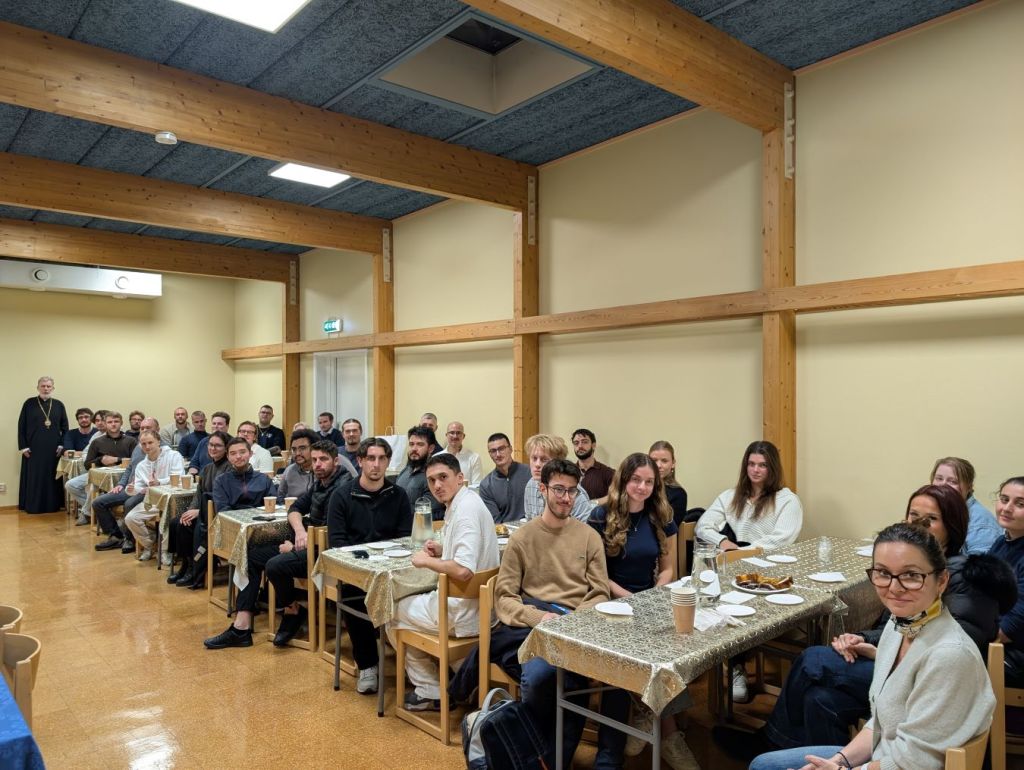
A total of 48 people attended in person, while more than 20 others participated online from countries throughout the Metropolis’ jurisdiction. His Eminence offered clear and thoughtful responses to all questions raised.

At the conclusion of the meeting, refreshments were offered in honor of the young volunteers who serve the local Church in various ministries.

The next Catechumens’ meeting will take place on Thursday, November 6, 2025, at 6:00 p.m. at the St. George Cathedral. The subject will again focus on Missionary Work, and His Eminence will present his full lecture at that time.

Those outside Stockholm are invited to attend virtually via the following link:

For additional information, please call +46 73 542 9745 or email metropolisofsweden@gmail.com.

Metropolis

Hierarchical Divine Liturgy at the St. Nicholas Hermitage in Rättvik

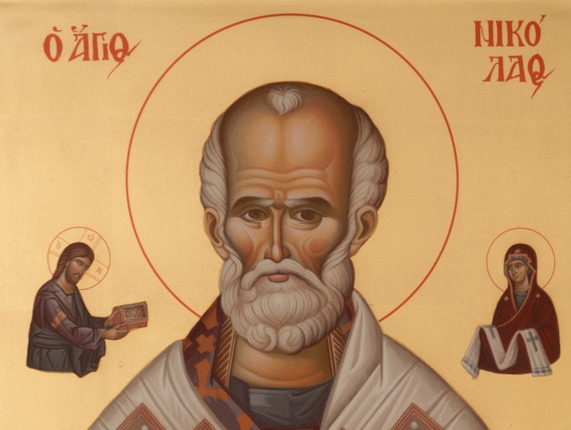
We announce to the faithful of the Mother Church of Constantinople in Scandinavia that on Saturday, November 8, 2025, a Hierarchical Divine Liturgy will be celebrated by His Eminence Metropolitan Cleopas of Sweden and All Scandinavia at the Chapel within the Hermitage in Rättvik, Sweden, dedicated to our Father among the Saints, Nicholas, Archbishop of Myra in Lycia, the Wonderworker.

During the Divine Liturgy, a memorial service will also be held for the late Archimandrite Eusebios Vittis, the founder of the Hermitage, marking sixteen years since his repose.

The Hierarchical Divine Liturgy will begin on Saturday, November 8, 2025, at 10:30 a.m.

All devout Christians and the spiritual children of Father Eusebios are invited to participate in the Divine Liturgy and memorial service, with the assurance that the soul of the blessed Father Eusebios rejoices in the heavens. May we have his blessing!

Metropolis

Hierarchical D. Liturgy at the Celebrating Parish of Sts. Demetrios & Nestor, Örebro

It is joyfully announced to the faithful of the Holy Metropolis of Sweden that on Saturday, October 25, 2025, at 10:00 a.m., a Hierarchical Divine Liturgy will be celebrated at the festal Parish of Saints Demetrios and Nestor in the city of Örebro, Sweden (Gode Herdens Kapell, Björkrisvägen 17, 70234 Örebro, Brickebackens Centrum), officiated by His Eminence Metropolitan Cleopas of Sweden and All Scandinavia.

The devout Christians are invited to attend the Divine Liturgy and receive the blessing of Saint Demetrios the Great Martyr and Myrrh-Streamer.


Högmässa i den firande kyrkan tillägnad de heliga Demetrios och Nestor i Örebro

Det meddelas med glädje till församlingen i det Heliga Metropolitdömet av Sverige att på lördagen den 25 oktober 2025 kl. 10.00 kommer en ärkebiskoplig gudstjänst att hållas i den firande kyrkan de heliga Demetrios och Nestor i Örebro (Gode Herdens Kapell, Björkrisvägen 17, 70234 Örebro, Brickebackens Centrum), ledd av Hans Eminens Metropoliten Cleopas av Sverige och hela Skandinavien.

De troende kristna inbjuds hjärtligt att delta i den gudomliga liturgin och att ta emot välsignelsen från den helige store martyren Demetrios Myrdoftande.

Metropolis

H.E. Metropolitan Cleopas of Sweden’s Homily on the Fourth Sunday of Luke

St. George Cathedral of Stockholm

Sunday, October 12, 2025

Dearly Beloved Brothers and Sisters in Christ,

Today we hear one of the most beautiful and important parables that our Lord Jesus Christ ever spoke — the Parable of the Sower. Christ tells us about a man who went out to sow his seed. Some of it fell by the wayside and was eaten by birds; some fell on rocky ground and withered away; some fell among thorns and was choked; and some fell on good soil and produced much fruit.

This parable is not just a story about farming. It is a mirror held up to our hearts. The seed is the Word of God, and the soil is the condition of our souls.

Saint John Chrysostom says that the Lord speaks of the soul as soil because, like earth, it can either bring forth fruit or grow nothing at all. He writes, “The heart of man is able to receive the seed of God’s Word, but whether it bears fruit depends on the care and attention we give to it.”

Every one of us hears the same Word. But not everyone bears the same fruit. The problem is not with the seed — God’s Word is always powerful and full of life. The problem is with the soil, the condition of our hearts.

The first kind of soil, the path, is hard and beaten down. The Word cannot enter because the heart has become closed. Saint Cyril of Alexandria explains that this happens when people hear the Gospel but do not take it seriously, and so “the devil comes and snatches the seed away.” How many times do we hear the Scriptures read in church, yet leave unchanged? How often do we let distractions, doubts, or pride steal the Word from our hearts?

The second kind of soil, the rocky ground, represents those who receive the Word with joy but have no root. Saint Gregory Palamas says that these are people who love the beauty of the Gospel but flee when trials come. When life becomes difficult, their faith withers because it was only on the surface. Brothers and sisters, the Christian life is not just about feelings; it is about faithfulness — holding fast to Christ in times of joy and in times of sorrow.

The third kind of soil, the thorny ground, is where the Word is choked by “the cares, riches, and pleasures of life.” Saint John Chrysostom warns us that even after we begin to grow in faith, we must be careful not to let worldly anxieties suffocate our spiritual life. We all have responsibilities — work, family, finances — but when these things dominate our minds, the Word of God finds no space to breathe.

Finally, there is the good soil — the heart that hears the Word, keeps it, and bears fruit with patience. Notice that Jesus says “with patience.” Spiritual growth is not instant. Saint Nicholas Cabasilas reminds us that grace works gradually in the soul, like a seed growing quietly underground. We must water it with prayer, nourish it with the sacraments, and protect it from the weeds of sin.

The Fathers teach us that the soil of the heart can be changed. Even if our hearts have been hard, rocky, or full of thorns, repentance can transform them. Just as a farmer tills the ground to prepare it for seed, we must cultivate our hearts through confession, humility, and love.

Prayer softens the soil. Fasting removes the stones. Almsgiving pulls out the thorns. And the Holy Eucharist fills the soul with divine life. When we live in communion with Christ, our hearts become fertile ground for the Word to take root and grow.

Saint Gregory the Theologian once said, “Let us become good soil, that we may bear fruit — some a hundredfold, some sixty, some thirty — but all for the glory of God.” The measure of fruitfulness does not matter as much as our faithfulness. Even a small fruit, grown in humility, is precious in the eyes of the Lord.

Today Christ the Sower passes by once again, scattering His divine Word into the field of our hearts. The question is: what kind of soil will He find? Will His Word find a heart open and ready to receive Him?

Let us each prepare our hearts so that the seed may not be wasted. Let us listen with attention, hold fast with patience, and live the Word we hear. Then the Lord will make us “good soil” — souls that bring forth fruit a hundredfold in faith, in hope, and in love. Amen!

Metropolis

Welcoming a group from the Uspensky Cathedral Parish of the Orthodox Archdiocese of Helsinki & All Finland at St. Georgios Cathedral of Stockholm

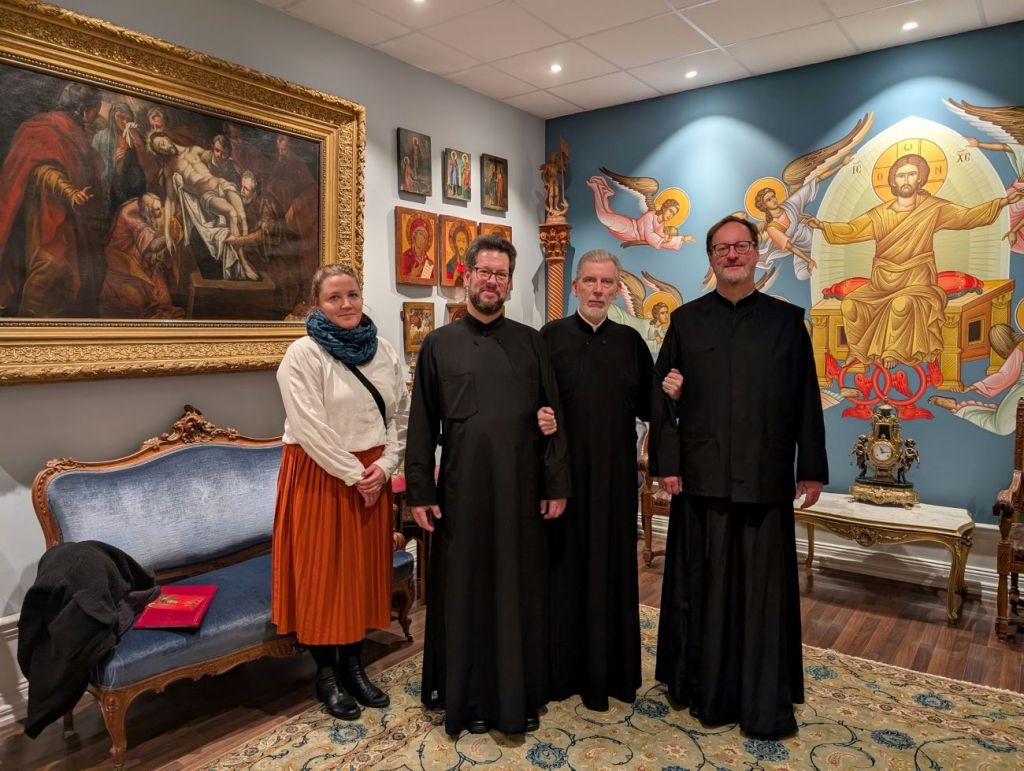
On Friday, October 10, 2025, we welcomed at the St. Georgios Cathedral of Stockholm a group from the Uspensky Cathedral Parish of the Orthodox Archdiocese of Helsinki & All Finland; Archpriest Rev. Fr. Teo Merras, Protodeacon Rev. Juha Lampinen, Diaconal worker Ms. Anneli Tamme (originally from Estonia) and Diaconal worker Ms. Paula Ahonen.

Ανακοινώσεις · Θεία Λειτουργία

Θεία Λειτουργία – Gudomlig liturgi – 29/11/2025

Θα τελεστεί Θεία Λειτουργία το Σάββατο στις 29 Νοεμβρίου στις 10 η ώρα, στο Malmö στην Mariakyrkan.

Gudomlig liturgi kommer att genomföras lördagen den 29 november kl 10:00 i S:ta Maria kyrka, Södervärnsgatan 8, Malmö.

Ανακοινώσεις · Θεία Λειτουργία

Θεία Λειτουργία – Gudomlig liturgi – 25/10/2025

Θα τελεστεί Θεία Λειτουργία το Σάββατο στις 25 Οκτωβρίου στις 10 η ώρα, στο Malmö στην Mariakyrkan.

Gudomlig liturgi kommer att genomföras lördagen den 25 october kl 10:00 i S:ta Maria kyrka, Södervärnsgatan 8, Malmö.

Metropolis

Launch of Youth Group GOYS, at St. George Cathedral of Stockholm, on Sunday, October 12, 2025

We are pleased to announce the formation of a new youth group at St. George Cathedral of Stockholm, under the name GOYS (Greek Orthodox Youth of Scandinavia), with activities beginning on Sunday, October 12, 2025, at 11:30 a.m.

The group is open to all children from 6th through 12th grade and will meet every Sunday, after the Divine Liturgy, for one hour to discuss interesting topics such as friendship, materialism, spiritual life, and Artificial Intelligence.

In addition, the group will organize exciting activities, such as:

a) Volunteering at the Sandwich Factory, preparing coffee and sandwiches for the homeless in Stockholm,

b) Organizing a youth book sale,

c) Playing board games,

d) Learning how to bake prosphora (offering bread), and

e) Concluding the year with a three-day summer camp in early June of the following year.

If your child is interested in joining GOYS, please contact Mrs. Sophia Fromell at 073 753 1463, or via email at sophiafromell@gmail.com for more information.