Metropolis

Pastoral Visit of Metropolitan Cleopas to Västerås, Sweden

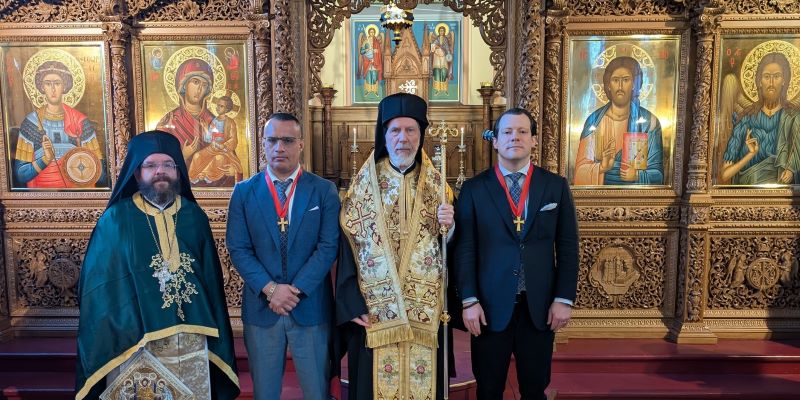
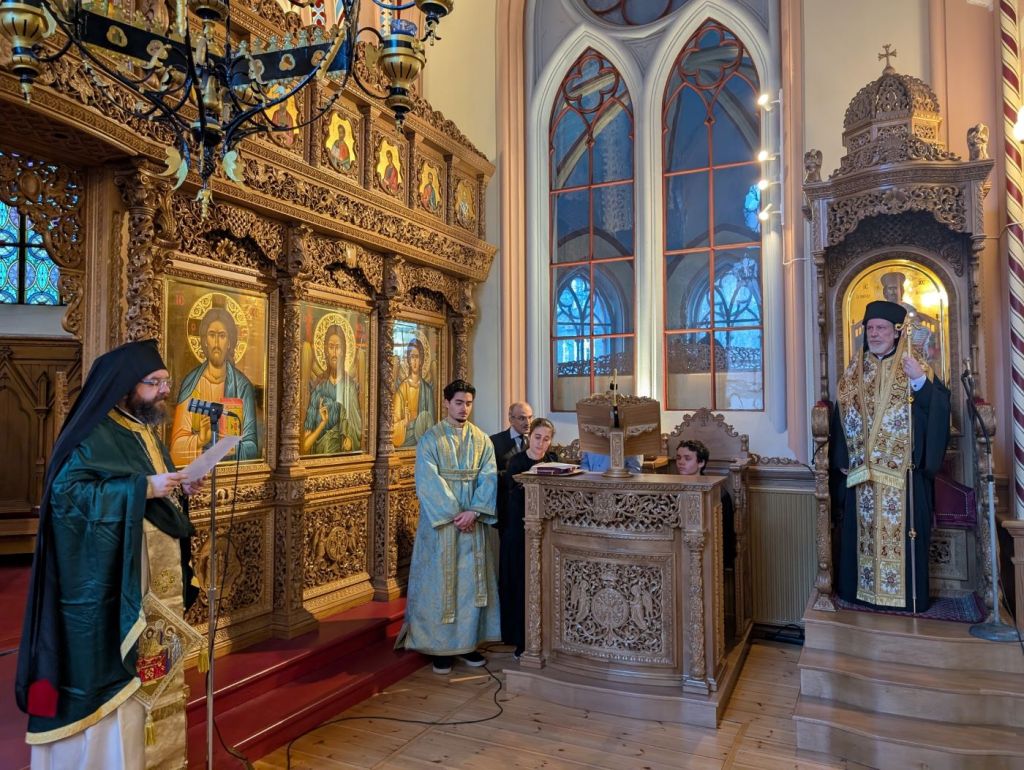
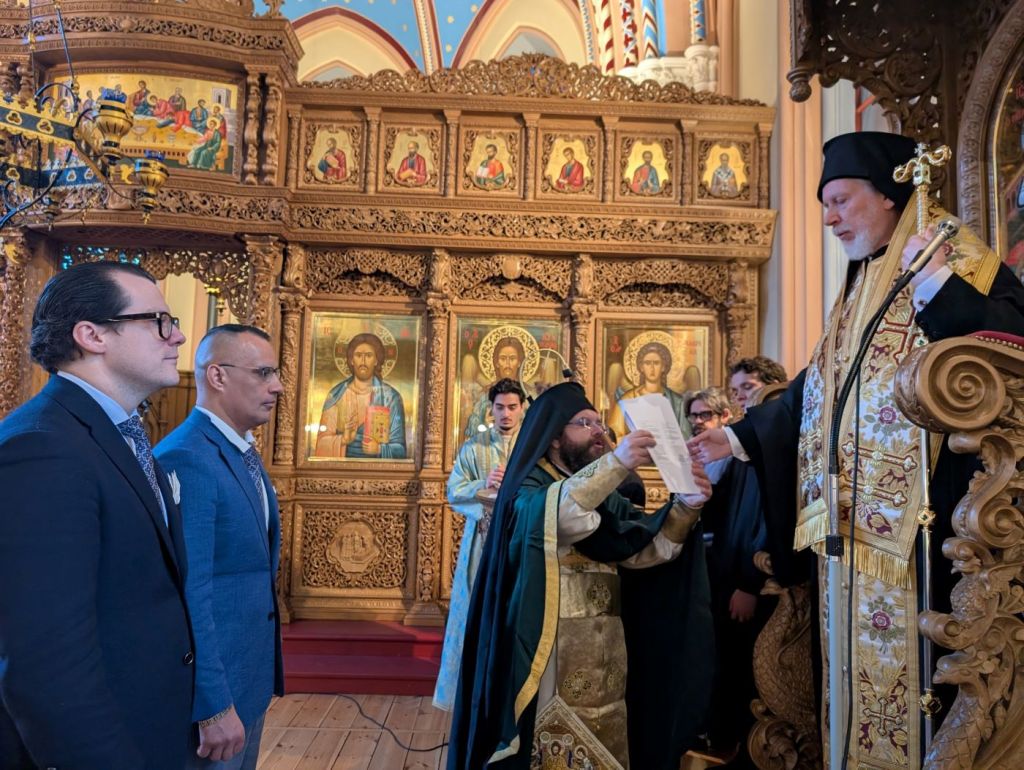
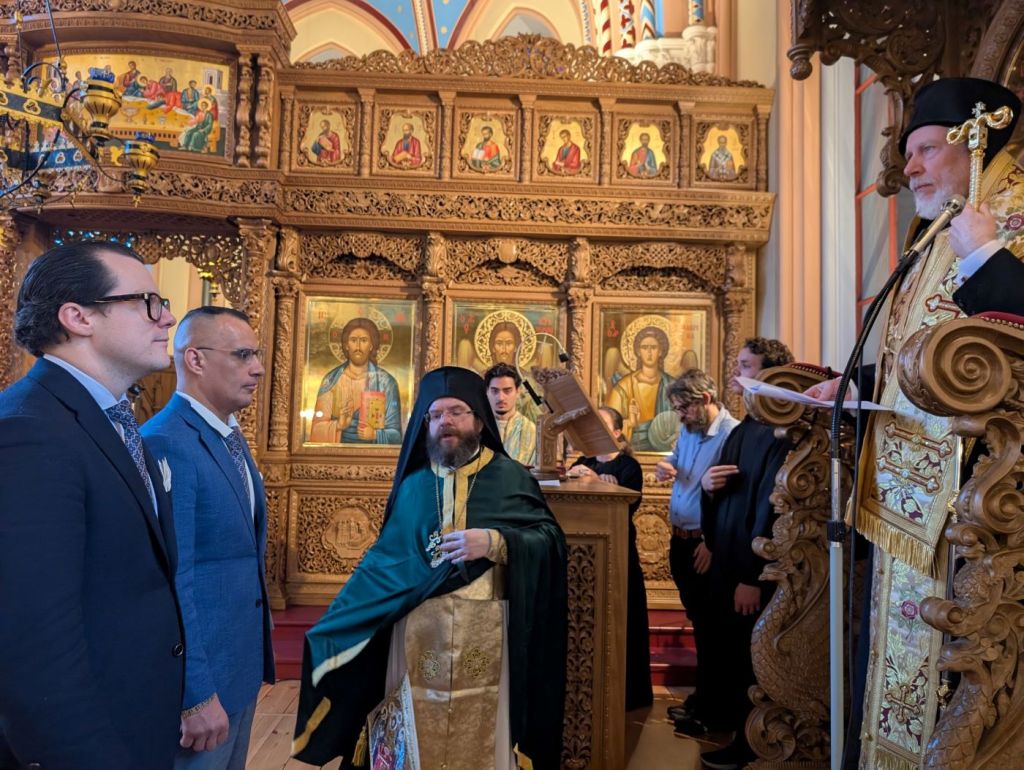
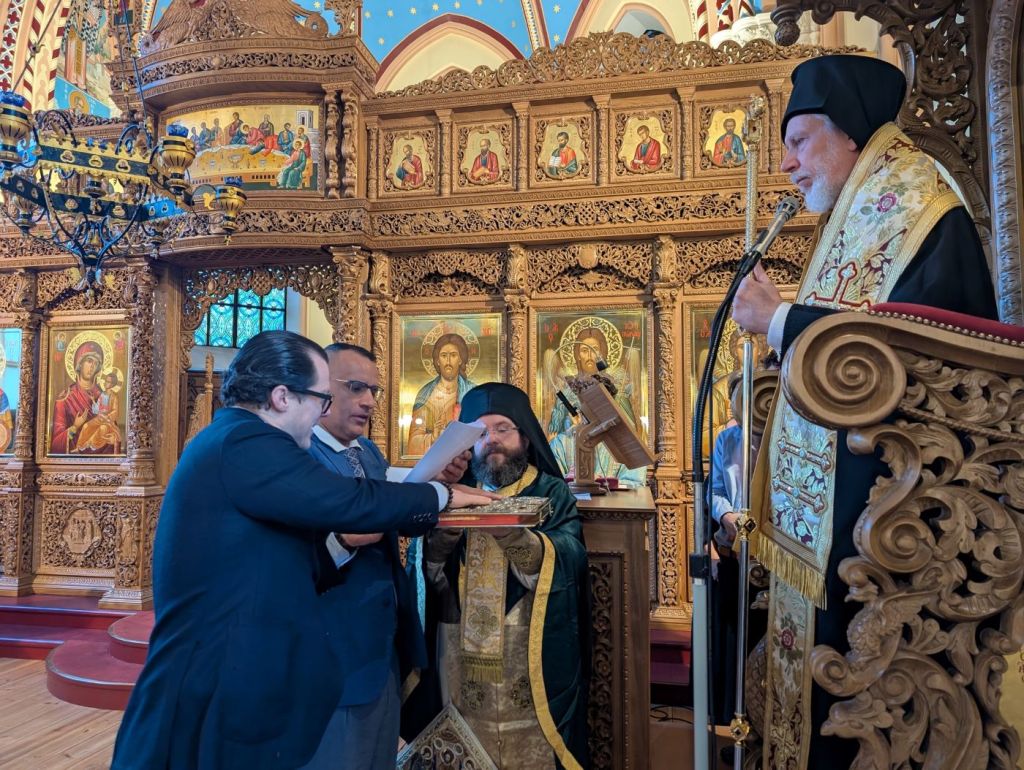
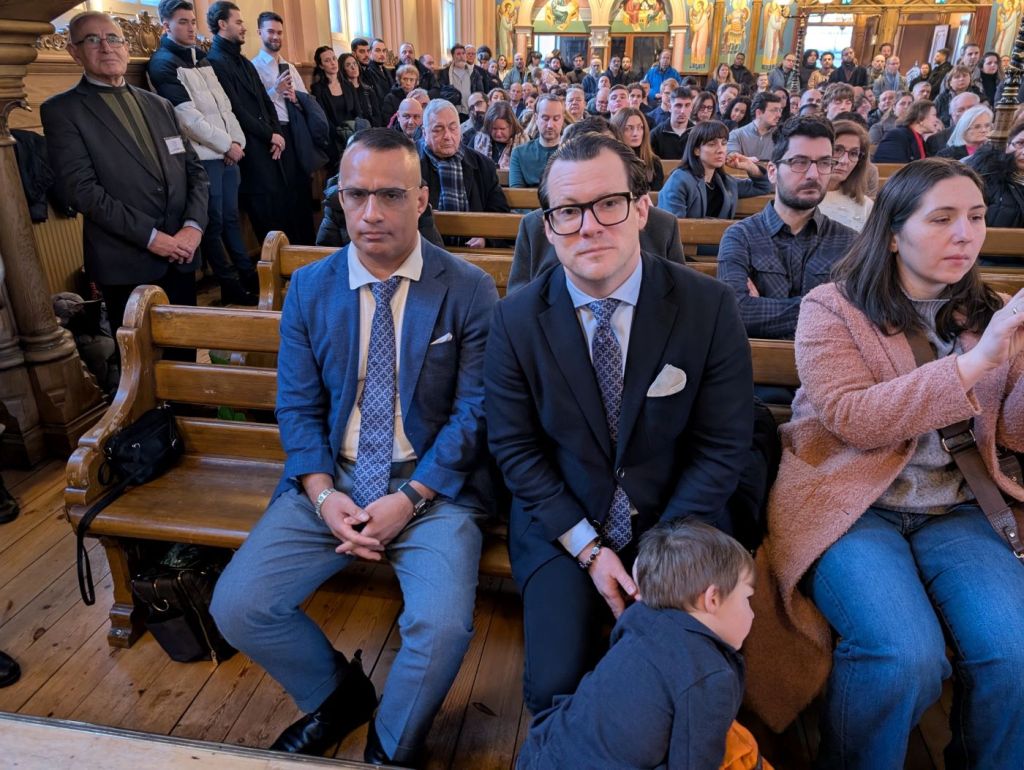
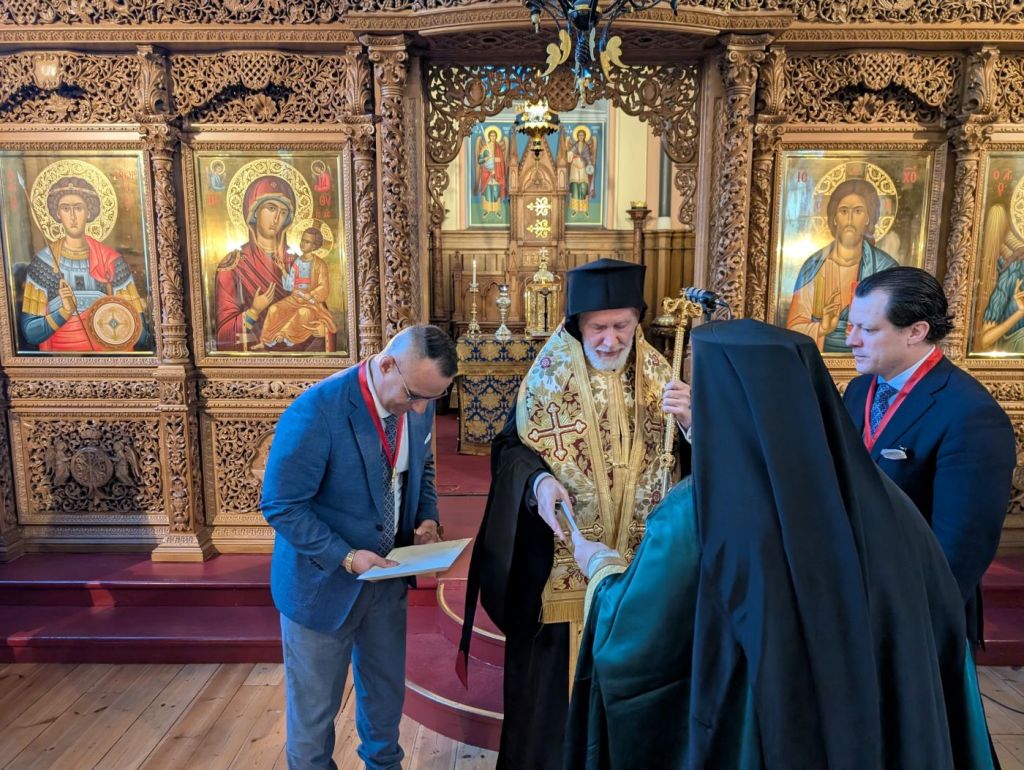
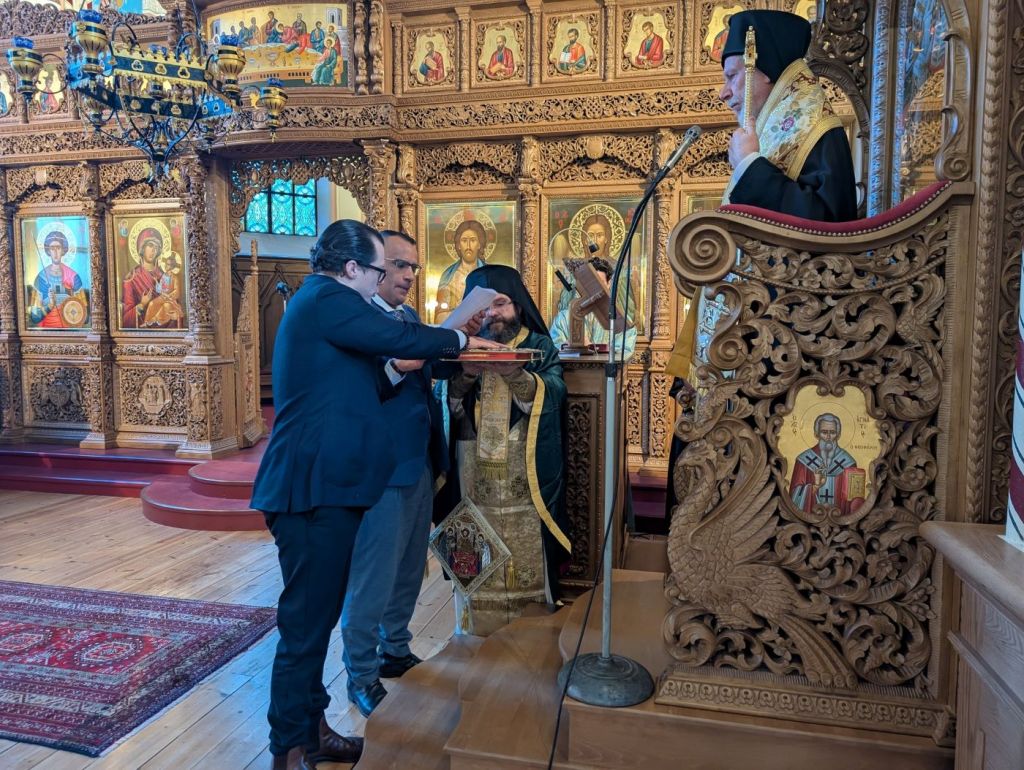
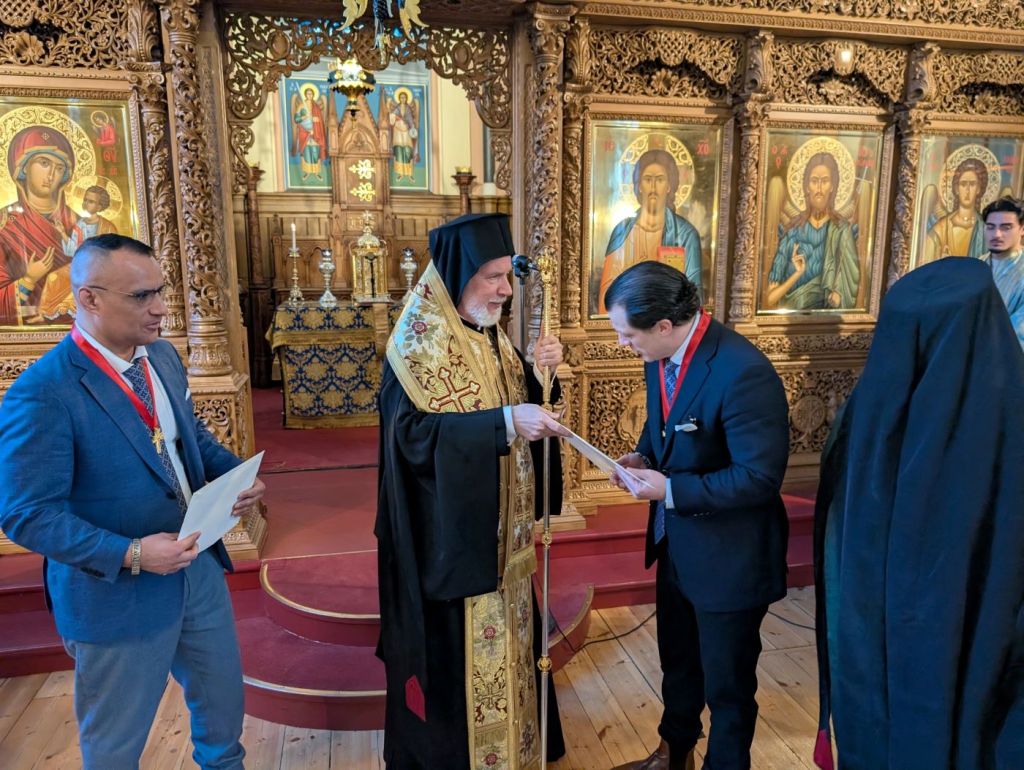
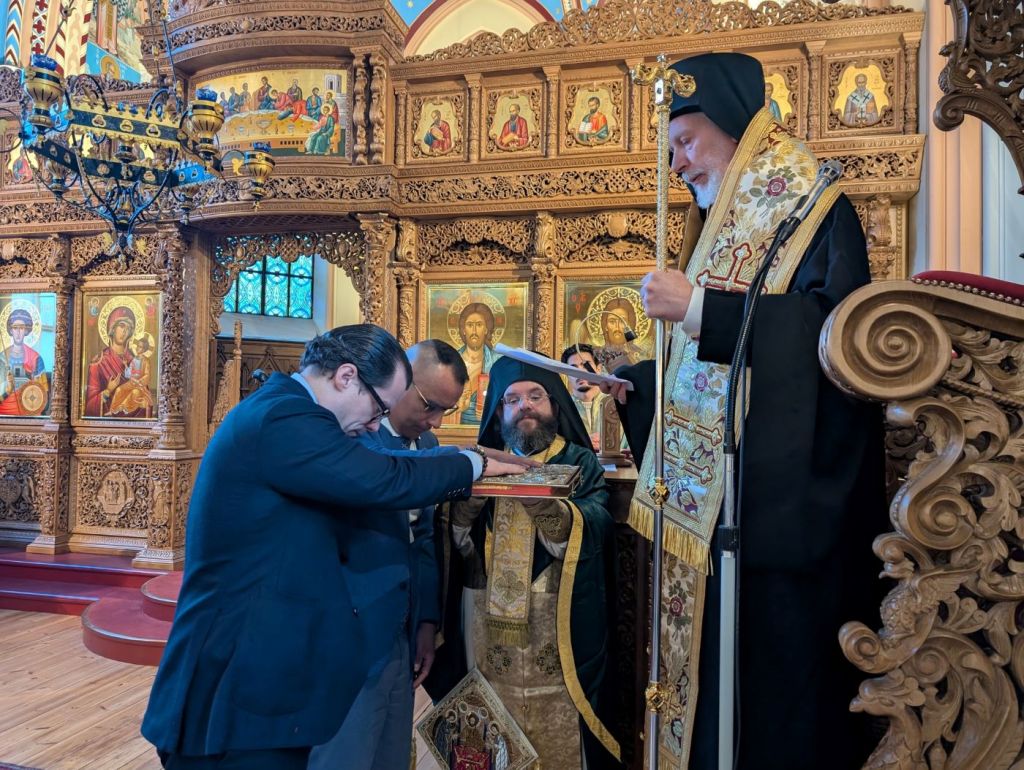
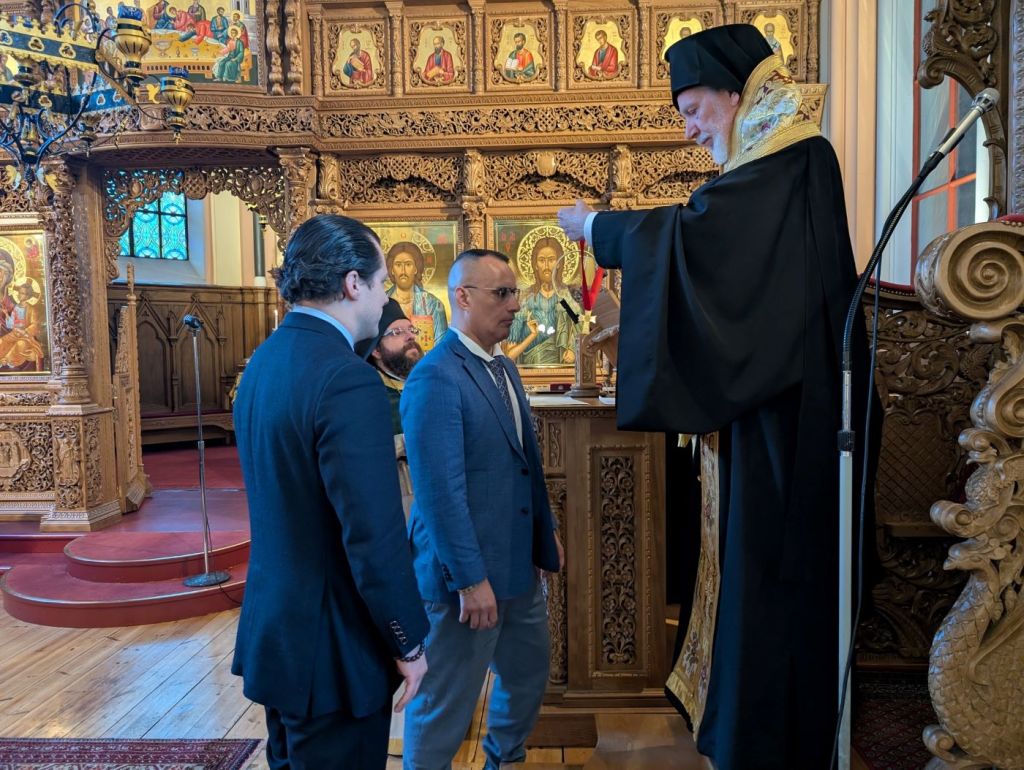
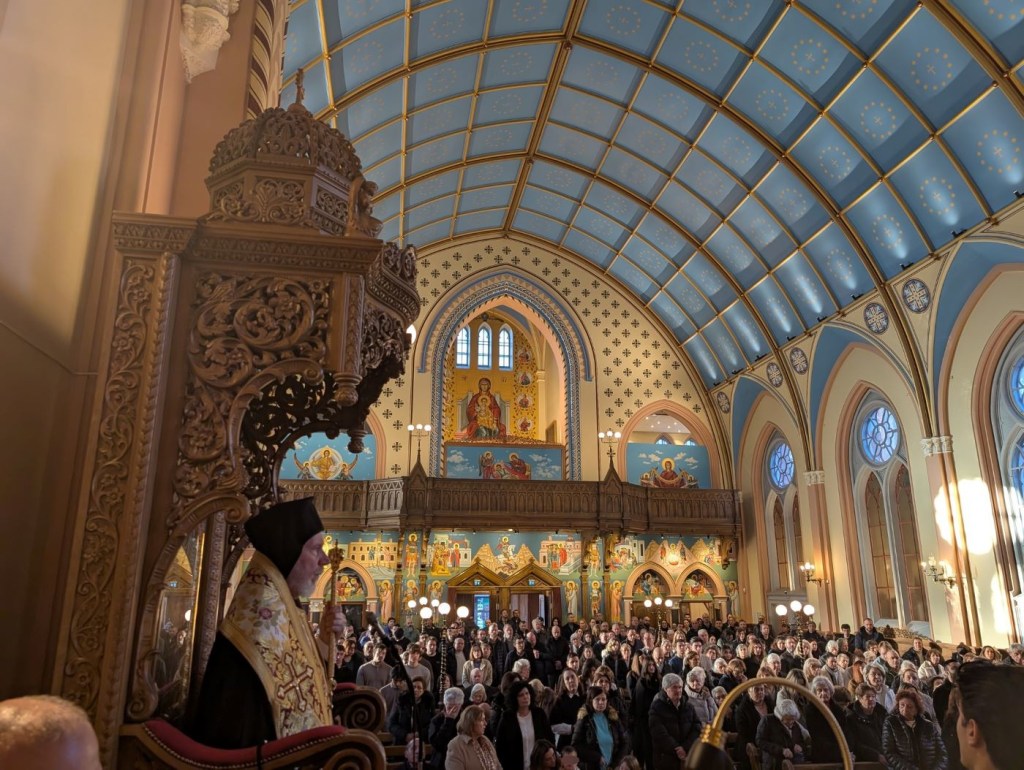
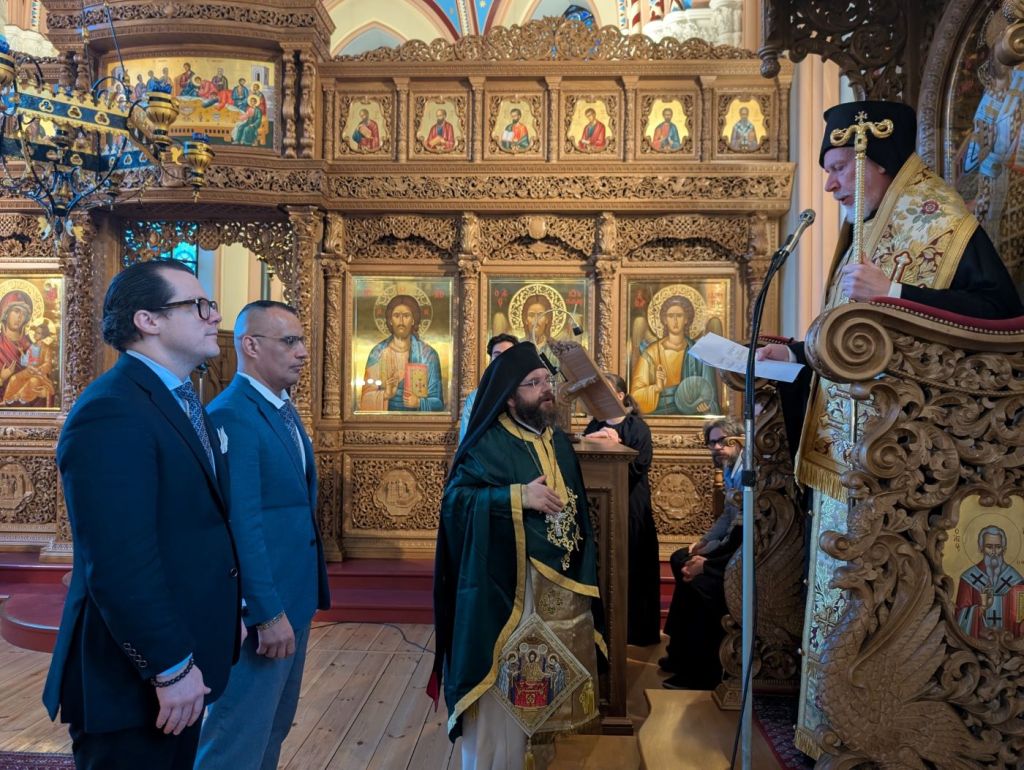
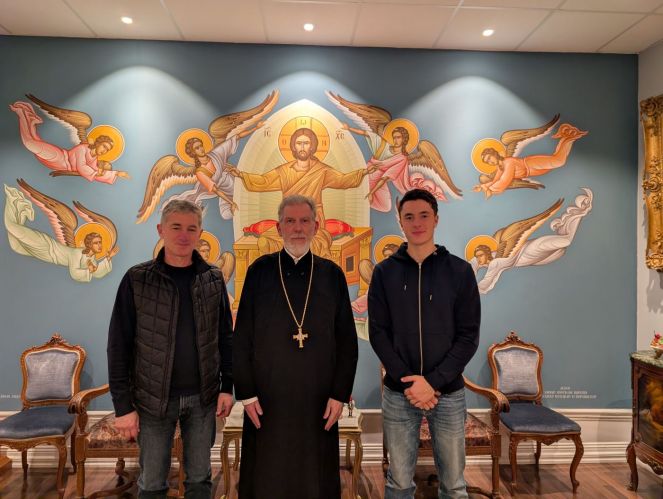
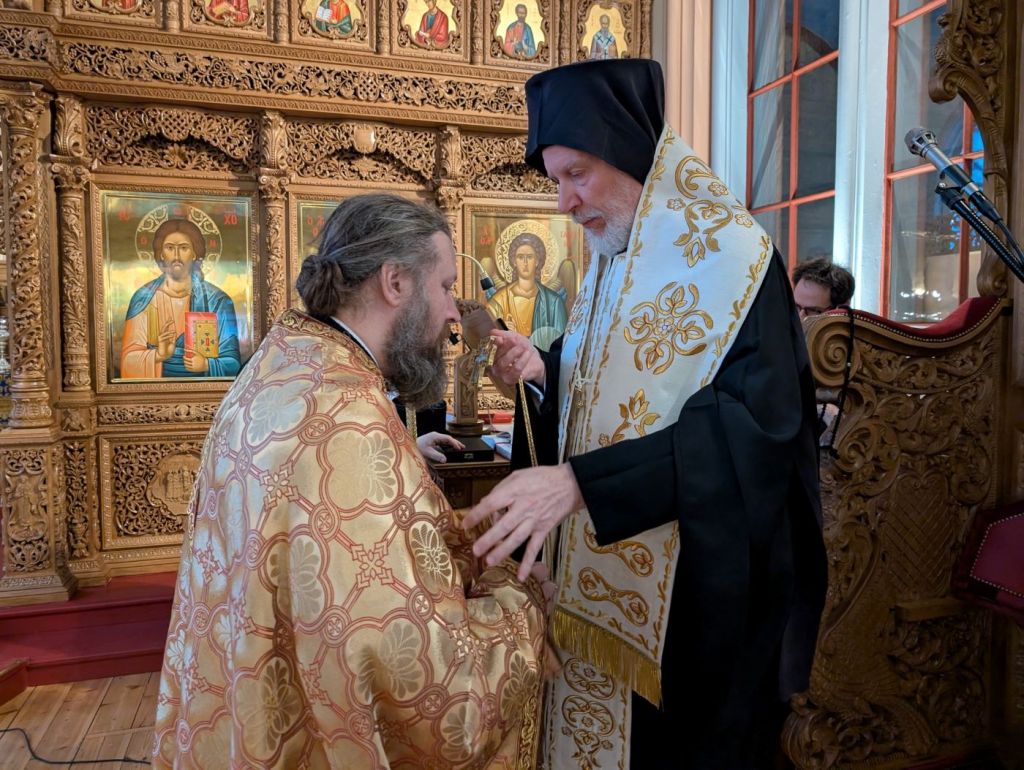
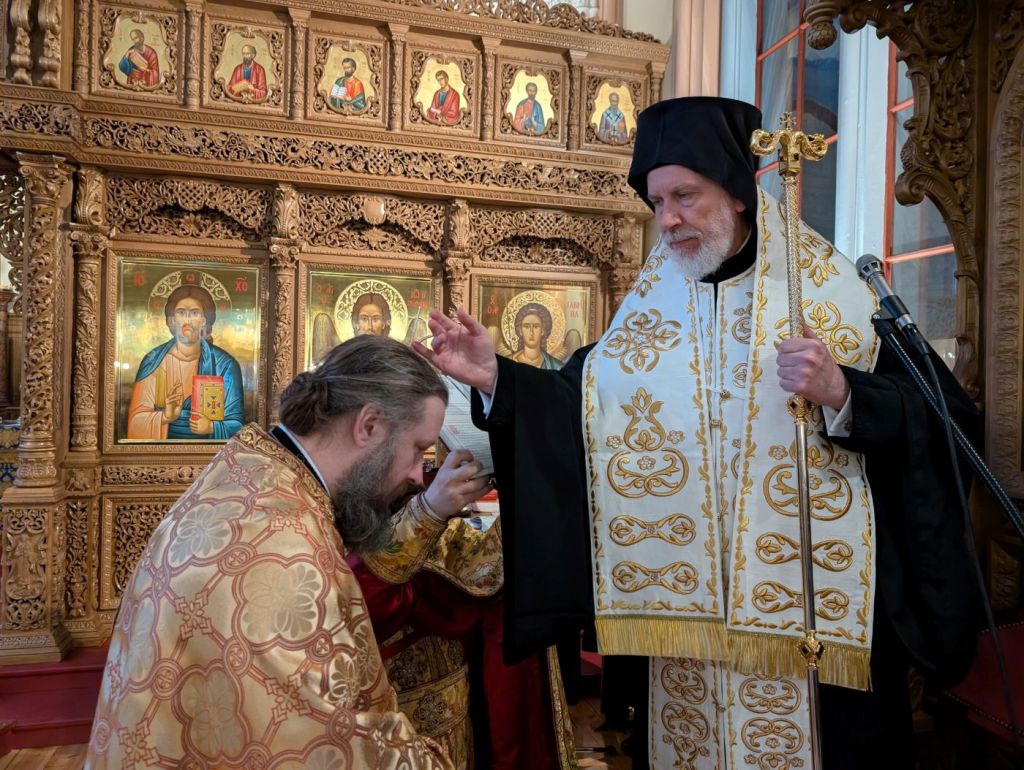
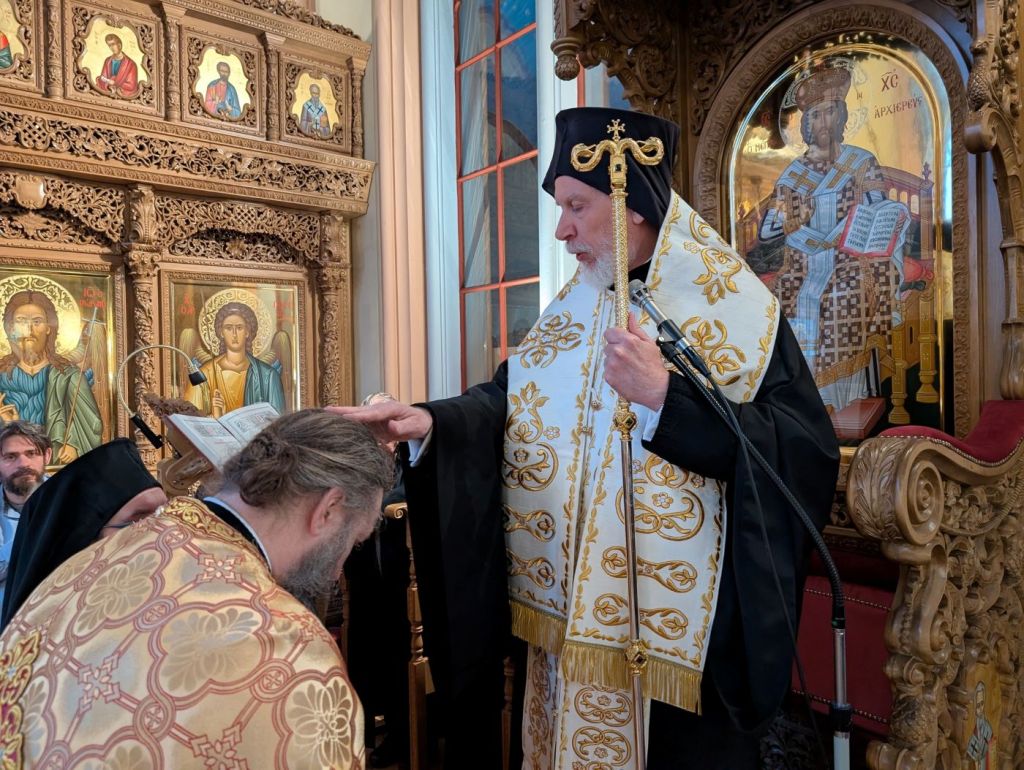
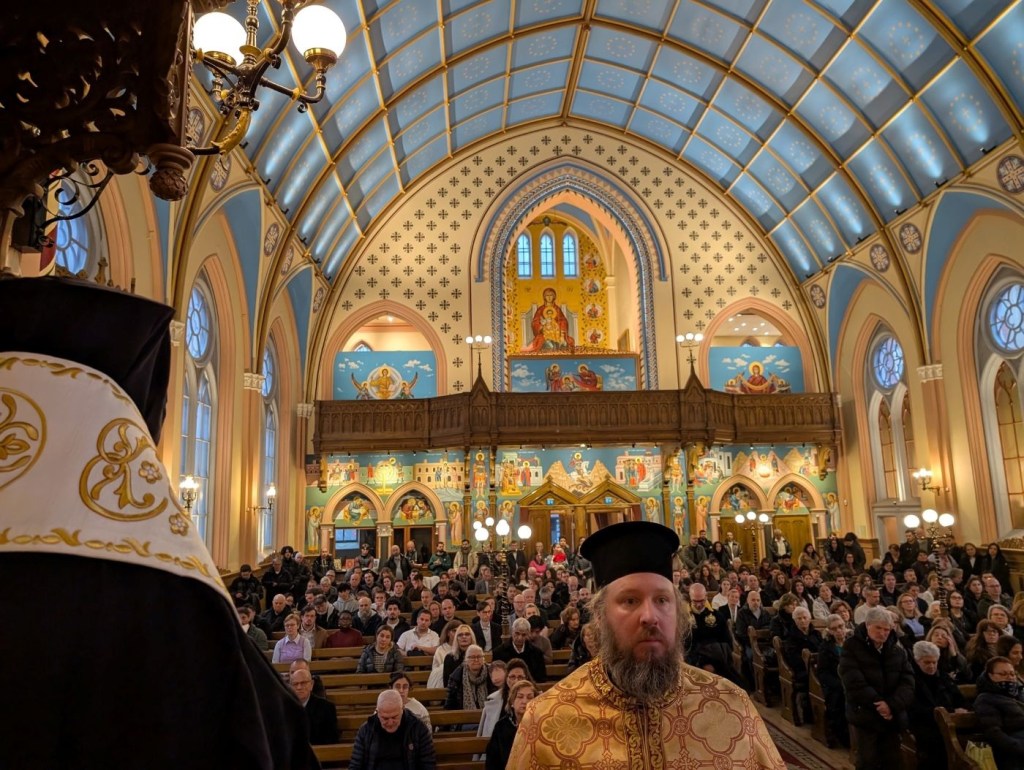
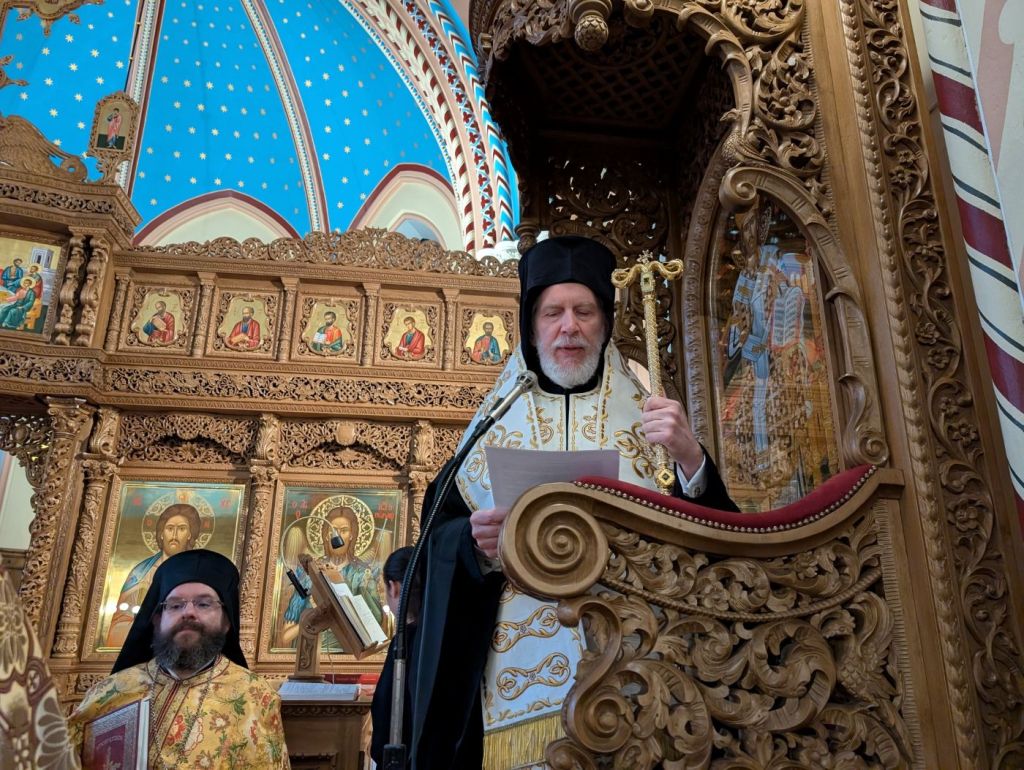
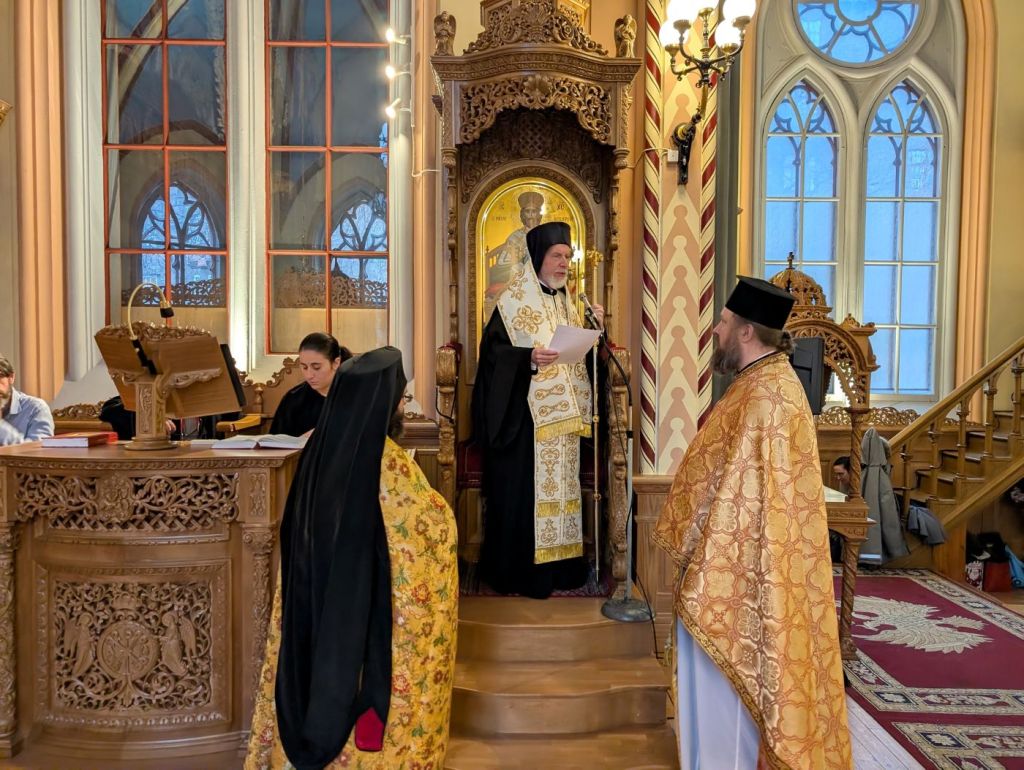
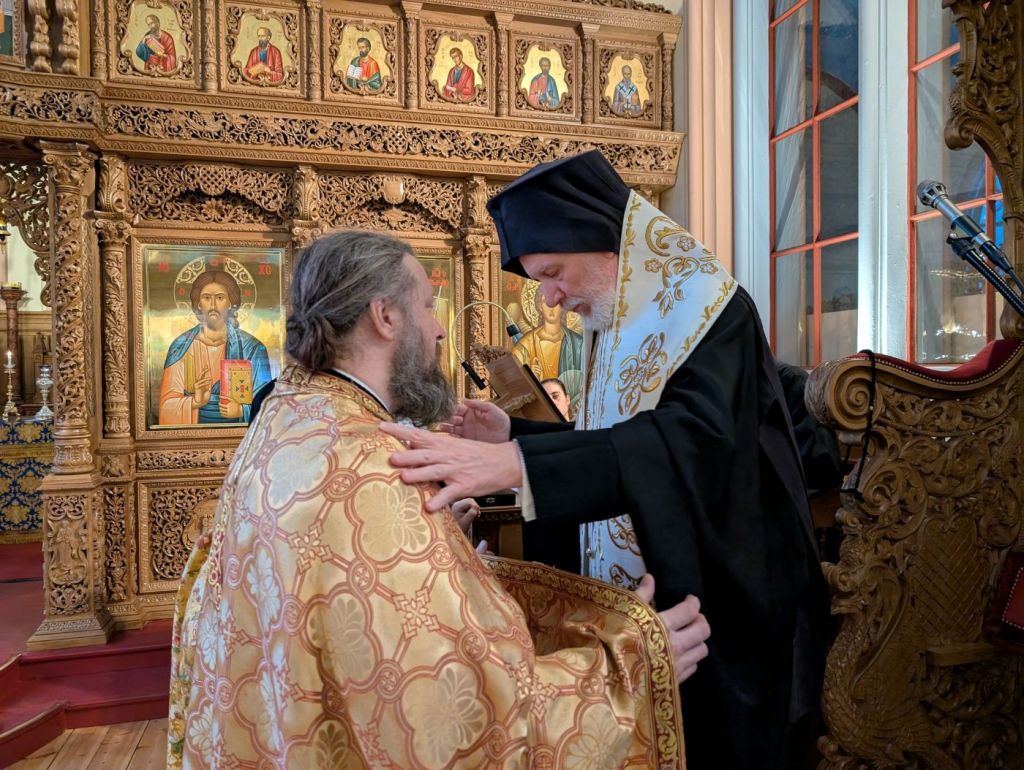
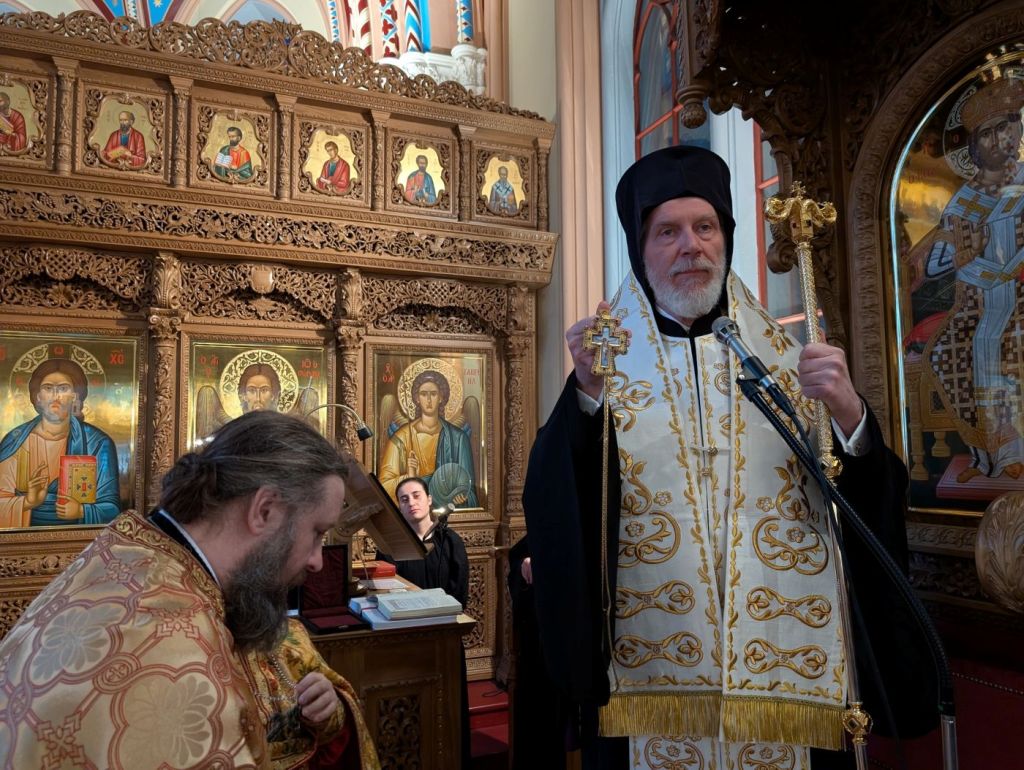
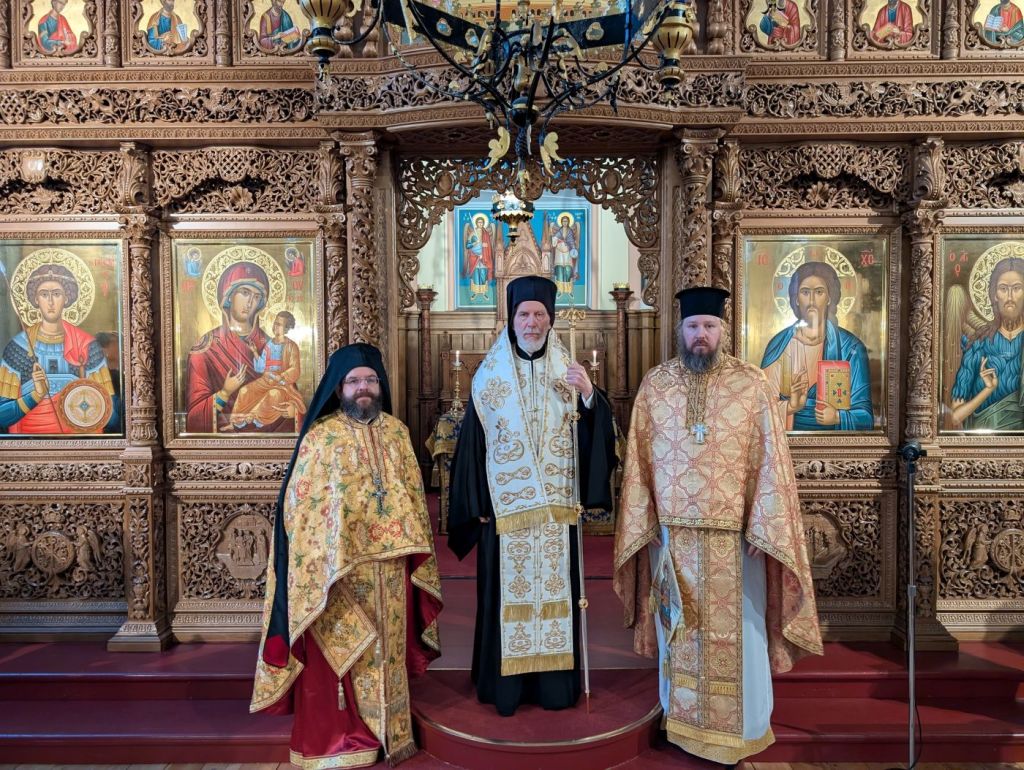
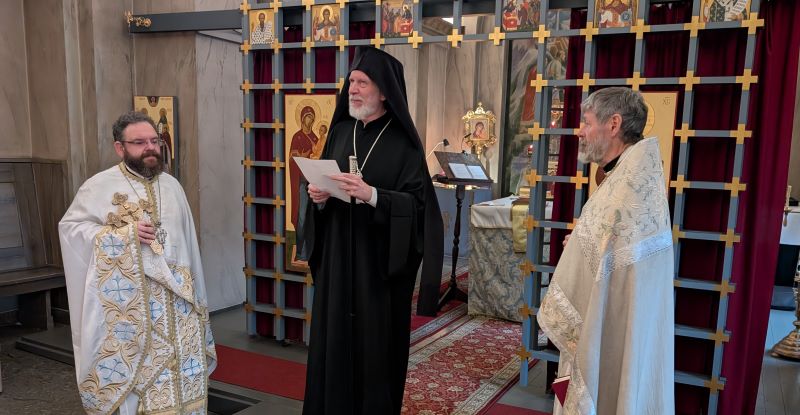
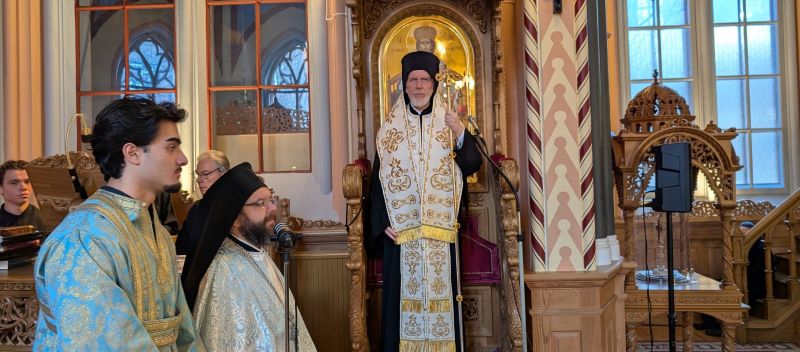
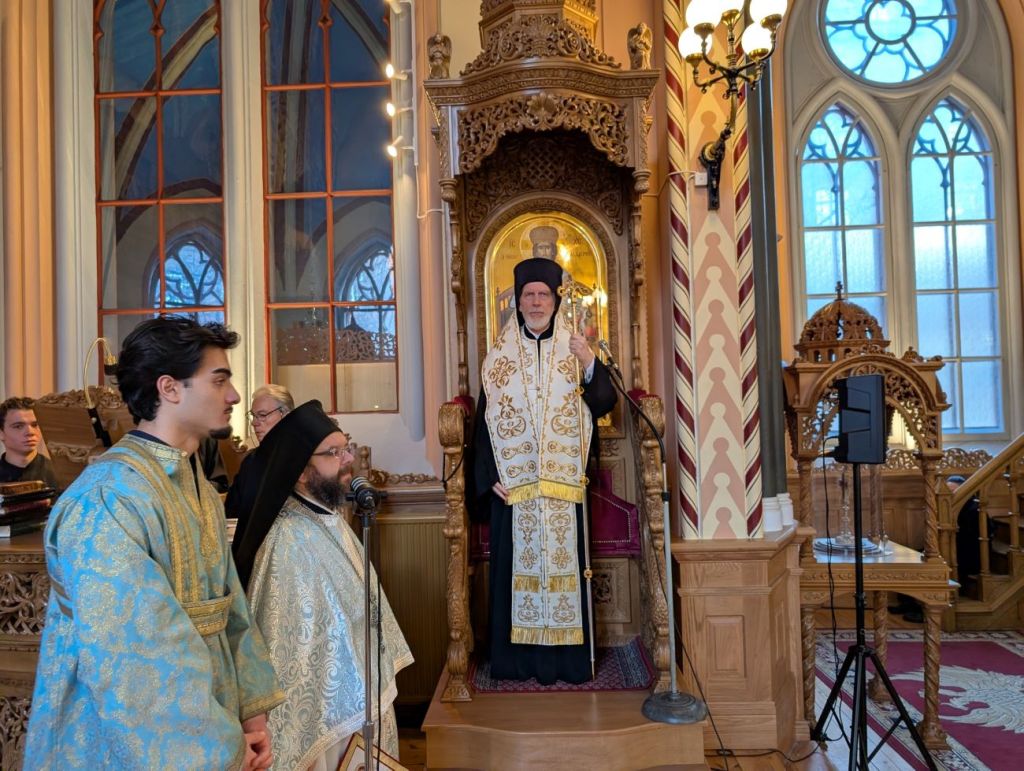
On Saturday, following the Feast of the Entry of the Theotokos into the Temple and the commemoration of our Venerable Saint Iakovos, the new Ascetic of Evia, 22 November 2025, His Eminence Metropolitan Cleopas of Sweden and All Scandinavia, accompanied by the Very Reverend Archimandrite Bartholomew Iatridis, Pastor of the St. George Cathedral of Stockholm, and the Reverend Oikonomos George Arvanitidis, Pastor of the Saints Demetrios and Nestor Parish of Örebro, presided at the service held in the Gideonsbergskyrkan in Västerås, Sweden, which was graciously made available by the Lutheran Church.

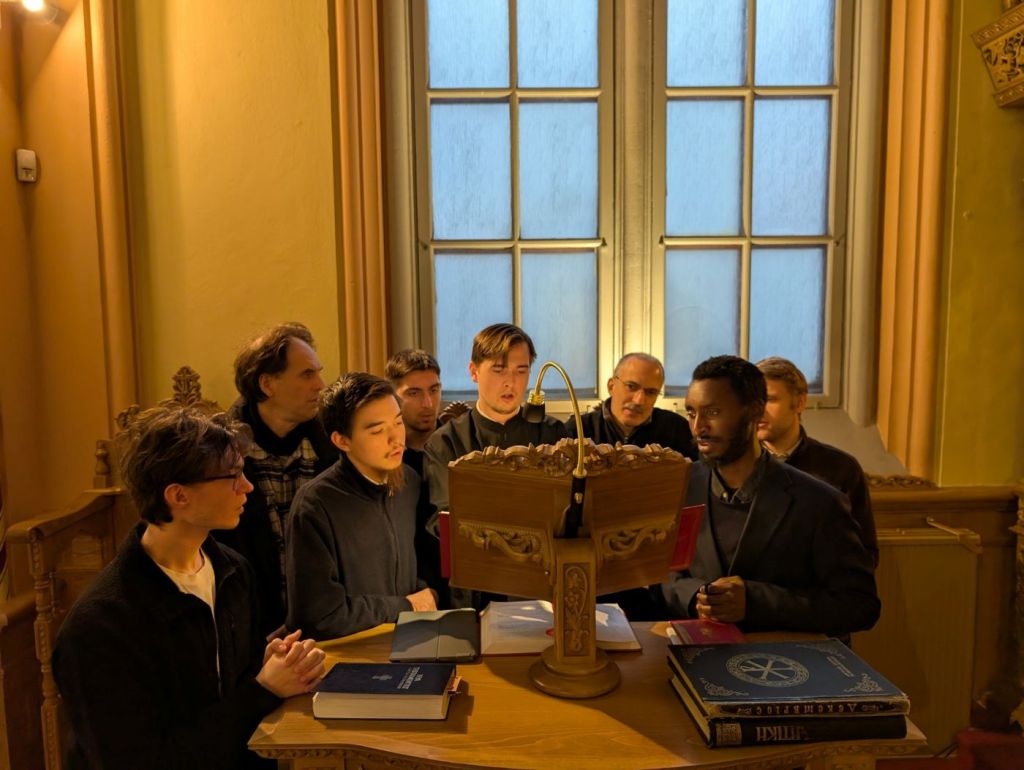
The hymns of the day were rendered by a five-member youth choir under the direction of Dr. Andreas Selamsis, Protopsaltis of the Stockholm Cathedral.

In his homily, the Hierarch of the Northern Lands of the Mother Church referred to the significance of the Feast of the Entry of the Theotokos into the Temple as a prelude to the Great Feast of Christmas, stating:

“Only yesterday our Church celebrated the Entry of the Theotokos, a feast that opens before us a window looking directly toward the joy of Christmas.

The Entry is not simply a feast of the Virgin Mary; it is the first light of the Birth of Christ, the dawn before the Sun of Righteousness appears.

Without the Entry, there would be no Christmas. Without the preparation of the Theotokos, there would be no Incarnation. Without the sanctification of the Mother, the Savior would not have come into the world.

Christmas is the moment when ‘the Word became flesh.’ The preparation for this moment begins with the entry of the Virgin Mary into the Temple. The three-year-old Mary enters the Holy of Holies to become herself the ark of the new Law, the living Temple, the sanctified earth from which Christ will spring forth.

Just as the earth must be cultivated before it receives the seed, so too the Virgin is prepared before receiving Christ. The Entry is therefore the first chapter of Christmas.

Christmas means ‘Emmanuel—God with us.’ And for God to dwell among us, there had to be a place free of any shadow of sin. That place is the Theotokos.

The Church sings: ‘The Temple of God is led into the Temple of God.’ The Virgin enters the handmade temple to become the uncreated Temple—the place where the eternal God will take on human flesh. This is why the Entry is the mystical beginning of the Incarnation.

What is Christmas? It is the condescension of God, who descends into poverty, into flesh, into human life. This condescension already begins with the Entry. God sees the childlike soul of Mary, purer than the angels, and finds in her a place of rest. Before God takes on human flesh, He prepares the heart that will contain Him. This is why the Fathers of the Church call the Entry ‘the forefeast of the Nativity.’

What begins today is completed in Bethlehem. The Entry is the opening of the gate; Christmas is the entrance of God into the world.

Today the Theotokos enters the temple. Tomorrow, at Christmas, Christ calls us to allow Him to enter the temple of our own hearts. But for this to happen, we must do what she did; purify our hearts, pray, humble ourselves, fast, and allow Grace to sanctify us. Only then will Christmas not be an external celebration but an inner Birth of Christ within us.

The Entry is the Divine preparation. Christmas is the Divine revelation. At the Entry, the Theotokos enters the Temple. At Christmas, God enters the world. Today the Mother of Life is brought into the Temple. In a few days, the Giver of Life will be born.

Let us also prepare ourselves, so that when Christmas night arrives, Christ may find within us a pure temple, a humble heart, a soul filled with love. May the Theotokos, who today opens the way of salvation, lead us to the Christ who is coming in flesh. Amen.”

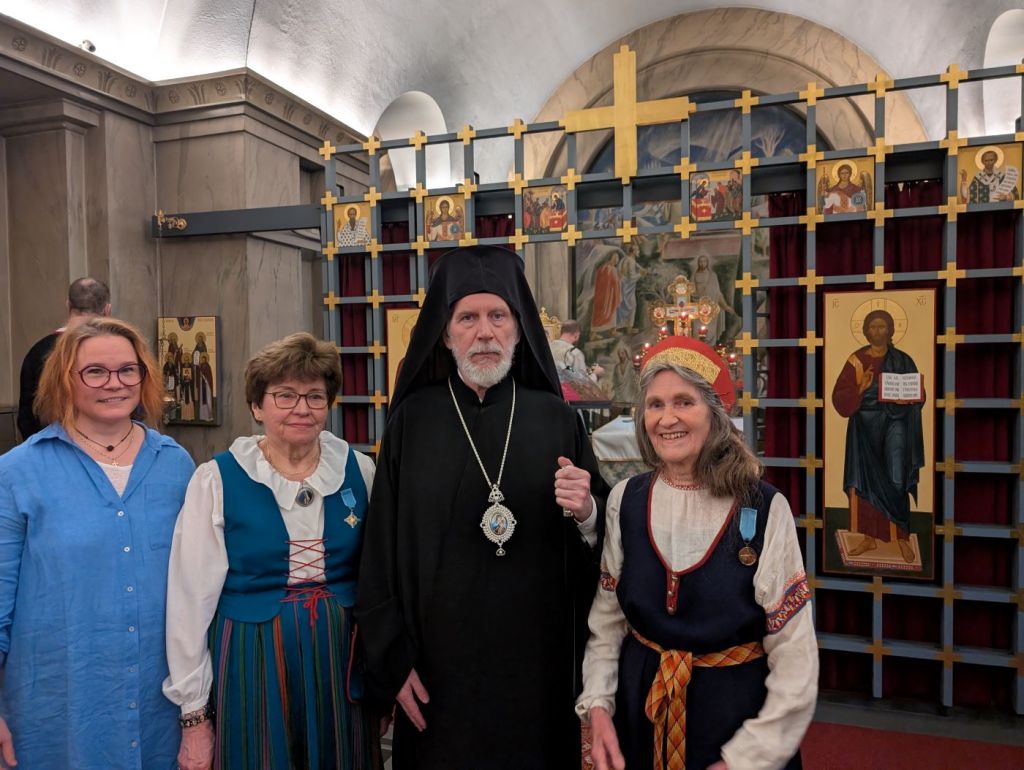
In conclusion, the Metropolitan thanked the priests who accompanied him, the choir members, and the congregation, especially Mrs. Britt Marie Zotos, who worked diligently in preparing and offering the refreshments that followed in the hall adjacent to the church.

He also presented his recently published study, issued by the Apostoliki Diakonia of the Church of Greece, on the late Metropolitan Polyefktos of Sweden, to Professor Dr. Christos Papachristodoulou of Västerås University.

In the church’s reception hall, His Eminence had the opportunity to converse with members of the Greek community of Västerås, who repeatedly expressed their gratitude for the spiritual opportunity of the day’s gathering.

In the afternoon, Metropolitan Cleopas returned by train to the headquarters of his Metropolis in Stockholm, accompanied by Fr. Bartholomew.

Πνευματικά · Metropolis

H.E. Metropolitan Cleopas’ Homily on the Entrance of the Theotokos into the Temple and the Nativity of Chirst

St. George Cathedral of Stockholm

Sunday, November 23, 2025

Dearly Beloved Brothers and Sisters in Christ,

Let us reflect upon two radiant feasts that illuminate the entire mystery of salvation, the Entrance of the Most Holy Theotokos into the Temple and the Nativity of our Lord Jesus Christ.

At first glance, these feasts may appear to stand far apart—one in November, the other at the brink of winter. Yet the Fathers teach us that they form a single arc in the divine story: the preparation and the fulfillment, the quiet beginning and the glorious revelation, the sowing and the harvest of salvation.

In the Entrance of the Theotokos, the Church shows us the quiet and hidden preparation of salvation. St. Gregory Palamas says that in her, “all the ages found their perfection,” for she is the one through whom God will enter creation. Her footsteps into the Temple are the first earthly signs of the “coming of the fullness of time.”

In the Nativity of Christ, that which was hidden is revealed. St. John Chrysostom proclaims that on this day “the earth becomes heaven,” for God Himself takes flesh. What the Entrance begins, the Nativity completes; what is offered in purity within the Temple becomes incarnate as the Savior of the world.

At her Entrance, the three-year-old Mary enters the Temple, but the Fathers repeatedly remind us that she is herself the true Temple. St. Andrew of Crete calls her “the Temple that contained God not in shadow, but in truth.” The Temple receives her, but only as a symbol receives its fulfillment.

At Christmas, we see this fulfilled when the Temple gives birth to the God who dwells within it. The one who entered the Temple now becomes the Mother of the Temple’s Lord. St. Ephraim the Syrian says, “The heavens cannot contain Him, yet a pure maiden’s womb has received Him.”

The Entrance reveals the Temple being prepared; the Nativity reveals the God who sanctifies the Temple.

In the Entrance, Mary is offered freely by her parents, Joachim and Anna, as a gift to God. St. Germanos of Constantinople writes that in her entrance, “humanity offers back to God its first truly spotless fruit.”

In the Nativity, God offers Himself as a gift to humanity. What Joachim and Anna did in symbol, God does in reality. The Fathers stand amazed: the one offered in the Temple becomes the one who offers Himself on behalf of all. The Entrance is the offering of the pure vessel; the Nativity is the outpouring of the divine treasure.

The Entrance is shrouded in silence. No crowds, no trumpets—only the quiet marvel of the angels, who, according to tradition, feed the child Mary with heavenly bread. St. Gregory of Nyssa tells us that “God delights to work in secret that which He later reveals in glory.”

The Nativity, by contrast, resounds with proclamation—angels singing to shepherds, a star calling magi, heaven and earth rejoicing. The silence of the Temple prepares the song of Bethlehem. What begins in stillness ends in cosmic praise.

In the Temple, Mary is formed—physically, spiritually, and mystically. The Fathers describe her upbringing as a continual ascent into holiness. St. John of Damascus writes that she “grew like a lily in the midst of thorns.”

At the Nativity, she becomes the fulfillment of that formation. The one formed in holiness now brings forth “the Holy One of Israel.” All her preparation leads to this moment when she becomes not only the Temple but the Gate through which God enters the world.

During the Entrance, little Mary ascends the steps of the Temple, climbing toward the Holy of Holies. This ascent is the icon of humanity rising slowly toward God, yearning for communion with Him.

At the Nativity, in a divine paradox, God descends the steps of heaven, born in a cave, laid in a manger, clothed in humility. What Mary does in miniature—ascending—Christ does in majesty—descending. The Entrance shows humanity seeking God; Christmas shows God seeking humanity.

In her Entrance, Mary is preserved in virginity as a living sign that God is preparing something utterly new. The Fathers emphasize that she is the “ever-virgin” not merely for purity, but to show that the coming salvation is not of human effort but of divine grace.

In the Nativity, this mystery reaches its summit: the Virgin gives birth, and her virginity remains intact. St. Ambrose famously teaches, “He entered the world through closed doors, and He left the tomb in the same way.” The Entrance reveals the virgin prepared; the Nativity reveals the virgin overshadowed by the Holy Spirit.

Therefore, the Entrance and the Nativity are not two separate stories but one mystery of love: The Temple is prepared; the Lord enters it. The Virgin is offered; God offers Himself. Silence prepares the hymn; the hymn reveals the mystery. Humanity ascends; God descends.

The Entrance gives us Mary, ready to receive God. The Nativity gives us Christ, ready to save humanity. In both feasts, God shows His humility and His lavish love; and in both feasts, humanity is invited to respond.

May we, like the Theotokos, become temples prepared for Christ. May we, like the shepherds, hasten to meet Him. And may the One born in Bethlehem also be born in our hearts. Amen!

Metropolis

5th Meeting of Catechumens and Newly Illumined at the Stockholm Cathedral

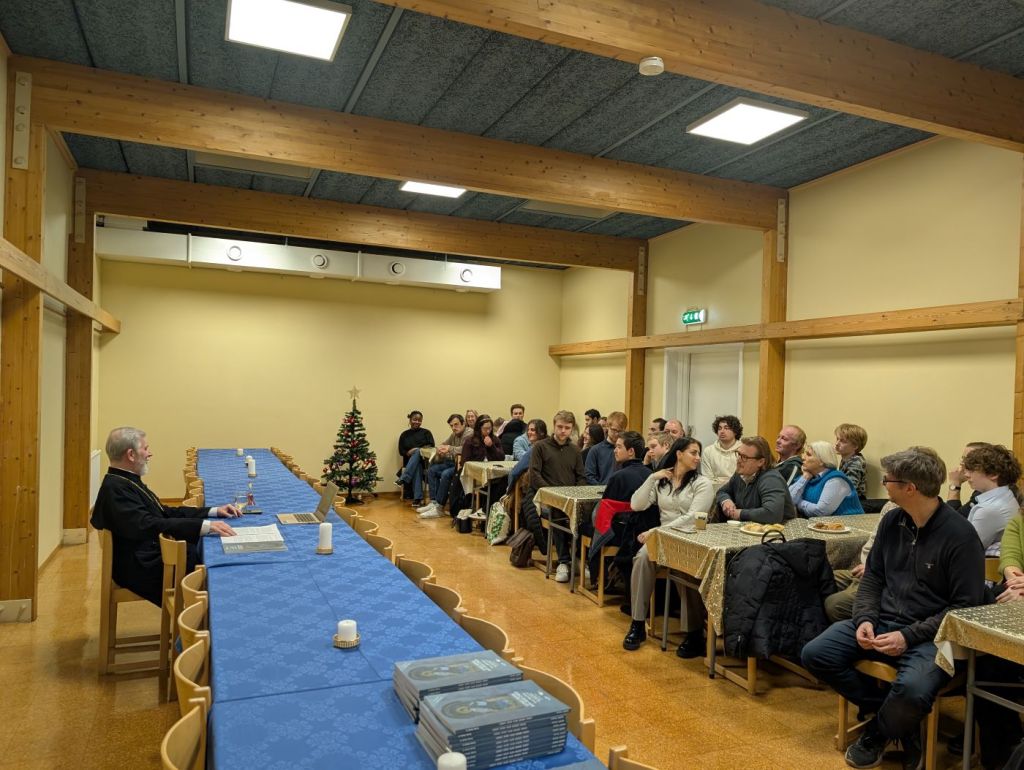
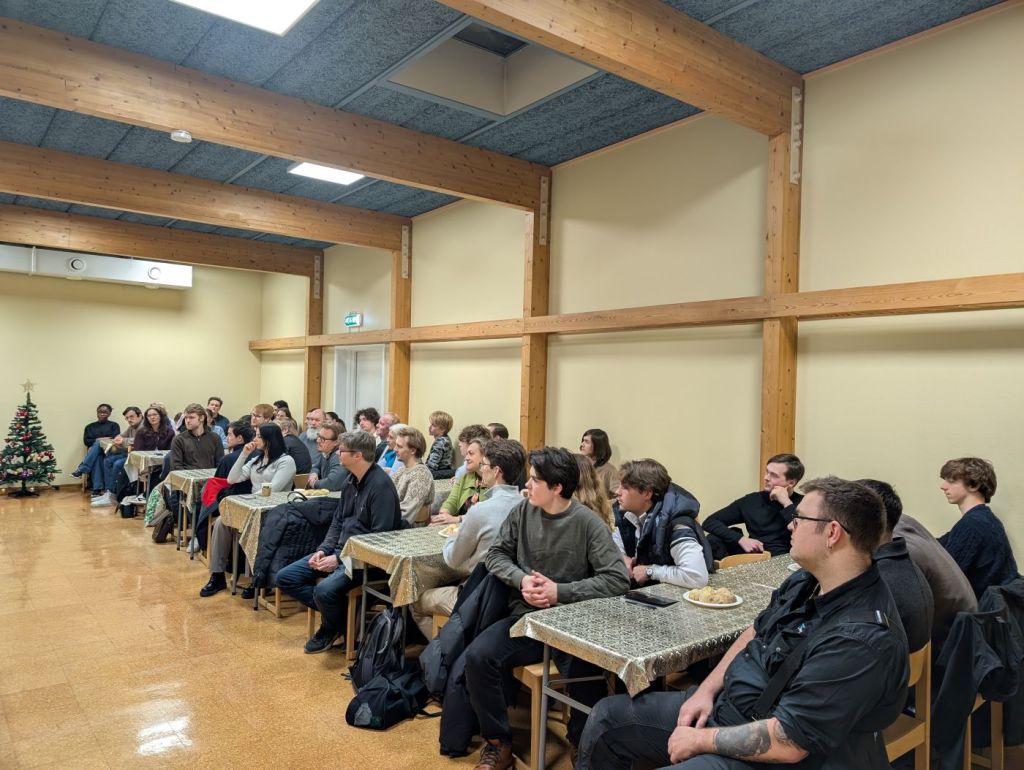
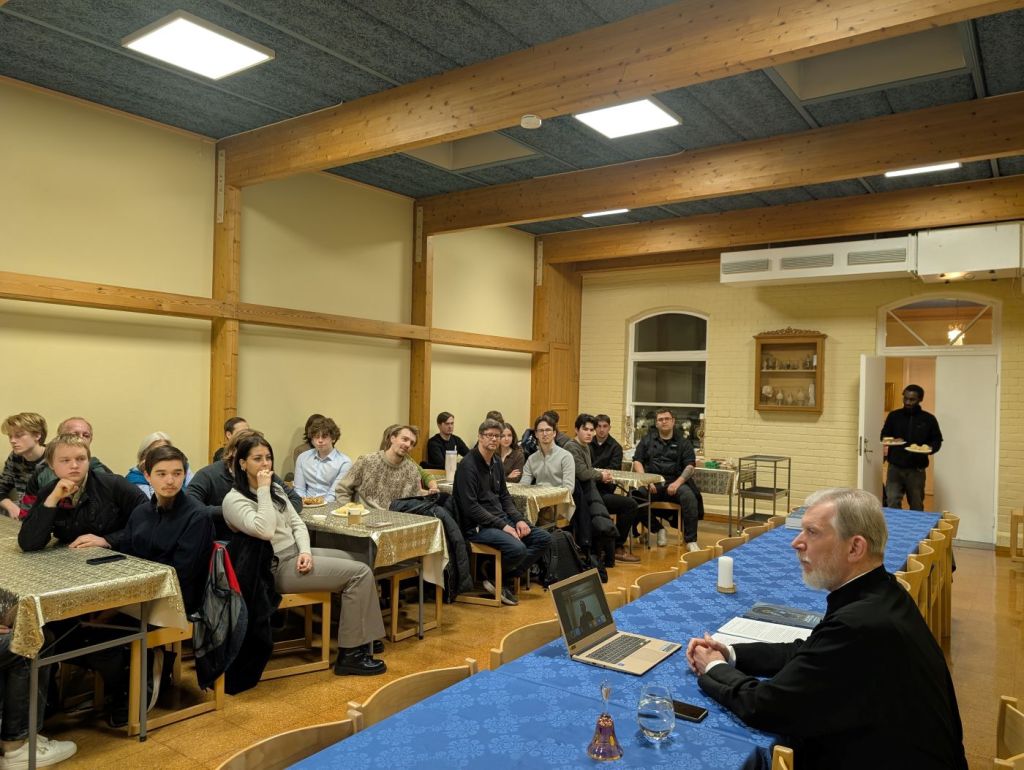
On the afternoon of Thursday, November 20th, 2025, the fifth consecutive meeting of Catechumens and Newly Illumined of the Holy Metropolis of Sweden took place in the welcoming premises of the St. George Cathedral of Stockholm (Birger Jarlsgatan 92, 114 20 Stockholm), with the participation of 50 young people in person and another 25 online.

Once again, His Eminence Metropolitan Cleopas of Sweden and All Scandinavia served as the speaker, addressing the participants in the English language, in order to accommodate the diverse group of Catechumens and newly baptized faithful who come from various countries and cultural backgrounds.

The topic of the presentation was the continuation of the lecture entitled:

“The Missionary Work of the Evangelist Matthew.”

During the session, participants once again posed thoughtful and insightful questions, to which His Eminence offered well-founded and pastoral responses.

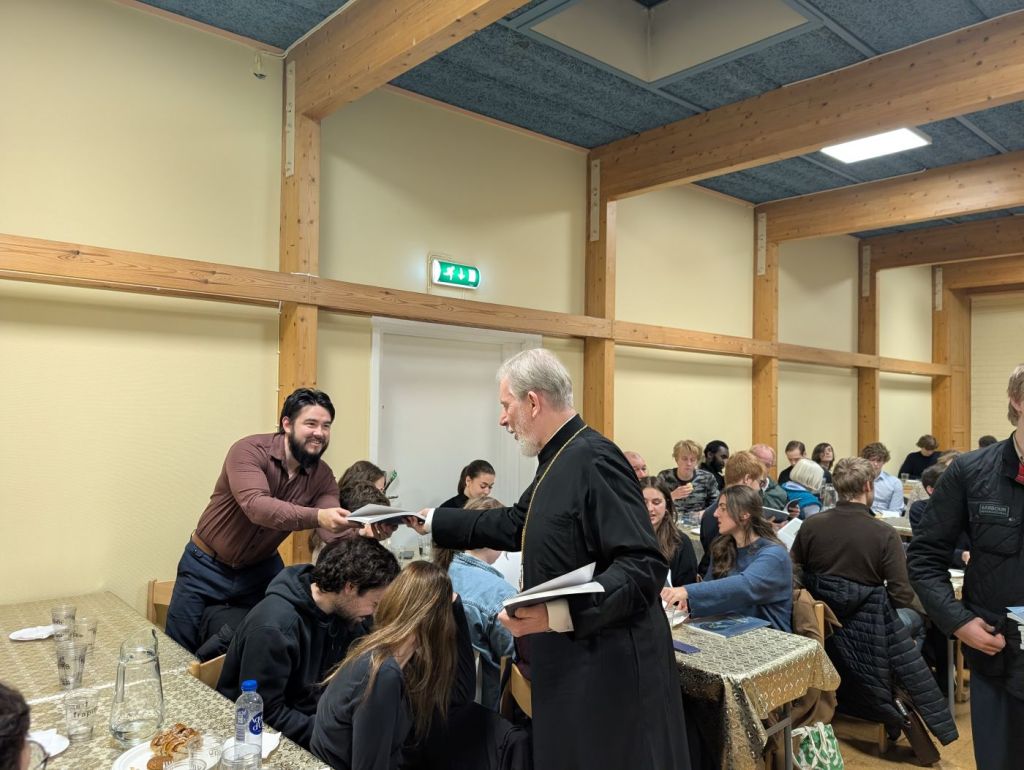
At the conclusion of the meeting, refreshments were offered in honor of all who were present, particularly the young people who serve the local Church faithfully and with dedication in various ministries.

The next meeting will take place on Thursday, December 18th, 2025, at 6:00 p.m., in the same location, and will inaugurate a new cycle of thematic presentations. (The entrance is from the church drive way.)

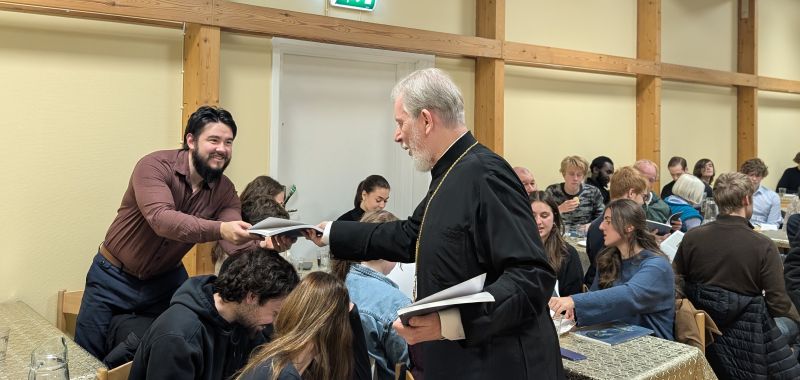
At the upcoming meeting, the catechumens will be given the catechetical support books in Greek and English, which were kindly offered on behalf of the organization ‘Agape Hellas’ by Mr. Emmanouil Toufexis. The books are titled: ‘A Deeper Acquaintance with Jesus Christ’ (‘Going Deeper with Jesus Christ’).

Those residing outside Stockholm may follow the meeting online at the link below:

For further information, please contact: +46 73 542 9745 or at metropolisofsweden@gmail.com

Πνευματικά · Metropolis

The Evangelist Matthew and American Cinema

By His Eminence Metropolitan Cleopas of Sweden

Allow me to begin not from a Patristic text, but from a world we often consider distant from the Church: the world of cinema – the world of art, of images, of contemporary storytelling.

The Church is not afraid of modern culture; whatever bears seeds of truth, she embraces, illumines, and transforms. As Saint Justin the Philosopher says: “Πάντες οἱ σπερματικοὶ λόγοι τοῦ Θεοῦ εἰσί” – “All the seeds of truth belong to God.”

Today, we will take such a “seed” from contemporary cinema and plant it beside the Gospel: a modern, unpretentious, moving American film, “Beauty in the Broken.”

It is a film which, without knowing it, speaks the language of the Gospel. A story which, without intending it, mirrors the story of a great Saint: the former tax collector Matthew, who became Evangelist, Apostle, martyr, and guide of generations.

In this film we meet a young girl. A girl living on the margins: homeless, afraid, deeply wounded. A human being who, in the eyes of the world, is not worth paying attention to. People walk past her as if she does not exist; some pity her, others avoid her, others almost fear her. A “broken” life.

But then something unexpected and ultimately saving happens. Someone sees her. Looks at her deeply. Not as others look at her, but as God looks at the human being: beyond clothing, beyond poverty, beyond wounds.

A psychiatrist, a man with an open heart, sees in this girl not a ruined life, but a life that hides within itself an invaluable treasure: the gift of art, the gift of creativity.

And from that single look, the transformation begins. Not because the girl suddenly becomes perfect, but because someone has recognized her worth. This person has seen the beauty within the broken.

Which figure in Scripture most brings this girl to mind? Who so closely resembles an existence on the margins, misunderstood, condemned? Who also lived in fractures, in social disdain, in moral loneliness? The tax collector Matthew.

The one who became the author of the first Gospel. The one who wrote about Christ, because Christ first “wrote” upon his own heart.

Before becoming an Evangelist, Matthew was a tax collector. And tax collectors in that era – as the Fathers of the Church describe – were dishonored people.

Saint Cyril of Alexandria says: “Οἱ τελῶναι ἦσαν τοῖς πολλοῖς βδελυκτοί” – “Tax collectors were abominable to the many,” that is, repulsive to most people, and “ἄνθρωποι ἄδικοι” – “unjust people,” because they were considered collaborators with the Roman occupiers, people of shame.

Saint John Chrysostom notes that “tax collector” meant “ἄδικος κατ᾽ ἐπάγγελμα” – “a professional in injustice.”

Saint Gregory the Theologian underscores that people of this sort were regarded as “ἀνίατοι τῇ κακίᾳ” – “incurable in their wickedness.”

This is how the world saw Matthew. Just as the world in the film sees the young girl: a lost cause.

And yet, Someone passes by in front of him. Not just anyone – Christ, the God-Man. The only One who can see into the soul more deeply than anyone else.

And Christ sees him. He looks at him without contempt, without disgust, without suspicion, but with love. With that love which Saint Basil the Great calls “ἀγάπη ἡ ἁγιάζουσα τὰ ἀμαρτωλά” – “love that sanctifies even what is sinful.”

And then Christ says to Matthew two words that changed the history of the world: “Follow Me.”

He does not ask him to correct his mistakes first. He does not say, “Become better and then come.” He gives him neither deadline nor conditions. He says: Come as you are. With your cracks. With your mistakes. With your wounds. And I will transform you.

Saint John Chrysostom comments: “Οὐκ ἐκ λόγων μακρῶν, ἀλλ᾽ ἐκ μιᾶς ῥήσεως ἡ κλῆσις.” – “His calling did not come through long speeches, but through a single phrase.”

And elsewhere: “Εἷλκεν αὐτόν οὐ λόγων πλήθει, ἀλλὰ τῇ δυνάμει τοῦ βλέμματος.” – “He drew him not by a multitude of words, but by the power of His gaze.” Christ attracted him with the power of His divine look.

And Matthew rose up “immediately” and followed Him. From this moment onward, everything changes. The broken becomes strong. The margin becomes mission. Shame becomes glory.

Here the life of Matthew meets the film we mentioned. For what Christ does to Matthew is precisely what the doctor does to the girl in the film: He sees him. He recognizes him. He honors him. He lifts him out of insignificance. He gives him hope. He gives him identity.

In the film, when the girl paints, when she allows her soul to express itself, when her art gushes forth out of her wounds, we see something astonishing: the cracks do not disappear – they are transformed. They become color. They become lines. They become beauty.

So too with Matthew: his old self does not vanish, but is sanctified. His mistakes are not erased, but redeemed. His past is not cancelled, but transformed into Gospel.

Saint Gregory the Theologian says this in a striking way: “Ὁ Θεός μεταποιεῖ τὰ ταπεινὰ εἰς ὑψηλά, καὶ τὰ ἀτιμασμένα εἰς τίμια.” – “God transforms what is lowly into what is exalted, and what is dishonored into what is honorable.” He “sees the being of the heart and not the seeming.”

This is what He does with Matthew. He does not see a sinner, but a hidden Evangelist. He does not see an unjust tax collector, but a future Apostle. He does not see the sin; He sees the beauty hidden within the broken.

This is what happens with Matthew. This is what happens in the film. This is what can happen for each one of us.

After his calling, Matthew does not simply become a believer. He becomes an Evangelist. He writes the first Gospel in order.

Saint Jerome says that the Gospel according to Matthew is the “Gospel of the prophecies,” because it shows that Christ fulfills the entire Law and the Prophets.

Saint Athanasius the Great calls Matthew’s Gospel “a fountain of truth and a treasury of wisdom.”

Saint Chrysostom says that the Sermon on the Mount – which only Matthew records in such detail – is “the Constitution of the Kingdom of God.”

The once “unjust tax collector” writes the Constitution of the Kingdom of God!

But he does not stop there. He becomes an Apostle. He becomes a missionary. He reaches distant nations. He preaches Christ to peoples unknown. He endures persecutions. And finally, he offers his life.

Chrysostom says: “Οἱ ἀπόστολοι ἐσφράγισαν τὸ εὐαγγέλιον οὐ λόγοις, ἀλλ᾽ αἵματι.” – “The Apostles sealed the Gospel not with words, but with blood.”

This is what Matthew does as well. He gives what he had: his life. This entire journey of holiness begins from a single look and two words. From the fact that Christ saw the beauty within the broken.

We all have cracks. We all have weaknesses, fears, wounds. No one is perfect, but Christ does not ask for perfection. He asks for a heart. He asks for a will. He asks that we open for Him even a small window so that He may enter and dwell within us.

Saint Basil says: “Οὐκ ἀπαιτεῖται τέλειος ἀρετή, ἀλλὰ προαίρεσις ἁγία.” – “What is required is not perfect virtue, but a holy disposition.” God does not wait for us to become saints in order to love us. He loves us so that we may become saints.

Just as, in the film, the girl discovers the power of art through the love of someone who believed in her, so too we discover our own gift when we allow Christ to see us.

Today, Christ says to us the very words He spoke to Matthew: “Follow Me.” Come. With your wounds, with your past, with your mistakes, with your weaknesses, with your “cracks,” because it is there, in the cracks, that the light enters.

Saint Nicholas Cabasilas says that the grace of God enters “ἐν ταῖς χαραγμαῖς τῆς ψυχῆς” – “into the cuts of the soul.” Into the scratches of the soul. Where we hurt. Where we are weak. There God opens a way.

We honor a Saint who teaches us that Christ does not see as the world sees. The world sees what is broken. Christ sees the beauty within the broken. The world sees sin. Christ sees a mission. The world sees the past. Christ sees the future.

This is why the message of Saint Matthew is so contemporary. Matthew – like the heroine of the film – teaches us that you are not what others, the ill-intentioned and toxic, say you are. You are not your mistakes. You are not your wounds. You are not your fears. You are what God sees within you!

Saint Gregory the Theologian says: “Τῷ Θεῷ οὐ τὸ τέλειον ἀρέσκει, ἀλλὰ τὸ προσφερόμενον.” – “What pleases God is not what is perfect, but what is offered.”

So let us also become people who see beauty. Let us learn to see others as Christ sees them. Let us learn to see ourselves as Christ sees us.

If a tax collector became an Evangelist, if a girl on the margins became an artist, then we too, by the grace of God, can become something we cannot yet imagine.

And if you allow Christ – if you open even a small chink in your heart – then you will see that what you consider cracks are in reality the very points where the light will enter. Because in the life of the Christian, as in art, the most beautiful designs are painted on surfaces that have been wounded.

Let us therefore be inspired by this film, by this parable of our age. Let us be inspired by the story of Saint Matthew. Let us learn to see others not through their fractures, but through their gifts. Let us learn to see beauty where the world sees only failure. And above all, let us learn to see ourselves as Christ sees us – through the promise of transformation.

The tax collector became an Evangelist. The weak became an Apostle. The broken became beauty. May our own life likewise become a wondrous story of transformation. May it become a small continuation of the Gospel. For, as Saint Basil the Great says: “Every Christian is called to become a living Gospel!”

Metropolis

16/11: Expression of Solidarity for Today’s Traffic Accident in Stockholm

The Holy Metropolis of Sweden and All Scandinavia and His Eminence Metropolitan Cleopas express their deepest sorrow for the tragic accident that occurred this afternoon in Stockholm, on a central avenue above the Cathedral of Saint George, when a public transportation bus veered off course and crashed into a stop, resulting in the loss of human life and the injury of our fellow citizens.

Metropolitan Cleopas conveys his sincere and heartfelt condolences to the families of the victims, sharing in their profound grief and praying for the repose of the souls of the departed. At the same time, he wishes a swift and full recovery to all those injured.

The Holy Metropolis of Sweden affirms its practical support to those affected, offering every possible spiritual and psychological assistance during these difficult hours, and calls upon all the faithful to unite their prayers for the victims and their families.

May the All-Good God grant comfort to the mourners and peace to every heart.

Metropolis

4th Meeting of Catechumens and Newly Illumined at the Stockholm Cathedral

On the afternoon of Thursday, November 6th, 2025, the fourth consecutive meeting of Catechumens and Newly Illumined of the Holy Metropolis of Sweden took place in the welcoming premises of the St. George Cathedral of Stockholm (Birger Jarlsgatan 92, 114 20 Stockholm), with the participation of 50 young people in person and another 25 online.

Once again, His Eminence Metropolitan Cleopas of Sweden and All Scandinavia served as the speaker, addressing the participants in the English language, in order to accommodate the diverse group of Catechumens and newly baptized faithful who come from various countries and cultural backgrounds.

The topic of the presentation was the continuation of the lecture entitled:
“The Missionary Work of the Church throughout the World.”

His Eminence presented the full content of his address, referring to the apostolic identity of the Orthodox Church, as well as the contemporary witness of the faith across all continents.

During the session, participants once again posed thoughtful and insightful questions, to which His Eminence offered well-founded and pastoral responses.

At the conclusion of the meeting, refreshments were offered in honor of all who were present, particularly the young people who serve the local Church faithfully and with dedication in various ministries.

The next meeting will take place on Thursday, November 20th, 2025, at 6:00 p.m., in the same location, and will inaugurate a new cycle of thematic presentations. (The entrance is from the church drive way.)

Those residing outside Stockholm may follow the meeting online at the link below:

For further information, please contact: +46 73 542 9745 or at metropolisofsweden@gmail.com

Metropolis

Celebration of Saint Nectarios at the Stockholm Cathedral

On Sunday morning, November 9, 2025, His Eminence Metropolitan Cleopas of Sweden and All Scandinavia celebrated the Divine Liturgy at the Saint George Cathedral of Stockholm, in honor of the feast of our Father among the Saints, Nectarios, Metropolitan of Pentapolis of Libya, patron saint of the island of Aegina. On this occasion, His Eminence also brought a relic of the Saint to bless and sanctify the faithful.

Serving together with the Shepherd of the Scandinavian Lands were the Very Reverend Archimandrite Bartholomew Iatridis, Pastor of the Cathedral, as well as visiting clergy: the Reverend Hieromonk Hieronymos (José Quintero) of the Holy Metropolis of Mexico, and the Reverend Protopresbyter Nectarios from Syria, a clergyman of the Holy Metropolis of Nea Krini and Kalamaria.

Both guest clergy speak the Greek language fluently and are distinguished for their extensive learning and missionary zeal. Because of their presence, the Divine Liturgy was celebrated in Greek, Swedish, English, Spanish, and Arabic.

Following his bilingual sermon and introduction of the visiting clergy, Metropolitan Cleopas presented them with the liturgical edition of the Divine Liturgy of St. John Chrysostom in Greek, Swedish, and English, published by the Apostoliki Diakonia of the Church of Greece.

The Metropolitan then welcomed Mrs. Agnetha Hilding Qvarnström, representative of the Kyrkvädsföreningen i Stockholms Stift organization. He presented her, as well as members of the organization who were seated in the front rows as honored guests, with the same liturgical edition.

After the customary Sunday fellowship gathering in the Cathedral Fellowship Hall, His Eminence provided the Swedish visitors with an overview of the history of the Holy Metropolis in Scandinavia, the Cathedral, the presence of the Ecumenical Patriarchate in the Northern Lands, and the missionary and pastoral work being carried out. He also answered questions and concluded the visit with a guided tour of the Museum of Hellenic-Christian Heritage.

Metropolis

The New Archbishop of Finland Visits the Stockholm Cathedral

During the three-day period of October 31st, November 1st and 2nd, 2025, His Eminence Archbishop Elia of Helsinki and All Finland visited Stockholm on the occasion of the feast of the Synaxis of the Saints of Karelia.

Specifically, at midday on Friday, October 31st, His Eminence Metropolitan Cleopas of Sweden and All Scandinavia, accompanied by the Very Reverend Archimandrite Bartholomew Iatridis, welcomed at Stockholm’s Arlanda Airport the new Archbishop of Helsinki and All Finland, His Eminence Elia, who was accompanied by the Reverend Protopresbyter Mikael Sundkvist and the Reverend Archdeacon Andreas Salminen. They then attended a luncheon graciously offered by businessman Mr. Konstantinos Zisis.

In the afternoon of the same day, the Hierarchs of the Mother Church and the above-mentioned Clergy were received by the Ambassador of Finland to Sweden, His Excellency Mr. Olli Kantanen, with whom they exchanged views on ecclesiastical and current matters affecting both countries.

The Shepherd of the Scandinavian Lands offered His Excellency his published study in English regarding the Patriarchal Visit of His All-Holiness Ecumenical Patriarch Bartholomew to Stockholm, in 2019.

That evening, Metropolitan Cleopas hosted a dinner in honor of the Archbishop and his accompanying Clergy, at a local restaurant.

On the morning of Saturday, November 1st, 2025, Archbishop Elia presided over the Divine Liturgy at the Finnish Parish of Saint Nicholas in Stockholm, at which Metropolitan Cleopas of Sweden and All Scandinavia participated in prayer. He was accompanied by the chief Legal Advisor of the Metropolis, Mr. Rafail Poumeyrau.

At the conclusion of the Divine Liturgy, Metropolitan Cleopas addressed Archbishop Elias appropriately.

That evening, Metropolitan Cleopas again offered a dinner in honor of the Archbishop and his Entourage.

On the morning of Sunday, November 2nd, 2025, Metropolitan Cleopas welcomed Archbishop Elia and his clergy at the Saint George Cathedral of Stockholm.

A concelebration of the Hierarchs followed. At its conclusion, Metropolitan Cleopas welcomed Archbishop Elia for the second time, following the Patriarchal Visit last August, expressing his gratitude for his honored presence and his overall support of the Finnish Parish of Saint Nicholas.

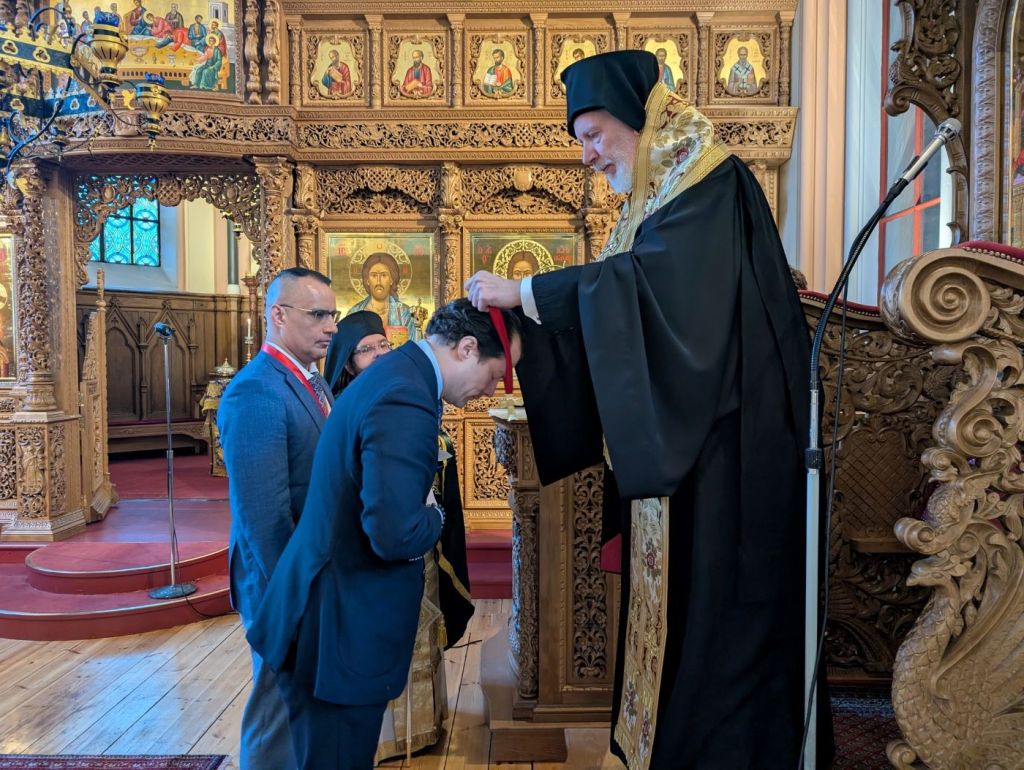
He offered him a Hierarchical medalion/Engolpion, as well as his latest study on the first Metropolitan of Sweden, the late Polyefktos.

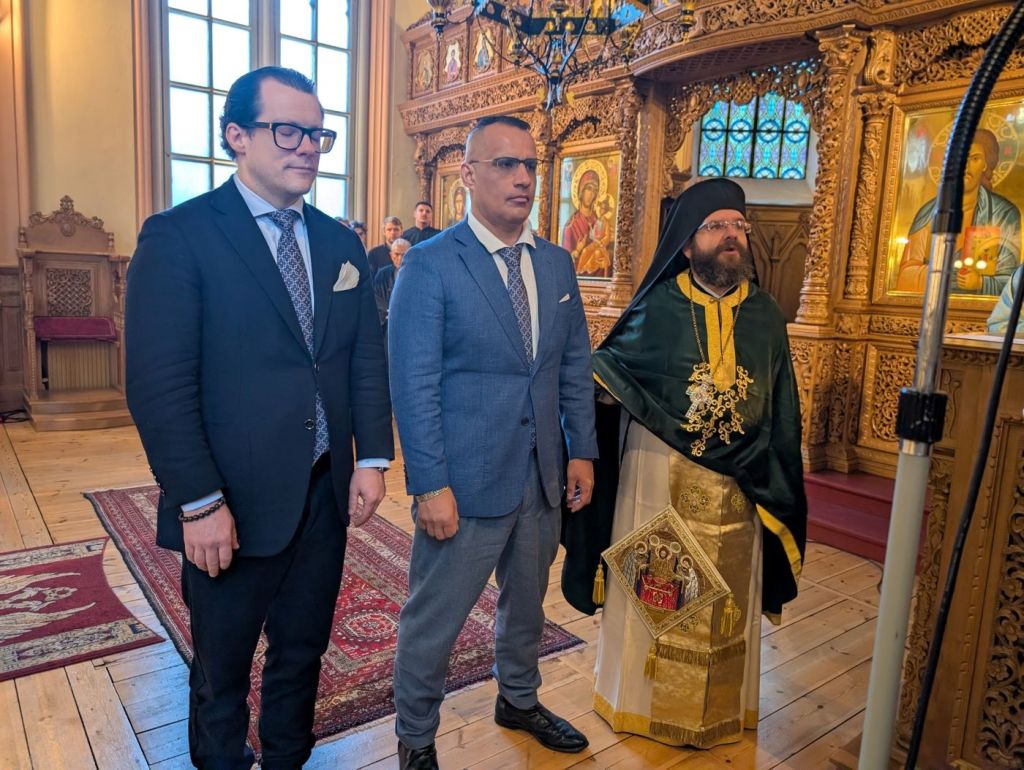
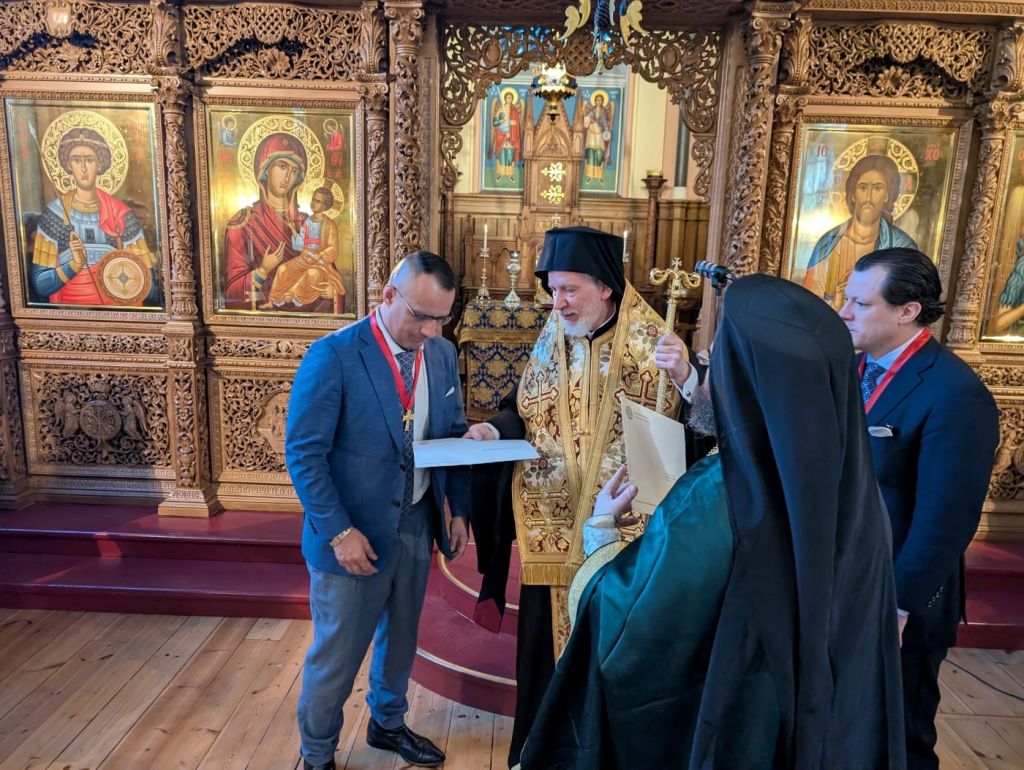
Then, Archbishop Elia thanked Metropolitan Cleopas for his generous hospitality and bestowed upon him the Cross of the Order of the Archdiocese of Finland, together with its accompanying insignia.

He also expressed his joy for the brotherly relations between the two Churches, for the benefit of the Mother Church of Constantinople. He spoke about the venerable Head of Orthodoxy, Ecumenical Patriarch Bartholomew, and expressed his admiration for the restoration work of the Cathedral, which he remembered from his student years.

In his address, delivered in Greek and English, Metropolitan Cleopas stated: “Today, in our worship Synaxis, we welcome His Eminence Archbishop Elia of Helsinki and All Finland, together with his companions, Father Mikael and Archdeacon Andreas, who have been in Stockholm since the day before yesterday on the occasion of the celebration of the Synaxis of the Saints of Karelia, who were honored yesterday in our Finnish Parish of Saint Nicholas.

Today we have the exceptional honor and blessing to welcome His Eminence with his esteemed Entourage for the second time, after the Patriarchal Chorostasia here of His All-Holiness Ecumenical Patriarch Bartholomew, on August 24th of this year, in order to reaffirm our fraternal relationship and to thank him, because he grants canonical permission to distinguished Clergy of his Archdiocese to visit and offer the Holy Sacraments to our Finnish Parish, for which we are deeply grateful for his unwavering support.

We wish you, Your Eminence, health, strength, and the abundant blessing of God in your Archpastoral ministry, and may you enjoy the fruits of your labors! Welcome!

Today we heard the Parable of the Rich Man and Poor Lazarus. It is not simply a narrative, but a calling; a signpost for our spiritual life.

In the parable, we discern the rich man who lives in luxury and self-indulgence, and Lazarus who is in poverty and pain, silent and patient, near the gate of the rich man.

The two figures represent two familiar ways of life. The rich man is not condemned because he possesses wealth, but because he does not see his brother, does not recognize his social responsibility, and does not glorify God through his blessings.

Lazarus, although poor, has a name: ‘Lazarus,’ which means ‘God is my help.’

The parable then moves to the afterlife. Lazarus is carried to the bosom of Abraham, while the rich man descends into Hades. The reversal is clear: our life on earth determines the soul’s condition after death. This is not merely a warning, but a call to transformation now.

Greed and avarice isolate the human being; covetousness becomes idolatry. Compassion toward our neighbor is an expression of faith.

Let us escape indifference and become active. Let us make the decision to show mercy, with our eyes fixed on the Lord, who loves the humble and justifies the repentant, so that when the day comes that we stand before Him, we may hear His blessed words: ‘Well done, good and faithful servant.’

Your Eminence,

Fr. Mikael & Archdeacon Andreas,

With profound reverence and sincere joy, we welcome You today at our Cathedral.

Your presence among us this day is not only a blessing, but also a visible sign of the living unity of the Church of Christ, which transcends boundaries of geography and culture, binding us together in one common faith, prayer, and Eucharist, under the Mother Church of Constantinople.

We express our profound gratitude for the consistent and generous support that the Autonomous Church of Finland provides to our beloved St. Nicholas Finnish Orthodox Parish of Stockholm.

The regular sending of clergy—who travel from Finland to Stockholm, to serve the Divine Liturgy, to offer the Holy Sacraments, to provide guidance, comfort, and encouragement—this is not a small gift. It is a sacrifice of time, energy, and resources.

Your Eminence, your concern for our pastoral life reflects the care of the Good Shepherd.

Today, your second official visit as Archbishop reminds us that we are not alone. We are part of the one Orthodox Church—united in faith, in prayer, in apostolic tradition.

At this point, please allow me to offer you these two small gifts; an engolpion & my latest book on the first Metropolitan of Sweden the late Polyefktos Finfinis.

May the grace of our Lord Jesus Christ be with you always and with your Esteemed Entourage, Fr. Mikael & Protodeacon Andreas. Thank you.”

After the conclusion of the Divine Liturgy, His Eminence Archbishop Elia, together with the clergy accompanying him, the President of the Finnish Parish of Saint Nicholas in Stockholm and the Director of the Parish Choir, Mr. Jukka Aminoff, the Chief Legal Adviser to the Holy Metropolis of Sweden Mr. Rafail Poumeyrau, Mr. and Mrs. Benedict Svendberg, and His Eminence Metropolitan Cleopas, attended a luncheon offered in honor of the visiting delegation by the Cathedral Philoptochos Ladies Society, under the gracious care of its President Mrs. Fotini Batsela, and Mrs. Tania Svendberg, held on the premises of the Museum of Hellenic-Christian Heritage, within the Cathedral grounds.

Thereafter, Metropolitan Cleopas accompanied Archbishop Elia and his honorable entourage to Stockholm’s Arlanda Airport, where he bid farewell to them, once again expressing his gratitude for their distinguished visit and for the reaffirmation of their mutual fraternal relations and fruitful cooperation.

Metropolis

Doxology Service for October 28th, 1940, National Celebration in Stockholm

On Sunday, October 26, 2025, His Eminence Metropolitan Cleopas of Sweden and All Scandinavia celebrated the Divine Liturgy at the Cathedral of Saint George in Stockholm, assisted by the Cathedral’s Pastor, the Very Reverend Archimandrite Bartholomew Iatridis.

Following the dismissal of the Divine Liturgy, a Doxology (Thanksgiving) Service was held, attended by Her Excellency Mrs. Aikaterini Fontoulaki, Ambassador of Greece to Sweden; the Presidents of the two Greek Schools of Stockholm, the Honorable Mr. Petros Anastasiadis and Mr. Fotis Panitsas; a large number of children; and a devout and enthusiastic congregation.

At the conclusion of the Doxology, Her Excellency the Ambassador read the message of the Deputy Minister of Foreign Affairs of Greece, responsible for Greeks Abroad, His Excellency Mr. Ioannis Michail Loverdos.

Metropolitan Cleopas then delivered an address appropriate to the occasion, speaking about the multiple meanings of the day and of the National Holiday. He congratulated those present, and particularly the children, who through their participation and traditional costumes conveyed the spirit and message of the double celebration. He offered special thanks to Mrs. Alexandra Zorpidou, who consistently takes care of the traditional attire of both young and old, as well as to the Lyceum of Greek Women of Stockholm.

His Eminence stated the following in his homily:

“Your Excellency Ambassador of Greece Ms. Fountoulaki,
Very Reverend Father Bartholomeos,
Honored Chanters,
Dearly beloved Brothers and Sisters in Christ,
Our beloved children,

Today’s Gospel reading presents the moving account of the healing of the demon-possessed man of Gadarens. Christ meets a man tormented and broken, who had lost both reason and peace. He lived in isolation among the tombs, without communion with others.

Yet in the midst of his despair, Christ approaches him with love. With a single word, He casts out the demons, and the man stands forth ‘clothed and in his right mind.’

This miracle reveals the profound theology of freedom, that Christ came into the world to liberate the human person not only from physical slavery, but above all from spiritual captivity.

The greatest bondage is not only external oppression, but the enslavement of the soul to passions, fear, and hopelessness.

The delivered man wishes to follow Christ, but the Lord tells him: ‘Return to your home and proclaim all that God has done for you.’ Preach salvation through your life itself. Thus, he becomes a newly-called disciple — a new missionary!

Within this message of spiritual freedom, our Holy Church also celebrates today the Anniversary of October 28, 1940. Then too, our nation confronted the most ruthless form of bondage — dark and inhuman.

The powers of that age sought to enslave a small country, to strip away its freedom, dignity, and soul. Yet just as Christ dispelled the darkness from the Gadarene, so too He illumined the heart of the Greek people, and the sacred word ‘NO’ (‘OXI’) resounded: the ‘NO’ of faith and freedom.

With a prayer on their lips, the Cross on their chest, and the flag in their hands, the Greeks stood upright in the face of the threat of darkness. They fashioned immortality out of sacrifice, ignoring the reckless, the cynical and the toxic, as well as the opportunists of their time. Faith in Christ preserved the nation’s freedom.

Today, many still suffer slavery — not with chains, but with addictions, sins, fears, and despair. Our age has many ‘Gadarenes’ — people without peace, without direction, without God.

Yet, every time a Greek struggles for what is just, stands with dignity amid trials, because that flame lives again.

In every field, Greeks continue to write history: In diplomacy and the arts, in culture and education, in scientific research and in athletics.

From Olympic stadiums to laboratories, the Greek spirit shines — in the leaps of Miltos Tentoglou, in the gold medal of Myriokephalitaki, in Paralympic champion Nasos Gavelas, in the world-champion Alexandris sisters, in Stefanos Douskos and Manolos Karalis, in Milena Kontou & Valia Lykomitrou, in Maria-Louiza Gika, and in Yiannis Poubouridis, European boxing champion; in the National Basketball Team with its Eurobasket bronze medal; in the scientists of Aristotle University of Thessaloniki who created the world’s fastest AI processor; and in the two 17-year-old Greek girls crowned champions in the Microsoft World Informatics Competition, Eleni Karakasidou and Argyro Petsa.

And for all who struggle passionately on the track of life, the Greek ideal of ‘noble striving’ lives and inspires.

Times may change, but one truth remains: Greece has never ceased to inspire. Small in size, yet immeasurable in the power of her soul.

Please allow me to conclude with the timely words spoken in this very Cathedral by His All-Holiness Ecumenical Patriarch Bartholomew, on August 21, 1993:

“When you left your ancestral homeland and journeyed to foreign lands, you crossed the borders of Greece — but you did not cross the borders of Hellenism nor of Orthodoxy. The Greek State has borders. Hellenism does not, just as culture and freedom have no borders. And Orthodoxy has no borders, just as love and truth have no borders. For this reason, although you may be far from Greece, you nevertheless continue to be a living part of Hellenism and of Orthodoxy, under the Ecumenical care of the centuries-old sacred institution of the Ecumenical Patriarchate.

Those Greek emigrants of antiquity were the first to spread Greek civilization far beyond metropolitan Greece. Later, through the conquests of Alexander the Great, this civilization was extended deep into the East, as far as the heart of Asia, and southward into the lands of Africa.

Rome also came to conquer Greece; yet, in the end, it was conquered by Greek civilization and became the vehicle for its spread to the lands of Western Europe. In this way, Greek civilization became universal, and the Greek language became the global means of communication among peoples.

Upon these foundations the modern European civilization was built. And for this reason, we see that most of the fundamental concepts of contemporary culture are expressed in European languages with Greek words, such as theology, philosophy, poetry, politics, economy, physics, mathematics.

Even the Swedish word for church, ‘Kyrka,’ derives from the Greek ‘Kyriakon,’ meaning ‘the House of the Lord.’

And even the two opposing concepts that dominate modern reality at the end of the twentieth century are expressed with Greek words: ‘technology’ and ‘ecology.’

Rejoice in the Lord, and ‘if it is possible, as far as it depends on you, live in peace with all people’ (Romans 12:18): live in peace with your fellow Greeks, live in peace with the other Orthodox and Christians in this Land, live in peace with all. And may our Patriarchal blessing and the grace of our Savior Jesus Christ be with you all, brethren and children.”

(Vasileios Th. Stavridis, Professor of the Holy Theological School of Halki, “The Patriarch in Sweden (August 20-24, 1993), History of the Church of Sweden, Ecumenical Patriarchate – Church of Sweden, Holy Metropolis of Sweden,” Epektasis Publications, pp. 59–65.)

Today, therefore, as we honor October 28th, the Holy Protection of the Theotokos, and Saint Demetrios the Myrrh-Bearer, let us bow our heads with reverence to the memory of those who sacrificed themselves — and let us look forward to a future that calls us to prove ourselves worthy of them.

Let us say our own ‘NO’ in our own time: No to indifference, No to violence, No to injustice. And let us say our own ‘YES’: Yes to knowledge, Yes to creativity, Yes to humanity.

For Hellenism is not only a history we read — it is a flame we carry in our hands.

Long live October 28th!

Long live our Nation!

Long live our Greek Diaspora in Scandinavia!

Congratulations to our children in their traditional costumes! May they always be blessed!”

After the service, the dignitaries and many parishioners gathered in the Cathedral’s adjoining Fellowship Hall, where coffee and refreshments were offered by the Cathedral’s Philoptochos Ladies Society.

During the fellowship hour, a conversation took place between His Eminence Metropolitan Cleopas and the Presidents of the two Greek Schools of Stockholm. His Eminence announced that within the week he would formally invite them to attend an upcoming Sunday Divine Liturgy, to address the congregation and present the history and work of their schools; thus expressing the unwavering support of our local Church for the Greek-educated youth of our Omogeneia/Greek Community at large, in Scandinavia, and our shared commitment to the preservation and promotion of our Greek-Orthodox heritage, culture and history.

Metropolis

Metropolitan Cleopas of Sweden’s Homily on St. Demetrios the Myrrh-Streamer, Sts. Demetrios and Nestor Parish, Örebro

Örebro, Saturday, October 25, 2025

Very Reverend and Rev. Fathers,

Dearly Beloved Brothers and Sisters in Christ,

Today, with reverence and great joy, we celebrate St. Demetrios of Thessaloniki, the glorious martyr and myrrh-streamer, whose steadfast faith continues to shine as a beacon of hope for the entire Church.

St. Demetrios was still a young man when he confessed Christ before the rulers of this world. His youth was not an obstacle but a strength — a heart aflame with pure devotion, unburdened by fear, focused on the Kingdom of God with the clarity that the Gospel brings.

The Church therefore honors him as a special guardian and protector of young people. Through his life we see that holiness is not the achievement of old age alone; sanctity applies to all age groups.

He could have chosen personal comfort, pursued worldly honor, or remained silent in order to save himself. But instead, he used his gifts and position to lift others up, to encourage the righteous, and to proclaim the truth even when it placed him in danger. He inspired the youth of Thessaloniki then — and continues to inspire young people today — to serve others, to protect those who are vulnerable, and to radiate Christ’s love in a world often filled with confusion and hardship.

His sacrifice — pierced by spears for the sake of the Gospel — reveals a vision not limited by earthly life, but filled with eternal purpose. More than seventeen centuries have passed since his martyrdom, yet his memory is alive because true love never fades, and true faith never dies.

His holy myrrh, which has flowed from his relics through the ages, reminds us that God glorifies those whose hearts are steadfast in love.

St. John Chrysostom calls the martyrs “friends of Christ,” who follow Him faithfully even unto death.

St. Basil the Great teaches us that the martyrs “prefer virtue to life and death to sin,” a truth we see embodied in St. Demetrios.

St. Gregory Palamas praises him as “the mighty defender of Thessaloniki and an unshakable tower for the faithful.”

Young and old alike — let us look to St. Demetrios and allow his example to give shape and direction to our own calling: to be courageous in faith, committed to service, filled with compassion, and unashamed to proclaim Christ in our lives.

May the youth of our parish especially find in him a true friend and heavenly protector — someone who understands their struggles and calls them to greatness, rooted in Christ’s love.

As we honor St. Demetrios today, we also express heartfelt gratitude to our beloved pastor, the Rev. Oikonomos Fr. George Arvanitidis, who guides this flock with faithfulness, and genuine love. Father, we thank you for your dedicated ministry to Christ’s Holy Church and for nurturing our spiritual growth. May the Lord grant you many blessed years and continue to strengthen you in every good work.

To the faithful of this parish and to those who have traveled from other cities and Oslo, to share in this celebration, your presence is a treasured gift. Thank you for honoring St. Demetrios and for uniting your prayers with ours as one family of Christ across distances and nations. Amen!