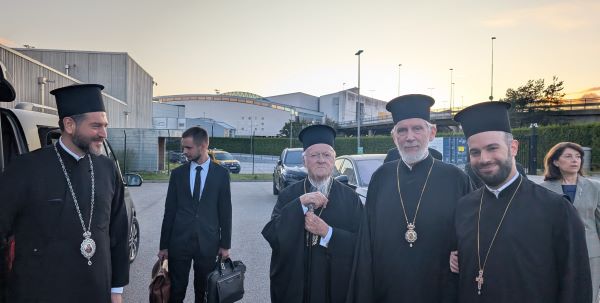
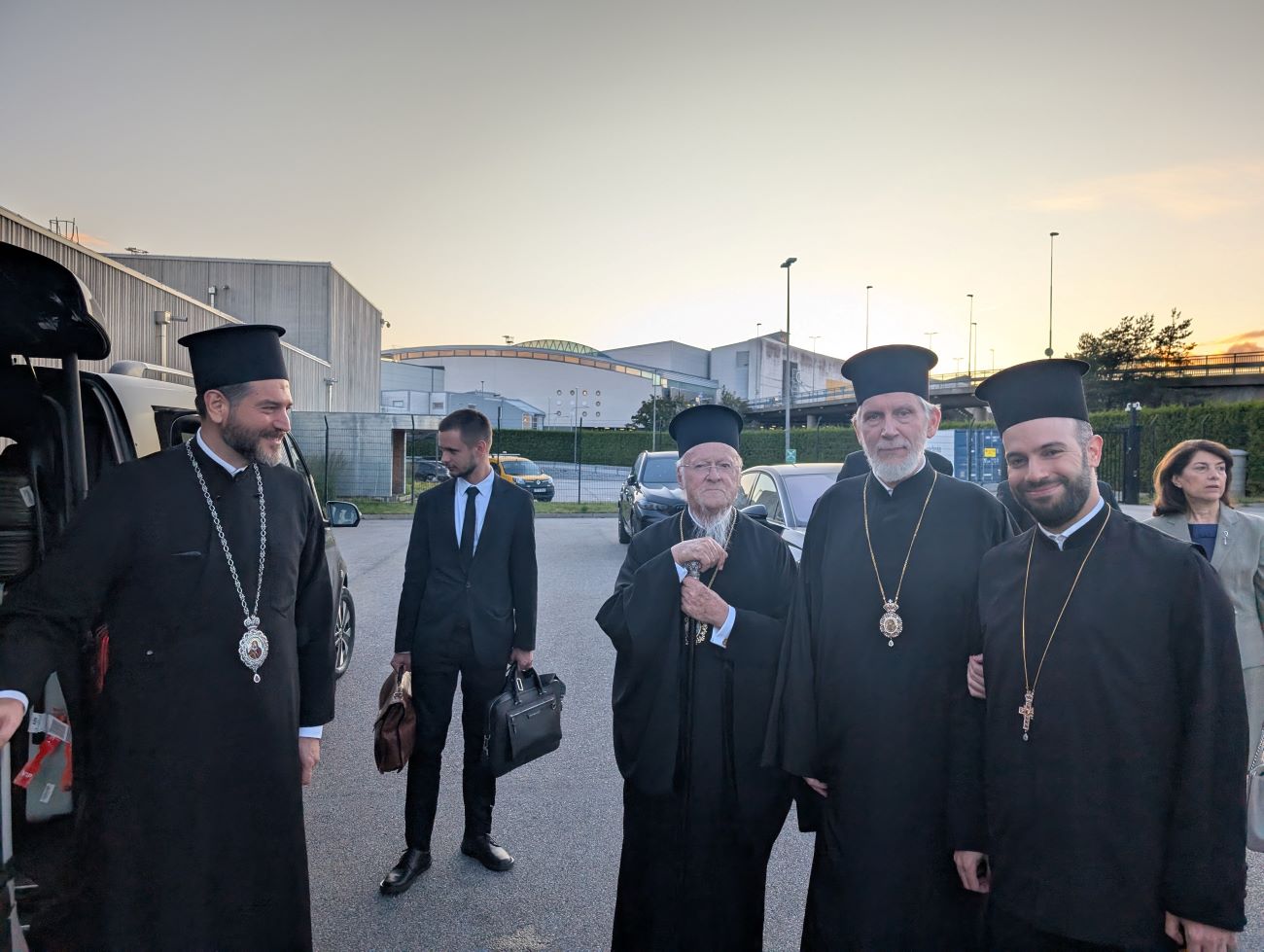
Η Α. Θ. Παναγιότης, ο Οικουμενικός Πατριάρχης κ.κ. Βαρθολομαίος, συνοδευόμενος από τα Μέλη της Συνοδείας του, Σεβ. Μητροπολίτη Νέας Ιερσέης κ. Απόστολο, Πανοσιολ. Μ. Εκκλησιάρχη κ. Αέτιο, και τον Πανοσιολ. Διάκονο κ. Επιφάνιο και τον οικείο Μητροπολίτη Σουηδίας και πάσης Σκανδιναυΐας, Σεβ. κ. Κλεόπα, και εκκίνησε την δευτέρα ημέρα της υψηλής Αυτού επισκέψεως στην Στοκχόλμη, επισκεφθείς την πρωΐα της 22 Αυγούστου 2025, τον Εξοχώτατο Υπουργό κ. Jakob Forssmed, αρμόδιο για τις θρησκευτικές κοινότητες στην Σουηδία, μετά του οποίου είχε ωριαία συζήτηση.
Στην συνέχεια, παρεκάθησε σε γεύμα, το οποίο παρέθεσε προς τιμήν Του, σε εστιατόριο της πόλεως, ο εθελοντής επικεφαλής της νομικής υπηρεσίας της Ι. Μητροπόλεως Σουηδίας, κ. Ραφαήλ Poumeyrau.
Κατόπιν, άπαντες μετέβησαν στον Λουθηρανικό Ναό της Στοκχόλμης Filadelfiakyrkan, όπου ο Οικουμενικός Πατριάρχης ωμίλησε καταλλήλως, όπως και παρευρεθέντες εκπρόσωποι ετέρων Χριστιανικών Δογμάτων και Ομολογιών, με αφορμή τον εορτασμό της Οικουμενικής Εβδομάδος.
Μετά ταύτα και στα πλαίσια των εν λόγω εορτασμών, η Α. Θ. Παναγιότης, μετά της Συνοδείας Αυτής, παρηκολούθησαν σειρά ομιλιών και εκδηλώσεων στο Grunewald Hall, Stockholm Concert Hall.
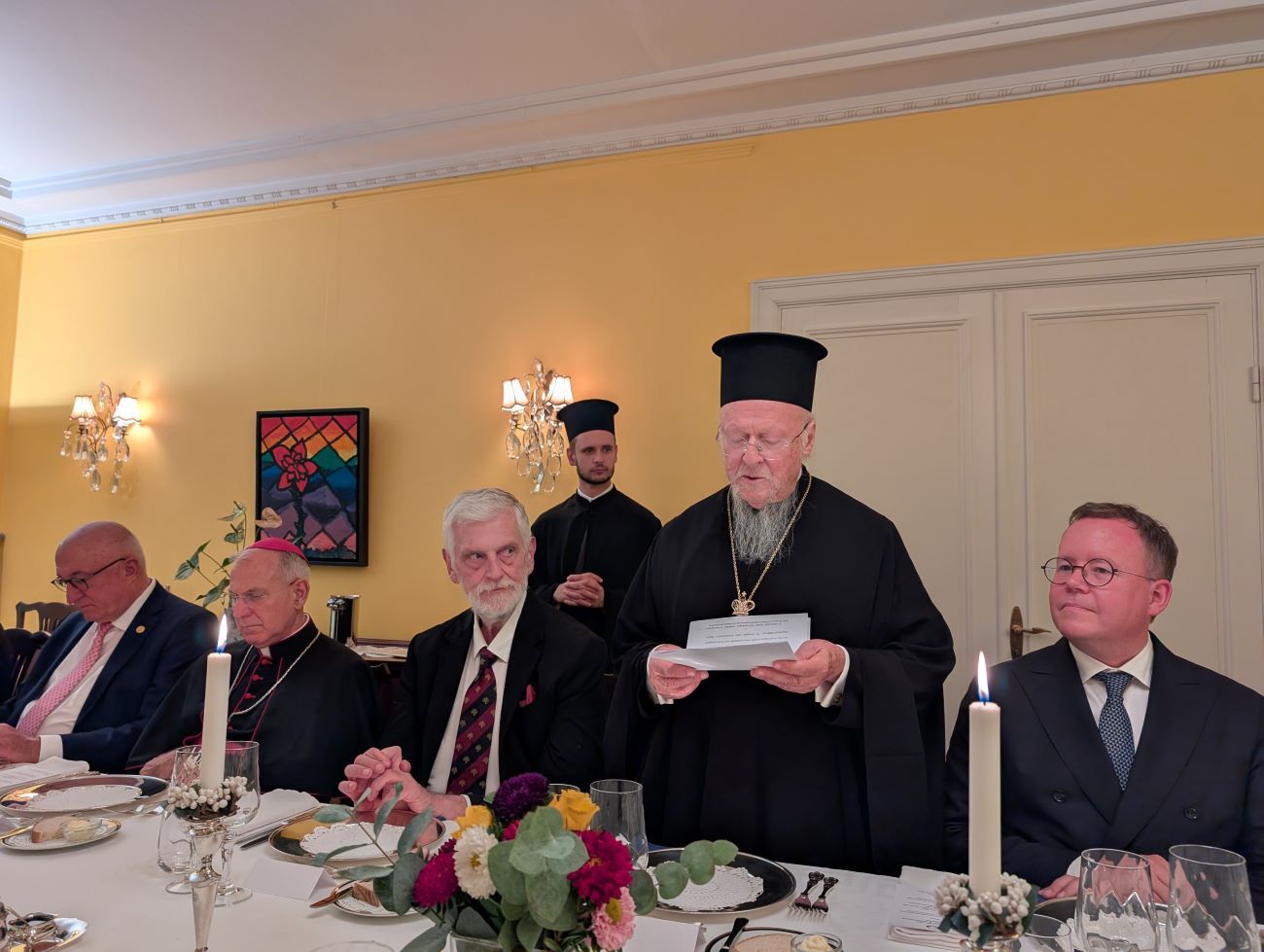
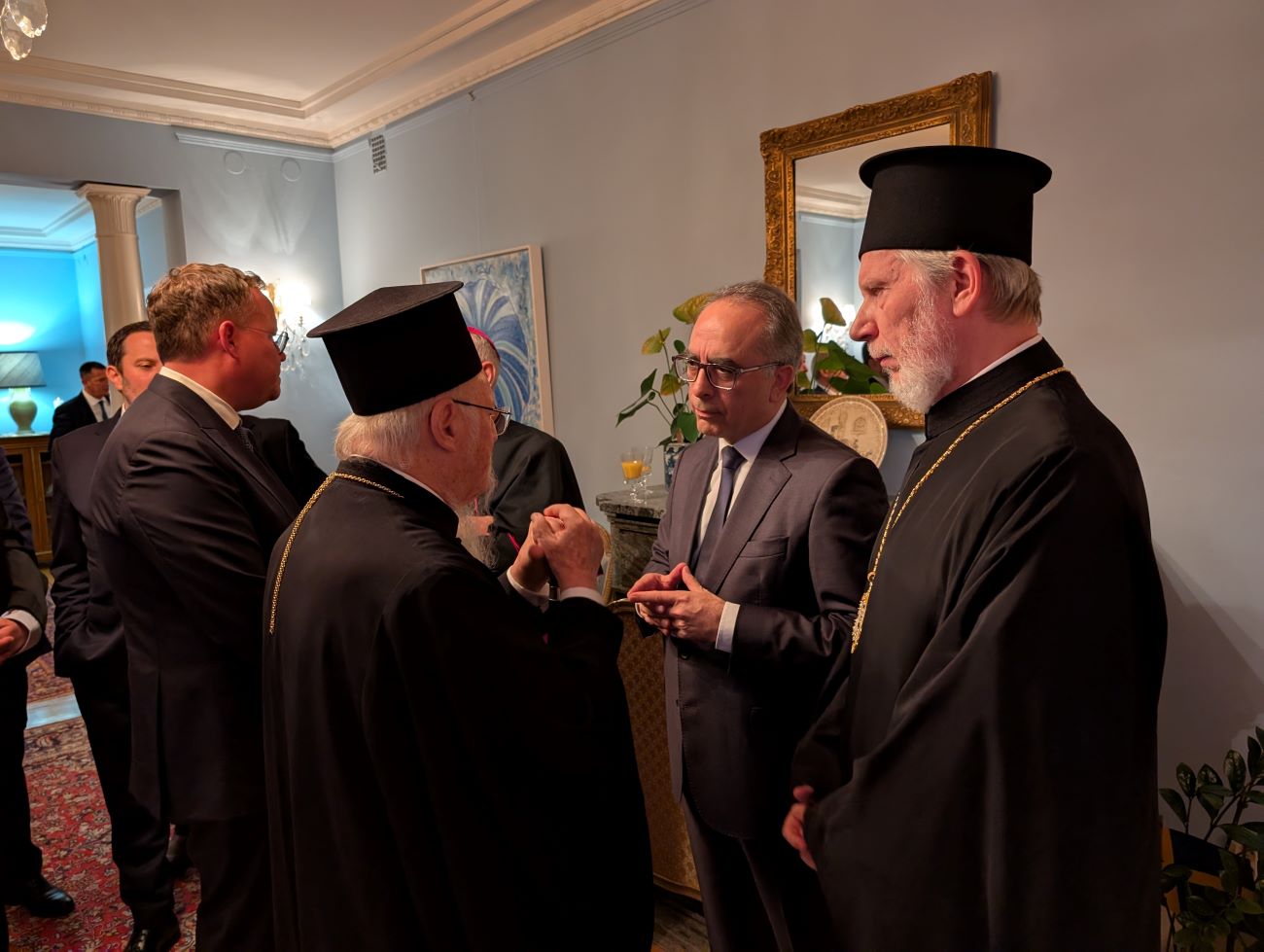
Η ημέρα κατέκλεισε, με το παρατεθέν γεύμα προς τιμήν της Σεπτής της Ορθοδοξίας Κορυφής, υπό της Εξοχ. Ελληνίδος Πρέσβεως, κ. Αικατερίνης Φουντουλάκη, στην Πρεσβευτική Κατοικία, στην Στοκχόλμη.
The Holy Metropolis of Sweden and All Scandinavia and its Shepherd, His Eminence Metropolitan Cleopas, welcomed His All-Holiness, Ecumenical Patriarch Bartholomew, yesterday afternoon, Thursday, August 21, 2025, at Arlanda Airport in Stockholm.
Responding to the kind invitation of His Eminence Archbishop Martin Modéus of Uppsala and Primate of the Lutheran Church of Sweden, as well as that of His Eminence Metropolitan Cleopas, Shepherd of the Scandinavian countries, His All-Holiness will honor with his esteemed presence the events organized for the Ecumenical Week.
The Ecumenical Patriarch will be a keynote speaker at three major events of the Lutheran Church. During His stay, He will also have the opportunity to offer His blessing at the official dinner and luncheons held in His honor by the Holy Metropolis.
Furthermore, He is scheduled to meet with representatives of the Swedish State Leadership, delegates from other Christian Denominations and Confessions, and to give His paternal blessing to the clergy and faithful of the Mother Church’s flock in Scandinavia.
It is noteworthy that this marks the third time during the tenure of His Eminence Metropolitan Cleopas that the venerable Head of Orthodoxy visits the Holy Metropolis of Sweden.
The first Visit occurred in 2017, when, for the first time, an Ecumenical Patriarch visited Iceland, served as the keynote speaker at an environmental conference, and blessed the establishment of the local parish in honor of the Apostle Bartholomew.
The second Visit took place in 2019, when His All-Holiness visited Stockholm and blessed the commencement of the external restoration works of the St. George Cathedral, on the occasion of the 50th anniversary of the founding of the Holy Metropolis of Sweden.
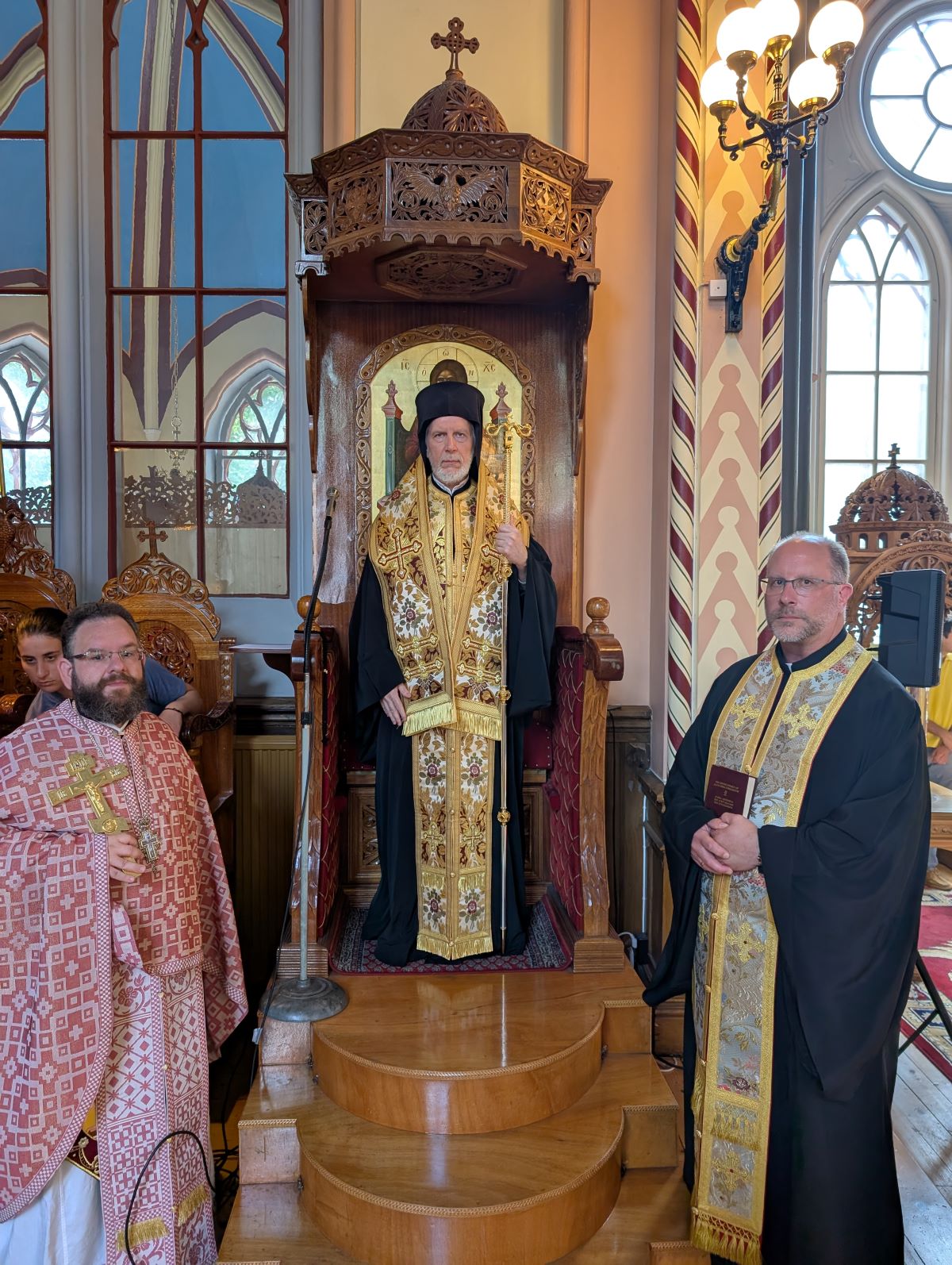
The current, third Visit will culminate on Sunday, August 24, 2025, with the Thyranoixia Service of the Saint George Cathedral of Stockholm, marking the completion of its internal restoration. His All-Holiness will then preside over the Divine Liturgy in Chorostasia.
Our prayer is that the Lord grant many years to the Ecumenical Patriarch, the Spiritual Father of millions of Orthodox faithful around the world, and bless Him with health and strength to continue fulfilling His manifold duties, bestowing His blessing for the progress of the scattered children of the Mother Church and for peace throughout the world!
Η Ι. Μητρόπολις Σουηδίας και πάσης Σκανδιναυΐας και ο Ποιμενάρχης αυτής, Σεβ. Μητροπολίτης κ. Κλεόπας υπεδέχθησαν την Α. Θ. Παναγιότητα, τον Οικουμενικό Πατριάρχη κ. κ. Βαρθολομαίο, χθες το απόγευμα, Πέμπτη, 21 Αυγούστου 20205, στο Αεροδρόμιο Arlanda της Στοκχόλμης, ο Οποίος, ανταποκρινόμενος στην ευγενική πρόσκληση του Σεβ. Αρχιεπισκόπου Ουψάλης και Πριμάτου Σουηδίας της Λουθηρανικής Εκκλησίας κ. Martin Modéus και του Ποιμενάρχου των Σκανδιναυϊκών Χωρών Σεβ. κ. Κλεόπα, θα τιμήσει με την υψηλή Αυτού παρουσία τις διοργανούμενες εκδηλώσεις για την Οικουμενική Εβδομάδα.
Ο Παναγιώτατος Οικουμενικός Πατριάρχης θα είναι ομιλητής σε τρεις κεντρικές εκδηλώσεις της Λουθηρανικής Εκκλησίας, ενώ κατά την παραμονή Του θα έχει την ευκαιρία να ευλογήσει τα προς τιμήν Του παρατεθησόμενα από την Ιερά Μητρόπολη δείπνο και γεύματα, ενώ πρόκειται να συναντηθεί με εκπροσώπους της Σουηδικής Πολιτειακής Ηγεσίας, εκπροσώπους ετέρων Χριστιανικών Δογμάτων και Ομολογιών και φυσικά να συναναστραφεί και να ευλογήσει πατρικώς τον Ιερό Κλήρο και το λαό του ποιμνίου της Μητρός Εκκλησίας στην Σκανδιναυΐα.
Να σημειωθεί, ότι είναι η τρίτη κατά σειρά φορά, επί των ημερών της Αρχιερατείας του Σεβ. Μητροπολίτου κ. Κλεόπα, που η Σεπτή της Ορθοδοξίας Κορυφή επισκέπτεται την Ιερά Μητρόπολη Σουηδίας.
Η πρώτη φορά ήταν το έτος 2017, όταν για πρώτη φορά Οικουμενικός Πατριάρχης επισκέφθηκε την Ισλανδία, ήταν κεντρικός ομιλητής συνεδρίου για το περιβάλλον και ευλόγησε την ίδρυση της εκεί ενορίας προς τιμήν του Αποστόλου Βαρθολομαίου.
Η δεύτερη φορά ήταν κατά το έτος 2019, όταν επισκέφθηκε την Στοκχόλμη και ευλόγησε την έναρξη των εξωτερικών εργασιών αποκαταστάσεως του Καθεδρικού Ναού Αγίου Γεωργίου Στοκχόλμης, επ᾽ ευκαιρία των εορτασμών της 50ετηρίδος από της ιδρύσεως της Ιεράς Μητροπόλεως Σουηδίας, και η τρίτη φορά είναι η παρούσα, οπότε την Κυριακή, 24 Αυγούστου 2025, θα τελέσει την ακολουθία των Θυρανοιξίων του Καθεδρικού Ναού Αγίου Γεωργίου Στοκχόλμης, επί τη αποπερατώσει των εργασιών εσωτερικής αποκαταστάσεως αυτού, και θα χοροστατήσει στην Θεία Λειτουργία.
Προσευχή όλων είναι, ο Κύριος να πολυχρονίζει τον Οικουμενικό Πατριάρχη, τον Πνευματικό Πατέρα εκατομμυρίων Ορθοδόξων ανά τον κόσμο, και να του χαρίζει υγεία και δύναμη, για να ανταποκρίνεται στα πολυεύθυνα και πολυσχιδή καθήκοντά Του και να επιδαψιλεύει την ευλογία Του, για την προκοπή των διεσπαρμένων τέκνων της Μητρός Εκκλησίας και την ειρήνη σε όλο τον κόσμο!
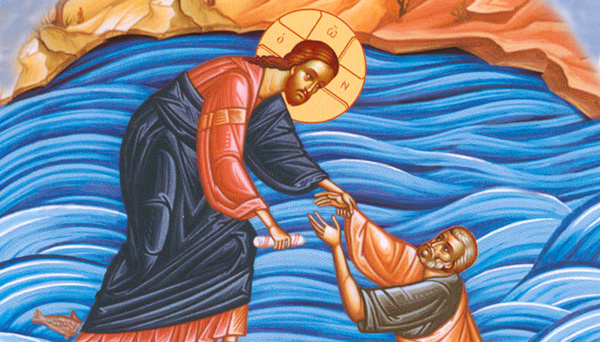
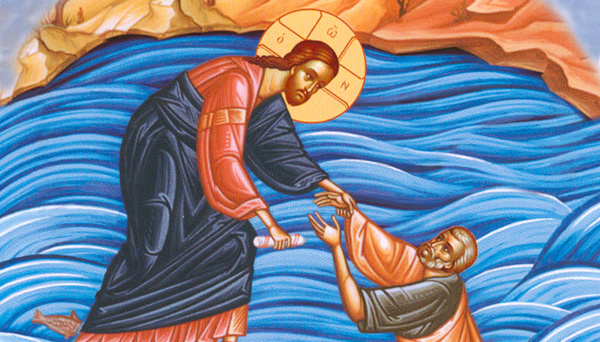
Today, the Holy Gospel presents us with a powerful, symbolic event: our Lord walking on the sea, and His saving of the Apostle Peter who, though bold in faith at first, began to sink in doubt.
We begin with Christ sending His disciples away in a boat, while He goes up the mountain alone to pray. Saint John Chrysostom teaches that this reveals Christ’s humanity and divinity. As man, He prays. As God, He will soon walk upon the sea.
Spiritually, the boat represents the Church, and the sea, this troubled world. Christ’s physical absence from the boat reminds us of times when we feel distant from God—yet He is never far from us.
The disciples are caught in a storm. The Fathers interpret this storm as a symbol of the temptations and trials of life. The boat is “beaten by the waves,” just as we are often shaken by anxiety, suffering, and sin.
But in the fourth watch of the night—the darkest hour—Christ comes to them. According to Saint Gregory of Nyssa, this shows that God often allows difficulties to persist for a time, so that our faith may be tested and refined, but He never abandons us.
When the disciples see Him, they are terrified, thinking it is a ghost. Christ reassures them with the words, “Do not be afraid.”
Then comes the remarkable moment when Peter says, “Lord, if it is You, command me to come to You on the water.” Christ says, “Come.”
Saint John Chrysostom praises Peter’s zeal, but also notes that his faith was mixed with doubt. As long as Peter looks toward Christ, he walks upon the waves. But when he sees the wind, he begins to sink.
Saint Theophylact explains that Peter symbolizes each one of us. We step out in faith, but when we turn our eyes away from Christ and focus instead on the winds—the dangers, the distractions, the fears—we begin to sink. Yet even in that moment of weakness, Peter cries out, “Lord, save me!” And immediately, Jesus stretches out His hand and catches him.
Let us learn from this: Christ does not abandon us because of our weak faith. He is ready to save us the moment we call upon Him with humility.
Christ’s gentle rebuke is a call to deeper faith. Saint John of Damascus reminds us that faith is not merely belief—it is absolute trust in God’s presence and power, even when the storm rages around us.
Peter’s sinking did not end in death—it ended in being raised up by the hand of Christ. After entering the boat, the storm ceases, and the disciples fall down and worship Christ, saying, “Truly You are the Son of God.”
This is the proper response to the saving presence of Christ: worship and confession.
The sea of life is full of storms. Fear, suffering, and temptation threaten us, and at times we, like Peter, begin to sink, but Christ walks upon the waters of chaos. He comes to us in our darkest hour, and He reaches out His hand when we call to Him with faith.
May we always remain in the boat of the Church, and may the Lord, who calms every storm, grant us His peace and lead us to safe harbor in His Kingdom. Amen!
Πανοσιολογιώτατε, Μουσικολογιώτατοι, Αγαπητοί μου Αδελφοί, Αγαπημένα μας παιδιά,
Η σημερινή ευαγγελική περικοπή μάς παρουσιάζει ένα συγκλονιστικό γεγονός. Τον Κύριο να περπατά επάνω στα κύματα, τους μαθητές να ταράσσονται, τον Πέτρο να ζητά να Τον πλησιάσει, και εν τέλει να σώζεται από το χέρι του Κυρίου, όταν αρχίζει να βυθίζεται.
Η περικοπή ξεκινά με την φράση: «Ἀνάγκασεν ὁ Ἰησοῦς τοὺς μαθητὰς ἐμβῆναι εἰς τὸ πλοῖον» (Ματθ. 14,22). Ο Χριστός φαίνεται να απομακρύνει τους μαθητές Του και να τους αφήνει στην δοκιμασία.
Ο Άγιος Ιωάννης ο Χρυσόστομος εξηγεί: «Ἀναγκάζει αὐτοὺς νὰ ἀπομακρυνθοῦν, ὅχι διότι ἤθελε νὰ τοὺς ἀπομακρύνει ἀπό τὴν παρουσία Του, ἀλλὰ διότι ἤθελε νὰ τοὺς παιδαγωγήσει στήν πίστη διὰ τῆς δοκιμασίας».
Το πλοίο συμβολίζει την Εκκλησία, αλλά και την ψυχή του κάθε πιστού. Ο άνεμος είναι οι θλίψεις και οι πειρασμοί του βίου. Ο Άγιος Κύριλλος Αλεξανδρείας σχολιάζει: «Ὅταν ἐπιτρέπεται θλίψις εἰς τοὺς πιστούς, οὐκ ἀπουσιάζει ἡ θεία πρόνοια, ἀλλ’ ἐνεργεῖ ἐν τῷ κρυπτῷ πρὸς τὸ συμφέρον».
Η θάλασσα φουρτουνιάζει, αλλά δεν βυθίζεται το πλοίο, γιατί ο Κύριος είναι έτοιμος να επέμβει την κατάλληλη στιγμή. Ο Πέτρος, με πίστη, ζητά το ακατόρθωτο: «Κύριε, εἰ σὺ εἶ, κέλευσόν με ἐλθεῖν πρὸς σὲ ἐπὶ τὰ ὕδατα» κι ο Χριστός του απαντά: «Ἐλθέ». Η φράση αυτή, σχολιάζει ο Άγιος Ιωάννης ο Χρυσόστομος, αποκαλύπτει την θεία προτροπή: «Ὁ Κύριος, μολονότι γνώριζε τὸν φόβο τοῦ Πέτρου, δὲν ἀρνεῖται νὰ τὸν προσκαλέσει. Ἐπιθυμεῖ νὰ τὸν διδάξει διὰ τῆς ἐμπειρίας».
Ο Πέτρος βαδίζει πάνω στο νερό. Όσο το βλέμμα του είναι στραμμένο στον Χριστό, νικά την φύση. Όταν στρέφεται στον άνεμο, όταν κοιτάζει τον κίνδυνο και όχι τον Σωτήρα, βυθίζεται.
Ο Πέτρος φοβάται κι αμέσως βυθίζεται, αλλά δεν μένει στην σιωπή. Φωνάζει: «Κύριε, σῶσόν με». Αυτή η φράση γίνεται προσευχή σωτηρίας, που κινεί το έλεος του Θεού. Ο Χριστός αμέσως εκτείνει την χείρα Του και λέγει: «Ὀλιγόπιστε, εἰς τί ἐδίστασας;», όχι για να κατηγορήσει, αλλά για να διδάξει.
Όταν ο Χριστός μπαίνει στο πλοίο, η θάλασσα γαληνεύει. Ο Άγιος Γρηγόριος ο Παλαμάς σημειώνει σχετικά: «ἡ ψυχὴ τοῦ ἀνθρώπου, ὅταν ὑποδεχθῇ τὸν Χριστὸν ἐντός της, ἡρεμεῖ, ὅπως ἡ θάλασσα, ὅτε ἀνέβη εἰς τὸ πλοῖον».
Η παρουσία του Χριστού ειρηνεύει την ψυχή, κατευνάζει τα πάθη, παύει τον φόβο. Οι μαθητές Τον προσκυνούν, λέγοντας: «Ἀληθῶς Θεοῦ Υἱὸς εἶ».
Η ζωή του χριστιανού είναι ταξίδι μέσα σε θάλασσα ταραγμένη, αλλά το βλέμμα μας στον Χριστό είναι η σωτηρία μας. Ας μη νικηθούμε από τον φόβο. Κι αν κάποια στιγμή κλονισθούμε, ας μην διστάσουμε, να φωνάξουμε, με συντριβή: «Κύριε, σῶσόν με» και θα Τον δούμε, να απλώνει και σε εμάς το χέρι Του. Αμήν!
Today, the Holy Gospel presents us with one of the most beloved miracles of our Lord; the feeding of the five thousand (Matthew 14:14–22). This is a story of physical nourishment, and divine revelation of God’s love and providence.
As St. John Chrysostom notes, the miracle begins not with bread, but with compassion. “He saw a great multitude, and was moved with compassion towards them, and He healed their sick.”
Before any physical need is met, the Lord tends to the suffering of the soul and body. His mercy acts and heals. Christ does not simply give bread; He gives Himself.
The disciples come to Christ with the problem, saying that the people are hungry, but Jesus responds, “You give them something to eat.” Here, the Lord invites human participation in divine work. He does not need the loaves and fish, yet He chooses to utilize us.
As St. Cyril of Alexandria teaches us, “our five loaves may seem insignificant, but in the hands of Christ, they become abundance.” When we offer Him what little we have; our time, our talents, our repentance, He transforms them all.
The miracle is not just about satisfying physical hunger; it is also a divine sign pointing us to the Bread of Life; Christ Himself. The Church is the green pasture where the multitudes sit and are fed; not with five loaves, but with the Incarnate Word Himself.
“And they took up what was left over; twelve baskets full.” God’s blessings are abundant and overflowing, yet never wasted. The twelve baskets remind us of the Twelve Apostles and the missionary ministry of the Church; to gather, preserve, and distribute the grace of Christ to the ends of the earth.
Let us then learn from today’s Gospel, to trust in God’s provision, to bring our needs to Christ, but also to be ready to serve, to recognize the Holy Eucharist as the ultimate fulfillment of all hunger, and to never forget that what we offer to Christ, He transforms beyond measure. Amen!
Να τί μάς διδάσκει ο Άγιος Κύριλλος Αλεξανδρείας: «Με το θαύμα αυτό, ο Χριστός προεικονίζει την Θεία Ευχαριστία: Μοιράζει ευλογημένο άρτο, όχι για να τραφεί μόνο το σώμα, αλλά να φωτιστεί και η ψυχή».
Το θαύμα της χορτοστασίας είναι προτύπωση του Μυστηρίου της Θείας Κοινωνίας. Ο άρτος που δίδει ο Χριστός δεν είναι μόνο για τον βιολογικό χορτασμό, αλλά και για τον αιώνιο!
Οι μαθητές λένε: «ἀπόλυσον τοὺς ὄχλους» κι ο Κύριος τους απαντά: «οὐ χρείαν ἔχουσιν ἀπελθεῖν· δότε αὐτοῖς ὑμεῖς φαγεῖν».
Ο Θεός δεν απορρίπτει ποτέ τον άνθρωπο. Εκείνοι που πλησιάζουν με πίστη, δεν φεύγουν πεινασμένοι.
Ο Άγιος Νικόλαος Βελιμίροβιτς σχολιάζει ότι, «Ο Χριστός δεν στέλνει ποτέ τον λαό Του μακριά νηστικό. Μόνο εμείς Τον απομακρύνουμε, με την απιστία μας»!
Ο Κύριος τους λέει: «Δώστε εσείς». Τους καλεί σε συνεργασία. Το θαύμα ξεκινά με την διαθεσιμότητα και την υπακοή των μαθητών, έτσι και η Εκκλησία, καλείται να τρέφει τον κόσμο με ελεημοσύνη, με λόγο, με την Χάρη των Ιερών Μυστηρίων.
Το σημερινό Ευαγγελικό ανάγνωσμα μάς καλεί να προσφέρουμε στον Χριστό ό,τι έχουμε, έστω και λίγο, αλλά με πίστη. Να μην θεωρούμε ότι κάτι είναι ακατόρθωτο, όταν ο Χριστός είναι παρών. Να μην διώχνουμε ποτέ κανέναν από την Εκκλησία, όσο «πεινασμένος» κι αν είναι, υλικώς ή πνευματικώς.
Επίσης, να προετοιμαστούμε να λάβουμε, όχι μόνο «τόν ἂρτον τόν ἐπιούσιον», αλλά τον ίδιο τον Χριστό, μέσα στην Θεία Ευχαριστία, αφού ο ίδιος ο Κύριος είπε ότι, «Ἐγώ εἰμι ὁ ἄρτος τῆς ζωῆς· ὁ ἐρχόμενος πρός με οὐ μὴ πεινάσῃ» (Ιω. 6,35).
Πανοσιολογιώτατε, Μουσικολογιώτατοι, Αγαπητοί μου Αδελφοί, Αγαπημένα μας παιδιά,
Η σημερινή Ευαγγελική περικοπή μάς υπενθυμίζει το θαύμα του πολλαπλασιασμού των πέντε άρτων και των δύο ιχθύων. «Καὶ ἐξελθὼν ὁ Ἰησοῦς εἶδε πολὺν ὄχλον, καὶ ἐσπλαγχνίσθη ἐπ᾽ αὐτοῖς καὶ ἐθεράπευσε τοὺς ἀρρώστους αὐτῶν» (Ματθ. 14,14).
Ο Κύριος δεν βλέπει απλώς ανθρώπους. Βλέπει πρόσωπα, ανάγκες, πόνους. Η πρώτη Του αντίδραση είναι η σπλαχνική Του καρδιά, όχι η απόσταση, δεν είναι η κρίση, αλλά η ευσπλαχνία!
Ο Άγιος Ιωάννης ο Χρυσόστομος σημειώνει χαρακτηριστικά: «Δεν περιμένει να Του ζητήσουν βοήθεια, αλλά μόνος Του προλαβαίνει τις ανάγκες τους, γιατί είναι φυσικό στον Θεό να σπλαχνίζεται».
Η ευσπλαγχνία Του γίνεται ενεργός αγάπη. Δεν περιορίζεται σε συναισθηματική συγκίνηση, αλλά θεραπεύει και αγκαλιάζει.
Οι μαθητές, βλέποντας τον όχλο και την ερημιά, λένε στον Χριστό: «Ἀπόλυσον τοὺς ὄχλους…» (στίχ. 15). Πολλές φορές η λογική μάς προτείνει λύσεις χωρίς πίστη. Βλέπουμε τα λίγα και πιστεύουμε ότι δεν φτάνουν. Ξεχνούμε, όμως, ποιός στέκεται ανάμεσά μας, ο Δημιουργός και Θεός μας!
Ο Μέγας Βασίλειος σχολιάζει σχετικώς: «Ο Θεός δεν ζητά να Του φέρεις το πολύ, αλλά να Του δώσεις το λίγο που έχεις, με πίστη».
Ο Κύριος δεν απορρίπτει το φτωχικώς προσφερόμενο, αλλά το ευλογεί και το αυξάνει, αυτούς τους «πέντε ἄρτους καὶ τούς δύο ἰχθύας». Και όμως χορταίνουν χιλιάδες. Ο Χριστός δεν πολλαπλασιάζει μόνο την τροφή, αλλά και την ελπίδα.
Να τί μάς διδάσκει ο Άγιος Κύριλλος Αλεξανδρείας: «Με το θαύμα αυτό, ο Χριστός προεικονίζει την Θεία Ευχαριστία: Μοιράζει ευλογημένο άρτο, όχι για να τραφεί μόνο το σώμα, αλλά να φωτιστεί και η ψυχή».
Το θαύμα της χορτοστασίας είναι προτύπωση του Μυστηρίου της Θείας Κοινωνίας. Ο άρτος που δίδει ο Χριστός δεν είναι μόνο για τον βιολογικό χορτασμό, αλλά και για τον αιώνιο!
Οι μαθητές λένε: «ἀπόλυσον τοὺς ὄχλους» κι ο Κύριος τους απαντά: «οὐ χρείαν ἔχουσιν ἀπελθεῖν· δότε αὐτοῖς ὑμεῖς φαγεῖν».
Ο Θεός δεν απορρίπτει ποτέ τον άνθρωπο. Εκείνοι που πλησιάζουν με πίστη, δεν φεύγουν πεινασμένοι.
Ο Άγιος Νικόλαος Βελιμίροβιτς σχολιάζει ότι, «Ο Χριστός δεν στέλνει ποτέ τον λαό Του μακριά νηστικό. Μόνο εμείς Τον απομακρύνουμε, με την απιστία μας»!
Ο Κύριος τους λέει: «Δώστε εσείς». Τους καλεί σε συνεργασία. Το θαύμα ξεκινά με την διαθεσιμότητα και την υπακοή των μαθητών, έτσι και η Εκκλησία, καλείται να τρέφει τον κόσμο με ελεημοσύνη, με λόγο, με την Χάρη των Ιερών Μυστηρίων.
Το σημερινό Ευαγγελικό ανάγνωσμα μάς καλεί να προσφέρουμε στον Χριστό ό,τι έχουμε, έστω και λίγο, αλλά με πίστη. Να μην θεωρούμε ότι κάτι είναι ακατόρθωτο, όταν ο Χριστός είναι παρών. Να μην διώχνουμε ποτέ κανέναν από την Εκκλησία, όσο «πεινασμένος» κι αν είναι, υλικώς ή πνευματικώς.
Επίσης, να προετοιμαστούμε να λάβουμε, όχι μόνο «τόν ἂρτον τόν ἐπιούσιον», αλλά τον ίδιο τον Χριστό, μέσα στην Θεία Ευχαριστία, αφού ο ίδιος ο Κύριος είπε ότι, «Ἐγώ εἰμι ὁ ἄρτος τῆς ζωῆς· ὁ ἐρχόμενος πρός με οὐ μὴ πεινάσῃ» (Ιω. 6,35).
On Sunday, August 24, 2025, at 9 a.m., His All-Holiness Ecumenical Patriarch Bartholomew will preside over the Thyranoixia Service, at the St. George Cathedral (Birger Jarlsgatan 92, 11420 Stockholm), on its complete renovation.
Come, let us welcome together the Venerable Head of Orthodoxy, and receive His Patriarchal blessings in person.
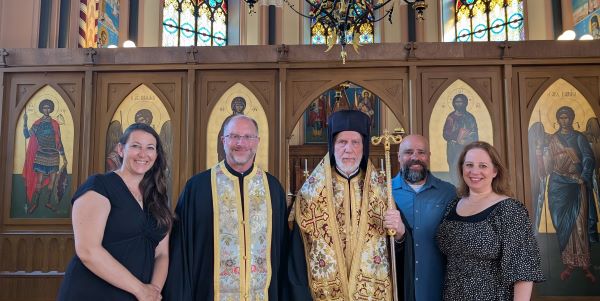
Το πρωΐ της Κυριακής Ζ΄ Ματθαίου, 27 Ιουλίου 2025, ο Σεβ. Μητροπολίτης Σουηδίας και πάσης Σκανδιναυΐας κ. Κλεόπας χοροστάτησε στην Θεία Λειτουργία, στον Καθεδρικό Ναό Αγίου Γεωργίου Στοκχόλμης, που ετέλεσε ο Εφημέριος του Ναού, Πανοσιολ. Αρχιμανδρίτης κ. Βαρθολομαίος Ιατρίδης, με την προσευχητική συμμετοχή του εξ Αμερικής παρεπιδημούντος Αιδεσιμολ. κ. Simon Thomas, Εφημερίου του Ενοριακού Ναού Ευαγγελισμού της Θεοτόκου Memphis, Tennessee, της Ι. Μητροπόλεως Ντιτρόιτ.
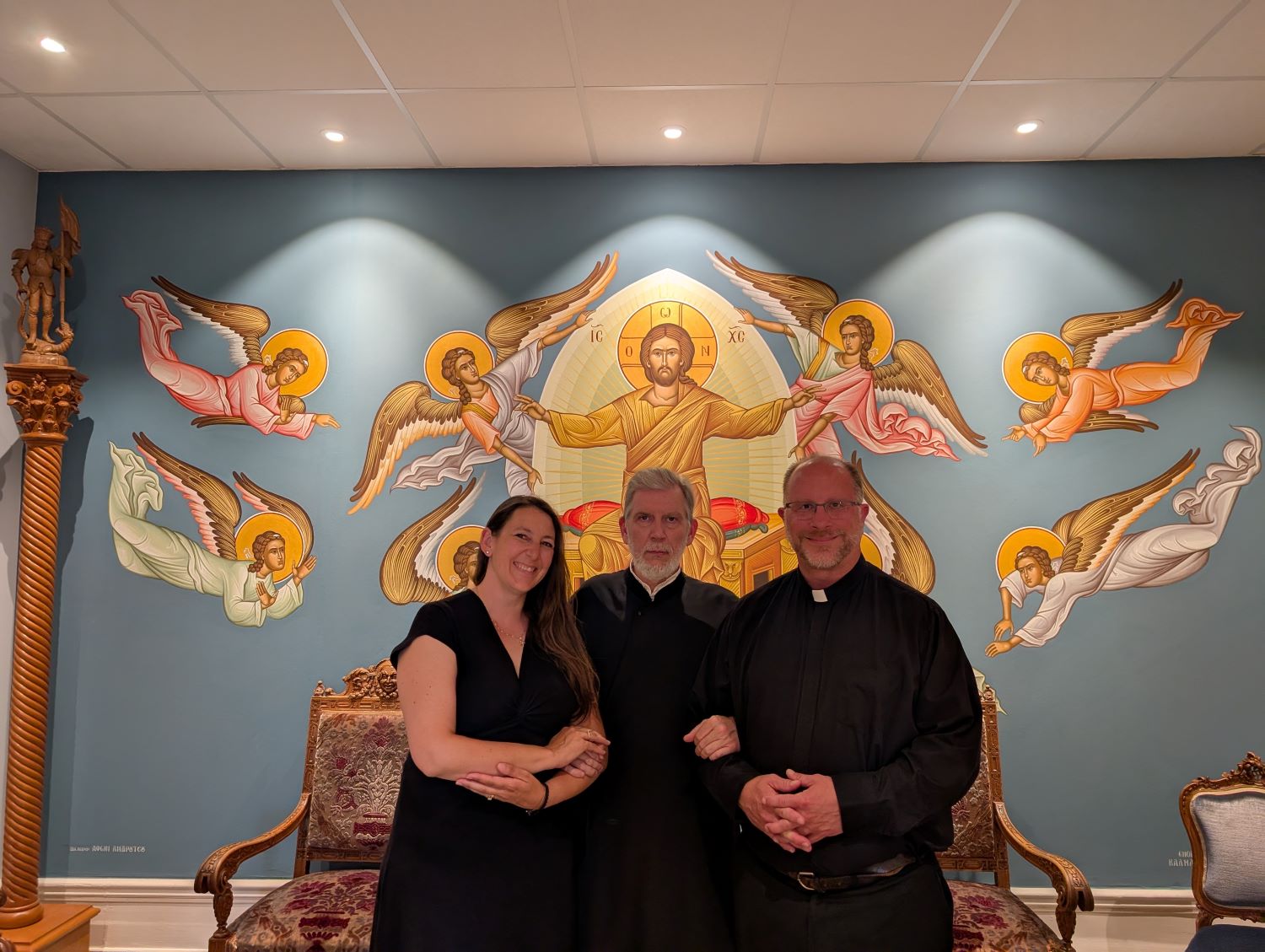
Μετά την απόλυση της Θείας Λειτουργίας και πριν την έναρξη του θείου κηρύγματος, ο Ποιμενάρχης καλωσόρισε τον παλαιό συμφοιτητή του, από την περίοδο των μεταπτυχιακών του σπουδών στην Θεολογική Σχολή Τιμίου Σταυρού Βοστώνης, συνοδευόμενο από την Πρεσβυτέρα του Στεφανία, καθώς και το φιλικό τους ζεύγος από την Νέα Υερσέη Ευστάθιο και Καλιρρόη, στους οποίους μαζί με τις ευχαριστίες για την τιμητική τους επίσκεψη επέδωσε την τρίγλωσση έκδοση της Θείας Λειτουργίας από την Ι. Μητρόπολη στην Ελληνική, Αγγλική και Σουηδική γλώσσα, και η οποία τυπώθηκε ευγενώς από την Αποστολική Διακονία της Εκκλησίας της Ελλάδος, με την μέριμνα και συμπαράσταση του Πανιερωτάτου Μητροπολίτου Φαναρίου κ. Αγαθαγγέλου, του και Γενικού Διευθυντού του μνημονευθέντος Εκκλησιαστικού Οργανισμού.
Τέλος, ο Σεβασμιώτατος ευχήθηκε στον π. Σίμωνα, στην οικογένειά του και στους συνοδούς των, κάθε από Θεού ευλογία, για επιτυχή συνέχιση της διακονίας του στις Ηνωμένες Πολιτείες της Αμερικής, καθώς και καλή διαμονή τόσο στην Στοκχόλμη, όσο και στο επικείμενο ταξίδι τους στην Νορβηγία και την Ισλανδία.
Ακολούθησε δεξίωσις στο Μουσείο Ελληνοχριστιανικής Κληρονομιάς, στις εγκαταστάσεις του ως άνω ναού και γεύμα σε εστιατόριο της πόλεως.
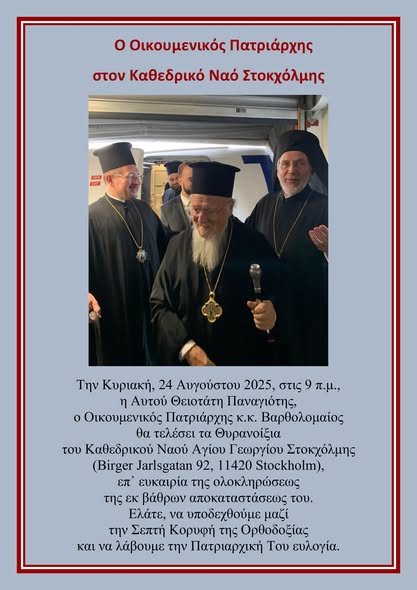
ΕΛΕΥΣΙΣ ΤΟΥ ΟΙΚΟΥΜΕΝΙΚΟΥ ΠΑΤΡΙΑΡΧΟΥ κ. ΒΑΡΘΟΛΟΜΑΙΟΥ
ΣΤΟΝ ΚΑΘΕΔΡΙΚΟ ΝΑΟ ΑΓΙΟΥ ΓΕΩΡΓΙΟΥ ΣΤΟΚΧΟΛΜΗΣ,
ΤΗΝ ΚΥΡΙΑΚΗ, 24 ΑΥΓΟΥΣΤΟΥ 2025
Tην Κυριακή, 24 Αυγούστου 2025, στις 9 π.μ., η Αυτού Θειοτάτη Παναγιότης, ο Οικουμενικός Πατριάρχης κ.κ. Βαρθολομαίος θα τελέσει τα Θυρανοίξια του Καθεδρικού Ναού Αγίου Γεωργίου Στοκχόλμης (Birger Jarlsgatan 92, 11420 Stockholm), επ᾽ ευκαιρία της ολοκληρώσεως της εκ βάθρων αποκαταστάσεως του.
Ελάτε, να υποδεχθούμε μαζί την Σεπτή Κορυφή της Ορθοδοξίας και να λάβουμε την Πατριαρχική ευλογία, εκ του σύνεγγυς.







 Ελληνική Ορθόδοξη Ενορία Αγίου Ανδρέα Μάλμε