Metropolis

“Sleep, My Little Angel, Sweetly to My Song”

By His Eminence Metropolitan Cleopas of Sweden

In the depths of the Greek soul there are certain sounds that seem to have been born together with the light of this land/Greece. Among them stands out the sound of the lullaby: a primordial human act, an act of love, reconciliation, peace, prayer, and promise. A promise to the child who sleeps, to the future that is coming, to the hope that rises, even after the darkest periods of history.

The lullaby constitutes not only tenderness, but also memory, tradition, folk wisdom, and theological depth, often without its creators or bearers being conscious of the depth of the words they whisper.

Such a moment of Greek musical tradition is the lullaby “Sleep, My Little Angel” (“Κοιμήσου, αγγελούδι μου, γλυκά με το τραγούδι μου”), incorporated into the work “The Song of the Dead Brother” by Mikis Theodorakis, with lyrics by Kostas Virvos.

It is a song that, although born out of the historical trauma of the Greek Civil War, simultaneously opens a path toward the mystery of Bethlehem, toward the utter humility and the glory of the God-Man Christ, toward the theology of the Incarnation as it was lived and expressed by the Fathers of the Eastern Orthodox Church.

The history of the song cannot be separated from the history of the cycle in which it belongs. Theodorakis composed “The Song of the Dead Brother” in 1961, in Paris, during a period in which he was seeking ways to unite popular musical expression with the deep wound of Greek society, to express a collective memory, and to offer the people, not only the beauty of songs, but also the “catharsis,” as he himself notes, of a new, contemporary “myth” born out of the Civil War.

The work is consciously placed in the form of ancient tragedy. The figures are archetypal, the action has a collective character, the Mother acquires dimensions of Jocasta, the two brothers recall Eteocles and Polynices, the people as Chorus sing and intervene, and the fate of the family becomes a symbol of the fate of the Nation.

Within this setting of anguish, betrayal, hatred, and a deep need for reconciliation, there is a lullaby. Not a lament, but a lullaby.

This is the first point of theological depth. For every person who suffers, even under conditions of civil hatred, the voice that remains untainted is the maternal voice.

The lullaby is the sound that hatred does not stain, that ideology does not contaminate. It is the sound of peace; that is why it is placed at the beginning of the work, not at the end. It is the beginning of the world, the beginning of human existence, the beginning of a possibility for reconciliation and restoration.

Virvos’ lyrics present a mother who sings to her child not only to lull it to sleep, but to initiate it into a world of struggle and responsibility:

“Sleep, my little angel,
my child, lullay, lullay,
grow up quickly
like the tall plane tree,
become a man in body and in mind
and always walk the righteous path.
Sleep, my little angel,
sweetly to my song.
Sleep, my little dove,
become like steel,
and let your little heart
grow as great as Christ’s,
so that you may never say in life ‘I cannot,’
and if need be, even take up the cross.”

An entire theology is hidden in these phrases: a calling to courage, to a broad heart capable of forgiveness; to the imitation of Christ; to the acceptance of the Cross not as punishment, but as the path of authentic love.

Here Greek folk tradition meets Saint Gregory the Theologian, who, speaking of the Birth of Christ, writes that the Word “put on humility, so that I might receive glory.” Birth is already Crucifixion, not yet in act, but in the intention of the Divine Economia/Dispensation.

When Virvos speaks of the child who may one day bear a cross, even without realizing it in Patristic language, he touches the very heart of Christology: that the human person, in order to resemble Christ, is called not only to live, but also to sacrifice, to offer, to love unto the end.

This lullaby, when one listens attentively also to the interpretations historically given by Giota Lydia, Despoina Bempedeli, Nena Venetsanou, and many others, does not raise its intensity or impose drama. It speaks gently, like a truth the child must hear even before learning to speak.

Theodorakis’s music wraps it in simple, clear folk tones that seek not effect, but memory. Thus the lullaby becomes an act of pedagogy. It teaches what love is, what greatness of soul is, what the cross is.

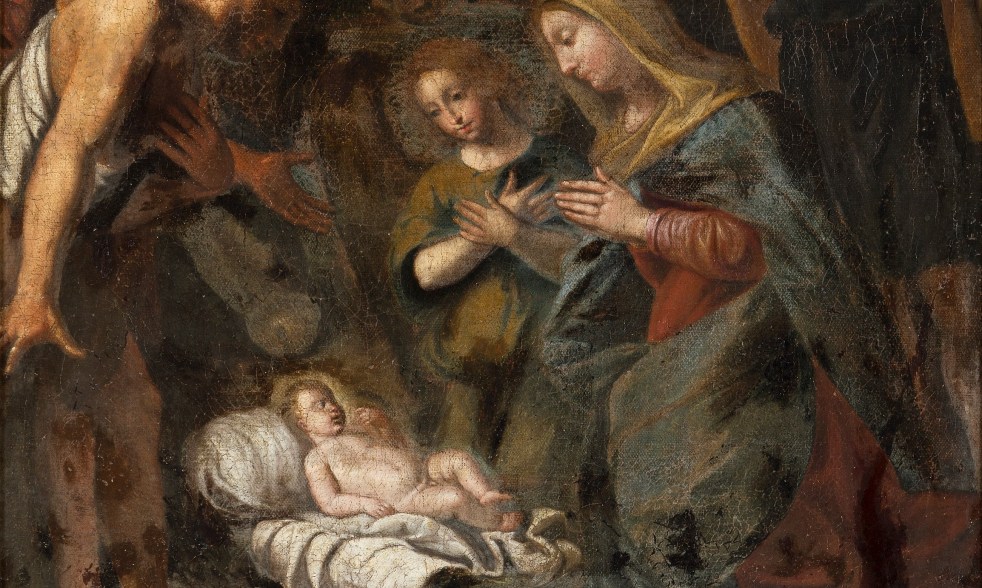
All this unfolds within a scene that, in an almost emblematic way, points to Bethlehem. For in Bethlehem, according to Byzantine iconographic tradition, the Mother of God does not smile as a mother defined solely by joy.

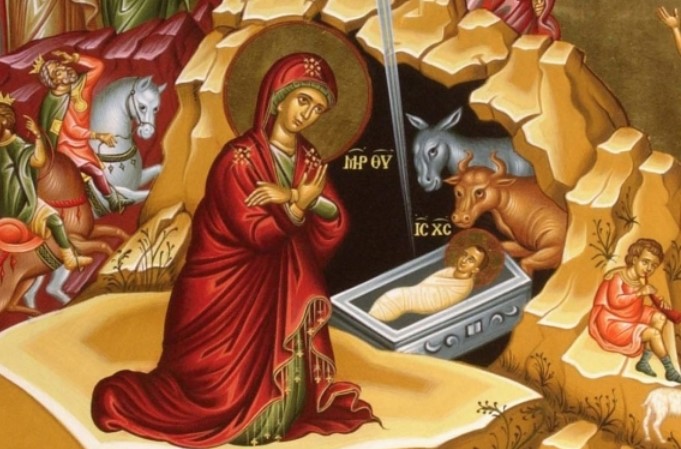
On the contrary, in the icon of the Nativity the Virgin bears a deep, inward expression. She lies down, often turned not toward the Infant but toward the believer, as if she knows that this Child did not come simply to live, but to give Life.

Her posture resembles that of a mother who does not lull a child destined for an ordinary life, but a child who will change the world through suffering. Her gaze is humble, calm, but profound, almost tragic.

The Fathers of the Church, such as Saint Epiphanios of Cyprus and Saint Romanos the Melodist, emphasize that the Virgin knew already from the Annunciation that her Son would become a “sign of contradiction.”

The image of Bethlehem, with the cave dark like a tomb, with the Infant swaddled like a dead body in a shroud, declares that the Mystery of the Nativity is inseparably united with the Mystery of the Passion.

From this perspective, the lullaby “Sleep, My Little Angel” stands as an extension of the Byzantine icon. The mother sings knowing, or intuiting, that the child will undergo trials, that life will not be merely a “dream,” but a struggle. “As great as Christ’s” is not only moral exhortation; it is a proposal of life, imitation of Christ, participation in the cruciform beauty of His love.

The history of Theodorakis’s work uniquely incorporates modern Greek pain. The composer recounts that, as he was composing the songs, the figures of friends and comrades lost in the Civil War seemed to come alive before him.

In his memory, Pavlos—a figure of popular imagination but also of reality—becomes the dead brother who bears the tragedy of the entire nation. Theodorakis sought to exorcise this evil not through dry political analysis, but through art, poetry, and music, through ancient tragedy that heals wounds not by erasing the past, but by transforming it.

Within this framework, the lullaby functions as the center of the drama, as the point where human tradition meets theological mystery, because every lullaby shows that the human person believes, even amid ruins, that the child who grows “like the tall plane tree” can restore meaning where meaning was lost, can love where hatred once reigned.

Our people, through this song, speak of a heart “as great as Christ’s” without employing academic theological language. Yet this is precisely the paradox and the greatness of Orthodoxy: that theology is found not only in the texts of Ecumenical Councils and the Fathers of the Church, but also in the sighs of mothers, in lullabies and laments, as expressions of prayer and invocations of divine mercy.

In Theodorakis’ work, there is an attempt to bring modern Greek tragedy into dialogue with the primordial drama of humanity, and this deeply recalls the Orthodox theology of the Incarnation.

God consents to become human, to enter human history, to take upon Himself human divisions, to endure, from His very Birth, social rejection and the tragic dimension of destiny.

The Incarnation, according to Saint John of Damascus, is “the descent of uncreated Grace into creation,” that is, God coming where there are wounds, not to judge them, but to heal them.

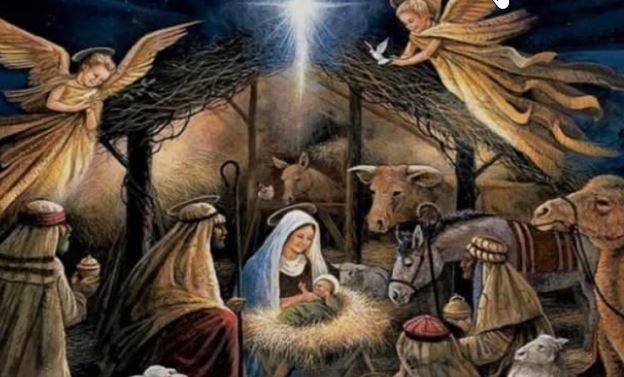
This is clearly evident in the icon of the Nativity. The cave is dark, black, like Hades; the newborn Christ is placed in a manger that resembles a tomb; His swaddling clothes resemble a burial shroud; angels hymn and shepherds adore, yet the Virgin remains calm, almost mournful.

Joseph, often seated to the side, represents human doubt and temptation. The entire icon is a unity of joy and mourning, birth and death, light and darkness. The Nativity of Christ is a salvific scene. God enters the world as an Infant in order to traverse the entire human journey, from cradle to grave.

Thus, when the folk mother in Theodorakis’ work says to her child, “and if need be, even take up the cross,” she speaks the language of the Virgin Mary. And when she says, “let your little heart become as great as Christ’s,” she speaks the language of Saint Maximus the Confessor, who teaches that the human person is called to become “by grace what God is by nature,” that is, to imitate Christ’s love, to become a pure, free, and expansive heart, as wide as His arms upon the Cross.

The lullaby remained deeply engraved in the memory of the people, because every people remembers what expresses its most authentic side. And the most authentic side of the Greek people was never hatred, but the longing for unity. As Theodorakis himself said, “I wanted never to let the memory of the people be extinguished.”

This longing for memory is profoundly theological. Christ was born to heal the memory of humanity, to awaken the nostalgia for paradise, to bring peace into the human heart, to reconcile humanity with God and humanity with itself.

The Nativity of Christ carries within it an invitation to unity. Christ did not come in a peaceful era; He came amid suspicion, imperial violence, and social divisions.

He was born as a “new Child” in order to unite and reconcile; therefore the angel sings: “Glory to God in the highest, and on earth peace.” Peace is the first gift of the Nativity.

The lullaby “Sleep, My Little Angel” is essentially a prayer for this peace. It is the folk voice that says: “I want you to grow up in a reconciled world, where you will be a man in body and in mind, but above all a human being with a great heart.”

It is the voice of a people seeking redemption, searching for a child to bear the future in his hands, longing to see the new generation not repeat the errors of the civil war.

The theology of the icon of the Nativity further reinforces this thought. In the icon, Christ stands at the center not only as an infant, but as the Savior of the world, who came to unite what was divided, to reconcile heaven and earth, the divine and the human.

The angels represent the heavenly realm, the shepherds the humble folk element, the Magi the wise and cosmopolitan element. All meet beside the Infant. It is the first great “reconciliation of humanity,” an image of the Kingdom of God within the world.

Thus, in Theodorakis’ work, the mother who lulls her child amid the pain of Greek history becomes an image of the Virgin Mary who lulls her Son amid the pain of human history.

And this child, called to grow up in difficult times, becomes an image of every generation called to bear its own cross with strength, with a heart as great as Christ’s.

At this point, the lullaby, Theodorakis’ work, the tragedy of Greek history, and the mystery of the Incarnation meet in a common place: the place of hope.

Greek tragedy teaches that after the Fall, after hubris, after catharsis, there is a new path. Orthodox theology teaches that after the fall of Adam comes the New Adam, that the Incarnation is the beginning of a new creation.

Saint Irenaeus says, “The Word recapitulates humanity,” and Saint Athanasiοs, “He became human so that we might become divine.”

The lullaby “Sleep, My Little Angel” is therefore a song of reconciliation. A song that reminds us that the maternal voice remains incorruptible even when ideologies collapse.

It is a song that speaks of a heart growing as great as Christ’s, of love that bears the cross, of a path leading from death to life. It is a hymn to peace, an invitation to unity, and a reminder that the Nativity of Christ is the beginning of a cosmic and at the same time divine reconciliation.

Perhaps this is the deepest reason why the song remains alive so many decades later. It shows us that every infant sleeping in its mother’s arms is a promise of life to history.

Just as the Divine Infant of Bethlehem slept in the manger in order to awaken the world to the truth of God, so every child lulled in a world wounded by wars, persecutions, and uprooting carries within it a flame, a flame that can become light.

The lullaby “Sleep, My Little Angel,” the Byzantine icon of the Nativity, Theodorakis’ work, and the Orthodox theology of the Incarnation, folk tradition and the Fathers of the Church, thus become one body, one voice, calling us to open our hearts and let them become “as great as Christ’s,” with the goal and destiny of deification.

Perhaps this is the greatest truth hidden within a simple lullaby: that maternal love, folk wisdom, and divine Revelation coexist together in the same cradle, the cradle of humanity, created “in the image” and called to live “according to the likeness.”

The Nativity of Christ, with the light of Bethlehem, reminds us that God became human as the Divine Infant so that every human being, through the pain of history and the tenderness of the maternal voice, might become a child of His Kingdom.

Have a blessed Christmas!
Metropolis

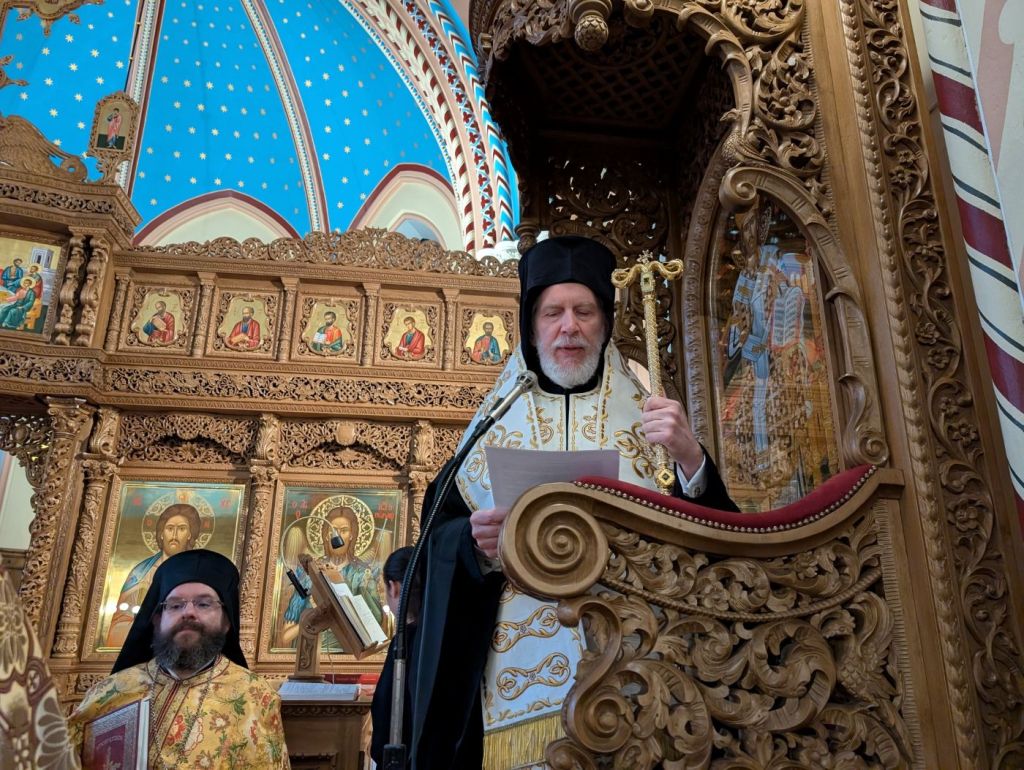
Ομιλία Σεβ. Μητροπολίτου Σουηδίας κ. Κλεόπα στην Κυριακή των Προπατόρων

Καθεδρικός Ναός Αγίου Γεωργίου Στοκχόλμης

Κυριακή, 14 Δεκεμβρίου 2025

Πανοσιολογιώτατε π. Βαρθολομαίε,
Αιδεσιμολογιώτατε π. Γεώργιε,
Μουσικολογιώτατοι,
Αγαπητοί εν Χριστώ Αδελφοί,
Αγαπημένα μας παιδιά,

Σήμερα, η Εκκλησία μας τιμά όλους τους Προπάτορες, τους Πατριάρχες, τους Προφήτες και τους Δικαίους της Παλαιάς Διαθήκης, οι οποίοι προετοίμασαν τον δρόμο για την ενανθρώπηση του Υιού και Λόγου του Θεού. Είναι οι «προ Χριστού Χριστιανοί», όπως χαρακτηριστικά αποκαλούνται, διότι έζησαν με πίστη, αναμένοντας τον ερχόμενο Μεσσία.

Στο σημερινό Ευαγγελικό ανάγνωσμα, ο Κύριος μάς παρουσιάζει την παραβολή του Μεγάλου Δείπνου (Λουκά 14,16-24). Ο Θεός προσκαλεί τον άνθρωπο στη χαρά της Βασιλείας Του κι όμως, παρά την πρόσκληση, πολλοί βρίσκουν δικαιολογίες, όπως η περιουσία, η εργασία, οι οικογενειακές υποχρεώσεις. Ο Άγιος Ιωάννης ο Χρυσόστομος λέει: «όταν τα καλά γίνουν εμπόδιο των καλυτέρων, τότε δεν είναι πλέον καλά».

Ο Άγιος Κύριλλος Αλεξανδρείας ερμηνεύει ότι η πρόσκληση στον γάμο είναι η πρόσκληση στην εν Χριστώ σωτηρία, ενώ η άρνηση των καλεσμένων φανερώνει «την σκληροκαρδία και τον δεσμό στα επίγεια», που κάνει τον άνθρωπο να χάνει το μεγαλύτερο δώρο που του προσφέρεται. Στη συνέχεια βλέπουμε ότι ο Θεός καλεί τελικά τους φτωχούς και τους αμαρτωλούς, γενικά τους «εκτός».

Οι Προπάτορες μάς δείχνουν τον δρόμο. Ο Αβραάμ, όπως λέγει ο Μ. Βασίλειος, υπήρξε «πατήρ της πίστεως» διότι εμπιστεύτηκε τον Θεό. Ο προφήτης Δαβίδ μετανόησε κι έγινε «άνθρωπος κατά την καρδίαν του Θεού». Οι Τρεις Παίδες στη Βαβυλώνα προτίμησαν να κινδυνεύσει η ζωή τους παρά να προδώσουν την πίστη τους.

Εμείς όμως έχουμε το ανεκτίμητο προνόμιο να ζούμε μετά την ενανθρώπηση. Να μετέχουμε στα Μυστήρια της Εκκλησίας. Να γευόμαστε ήδη από τώρα το δείπνο της Βασιλείας μέσα στη Θεία Ευχαριστία.

Καθώς πλησιάζουμε στα Χριστούγεννα, ας προετοιμάσουμε την ψυχή μας όπως οι Προπάτορες, με πίστη ζωντανή, με ελπίδα αδιάσειστη, με ταπείνωση και μετάνοια.

Είθε οι άγιοι Προπάτορες να πρεσβεύουν, ώστε κι εμείς να αξιωθούμε να καθίσουμε στο αιώνιο δείπνο της Βασιλείας του Θεού, μαζί με όλους τους αγίους. Αμήν!

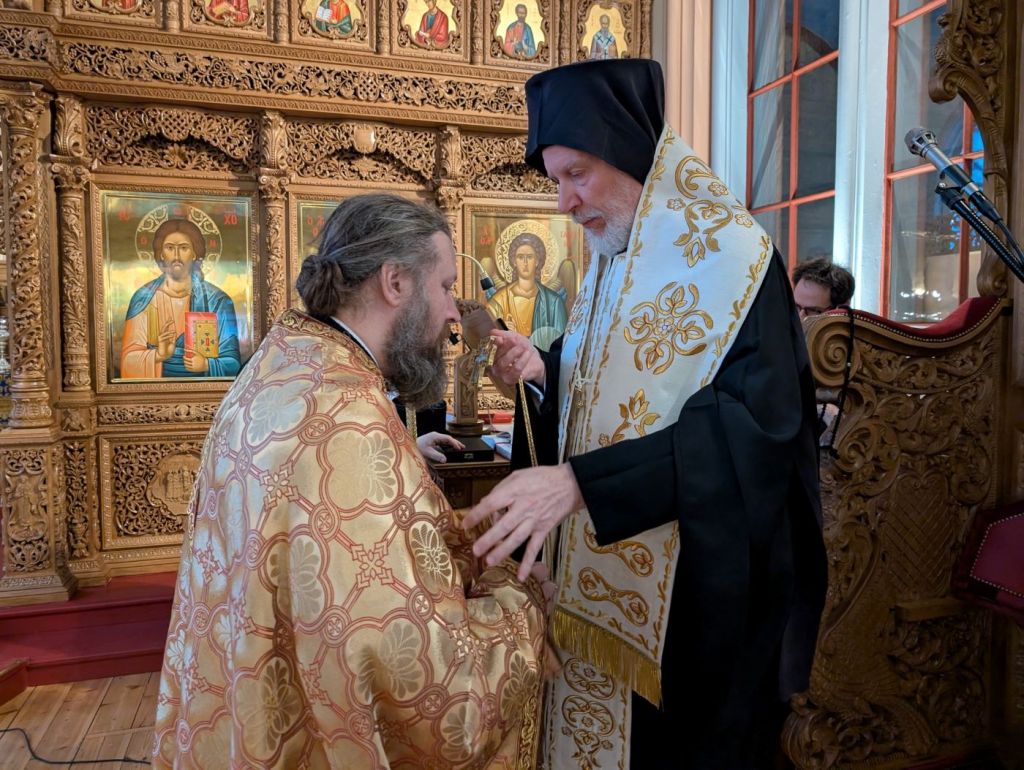
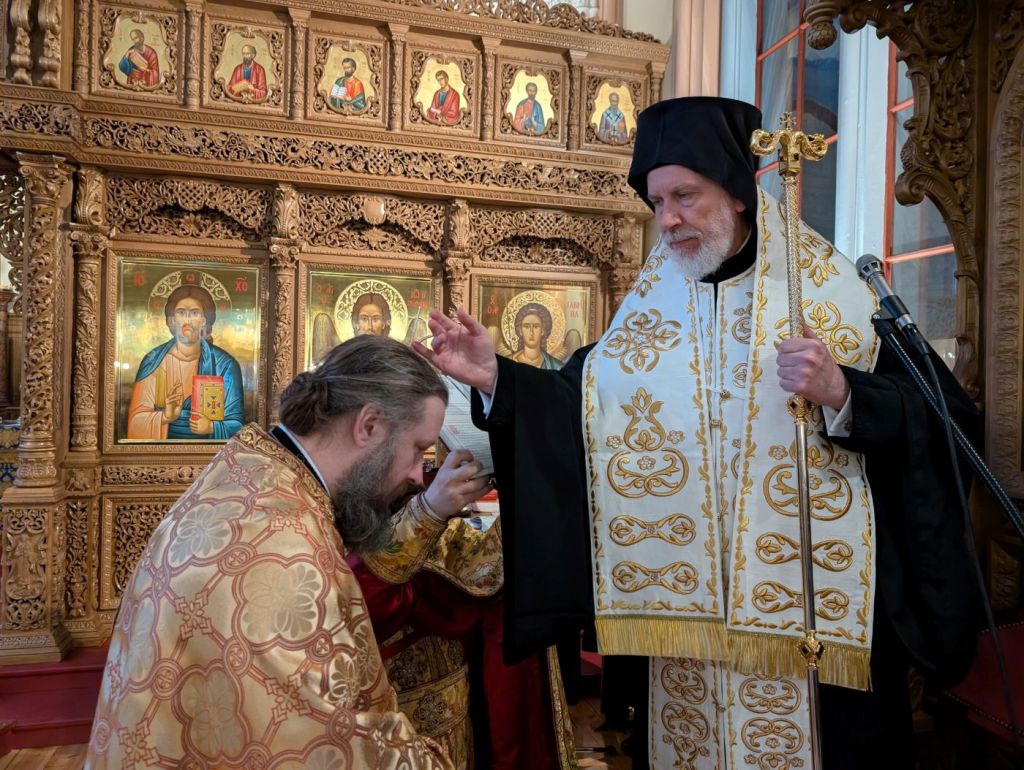
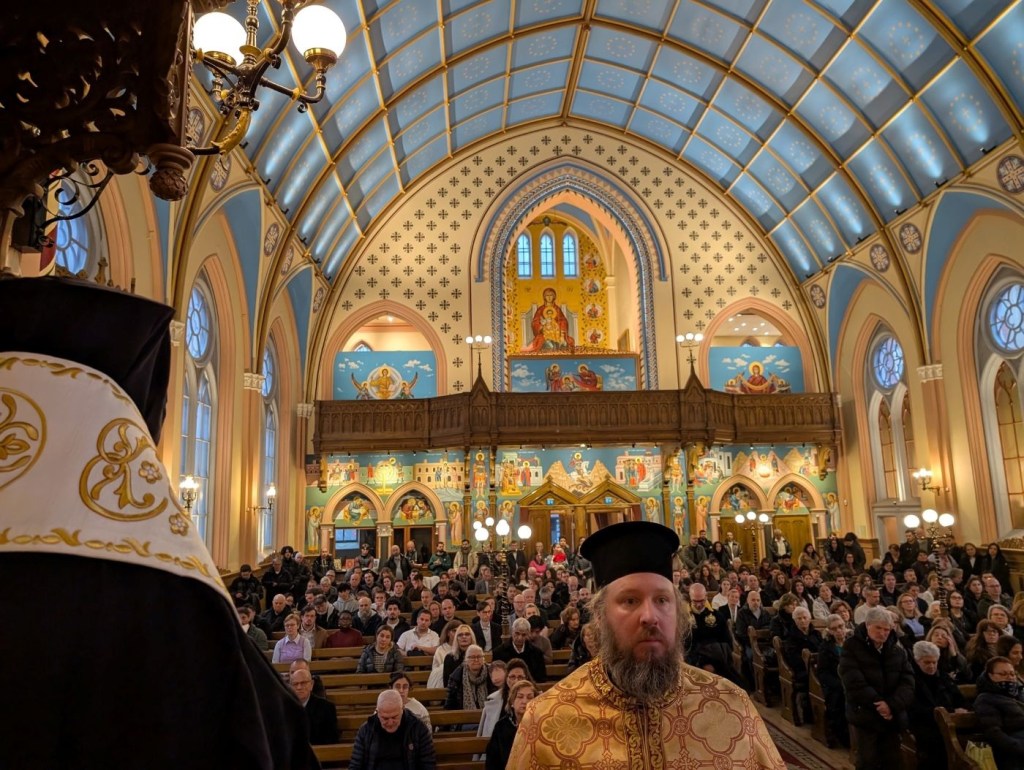
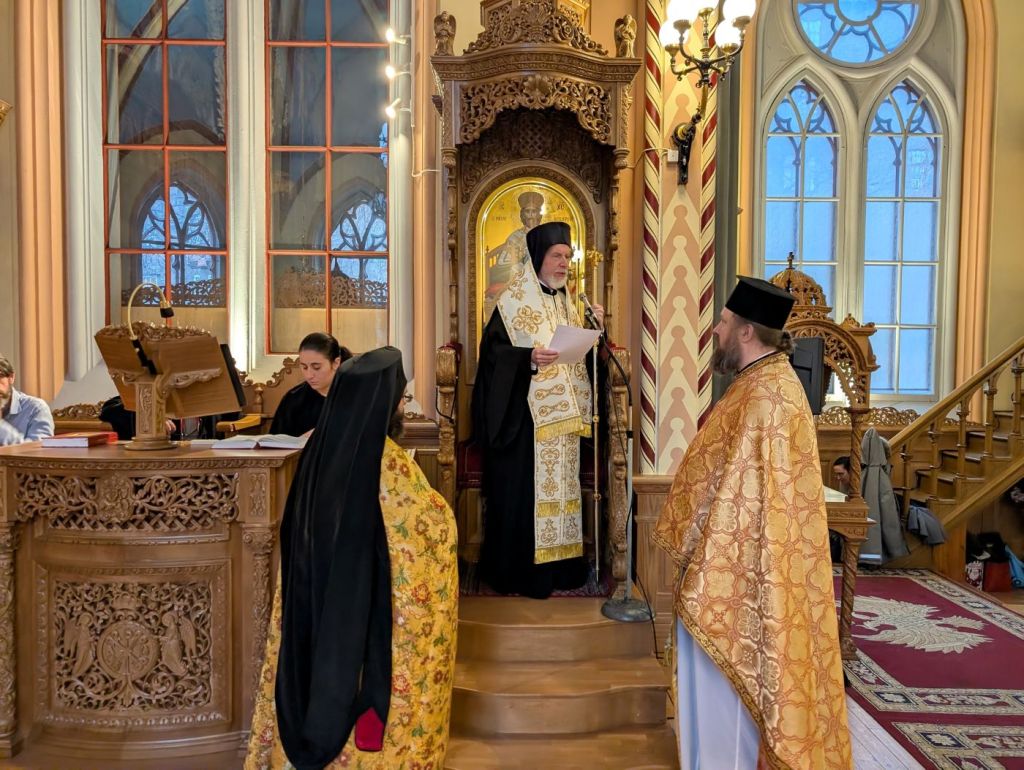
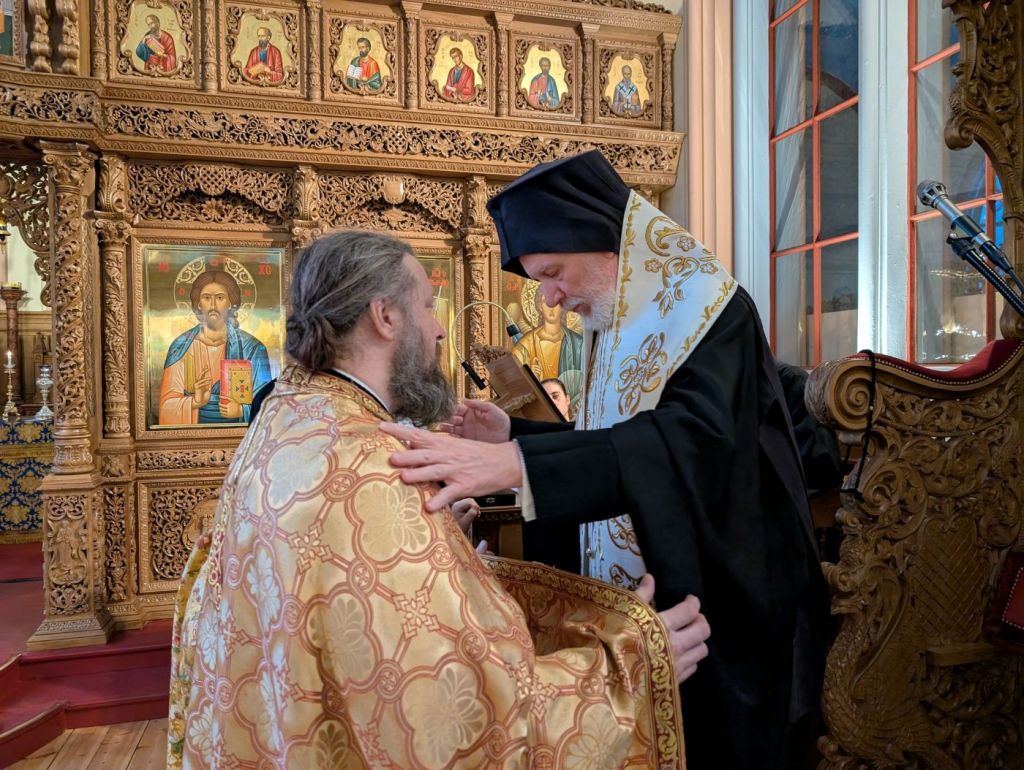
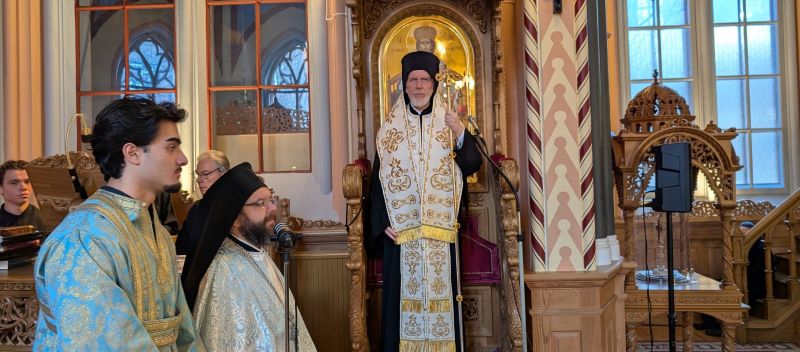
Στη σημερινή σύναξη, θα απονείμω το οφφίκιο του Πρωτοπρεσβυτέρου στον Αιδεσιμολ. Οικονόμο κ. Γεώργιο Αρβανιτίδη, ο οποίος για 10 χρόνια υπηρέτησε ως Διάκονος αρχικώς και ως εφημέριος της νεοπαγούς Ενορίας των Αγίων Δημητρίου και Νέστορος, στην πόλη του Ερεμπρού, όπου και διαμένει και εργάζεται ως Καθηγητής Μαθηματικών, στη δημόσια εκπαίδευση, ενώ παράλληλα είναι εθελοντής κληρικός της Μητροπόλεώς μας.

Ο π. Γεώργιος είναι έγγαμος και πατέρας τριών κοριτσιών και παρά τις πολλές οικογενειακές του υποχρεώσεις, εργάζεται με πολύ φιλότιμο και αφοσίωση για την εκπλήρωση της αποστολής του ως Ιερέως. Εκτός από την ενορία του, πολλές φορές συνδράμει και τις ανάγκες μας εδώ στον Καθεδρικό Ναό, παράλληλα, όμως, ταξιδεύει αρκετές φορές, τόσο εντός Σουηδίας, όσο και εκτός αυτής, όταν παρίσταται ανάγκη.

Για όλους αυτούς τους λόγους, θα τον περικοσμήσω σήμερα με τον επιστήθιο σταυρό, ώστε να λάβει από τον Ποιμενάρχη του μία ακόμα ευλογία και να συνεχίζει, με τον ίδιο και περισσότερο ζήλο, να εργάζεται προς δόξαν Θεού και για την πνευματική ανάπαυση των ανθρώπων, έχοντας τη δύναμη του Τιμίου και Ζωοποιού Σταυρού. Αμήν!

Ανακοινώσεις · Θεία Λειτουργία

Χριστουγεννιάτικη Θεία Λειτουργία – Julgudstjänst – 25/12/2025

Θα τελεστεί Θεία Λειτουργία την Πέμπτη 25 Δεκεμβρίου στις 10 η ώρα, στην Mariakyrkan Södervärnsgatan 8, Malmö.

Καλές Γιορτές 🎄

Julgudstjänst kommer att genomföras torsdag den 25 december kl 10:00 i S:ta Maria kyrka, Södervärnsgatan 8, Malmö.

Trevlig helg 🎄

Metropolis

The Feast of Saint Nicholas at the Finnish Parish of Stockholm

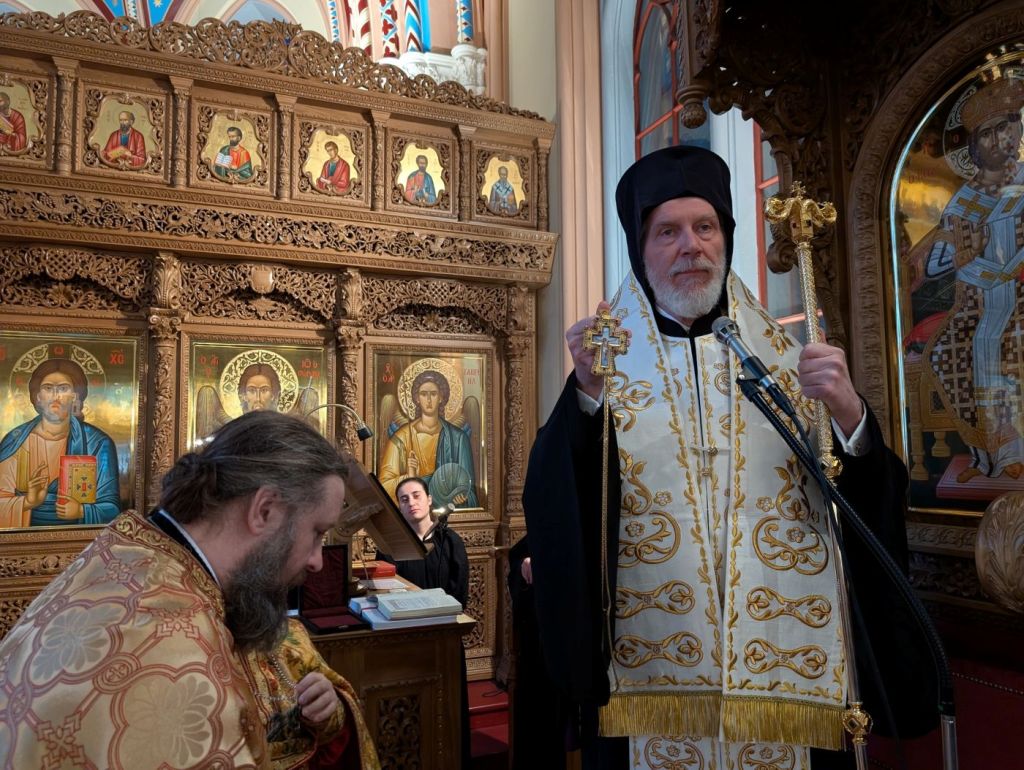
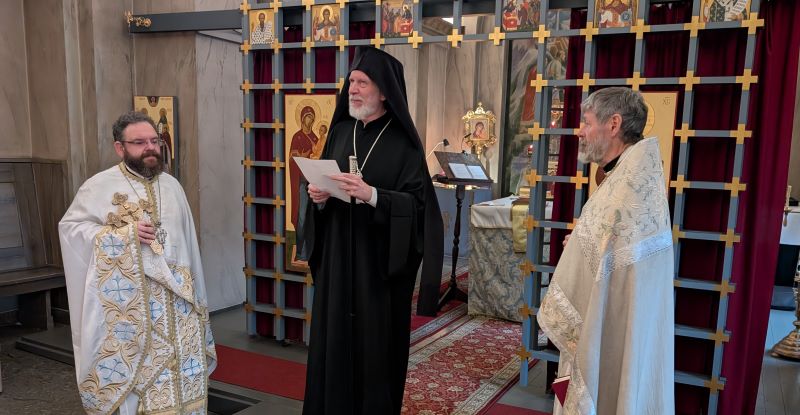
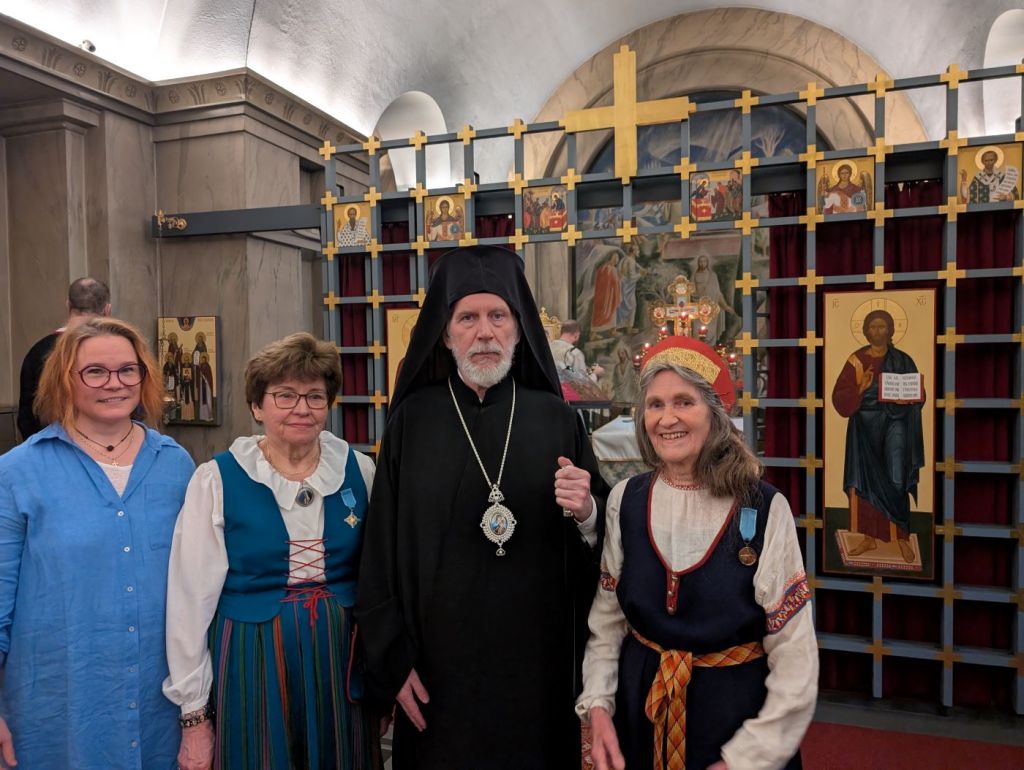
On the morning of Saturday, December 6, 2025, His Eminence Metropolitan Cleopas of Sweden and All Scandinavia presided over the Divine Liturgy in Chorostasia at the festal Finnish Parish of Saint Nicholas in Stockholm.

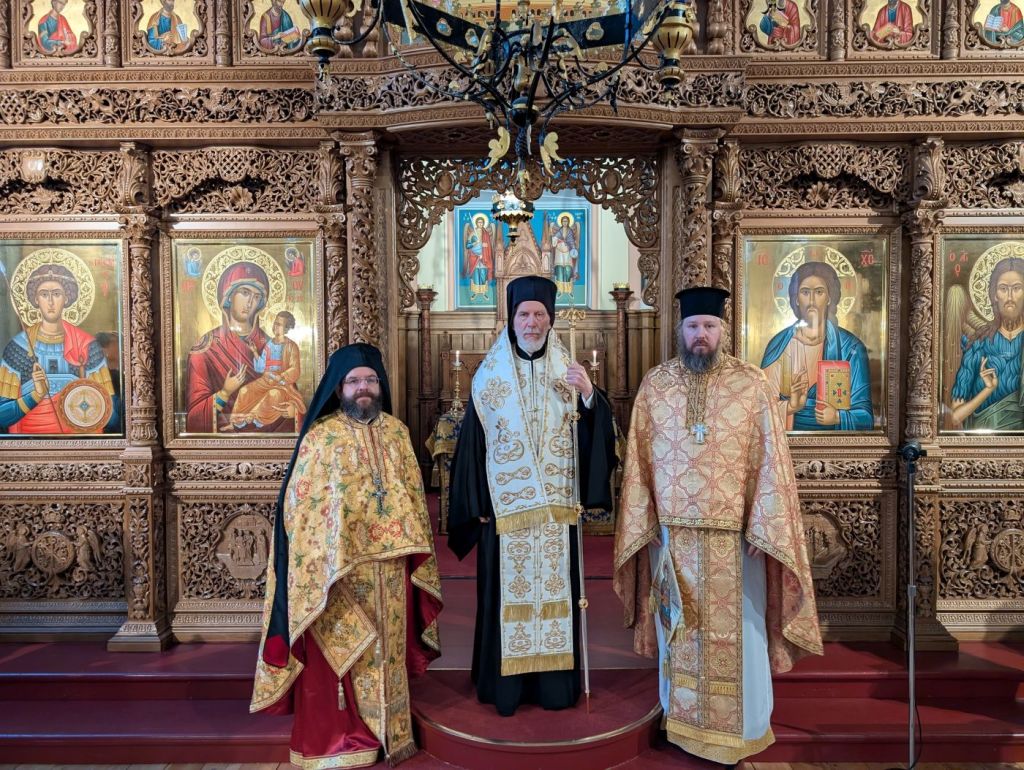
Concelebrating with him were the Very Rev. Archimandrite Bartholomew Iatridis, Parish Priest of Saint George Cathedral in Stockholm, and the visiting cleric from the Holy Archdiocese of Helsinki and All Finland, the Rev. Protopresbyter Mikko Leistola.

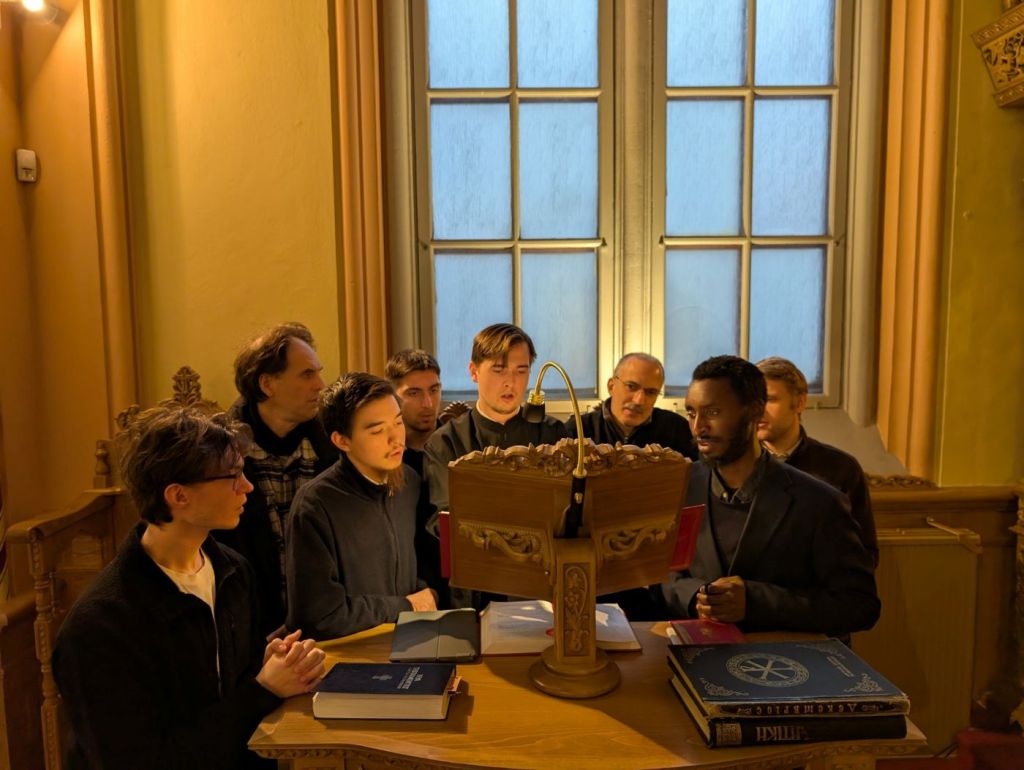
The hymns of the day were chanted in Finnish, Karelian, Swedish, Greek, and Church Slavonic by the parish choir, together with members of the Byzantine choir of Saint George Cathedral in Stockholm.

At the conclusion of the service, His Eminence Cleopas conveyed the greetings and blessings of His All-Holiness Ecumenical Patriarch Bartholomew to the Primate of the Church of Finland Archbishop Elia, as well as to the clergy and faithful of the Finnish Church.

He also addressed the congregation with the appropriate homily for the feast and offered his best wishes to those celebrating their name day. In his address, the Hierarch stated the following:

“Today our Church honors Saint Nicholas, the protector of sailors, of children, and of all those who seek his help with faith.

The life of Saint Nicholas is a living testimony to the words of Christ that we hear in the Gospel of the Beatitudes; words which reveal the true meaning of holiness and of the Kingdom of God.

“Blessed are the poor in spirit…”! Saint Nicholas, although born into a wealthy family, was truly poor in spirit, that is, humble. He did not keep his wealth for himself but offered it with love to the poor and the oppressed.

“Blessed are the merciful…”! The whole of his life was a life of mercy. He secretly supported those in need, comforted the sorrowful, and stood as a pillar of strength for all who endured hardship. His compassion knew no bounds, because in every person he saw the face of Christ.

“Blessed are the meek…”! Saint Nicholas was a peaceful and gentle man, as the hymnographer also proclaims in his dismissal hymn; indeed, he was truly an image of meekness. Yet his faith was so deep that he defended the truth of the Church with courage, without hatred or desire for revenge.

“Blessed are those who hunger and thirst for righteousness…”! He defended the innocent, cared for the poor, resisted injustice, and became a symbol of justice for all Christians.

Every Beatitude finds its practical expression in the person of Saint Nicholas. He did not live for himself, but for God and for others. This is the essence of holiness: that our lives reflect the teaching of Christ.

In today’s world, which is often dominated by competition, selfishness, and indifference, Saint Nicholas calls us to look around us with kindness. He teaches us to forgive, to help, to stand beside those who are suffering, and to live out the Beatitudes; not merely in words, but in deeds, as he did.

May Saint Nicholas become a beacon of faith and love, especially for our sailors, who have him as their protector and companion on their difficult journeys.

I wish many happy returns to all members of our parish who celebrate today their name day! May Saint Nicholas guide us, so that we may become truly “blessed” as people of peace, love, faith, and hope. Amen!”

Ανακοινώσεις · Θεία Λειτουργία

Θείες Λειτουργίες εν όψει των Χριστουγέννων σε Helsingborg και Malmö

Με την κανονική άδεια, ευλογία και προτροπή του Σεβ. Μητροπολίτου Σουηδίας και πάσης Σκανδιναυΐας κ. Κλεόπα, θα πραγματοποιηθούν δύο Θείες Λειτουργίες εν όψει των Χριστουγέννων στις πόλεις Helsingborg και Malmö, από τον Αιδεσιμολ. Οικονόμο κ. Γεώργιο Αρβανιτίδη, κατά το ακόλουθο πρόγραμμα:

Την Τρίτη, 23 Δεκεμβρίου 2025, στην πόλη Helsingborg, στον Ιερό Ναό Helige Basilius den Store (Nedre Eneborgs vägen 7, 252 68 HELSINGBORG), στις 10 π.μ.

Την ημέρα των Χριστουγέννων, 25 Δεκεμβρίου 2025, στην πόλη Malmö, στον Ιερό Ναό S:t Maria kyrka (Södervärnsgatan 8, 214 27 Malmö), στις 10 π.μ.

Καλούνται οι κάτοικοι των εν λόγω πόλεων και των περιχώρων, να προσέλθουν στους ως άνω Ιερούς Ναούς και να συμμετάσχουν προσευχητικώς στην Θεία Λειτουργία.

Metropolis

Pastoral Visit of Metropolitan Cleopas to Västerås, Sweden

On Saturday, following the Feast of the Entry of the Theotokos into the Temple and the commemoration of our Venerable Saint Iakovos, the new Ascetic of Evia, 22 November 2025, His Eminence Metropolitan Cleopas of Sweden and All Scandinavia, accompanied by the Very Reverend Archimandrite Bartholomew Iatridis, Pastor of the St. George Cathedral of Stockholm, and the Reverend Oikonomos George Arvanitidis, Pastor of the Saints Demetrios and Nestor Parish of Örebro, presided at the service held in the Gideonsbergskyrkan in Västerås, Sweden, which was graciously made available by the Lutheran Church.

The hymns of the day were rendered by a five-member youth choir under the direction of Dr. Andreas Selamsis, Protopsaltis of the Stockholm Cathedral.

In his homily, the Hierarch of the Northern Lands of the Mother Church referred to the significance of the Feast of the Entry of the Theotokos into the Temple as a prelude to the Great Feast of Christmas, stating:

“Only yesterday our Church celebrated the Entry of the Theotokos, a feast that opens before us a window looking directly toward the joy of Christmas.

The Entry is not simply a feast of the Virgin Mary; it is the first light of the Birth of Christ, the dawn before the Sun of Righteousness appears.

Without the Entry, there would be no Christmas. Without the preparation of the Theotokos, there would be no Incarnation. Without the sanctification of the Mother, the Savior would not have come into the world.

Christmas is the moment when ‘the Word became flesh.’ The preparation for this moment begins with the entry of the Virgin Mary into the Temple. The three-year-old Mary enters the Holy of Holies to become herself the ark of the new Law, the living Temple, the sanctified earth from which Christ will spring forth.

Just as the earth must be cultivated before it receives the seed, so too the Virgin is prepared before receiving Christ. The Entry is therefore the first chapter of Christmas.

Christmas means ‘Emmanuel—God with us.’ And for God to dwell among us, there had to be a place free of any shadow of sin. That place is the Theotokos.

The Church sings: ‘The Temple of God is led into the Temple of God.’ The Virgin enters the handmade temple to become the uncreated Temple—the place where the eternal God will take on human flesh. This is why the Entry is the mystical beginning of the Incarnation.

What is Christmas? It is the condescension of God, who descends into poverty, into flesh, into human life. This condescension already begins with the Entry. God sees the childlike soul of Mary, purer than the angels, and finds in her a place of rest. Before God takes on human flesh, He prepares the heart that will contain Him. This is why the Fathers of the Church call the Entry ‘the forefeast of the Nativity.’

What begins today is completed in Bethlehem. The Entry is the opening of the gate; Christmas is the entrance of God into the world.

Today the Theotokos enters the temple. Tomorrow, at Christmas, Christ calls us to allow Him to enter the temple of our own hearts. But for this to happen, we must do what she did; purify our hearts, pray, humble ourselves, fast, and allow Grace to sanctify us. Only then will Christmas not be an external celebration but an inner Birth of Christ within us.

The Entry is the Divine preparation. Christmas is the Divine revelation. At the Entry, the Theotokos enters the Temple. At Christmas, God enters the world. Today the Mother of Life is brought into the Temple. In a few days, the Giver of Life will be born.

Let us also prepare ourselves, so that when Christmas night arrives, Christ may find within us a pure temple, a humble heart, a soul filled with love. May the Theotokos, who today opens the way of salvation, lead us to the Christ who is coming in flesh. Amen.”

In conclusion, the Metropolitan thanked the priests who accompanied him, the choir members, and the congregation, especially Mrs. Britt Marie Zotos, who worked diligently in preparing and offering the refreshments that followed in the hall adjacent to the church.

He also presented his recently published study, issued by the Apostoliki Diakonia of the Church of Greece, on the late Metropolitan Polyefktos of Sweden, to Professor Dr. Christos Papachristodoulou of Västerås University.

In the church’s reception hall, His Eminence had the opportunity to converse with members of the Greek community of Västerås, who repeatedly expressed their gratitude for the spiritual opportunity of the day’s gathering.

In the afternoon, Metropolitan Cleopas returned by train to the headquarters of his Metropolis in Stockholm, accompanied by Fr. Bartholomew.

Πνευματικά · Metropolis

H.E. Metropolitan Cleopas’ Homily on the Entrance of the Theotokos into the Temple and the Nativity of Chirst

St. George Cathedral of Stockholm

Sunday, November 23, 2025

Dearly Beloved Brothers and Sisters in Christ,

Let us reflect upon two radiant feasts that illuminate the entire mystery of salvation, the Entrance of the Most Holy Theotokos into the Temple and the Nativity of our Lord Jesus Christ.

At first glance, these feasts may appear to stand far apart—one in November, the other at the brink of winter. Yet the Fathers teach us that they form a single arc in the divine story: the preparation and the fulfillment, the quiet beginning and the glorious revelation, the sowing and the harvest of salvation.

In the Entrance of the Theotokos, the Church shows us the quiet and hidden preparation of salvation. St. Gregory Palamas says that in her, “all the ages found their perfection,” for she is the one through whom God will enter creation. Her footsteps into the Temple are the first earthly signs of the “coming of the fullness of time.”

In the Nativity of Christ, that which was hidden is revealed. St. John Chrysostom proclaims that on this day “the earth becomes heaven,” for God Himself takes flesh. What the Entrance begins, the Nativity completes; what is offered in purity within the Temple becomes incarnate as the Savior of the world.

At her Entrance, the three-year-old Mary enters the Temple, but the Fathers repeatedly remind us that she is herself the true Temple. St. Andrew of Crete calls her “the Temple that contained God not in shadow, but in truth.” The Temple receives her, but only as a symbol receives its fulfillment.

At Christmas, we see this fulfilled when the Temple gives birth to the God who dwells within it. The one who entered the Temple now becomes the Mother of the Temple’s Lord. St. Ephraim the Syrian says, “The heavens cannot contain Him, yet a pure maiden’s womb has received Him.”

The Entrance reveals the Temple being prepared; the Nativity reveals the God who sanctifies the Temple.

In the Entrance, Mary is offered freely by her parents, Joachim and Anna, as a gift to God. St. Germanos of Constantinople writes that in her entrance, “humanity offers back to God its first truly spotless fruit.”

In the Nativity, God offers Himself as a gift to humanity. What Joachim and Anna did in symbol, God does in reality. The Fathers stand amazed: the one offered in the Temple becomes the one who offers Himself on behalf of all. The Entrance is the offering of the pure vessel; the Nativity is the outpouring of the divine treasure.

The Entrance is shrouded in silence. No crowds, no trumpets—only the quiet marvel of the angels, who, according to tradition, feed the child Mary with heavenly bread. St. Gregory of Nyssa tells us that “God delights to work in secret that which He later reveals in glory.”

The Nativity, by contrast, resounds with proclamation—angels singing to shepherds, a star calling magi, heaven and earth rejoicing. The silence of the Temple prepares the song of Bethlehem. What begins in stillness ends in cosmic praise.

In the Temple, Mary is formed—physically, spiritually, and mystically. The Fathers describe her upbringing as a continual ascent into holiness. St. John of Damascus writes that she “grew like a lily in the midst of thorns.”

At the Nativity, she becomes the fulfillment of that formation. The one formed in holiness now brings forth “the Holy One of Israel.” All her preparation leads to this moment when she becomes not only the Temple but the Gate through which God enters the world.

During the Entrance, little Mary ascends the steps of the Temple, climbing toward the Holy of Holies. This ascent is the icon of humanity rising slowly toward God, yearning for communion with Him.

At the Nativity, in a divine paradox, God descends the steps of heaven, born in a cave, laid in a manger, clothed in humility. What Mary does in miniature—ascending—Christ does in majesty—descending. The Entrance shows humanity seeking God; Christmas shows God seeking humanity.

In her Entrance, Mary is preserved in virginity as a living sign that God is preparing something utterly new. The Fathers emphasize that she is the “ever-virgin” not merely for purity, but to show that the coming salvation is not of human effort but of divine grace.

In the Nativity, this mystery reaches its summit: the Virgin gives birth, and her virginity remains intact. St. Ambrose famously teaches, “He entered the world through closed doors, and He left the tomb in the same way.” The Entrance reveals the virgin prepared; the Nativity reveals the virgin overshadowed by the Holy Spirit.

Therefore, the Entrance and the Nativity are not two separate stories but one mystery of love: The Temple is prepared; the Lord enters it. The Virgin is offered; God offers Himself. Silence prepares the hymn; the hymn reveals the mystery. Humanity ascends; God descends.

The Entrance gives us Mary, ready to receive God. The Nativity gives us Christ, ready to save humanity. In both feasts, God shows His humility and His lavish love; and in both feasts, humanity is invited to respond.

May we, like the Theotokos, become temples prepared for Christ. May we, like the shepherds, hasten to meet Him. And may the One born in Bethlehem also be born in our hearts. Amen!

Metropolis

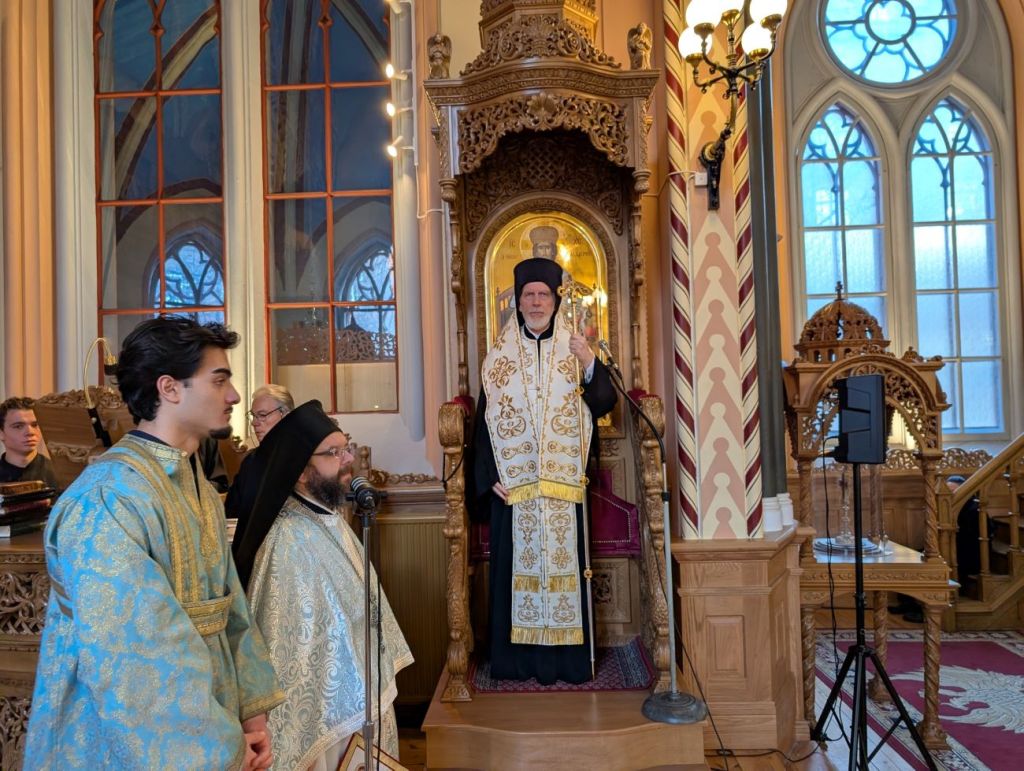
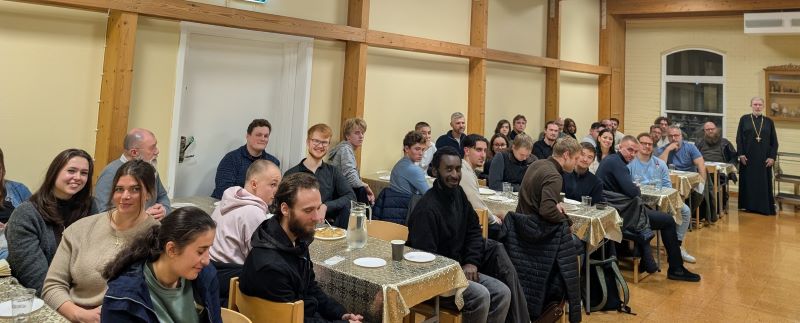
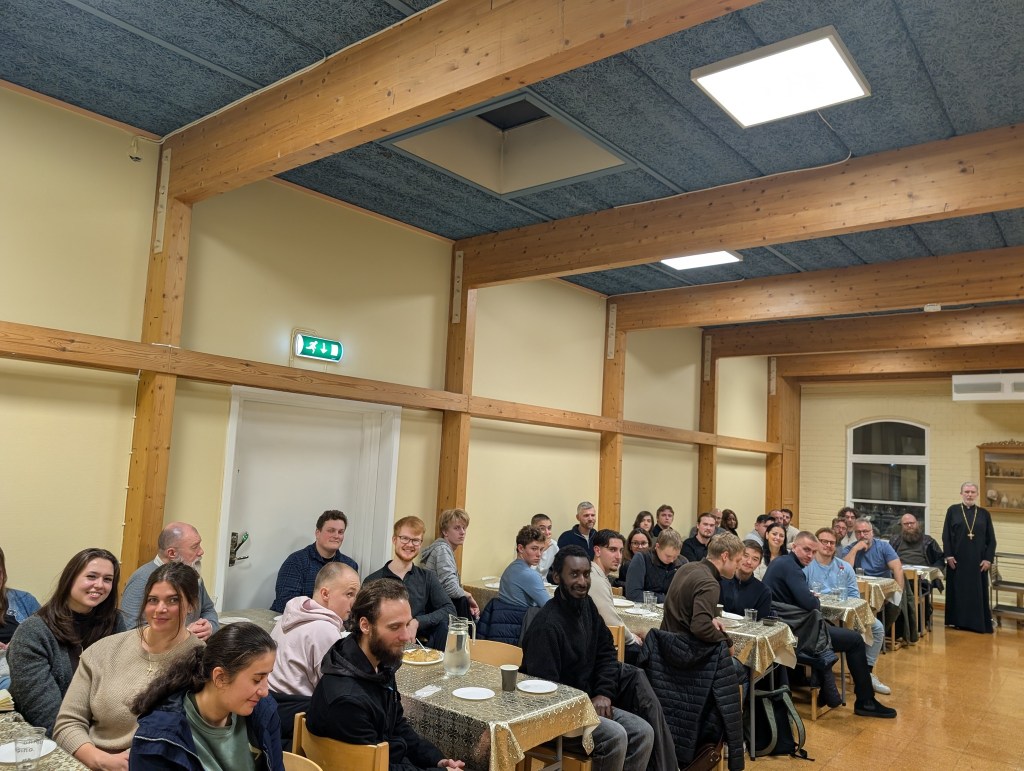
5th Meeting of Catechumens and Newly Illumined at the Stockholm Cathedral

On the afternoon of Thursday, November 20th, 2025, the fifth consecutive meeting of Catechumens and Newly Illumined of the Holy Metropolis of Sweden took place in the welcoming premises of the St. George Cathedral of Stockholm (Birger Jarlsgatan 92, 114 20 Stockholm), with the participation of 50 young people in person and another 25 online.

Once again, His Eminence Metropolitan Cleopas of Sweden and All Scandinavia served as the speaker, addressing the participants in the English language, in order to accommodate the diverse group of Catechumens and newly baptized faithful who come from various countries and cultural backgrounds.

The topic of the presentation was the continuation of the lecture entitled:

“The Missionary Work of the Evangelist Matthew.”

During the session, participants once again posed thoughtful and insightful questions, to which His Eminence offered well-founded and pastoral responses.

At the conclusion of the meeting, refreshments were offered in honor of all who were present, particularly the young people who serve the local Church faithfully and with dedication in various ministries.

The next meeting will take place on Thursday, December 18th, 2025, at 6:00 p.m., in the same location, and will inaugurate a new cycle of thematic presentations. (The entrance is from the church drive way.)

At the upcoming meeting, the catechumens will be given the catechetical support books in Greek and English, which were kindly offered on behalf of the organization ‘Agape Hellas’ by Mr. Emmanouil Toufexis. The books are titled: ‘A Deeper Acquaintance with Jesus Christ’ (‘Going Deeper with Jesus Christ’).

Those residing outside Stockholm may follow the meeting online at the link below:

For further information, please contact: +46 73 542 9745 or at metropolisofsweden@gmail.com