Ανακοινώσεις

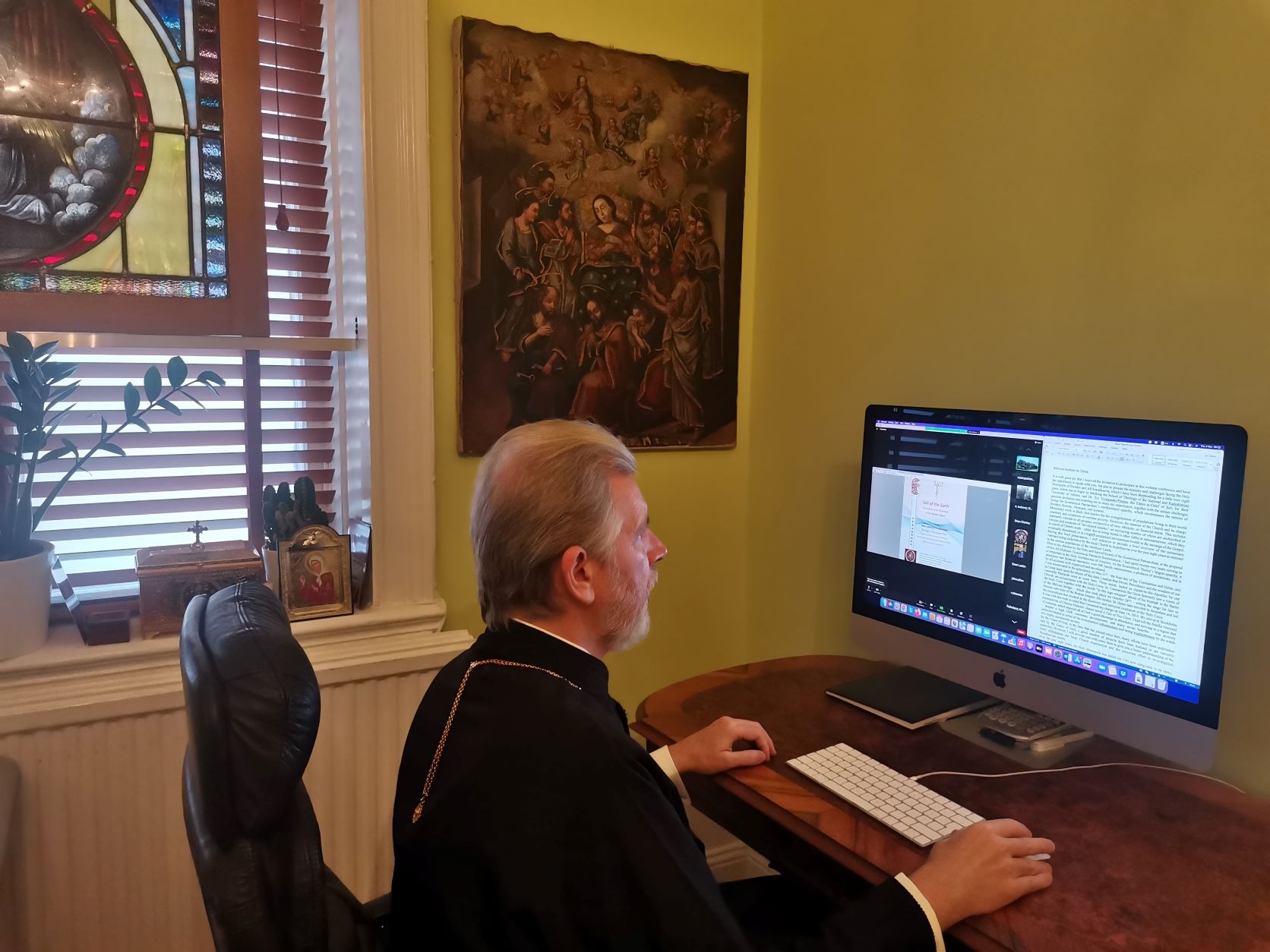
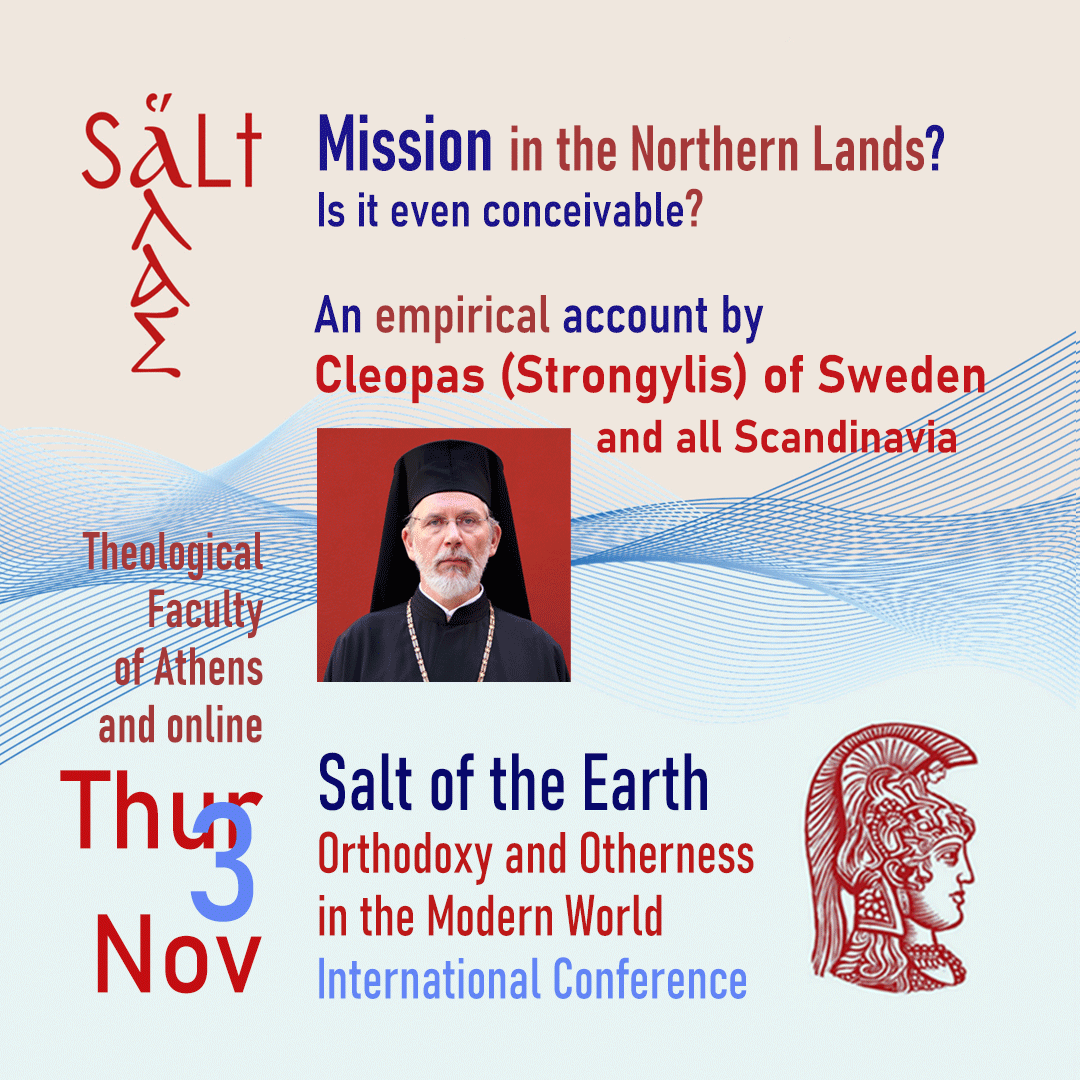
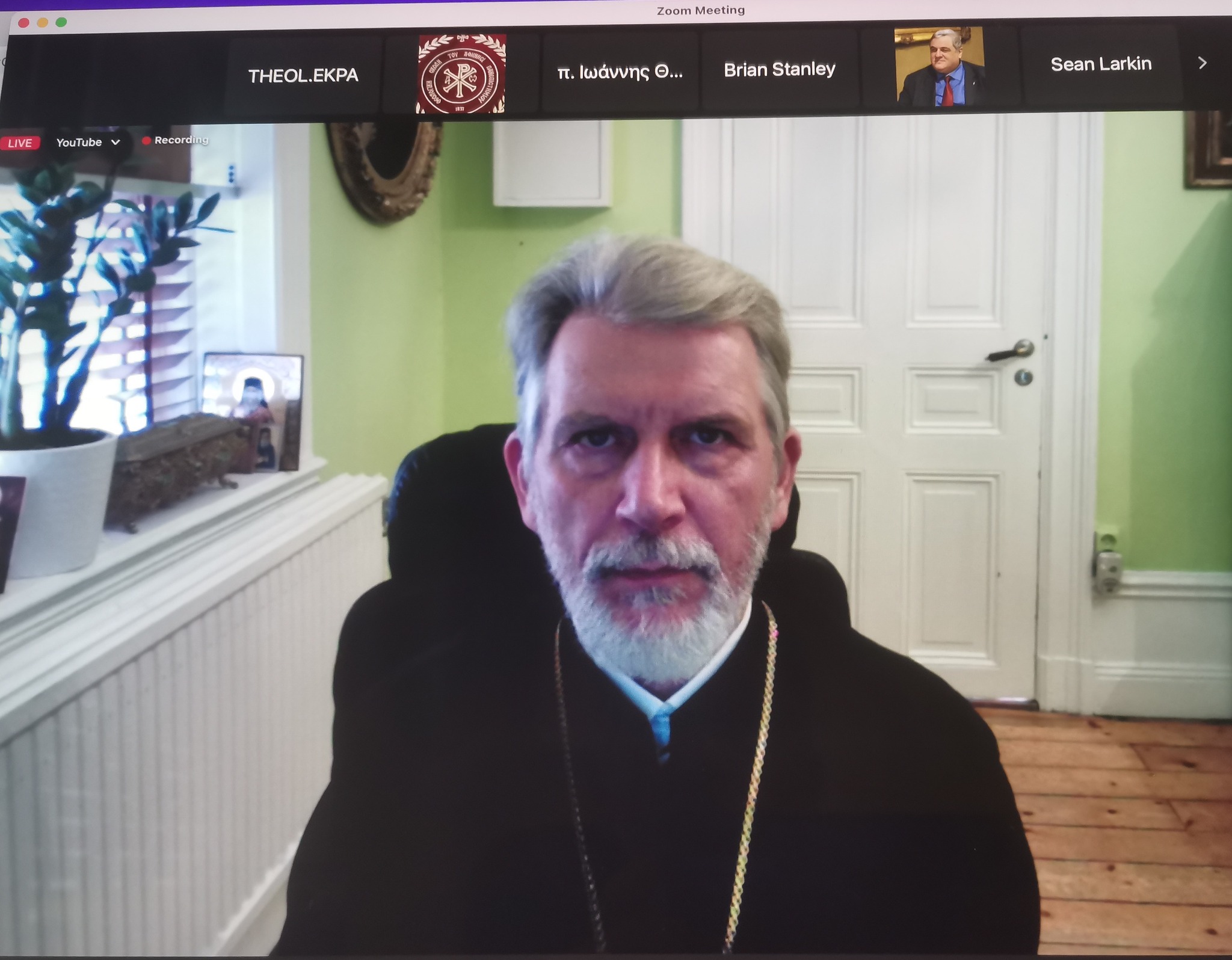
Speech by His Eminence Metropolitan Cleopas of Sweden at the School of Theology of the National and Kapodistrian University of Athens “Salt of the Earth” Conference: Orthodoxy and Otherness in the Modern World

Topic: Missionary Work in the Northern Lands: An Empirical Perspective

Athens, November 3, 2022

Beloved Brethren in Christ, 

It is with great joy that I received the invitation to participate in this webinar conference and have the opportunity to speak with you, but also to present the ministry and challenges facing the Holy Metropolis of Sweden and All Scandinavia, which I have been shepherding for eight-and-a-half years.

Allow me to begin by thanking the School of Theology of the National and Kapodistrian University of Athens, and Dr. Evi Voulgaraki-Pissina, the Editor-in-Chief of Salt, for their gracious invitation and enabling me to share my experiences, together with the unique challenges facing the Ecumenical Patriarchate’s northernmost eparchy, which encompasses the nations of Sweden, Norway, Denmark, and Iceland.

Missionary work is likely best known for the evangelization of populations living in third-world countries and conditions of extreme poverty. However, the mission of the Church and its charge inherently extends to all peoples, irrespective of race, ethnicity, or financial status. This includes citizens and residents of “developed nations,” an increasing number of whom are unchurched or in search of Christ’s truth – either due to being raised in other faiths or denominations, which they eventually abandoned, or in a highly secularized environment hostile to the message of the Gospel. During this brief presentation, I will endeavor to provide a brief overview of the missionary outreach being undertaken by the local Church in Scandinavia over the past eight-and-a-half years to minister to the various populations of the Northern Lands.

Prior to my election by the Holy and Sacred Synod of the Ecumenical Patriarchate, at the proposal of His All-Holiness Ecumenical Patriarch Bartholomew, I had spent twenty-two years serving as a clergyman in the Holy Archdiocese of America. As the Ecumenical Throne’s largest eparchy, it possesses vast financial resources, over 500 parish communities, a plethora of institutions, and is by all accounts well organized and developed.

I was ordained to the episcopacy on May 21st – the feast day of Sts. Constantine and Helen, and as I look back upon the choice of this date, I realize that Divine Providence and the wisdom of our venerable Patriarch were at work here. These saints, hailed as equals-to-the-Apostles by our Church, are synonymous with the Holy Cross. St. Constantine the Great famously saw a vision of the Holy Cross together with the words “in this sign conquer” ahead of his triumph in the Battle of the Milvian Bridge – which also took place on October 28th! – setting the stage for him to become sole ruler of the Roman Empire. His mother St. Helen later traveled to Jerusalem and led the excavations that resulted in the discovery and universal exaltation of the Holy Cross.

I often think about this and the role of the Holy Cross in my ministry and the life of the Church. St. Nectarios of Pentapolis, who served as the subject of my doctoral dissertation and who inspired most of my publications, famously coined the saying: “Σταυρός, ἡ μερὶς τοῦ βίου μου,” which roughly translates to “The Cross, a part of my life.” It is this understanding of the Cross as a “weapon of peace; an invincible trophy” with which I armed myself as I prepared to undertake a ministry in a land that was foreign to me, with many unknown circumstances.

The limitations of the human senses cannot interpret the mystery of the God-man’s sacrifice on the Cross, just as they cannot comprehend His kenosis or self-emptying, and His humility. Therefore, this singular event of Divine condescension and love can be experienced in no other way than through awe and joy. Awe and joy reveal the deeper meaning of the Cross, which symbolizes the concept of χαρμολύπη, which can be loosely translated to mean sweet sorrow or happiness intermingled with sadness. It refers to the spiritual condition that reflects or should reflect the permanent ethos of the Orthodox Christian mentality and Orthodox Christian truth. Let us not forget that the Cross holds a prominent position in the life and faith of Orthodox Christians, and hence best describes the missionary experience.

St. Silouan would say that the Cross of the Lord grants hope and the ability to overcome the hell of failure, because it opens up prospects for us to observe life and experience it, overcoming hell and Hades. In our daily struggle to spread the Gospel, let the Lord’s words ring clearly and triumphantly: “In the world you shall have tribulation; but be of good cheer, I have overcome the world” (John 16:33). Besides, we must not forget that even the simplest faithful Christian expresses the experience of χαρμολύπη through the sign of the Cross.

It was with this truth in mind that I assumed my charge on June 14, 2014. My arrival in Stockholm reminded me of Charles Dickens’ classic novel A Tale of Two Cities. I had left the fruitful vineyard of America, which enjoyed all of God’s good blessings in abundance, and arriving to a region that – despite boasting a high GDP, economic development, and many social benefits – was severely underdeveloped in terms of its ecclesiastical infrastructure and being weather-beaten by the winds of a highly secularized society.

By the Grace of God, in the time that has passed since then, many efforts have been undertaken and by the Grace of God, a good number of projects have been realized or are currently underway. However, I will provide you with some facts to give you a better understanding of the many deficiencies and privations our local Church experienced and the concerted effort to re-evangelize Scandinavian society.

Over the past eight years, the Holy Metropolis has added ten (10) new clergymen to its ranks, raising the present number to eleven (11), inasmuch as only one (1) clergyman was serving in the entire Metropolis prior to my arrival. Over that same period, along with the existing six (6) parishes, ten (10) new ecclesiastical communities were established: five (5) in Sweden – St. Cleopas the Apostle in Kalmar, The Entrance of the Theotokos into the Temple in Borås, Sts. Constantine and Helen in Jönköping, the Transfiguration of Christ in Överkalix, and the St. Nicholas Hermitage in Rättvik; three (3) in Norway – St. Nectarios of Pentapolis in Stavanger, St. Chrysostomos of Smyrna the Holy Ethnomartyr in Bergen, and St. Gerasimos of Cephalonia in Trondheim; one (1) in Denmark – St. Georgios of Ioannina the New Martyr in Roskilde; and one (1) in Iceland – St. Bartholomew the Apostle in Reykjavík.

The establishment of new parishes all throughout Scandinavia was a major priority, because there were Orthodox Christian faithful living in remote areas, as well as large cities, that were underserved and unchurched. Thanks to the continued establishment of new parishes, the Orthodox Christian witness is spreading throughout the entire region, while local enclaves of Orthodox Christians have an opportunity to attend church regularly. This is the cornerstone of our ministry.

In April 2018, the Divine Liturgy of St. John Chrysostom was published in Greek, English, and Swedish for the first time. The necessity of this initiative arose as a result of native Swedish speakers’ – especially young people’s – need to understand the Divine Liturgy. A large number of faithful from this demographic come from mixed marriages and their comprehension level of liturgical texts is limited, resulting in an inability to fully comprehend the richness of our tradition of worship.

As an eparchy of the Ecumenical Patriarchate, we are called to spiritually serve not only our Greek Orthodox brethren, but also all those who – out of zeal or interest – wish to learn more about the ministry of the Holy Metropolis, regardless of their religious, national, and social background. This is why the Holy Metropolis of Sweden’s ministry and pastoral work is missionary in nature and directed to “all the nations.” (Matthew 28:19). This is another feature of our missionary work. The Greek language is revered and plays a leading role in our liturgical life, but the local languages of all 4 nations are also included in attempt to facilitate outreach and minister to an increasingly heterogeneous congregation.

Our outreach efforts and Orthodox testimony have yielded fruits. From June 2014 until now, following the corresponding spiritual preparation and catechesis, the Holy Metropolis of Sweden has welcomed over 170 new members into the faith, via adult baptisms or the service of Chrismation for heterodox. Through our extroversion and social consciousness, the Holy Metropolis actively invites people from all walks of life in the present-day multicultural Scandinavian reality to “come and see,” as Philip told Nathanael.

Another feature of our missionary approach is extending the liturgical experience to other aspects of our communal existence. From June 2014 until today, Sunday Schools, Ladies Philoptochos Society chapters, youth groups, and the Holy Metropolis’ radio station have been established, while lessons in iconography, Byzantine music, and cooking are being offered. These are some of our communal activities aimed at promoting social inclusion and extending the sense of belonging for our parishioners.

Newly arriving brethren from Greece represent a steady part of our local Church’s weekly pastoral ministry, with the Holy Metropolis putting forth an organized effort to help them find housing and work at the earliest possible, thus facilitating their integration into local society. We are currently extending similar efforts to aid refugees arriving from war-torn Ukraine and other areas of the world.

The efforts of the Holy Metropolis during this same period include the adoption of administrative measures (i.e., increase in office hours from three (3) hours per week to a full eight-hour day, Monday through Friday), and regular archpastoral visits throughout the entire realm of the Holy Metropolis. It is important for parishioners and visitors to know that they can come into contact directly with Metropolis personnel in real time.

Since this webinar is being hosted by the University of Athens, let me take this opportunity to commemorate a great citizen of Athens, the orator Demosthenes, who famously said in his First Olynthiac speech that “we need money, for sure, Athenians, and without money nothing can be done that ought to be done.” This reality holds true today, nearly two-and-a-half millennia later, and that is why fundraising is such an essential component of missionary work.I personally spearhead fundraising efforts to ensure: a) the smooth operation of the Holy Metropolis and its parishes, b) the renovation of its churches, c) the modernization of our technologies, d) the upgrading and development of our facilities to showcase the Hellenic Christian heritage.

Until today, three concerts, as well as several day conferences and speeches of a religious and cultural nature, receptions and lunches, and four instructional conferences for clergymen and prospective clergymen have been organized.

Our crowning achievement in terms of fundraising involves the full interior and exterior restoration of our Cathedral, which is a historic Stockholm landmark over 130 years old, which had never been previously renovated. This ambitious project, which was miraculously completed during the duration of the pandemic, completely changed the face of our largest and most historic church, providing a unique Hellenic Christian imprint in the heart of Stockholm. We performed a similar extensive renovation at the Metropolitan Church of the Annunciation in Oslo and the Hermitage of St. Nicholas in Rättvik, Sweden.

The establishment of a Museum of Hellenic-Christian Heritage was a sine qua non for us, inasmuch as it filled a longstanding void. This museum space, which has been housed inside the facilities of the St. George Cathedral in Stockholm, showcases the treasures of our cultural heritage in the most effective manner possible, providing visitors with knowledge, information, and an empirical foundational basis. At the same time, the promotion of the Hellenic Christian heritage to the general Scandinavian public is a responsibility of the Holy Metropolis, with artifacts of this culture, which have been saved throughout the centuries, being clearly displayed in the glass museum showcases and clearly expressing its values, viewpoints, ideals, and aesthetic perspective.

Along with the museum, two new offices for the clergy, a library and an archive room were established in the Stockholm Cathedral premises, and the church was adorned with 36 large icon frescos in the altar, above the entrance and the balcony.

By the grace of God, His All-Holiness Ecumenical Patriarch Bartholomew presided over the dedication ceremony of our Museum and other renovated facilities during his official visit to the Metropolis in 2019 to celebrate our Metropolis’ semi-centennial and preside over our first ever Clergy-Laity Synaxis. Approximately 200 representatives of the 16 parishes, in the 4 nations that consist the Metropolis, as well as 43 members of the Dialogue between the Orthodox and Lutheran Church attended the Synaxis.

Aware of the demands of the modern age and taking advantage of technology, I make it a point to develop our Metropolis’ internet ministry, writing articles, encyclicals, messages and press releases, to keep our faithful and interested parties regularly informed through the Metropolis social media about our liturgical life, community events, and manifold ministries. 

I must also point out that it is of great importance to cultivate good cooperation with the local Civic and Church Authorities, as well as the heads of our doctrines and faiths, as through the spirit of love and dialogue, reconciliation and peace is preserved and prevailed, which benefit the inhabitants of the four nations and offers authentic Orthodox testimony to society at large. Faithfully serving the work of His All-Holiness the Ecumenical Patriarch, we support and promote Christian unity, which we do not consider to be a luxury, but rather, a necessity and a priority. There is no greater proof of what I am saying than the close relations and collaboration that have blossomed between the Holy Metropolis and other Christian Communities following the inception of my archpastoral duties, as well as my personal attendance at events organized by the other Orthodox presences, the Lutheran, Roman Catholic, Coptic, and Syriac-Aramean Churches.

Along with participation in events organized by other Christian communities, I have participated in numerous international conferences, representing the Ecumenical Patriarchate. In fact, I have already visited 16 nations from the day of my election to the episcopacy. Moreover, I have had the privilege of participating as a rotating member of the Holy and Sacred Synod of the Ecumenical Patriarchate. In addition, for the last five years, I participate in the meetings of the Conference of European Churches, where I currently serve as Vice-President.

Finally, in my pastoral work, I also include my writing activity and contribution for the enlightenment of the members of our Church and those who wish to learn more about the Orthodox faith, life and history. During my ministry in Sweden, I was guided by God’s Grace to publish a bilingual two-volume work on Saint Nectarios of Pentapolis, the trilingual edition of the Divine Liturgy in Greek, English, and Swedish, the bilingual edition of the Akathist Hymn in Greek and Swedish, a story for children in the Swedish language, as well as books written by the missionary and former clergyman of our Metropolis the late Fr. Eusebius Vittis.

I am grateful to the Trinitarian Godhead for all our accomplishments, which were achieved through prayer, many sleepless nights and long workdays, and the continual knowledge that on the path toward Golgotha and the Cross that each of us is called to bear for the salvation of our souls, Christ walks together with us, lightening our load and encouraging us through the empirical knowledge that the Resurrection always follows the Cross and our journey does not end at Golgotha, but at Emmaus!

There is still much to be done to advance our missionary work in the Northern lands, minister to the unchurched, and re-evangelize local society. As St. John Chrysostom says, “οὐκ ἱστάμεθα, πορευόμεθα γάρ,” we do not stand, for we are constantly pushing ahead. This is our task and our defining trait. This is the model handed down to us from the Fathers of the Church who worked continuously, dedicating their attention to every possible aspect of their flock’s communal life.

For my part, I express the humble wish that we may all derive spiritual joy from this webinar where we have come to share our experiences and knowledge in the service of Christ’s Gospel, since we all confess that: “behold, through the Cross joy has come to the entire world.”

Let us all boast, then, in Christ, as St. Paul the Apostle did: “but God forbid that I should boast except in the cross of our Lord Jesus Christ” (Gal. 6:14). This is a boast that is made not with sentiments of egotism and pride over superiority to others, but because our Savior Jesus Christ Himself, Who went up on the Cross, calls us to a life and freedom and love. And this invitation is too precious to keep to ourselves. It is activated by spreading the good news of the Gospel, which is achieved through missionary work for the glory of the Trinitarian God!

Thank you.
Ανακοινώσεις

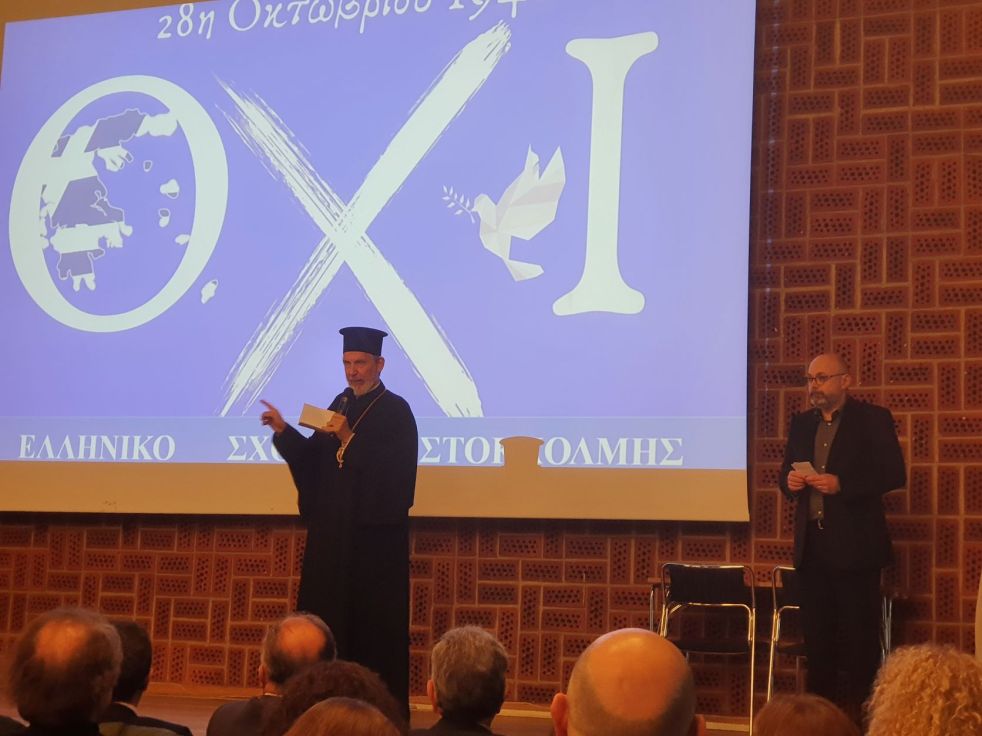
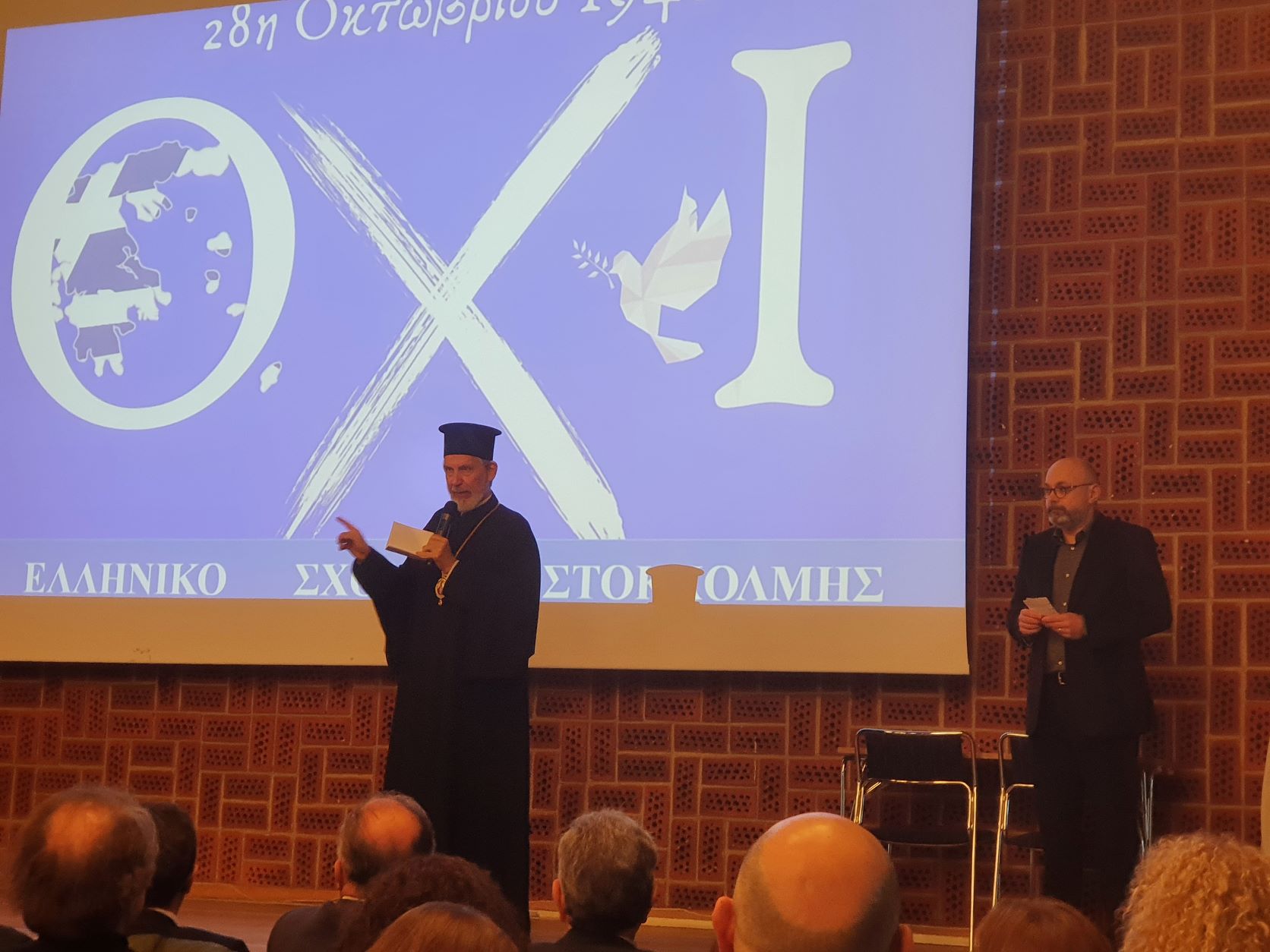
Ο Μητροπολίτης Κλεόπας στη γιορτή του Ελληνικού Σχολείου Στοκχόλμης

Το Σάββατο, 29 Οκτωβρίου 2022, πραγματοποιήθηκε η γιορτή της 28ης Οκτωβρίου 1940, στο Ελληνικό Σχολείο Στοκχόλμης, στην οποία συμμετείχαν ο Πρέσβυς της Κύπρου στη Στοκχόλμη Εξοχώτατος κ. Σόλων Σάββα, ο Πρόξενος της Ελλάδος Εντιμώτατος κ. Νικόλαος Καραλέκας, ο πρώην Πρόεδρος του Ελληνικού Σχολείου κ. Γεώργιος Κωνσταντίνου με τη σύζυγό του Μαρία και ο Σεβ. Μητροπολίτης Σουηδίας κ. Κλεόπας.

Ο Μητροπολίτης χαιρέτησε τη γιορτή των μαθητών του σχολείου, εκφράζοντας τις ευχαριστίες του προς τον Πρόεδρο του Σχολείου κ. Δημήτρη Σιώτη, για την ευγενική πρόσκληση του ιδίου και των μελών της εφορείας του σχολείου και των καθηγητών, και αναφερθείς στη διπλή γιορτή του Ελληνισμού, ανέφερε τα εξής:

“Σήμερα, πανηγυρίζουμε μία επέτειο, η οποία έμεινε γνωστή στην παγκόσμια ιστορία. Είναι η επέτειος του “ΟΧΙ” των Ελλήνων προς τους Ιταλούς κι ενώ συνήθως κάθε χώρα γιορτάζει τη λήξη ενός πολέμου, αντίθετα εμείς, με την επέτειο της 28ης Οκτωβρίου, γιορτάζουμε την αρχή ενός πολέμου.

Η Ιταλία ζήτησε από την Ελλάδα την άδεια να περάσει ο στρατός από τα Ελληνοαλβανικά σύνορα και να της παραχωρηθούν κάποια σημεία στρατηγικής σημασίας, όπως λιμάνια και αεροδρόμια. Ο τότε Πρωθυπουργός της Ελλάδος απάντησε με ένα μεγάλο “ΟΧΙ” κι αυτό βέβαια σήμανε την είσοδο της πατρίδος μας στο Β΄ παγκόσμιο πόλεμο.

Μαζί, όμως, με τη μεγάλη αυτή γιορτή, στην Εκκλησία μας πανηγυρίζουμε το ιερό πρόσωπο της Παναγίας μας, την Αγία Σκέπη, όπου, σύμφωνα με τις μαρτυρίες πολλών στρατιωτών του ”40, εμφανίστηκε μπροστά τους η Παναγία και τους προστάτευε, τους σκέπαζε, όταν πολεμούσαν τους κατακτητές.

Ο πόλεμος είναι αποτέλεσμα της κακίας και της πλεονεξίας των ανθρώπων. Ας προσευχηθούμε στο Χριστό κι ας επαναλάβουμε το λόγο των ψαλμών: “Ὑπόταξον Κύριε πάντα τά βάρβαρα ἔθνη τά τούς πολέμους θέλοντα.”

Ας απολαύσουμε τη γιορτή που έχετε ετοιμάσει και ας δώσουμε σε όλους ένα μήνυμα, μέσω της προσευχής μας, να σταματήσουν οι πόλεμοι και να επικρατήσει στον κόσμο η ειρήνη του Χριστού.”

Στο τέλος, ο μεν Ποιμενάρχης συνεχάρη όλους όσοι συντελούν στην πρόοδο του σχολείου και τους κάλεσε να παραστούν αύριο, Κυριακή, στον Καθεδρικό Ναό Αγίου Γεωργίου Στοκχόλμης, στη Θεία Λειτουργία και στη δοξολογία που θα ακολουθήσει, ο δε πρόεδρος του σχολείου διένειμε τα πιστοποιητικά ελληνομάθειας σε μαθητές του σχολείου.

Ανακοινώσεις

Μητροπολίτης Σουηδίας Κλεόπας, “Η μικρή λησμονημένη” της 28ης Οκτωβρίου

Δυό γιορτές σήμερα, με κοινό χαρακτηριστικό τον ηρωϊσμό. Ηρωΐδα μητέρα η Σκέπη η αγία,
η Παναγία, στο πλάι του Γιού της και στο πλάι των άλλων γιών της, των στρατιωτών της
Πίνδου, και το δικό μας ηρωικό ΟΧΙ, των Ελλήνων, απέναντι στη διαταγή του Μουσολίνι.


Ο σημερινός εορτασμός αποτελεί έναυσμα έντονου προβληματισμού, αν και κατά πόσο
μιμούμαστε όλους αυτούς που τιμά η σημερινή επέτειος. Αν γνώμονας, δηλαδή, της πορείας
μας, και η αλήθεια της νεοελληνικής μας ελευθερίας και συνείδησης, συνοψίζονται στην
έξαρση που προκαλούν οι στίχοι: “Απ’ τα κόκκαλα βγαλμένη των Ελλήνων τα ιερά”, ή
στη λυπηρή διαπίστωση της “Μικρής Λησμονημένης” του Μάνου Χατζιδάκη, “Σου
σπάσανε τα κόκκαλα τ’ ασθενικά παιδιά μας”, που αποτελεί την αναστροφή του ως άνω
Σολωμικού.
Οι ήρωες του ᾽40, οι άγιοι δηλαδή κι αγωνιστές της εποχής εκείνης, βίωσαν την ελευθερία,
ως εσωτερική απολύτρωση από το “εγώ”, στη θέση του οποίου κυρίαρχη θέση πλέον είχε ο
Θεός κι ο κόσμος ολόκληρος. Η θυσία των τιμώμενων ηρώων/αγίων τους ύψωσε στην
αιωνιότητα και τους επέβαλε ως φωτεινούς δείκτες στο στερέωμα της ιστορίας.
Η ευλογητική παρουσία τους στη ζωή των Ελλήνων όπου γης θα αποτελεί την επιβεβαίωση
της αρχής ότι ο ηρωισμός είναι μια θυσία, για χάρη της πνευματικής ιδέας που συναρπάζει,
που ανακαινίζει και μεταμορφώνει το άτομο σε πρόσωπο, που αναδεικνύει αληθινούς ήρωες,
ινδάλματα και πρότυπα σύγχρονα και διαχρονικά.
Οι αγώνες σε κάθε εποχή για την κατάκτηση της ελευθερίας είναι η απάντηση σε κάθε
αλλότρια δύναμη που προσπαθεί να ξεθεμελιώσει τα ιδανικά του Γένους, τη μνήμη και τις
θυσίες των προγόνων. Η παρακαταθήκη όσων αγωνίστηκαν είναι να τους μοιάσουμε και να
θυσιάζουμε καθημερινά το εγώ μας προς χάριν της ενότητας, της ομοψυχίας, δίχως διαιρέσεις
και διχόνοιες, που είναι δυστυχώς η “αχίλλειος πτέρνα” μας.
Συνυπάρχουμε ως Ελλάδα, εντός και εκτός συνόρων, συν-οραματιζόμαστε, συνεργαζόμαστε,
αλληλοπεριχωρούμαστε, μαθαίνουμε ο ένας από τον άλλο, εμπιστευόμαστε ο ένας τον άλλο.
Αναγκαιότητα και αρετή η ενότητα, η ομοψυχία, η αρμονική συμβίωση.
Στην εποχή μας, οφείλουμε έτι περισσότερο, να διατηρήσουμε τα ιδανικά μας,
υπερασπιζόμενοι την ταυτότητά μας έναντι των σύγχρονων κινδύνων, όπως αυτός της
παγκοσμιοποίησης, που αλλοιώνει τις κοινωνίες και καθιστά τον άνθρωπο ανελεύθερο,
δίχως όραμα, δίχως προοπτική.
Το “Άξιον εστί” του Οδυσσέα Ελύτη δανείστηκε απ᾽ την Ελλάδα παραστάσεις, ήχους,
νοσταλγίες κι αγώνες, συγγράφοντας ένα ποίημα σύμβολο, χιλιοτραγουδισμένο,
παρακαλώντας όλους μας, “να μη λησμονήσουμε τη χώρα μας”, επισημαίνοντας την ατομική
μας ευθύνη για τη διατήρηση της ταυτότητας μας, της Ελληνορθοδοξίας μας, της διαχρονικής
δηλαδή συμπόρευσης του Παρθενώνα με την Αγία Σοφία.
Ζούμε αναμφίβολα σε μια εποχή έντονων αντιφάσεων και εν εξελίξει πολεμικών
συγκρούσεων. “Ας αντισταθούμε στην ασχήμια των καιρών”, όπως συνήθιζε να λέει ο Μάνος
Χατζιδάκις κι ας προβληματιστούμε θετικά από τα λόγια του εθνικού ευεργέτη και προέδρου
του Ιδρύματος “Σταύρος Νιάρχος” κ. Ανδρέα Δρακόπουλου: “Η ελληνική ψυχή είναι
μοναδική και πρέπει να την ξυπνήσουμε από τον λήθαργό της, να την ταρακουνήσουμε, όχι
να την αφήνουμε απλά να υπάρχει, σαν προσκύνημα στις κορνίζες των ηρωϊκών προγόνων
μας.”
Ας γίνουν τραγούδι της ψυχής μας οι στίχοι του Κυριάκου Ντούμου: “… Έχω στα στήθια
μου τους στίχους του Σεφέρη, έχω του Γκάτσου την Αμοργό, έχω τον Κάλβο, τον Σολωμό.
… Έχω έναν ήλιο φυλαχτό απ’ τη Βεργίνα, Έχω τον Όλυμπο, τον Υμηττό, το Παλαμίδι, την
κυρά της Ρω. Έχω μια θάλασσα αγάπες στο Αιγαίο, Έχω στη Κρήτη ένα Θεό, ένα ακρωτήρι
κι ένα σταυρό, … έχω ένα δέντρο στην Επίδαυρο φυτέψει, έχω μια ορχήστρα κι ένα βωμό,
έχω τον λόγο μου τον τραγικό, …με την Ελλάδα εγώ ξυπνάω και κοιμάμαι!”

Χρόνια πολλά, Αδελφοί μου!

Ανακοινώσεις

Ομιλία Σεβ. Μητροπολίτου Σουηδίας κ. Κλεόπα στην Κυριακή Στ΄ Λουκά

Καθεδρικός Ναός Αγίου Γεωργίου Στοκχόλμης

Κυριακή, 23 Οκτωβρίου 2022

Πανοσιολογιώτατε,

Μουσικολογιώτατοι,

Αγαπητοί μου Αδελφοί,

Το κάθε θαύμα του Κυρίου, όπως και ολόκληρη η διδασκαλία Του, έχουν ως κύριο στόχο να αποκαλύψουν το μυστήριο του ερχομού της βασιλείας του Θεού στον κόσμο. Μιας βασιλείας, όπου δεν έχει θέση ο πόνος και η δυστυχία, οι θλίψεις κι οι αρρώστιες. Μιας βασιλείας, που είναι η κοινωνία της αγάπης του Θεού με τον άνθρωπο, γι’ αυτό και το κάθε θαύμα του Χριστού είναι ο αγωγός από τον οποίο διοχετεύεται η χάρη και η αγάπη του Θεού στους ανθρώπους.

Το σημερινό θαύμα στη χώρα των Γαδαρηνών έγινε η αιτία να γνωρίσουμε δύο αντίθετες στάσεις, ανάμεσα στο θεραπευμένο από τα δαιμόνια άνδρα και στους υπόλοιπους Γαδαρηνούς. Η μία θέση είναι θετική, από τον πρώην δαιμονισμένο κι η άλλη αρνητική, από τους κατοίκους της πόλης.

Ο πρώην δαιμονισμένος παρακαλεί το Χριστό, να μην τον αφήσει μοναχό, αλλά να του επιτρέψει να τον ακολουθήσει. Οι Γαδαρηνοί, αντίθετα, Τον παρακαλούν, να φύγει μακριά τους.

Ας δούμε, όμως, ποιά ήταν τα ελατήρια που δημιούργησαν τόσο αντίθετες στάσεις για το πρόσωπο του Κυρίου μας; Ο προ ολίγου δαιμονισμένος έχει καθίσει κοντά Του, «ἱματισμένος καί σωφρονῶν».

Το «πλῆθος» των δαιμονίων έχει εγκαταλείψει το δυστυχισμένο άνθρωπο, χάρη στη θαυμαστή παρέμβαση του Ιησού. Τα δαιμόνια εισήλθαν στους χοίρους, παρακαλώντας τη δίκαιη καταστροφή τους μέσα στη λίμνη. Άλλωστε, ήταν απαγορευμένο το εμπόριο των χοίρων από το Μωσαϊκό Νόμο.

Για πολλά χρόνια, ο γεμάτος δαιμόνια Γαδαρηνός είχε γίνει ο φόβος κι ο τρόμος. Τον είχαν αλυσοδέσει και περιπλανιόταν έξω από το χωριό, σε άθλια κατάσταση. Για το ταλαίπωρο συνάνθρωπό τους, έμαθαν οι Γαδαρηνοί από τους χοιροβοσκούς, ότι τον ευεργέτησε ο Χριστός, ότι του χάρισε την ειρήνη της ψυχής του, αλλά και ότι προκάλεσε τον πνιγμό των χοίρων.

Στο άκουσμα αυτό, οι Γαδαρηνοί αντέδρασαν αρνητικά. Συναντήθηκαν με το Χριστό, με διαθέσεις άγριες. Δεν πέρασε από το μυαλό τους το θαυμαστό γεγονός της θεραπείας ενός βασανισμένου από τα δαιμόνια συνανθρώπου τους. Δε χάρηκαν γιατί έγινε υγιής, αλλά αγανάκτησαν και ζήτησαν επιτακτικά από το Χριστό, να φύγει από την πόλη τους.

Μια ομάδα ανθρώπων, κυριευμένη από το παράνομο κέρδος, βιώνουν την παρουσία του Χριστού ως καταστροφική, ως ανατροπή ενός διαβρωτικού κατεστημένου και μιας θρησκευτικά διαστροφικής συνήθειας, της εκτροφής των χοίρων.

Τα κριτήριά τους είναι υλικά. Μένουν αδιάφοροι στην αμαρτωλότητά τους, στην παρανομία τους και το σπουδαιότερο, στη θεραπεία του συμπατριώτη τους. Δεν υποπτεύονται καν, ότι πάνω και πέρα από το παράνομο ή νόμιμο υλικό κέρδος, υπάρχει και προβάλλει το αιώνιο κέρδος της ψυχής, που είναι η σωτηρία της!

Πόσοι από τους σημερινούς «Γαδαρηνούς», δεν παραδέχονται ότι η συνεπής χριστιανική ζωή είναι ζημιογόνος και καταδικαστέα; Απουσιάζει  σ᾽ αυτούς το αξιολογικό κριτήριο για την ύπαρξή τους και τον κόσμο, γι’ αυτό, αντί να αγωνίζονται να κερδίσουν το Χριστό, επιδιώκουν να κερδίσουν τον κόσμο όλο, μια κατάκτηση με απροσδιόριστες, επώδυνες  κι επικίνδυνες διαστάσεις.

Άραγε, ο σύγχρονος άνθρωπος, με ποιά αξιολογικά κριτήρια απαντά στα προβλήματα της ζωής; «Ἐγεύθη» το Χριστό, έζησε την παρουσία Του και θέλει να παραμείνει κοντά Του «ἱματισμένος καί σωφρονῶν», ή μήπως Τον εξόρισε από τη ζωή του και δέχτηκε τη διαστροφή ως τρόπο ζωής, τη δε ζωή εν Χριστώ ως περιθωριακή συμπεριφορά των ολίγων και επικίνδυνων για την εποχή μας;

Θα μου επιτρέψετε, να καταθέσω κάποιες χαρακτηριστικές σκέψεις του Μάνου Χατζιδάκι: “Η πιθανή προέκταση του αξιώματος είναι, να συνηθίσουμε τη φρίκη, να μας τρομάζει η ομορφιά […] Η υποταγή ή ο εθισμός σε μια τέτοια συνύπαρξη, ή συνδιαλλαγή, δεν προκαλεί τον κίνδυνο της αφομοίωσης ή της λήθης, του πως πρέπει, του πως οφείλουμε να σκεφτόμαστε, να πράττουμε και να μιλάμε; Αναμφισβήτητα αρχίσαμε να το ανεχόμαστε. Όταν όμως το πρόσωπο του τέρατος πάψει να μας τρομάζει, τότε πρέπει να φοβόμαστε… γιατί αυτό σημαίνει ότι έχουμε αρχίσει να του μοιάζουμε.”

Οι κάτοικοι των Γαδαρηνών τρόμαζαν στη θέα του υγιούς πλέον πρώην δαιμονισμένου! Κάτι που δεν το έκαναν, όταν ο ίδιος ήταν υπό την επήρεια του δαίμονα.

Προσεύχομαι κι εύχομαι, η ψυχή μας να στολίζεται πάντοτε με την ομορφιά του θαύματος, της πίστης, των πνευματικών αγώνων και καταξιώσεων, της δημιουργίας και της κατά Θεόν προόδου. Αμήν!

Ανακοινώσεις

Ο Μητροπολίτης Σουηδίας ομιλητής και λειτουργός στη Βοστώνη

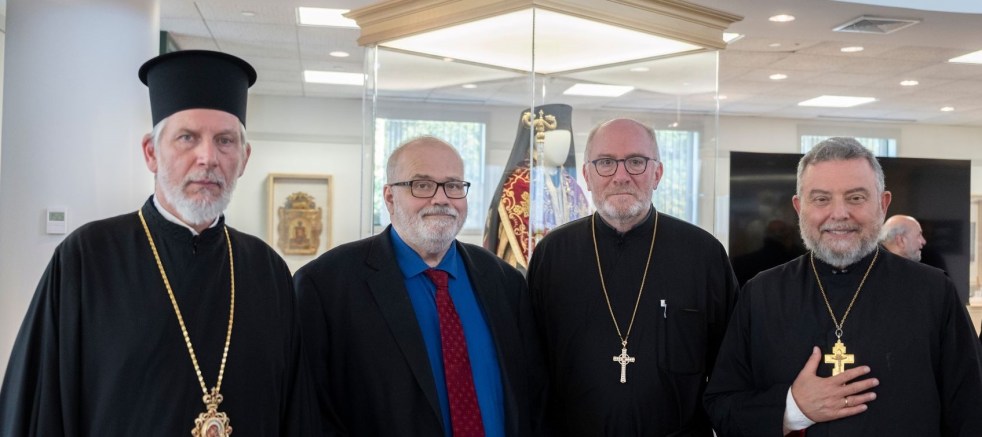
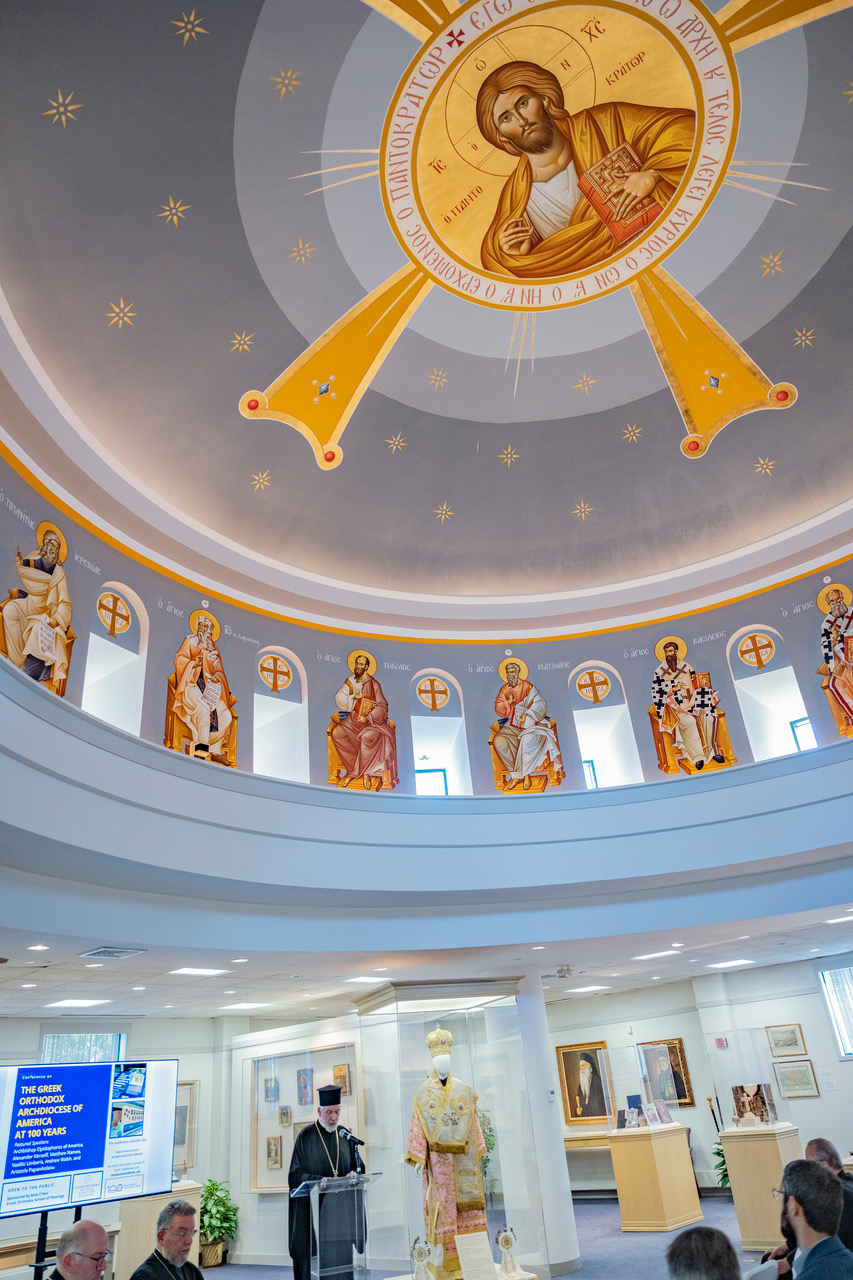
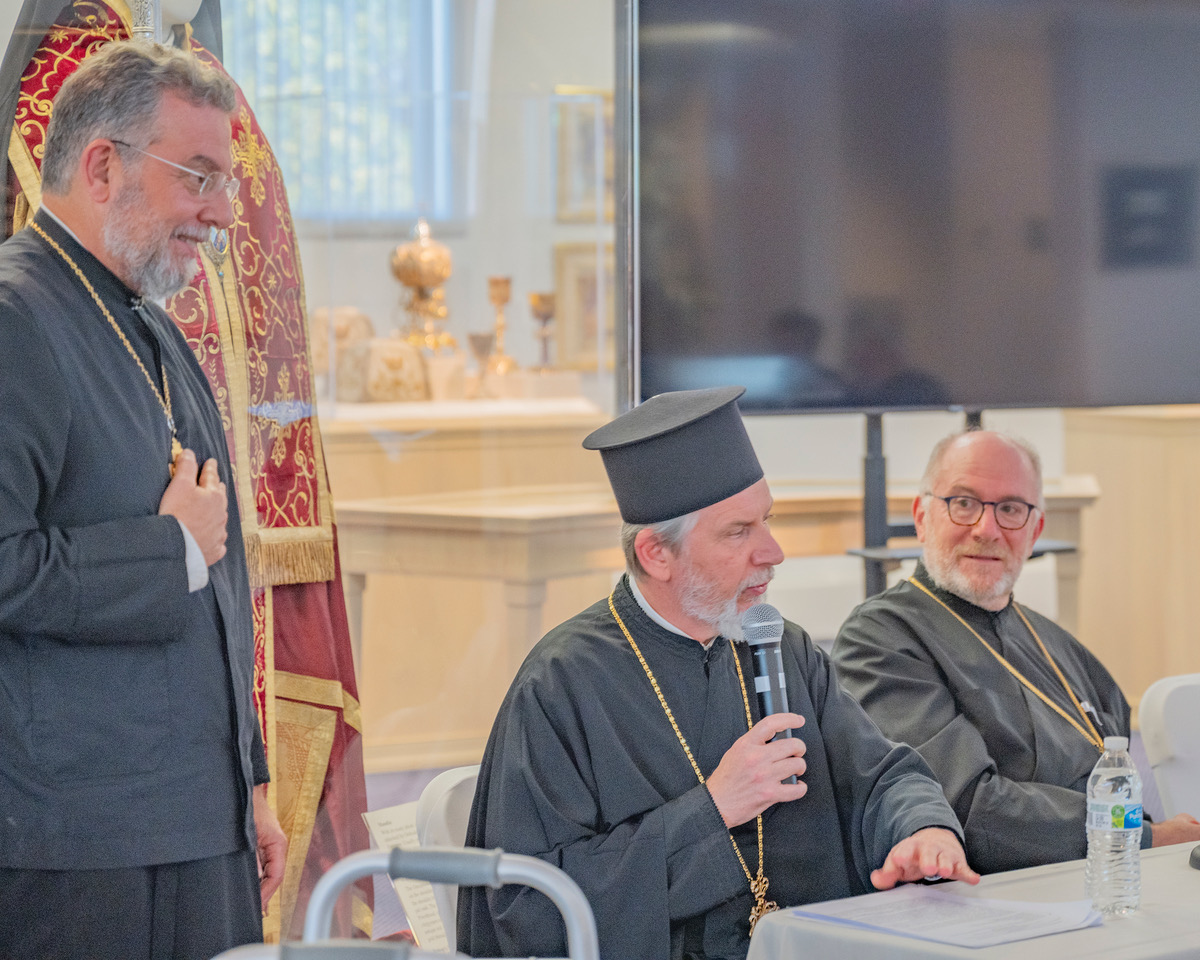
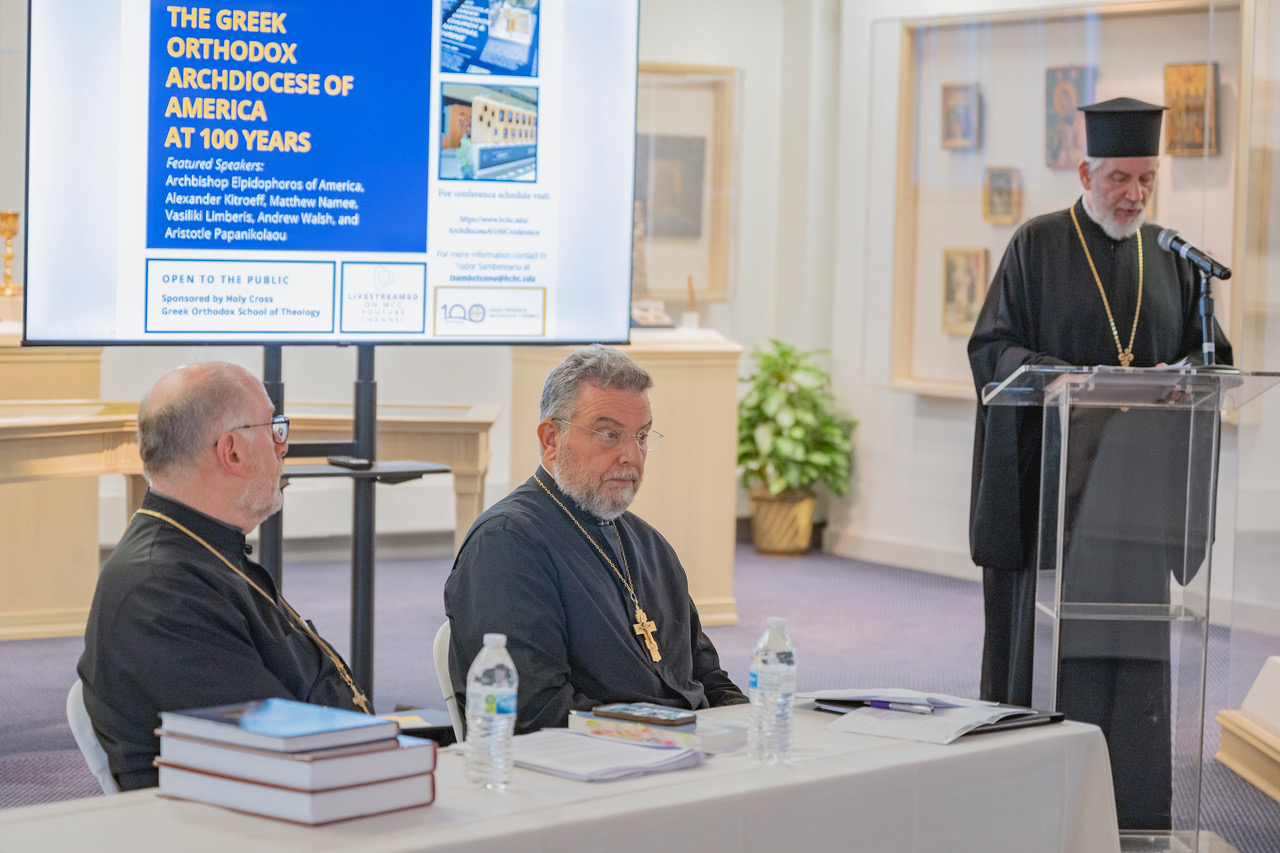
Στα πλαίσια των εορτασμών της 100ετηρίδος από της ιδρύσεως της Ι. Αρχιεπισκοπής Αμερικής, η Θεολογική Σχολή του Τιμίου Σταυρού Βοστώνης διοργάνωσε διήμερο συνέδριο στις εγκαταστάσεις της, με θέμα “The Greek Orthodox Archdiocese of America at 100 Years”.

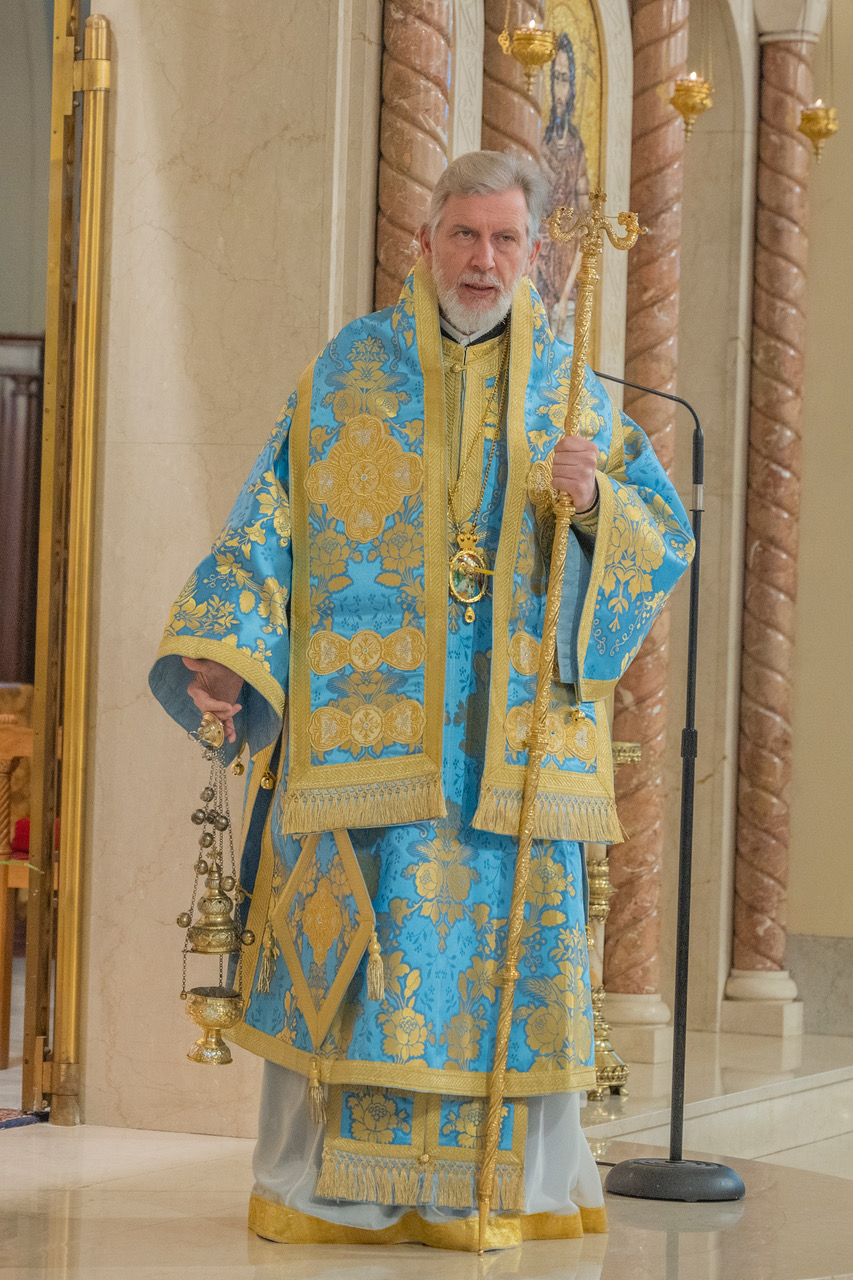
Προσκληθείς από τον Σεβ. Αρχιεπίσκοπο Αμερικής κ. Ελπιδοφόρο και την ως άνω σχολή, ο Σεβ. Μητροπολίτης Σουηδίας και πάσης Σκανδιναυΐας κ. Κλεόπας συμμετείχε στο εν λόγω συνέδριο, την Παρασκευή, 7 Οκτωβρίου 2022, αναπτύσσοντας στην αγγλική το θέμα “The Making of Archbishop Iakovos: How His Diakonia as a Priest Shaped His Archiepiscopacy”, πως δηλαδή η υποδειγματική ιερατική διακονία του Αρχιμανδρίτου Ιακώβου Κουκούζη στον Καθεδρικό Ναό της Βοστώνης συνετέλεσε στο να αναλάβει στη συνέχεια την πηδαλιουχία της Ι. Αρχιεπισκοπής Αμερικής.

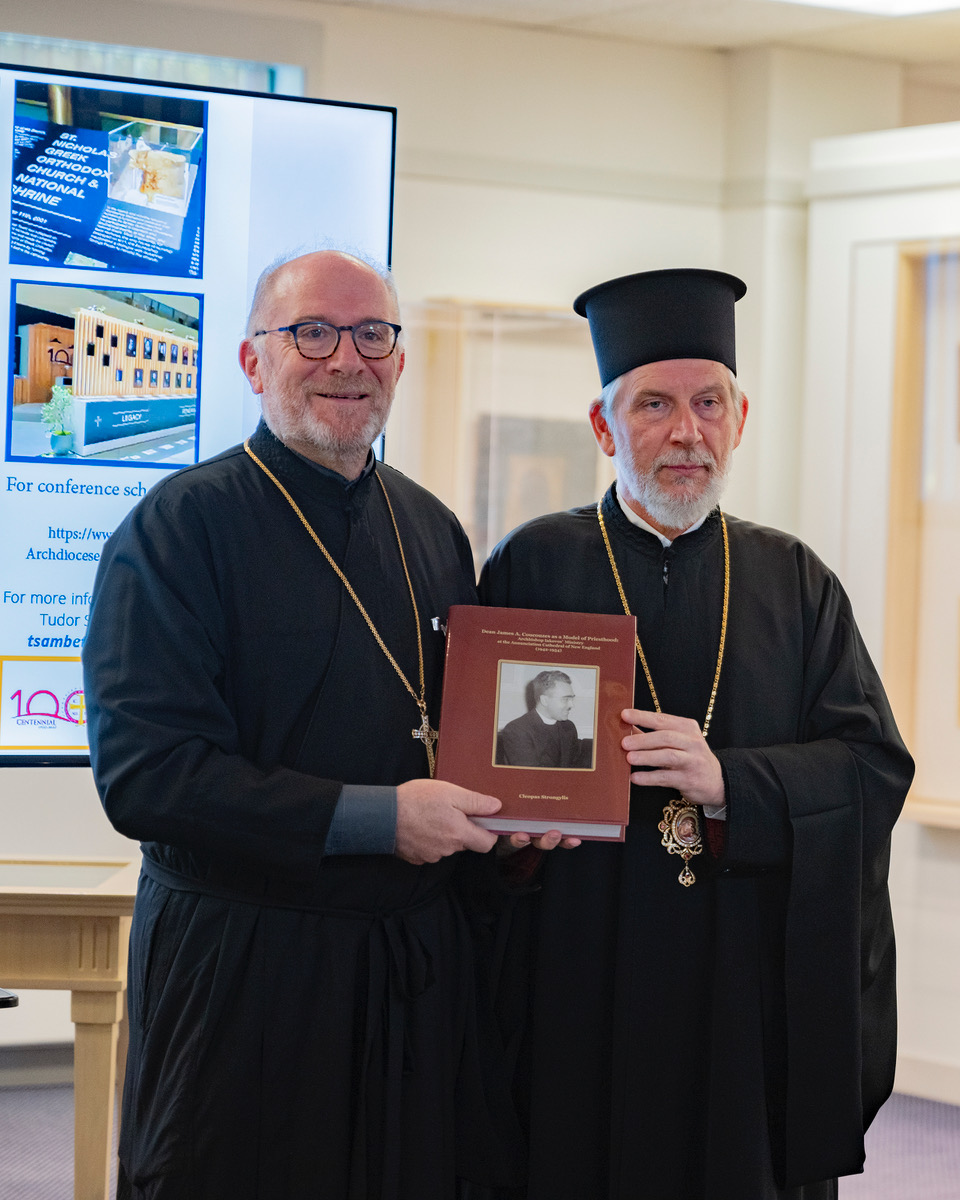
Η ομιλία βασίστηκε στη μελέτη που δημοσίευσε ο Μητροπολίτης Κλεόπας, το Νοέμβριο του 2012, κατά τη διακονία του ως προϊσταμένου του Καθεδρικού Ναού Ευαγγελισμού της Θεοτόκου Βοστώνης, με τίτλο “Dean James A. Coucouzes as a Model of Priesthood: Archbishop Iakovos’ Ministry at the Annunciation Cathedral of New England (1942-1954)”.

Στο τέλος της ομιλίας του, ο Επίσκοπος συνεχάρη τους διοργανωτές του συνεδρίου Πανοσιολ. Αρχιμανδρίτη Dr. Anton Vrame και Dr. James Skedros και προσέφερε αντίτυπα της μελέτης του για τον Αρχιεπίσκοπο Ιάκωβο στον Σεβ. Αρχιεπίσκοπο Αμερικής κ. Ελπιδοφόρο, τον Πρόεδρο της Θεολογικής Σχολής κ. George M. Cantonis, στον Dr. James Skedros και στον Καθηγητή του Haverford College Ελλογ. κ. Αλέξανδρο Κιτροέφ.

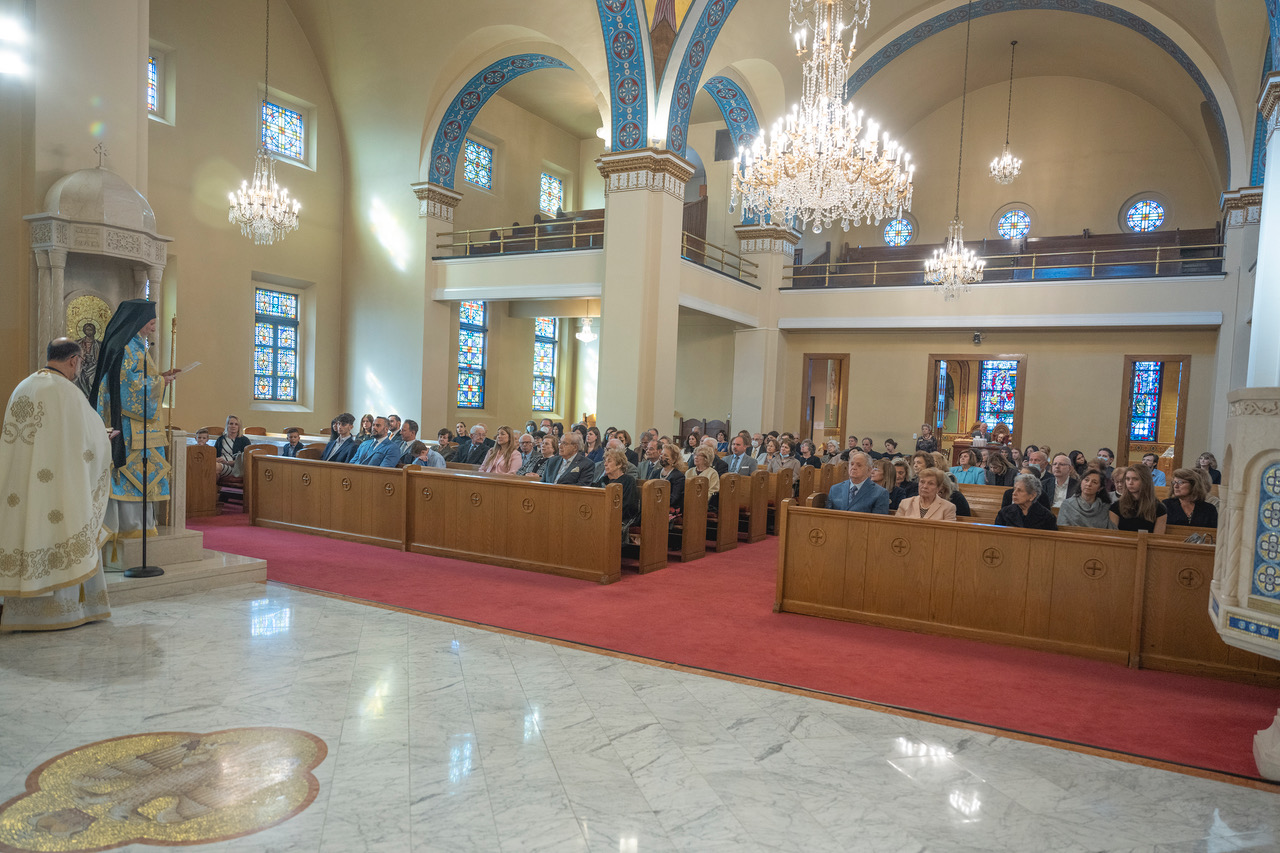
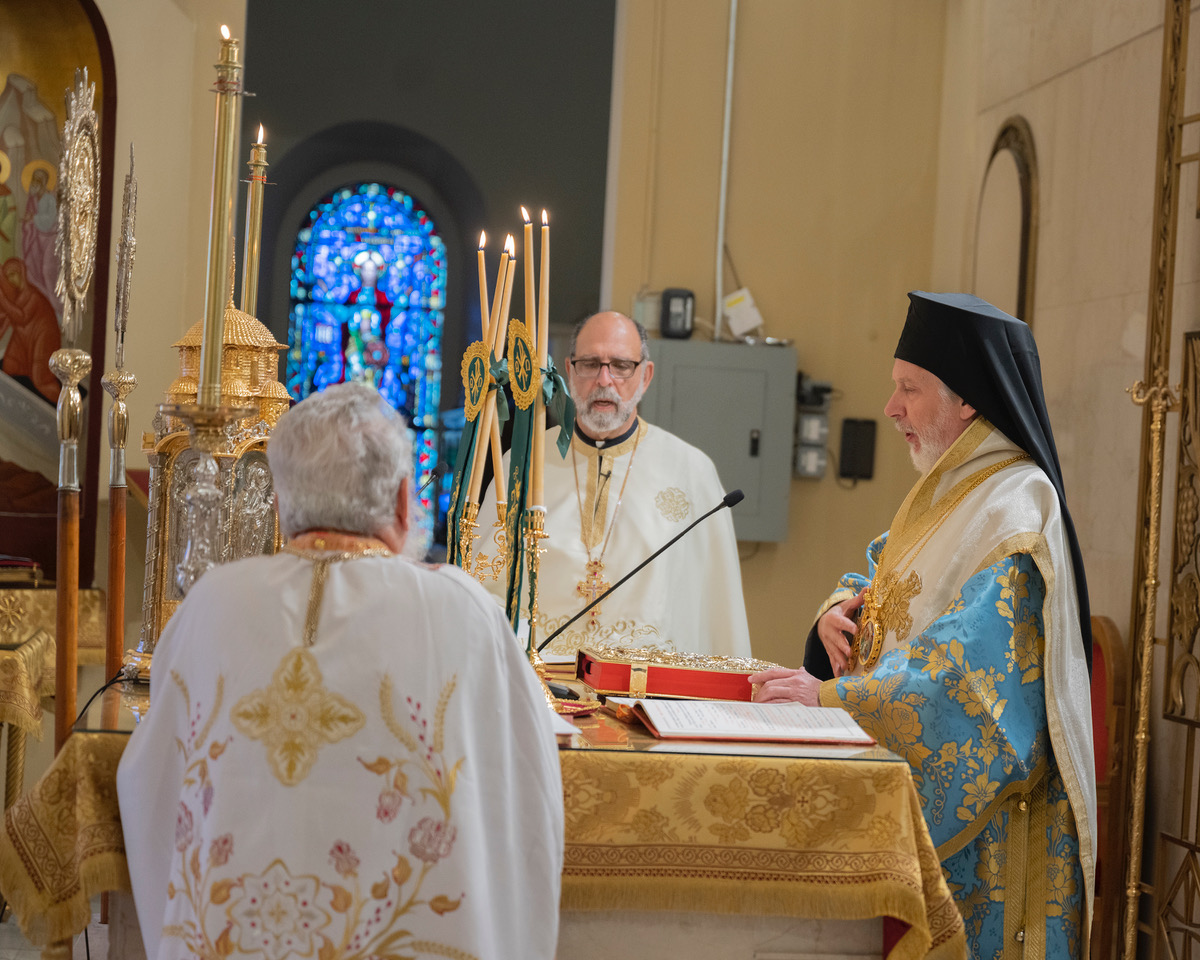
Την Κυριακή, 9 Οκτωβρίου, ο Σεβασμιώτατος λειτούργησε στον Καθεδρικό Ναό της Βοστώνης. Στην ομιλία του, ευχαρίστησε τον Σεβ. Αρχιεπίσκοπο Αμερικής κ. Ελπιδοφόρο, για την τιμητική του πρόσκληση, να συμμετάσχει ως εισηγητής στο διήμερο συνέδριο της Θεολογικής Σχολής, καθώς και τον Σεβ. Μητροπολίτη Βοστώνης κ. Μεθόδιο, με την κανονική άδεια του οποίου τέλεσε την ευχαριστιακή σύναξη, με τη συμμετοχή του προϊσταμένου του ναού Αιδ. Πρωτοπρεσβυτέρου κ. Αθανασίου Τσινίνη και του εξ Ελλάδος επισκέπτου Αιδ. κ. Βασιλείου. Τους ύμνους έψαλαν τρεις φοιτητές της Θεολογικής Σχολής του Τιμίου Σταυρού.

Αφού μίλησε πρώτα στους μαθητές του Κατηχητικού Σχολείου, ο Μητροπολίτης Σουηδίας εξέφρασε προς τα μέλη του Καθεδρικού Ναού της Νέας Αγγλίας την ευγνωμοσύνη του για την αγάπη που του έδειξαν καθ᾽ όλη τη διάρκεια της εκεί διακονίας του μέχρι σήμερα, τους προσέφερε τη μελέτη του για την Πατριαρχική Επίσκεψη στη Στοκχόλμη, συνεχάρη το νέο εφημέριο, π. Αθανάσιο για τον πρόσφατο διορισμό του, ευχήθηκε ταχεία αποκατάσταση της υγείας του απελθόντος εφημερίου Αιδ. Πρωτοπρεσβυτέρου κ. Δημητρίου Τόνια και κήρυξε το θείο λόγο, με θέμα την κυριακάτικη ευαγγελική περικοπή.

Ακολούθησε δεξίωση στις εγκαταστάσεις του ναού, την οποία προσέφεραν ευγενώς η Φιλόπτωχος Αδελφότης Κυριών και το εκκλησιαστικό συμβούλιο του ναού.

Το απόγευμα της ιδίας, ο Σεβασμιώτατος αναχώρησε από τη Βοστώνη, με προορισμό την έδρα της επαρχίας του, στη Στοκχόλμη.

Το φωτογραφικό υλικό είναι προσφορά του κ. Alex Mavradis.

Ανακοινώσεις

Metropolitan Cleopas of Sweden Visits Boston as a Guest Speaker

STOCKHOLM — To commemorate the 100 th  anniversary of the establishment of the Greek
Orthodox Archdiocese of America, the Holy Cross School of Theology in Boston held a two-
day conference on site at its facilities entitled “The Greek Orthodox Archdiocese of America
at 100 Years.”


At the invitation of His Eminence Archbishop Elpidophoros of America and the
aforementioned academic institution, His Eminence Metropolitan Cleopas of Sweden and All
Scandinavia participated in the conference as a guest speaker, delivering his presentation
entitled “The Making of Archbishop Iakovos: How His Diakonia as a Priest Shaped His Archi
episcopacy,” on Friday, October 7, 2022.
The presentation was based on a study Metropolitan Cleopas wrote in November 2012 during
his ministry as Dean of the Annunciation Cathedral of Boston
entitled Dean James A. Coucouzes as a Model of Priesthood: Archbishop Iakovos’ Ministry at
 the Annunciation Cathedral of New England (1942-1954).
At the end of his speech, the Metropolitan congratulated the conference organizers V. Rev.
Archimandrite Dr. Anton Vrame and Dr. James Skedros, while offering copies of his study on
Archbishop Iakovos to Archbishop Elpidophoros, Holy Cross President Mr. George M.
Cantonis, Dr. James Skedros, and Prof. Alexander Kitroeff of Haverford College.
On Sunday, October 9 th  Metropolitan Cleopas celebrated the Divine Liturgy at the Boston
Cathedral. During his address, he thanked His Eminence Archbishop Elpidophoros for
inviting him to participate in the conference as a guest speaker, as well as His Eminence
Metropolitan Methodios of Boston with whose canonical permission he celebrated the Divine
Liturgy together with the Dean of the Cathedral Rev. Protopresbyter Fr. Athanasios Tsininis
and Fr. Vasilios, a clergyman visiting from Greece. The hymns of the day were chanted by
three Holy Cross students.
After first speaking to the Sunday School students, Metropolitan Cleopas expressed his
gratitude to the members of the Annunciation Cathedral for the love they showed him from
the start of his ministry there until today, offered them copies of his chronicle of the
Patriarchal Visit to Stockholm, congratulated the new Dean of the Cathedral Fr. Athanasios
on his recent appointment, wished the former Dean Rev. Protopresbyter Fr. Demetrios Tonias
a speedy recovery, and delivered a sermon on the day’s Gospel reading.
A reception followed on site at the Cathedral, which was graciously offered by the Ladies
Philoptochos Society and the parish council.
Metropolitan Cleopas left Boston that afternoon to return to his see in Stockholm.
 
Photo credit: Mr. Alex Mavradis

Ανακοινώσεις

Η Δήμαρχος της Οστερσούντ στον Μητροπολίτη Σουηδίας

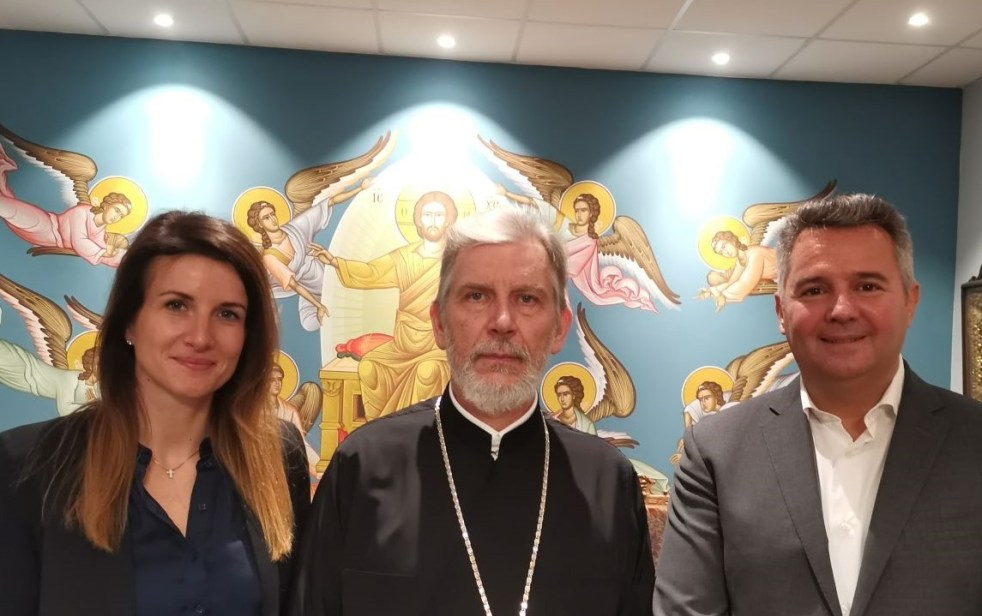
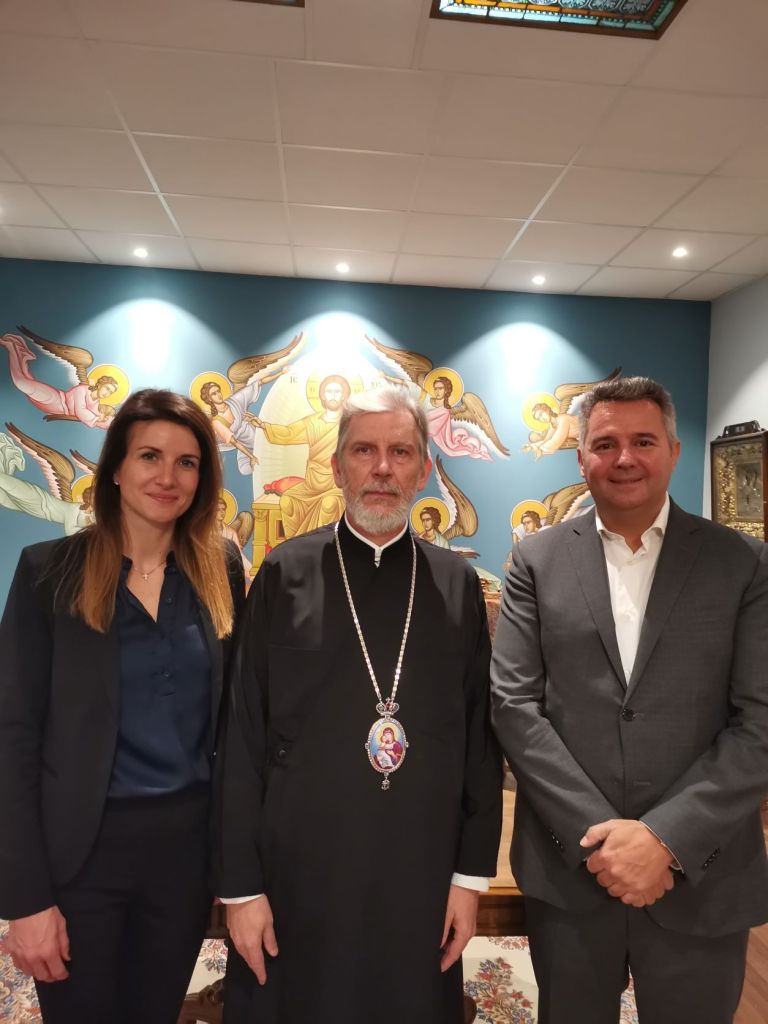
Η Ελληνίδα Δήμαρχος της πόλης Οστερσούντ (Östersund) της Σουηδίας Εντιμ. κ. Ευτυχία Effie Kourlos επισκέφθηκε την Κυριακή το μεσημέρι, 16 Οκτωβρίου 2022, τον Μητροπολίτη Σουηδίας κ. Κλεόπα, στις εγκαταστάσεις του Καθεδρικού Ναού Αγίου Γεωργίου Στοκχόλμης, συνοδευόμενη από τον Εντιμ. κ. Γεώργιο Κοντορίνη, επανεκλεγέντα επί σειρά ετών στο Δήμο Σόλνα της Στοκχόλμης.

Ο ποιμενάρχης υπεδέχθη τα ως άνω πολιτικά πρόσωπα και εξέφρασε την ευαρέσκειά του για την πρόσφατη εκλογή των δύο εκλεκτών μελών της Ομογένειας και ευχήθηκε ολοψύχως καλή επιτυχία στην πολιτική τους σταδιοδρομία, τους προσέφερε δε ως ευλογία τον αναμνηστικό τόμο της Πατριαρχικής Επισκέψεως στη Στοκχόλμη το 2019, καθώς και το εγκόλπιο ημερολόγιο του 2023, από τις εκδόσεις της Αποστολικής Διακονίας.

Στην Κυριακάτικη λατρευτική σύναξη συμμετείχε, επίσης, προσευχητικώς ο Εντιμ. κ. Γιώργος Γουλτίδης, ο οποίος εξελέγη αναπληρωτής Β´ περιφέρειας στην πόλη της Στοκχόλμης, για το κόμμα το οποίο εκπροσώπησε στις πρόσφατες εκλογές. Ο Σεβασμιώτατος συνεχάρη και ευχήθηκε τα άριστα στον κ. Γουλτίδη, δια την περαιτέρω πορεία του στα κοινά.

Ανακοινώσεις

Ο Μητροπολίτης Σουηδίας τέλεσε τον αγιασμό στο Ελληνικό Σχολείο Στοκχόλμης

Με την παρουσία 280 και πλέον μαθητών, των γονέων και διδασκάλων τους, τελέστηκε ο αγιασμός, επί τη ενάρξει της νέας σχολικής χρονιάς, στο Ελληνικό Σχολείο της Στοκχόλμης, από τον Σεβ. Μητροπολίτη Σουηδίας και πάσης Σκανδιναυΐας κ. Κλεόπα, στον οποίο συμμετείχε και ο εφημέριος του Καθεδρικού Ναού Αγίου Γεωργίου Στοκχόλμης, Πανοσιολ. Αρχιμανδρίτης κ. Βαρθολομαίος Ιατρίδης.

Στο τέλος της ακολουθίας, ο Ποιμενάρχης άγιασε όλους τους μαθητές, γονείς και διδασκάλους, ενώ ο π. Βαρθολομαίος προσέφερε από μια εικονίτσα σε κάθε μαθητή και το εγκόλπιο ημερολόγιο του 2023 της Ι. Μητροπόλεως στους διδασκάλους.

Ο Σεβασμιώτατος, αφού μίλησε στους μαθητές για την ευαγγελική περικοπή που αναφέρεται στην παρουσία του 12ετούς Ιησού εν μέσω των διδασκάλων του Ιουδαϊκού Νόμου και τη σπουδαιότητα του εκκλησιασμού, προσέφερε στον πρόεδρο του σχολείου Ελλογ. κ. Δημήτρη Σιώτη τον αναμνηστικό τόμο της Πατριαρχικής Επισκέψεως του 2019, στον οποίο περιλαμβάνεται και η επίσκεψη της Α. Θ. Παναγιότητος, του Οικουμενικού Πατριάρχου κ. Βαρθολομαίου στο ως άνω σχολείο.

Το Ελληνικό Σχολείο Στοκχόλμης συστεγάζεται με το Σουηδικό Ημερήσιο Σχολείο, στο Åsa, αριθμεί άνω των 400 μαθητών και προσφέρει μαθήματα ελληνικής γλώσσας σε αρκετά προάστεια της ευρύτερης περιοχής, καθ᾽ όλη τη διάρκεια της εβδομάδος.

Ο Μητροπολίτης Κλεόπας θα επισκεφθεί και πάλι το σχολείο, στον εορτασμό της 28ης Οκτωβρίου 1940.

Ανακοινώσεις

Ομιλία Μητρ. Σουηδίας Κλεόπα στην εορτή της Υψώσεως του Τιμίου Σταυρού

Αγαπητοί εν Χριστώ Αδελφοί,

Συναχθήκαμε επί τω αυτώ, στη σημερινή πανεπίσημη και λαμπρά αυτή ημέρα της Δεσποτικής εορτής της Παγκοσμίου Υψώσεως του Τιμίου και Ζωοποιού Σταυρού, για να ομολογήσουμε την κοινή μας πίστη στο Ζωοδότη Χριστό και να μετέχουμε στο Ποτήριο της ζωής.

Στη σημερινή εορτή, η Εκκλησία μάς καλεί να ασπασθούμε τον Τίμιο Σταυρό, όπως και στον καιρό της Αγίας Ελένης, μετά την εύρεσή του, τον ύψωσε ο πατριάρχης Μακάριος ενώπιον του λαού κι εκείνος τον προσκύνησε.

Ένας από τους ύμνους της σημερινής ημέρας, καλεί όλους μας, κληρικούς και λαϊκούς, να ασπασθούμε τον Τίμιο Σταυρό με χαρά και με φόβο. Με δύο εσωτερικές καταστάσεις, από πρώτη άποψη αντίθετες, ο ιερός υμνογράφος της Εκκλησίας, μάς καλεί να σταθούμε μπροστά στο Σταυρό του Κυρίου. Με χαρά και με φόβο.

Με χαρά, αρχικά, γιατί ο Σταυρός έγινε αιτία της νίκης του Χριστού κατά των δαιμονικών δυνάμεων και του θανάτου, όμως ακόμα έγινε όργανο της λύτρωσης και της ελπίδας του ανθρωπίνου γένους. Αλλά ο ασπασμός του Σταυρού, θα πρέπει να γίνεται στη συνέχεια και μ’ ένα αίσθημα φόβου. Όμως, ο φόβος εδώ, έχει τη θεολογική του σημασία. Δεν αναφέρεται στο συναίσθημα που δημιουργείται από κάποιο κίνδυνο ή κάποια απειλή. Πρόκειται για το φόβο εκείνο, που καταλαμβάνει την ψυχή του ανθρώπου, όταν γεγονότα και περιστάσεις της ζωής, ξεπερνούν τις δυνατότητες και τα ανθρώπινα μέτρα και την κάνουν να καταλαμβάνεται από θαυμασμό, έκπληξη και δέος.

Και στο προκείμενο θέμα, ο υμνογράφος ζητά να προσεγγίσουμε το Τίμιο Σταυρό με δέος, γιατί πάνω σ’ αυτό το ατιμωτικό όργανο ποινής της εποχής εκείνης, ανέβηκε εκούσια ο αναμάρτητος Θεάνθρωπος Χριστός και υπέστη την πιο επώδυνη και περιφρονητική καταδίκη, για να ξεπλύνει τις δικές μας αμαρτίες. Δέχτηκε να υποστεί τον βαθύ αυτό πόνο, που ήταν κατάληξη και συνέπεια της ανθρώπινης αποτυχίας.

Το πάθος του δικαίου και ανεξίκακου Κυρίου, που γίνεται με τη θέλησή Του για τη σωτηρία του ανθρώπου, είναι πολύ φυσικό να δημιουργεί το αίσθημα του φόβου. Η ανθρώπινη ευαισθησία δεν μπορεί να ερμηνεύσει το μυστήριο της θυσίας του Θεανθρώπου, όπως και δεν μπορεί να κατανοήσει την κένωση και ταπείνωσή Του. Σε αυτό, λοιπόν, το μοναδικό γεγονός της Θείας συγκαταβάσεως και αγάπης, δεν απομένει τίποτε άλλο, παρά φόβος και δέος.

Ένα μέσο, που μάς βοηθάει για να συναισθανθούμε τη θαυμαστή προσφορά και δωρεά του Θεανθρώπου προς όλους μας, είναι οι ύμνοι της ημέρας, αλλά και η καθιερωμένη νηστεία, που θυμίζει τη Μεγάλη Παρασκευή. Με αυτό τον τρόπο, δημιουργείται ατμόσφαιρα ιδιαίτερης καταστάσεως, για να καταλάβει ο πιστός ότι η αυτοθυσία του Χριστού δεν είναι ένα συνηθισμένο γεγονός, ούτε μπορεί να ερμηνευθεί με τα ανθρώπινα δεδομένα.

Ο φόβος και η χαρά, αδελφοί μου, εκφράζουν και τη βαθύτερη σημασία του Σταυρού, που είναι το σύμβολο της χαρμολύπης. Εκείνης, δηλαδή, της πνευματικής κατάστασης, που είναι ή πρέπει να είναι το μόνιμο ήθος του Ορθοδόξου φρονήματος και της Ορθόδοξης αλήθειας. Ας μην ξεχνούμε, ότι ο Σταυρός μέσα στην Ορθόδοξη ζωή και πίστη, κατέχει εξέχουσα θέση. Αγιογραφείται, προβάλλεται και σχηματίζεται παντού.

Η επανάληψη του σημείου του Σταυρού στη διάρκεια των λατρευτικών μας συνάξεων δεν είναι ένα μηχανικός και ανούσιος τύπος. Αντίθετα, εκφράζει τις δύο εσωτερικές καταστάσεις που βιώνει ή που πρέπει να βιώνει ο κάθε πιστός. Η χαρμολύπη είναι το ήθος, η ζωή μας.

Ο Ἀγιος Σιλουανός έλεγε ότι, ο Σταυρός του Κυρίου χαρίζει την ελπίδα και τη δυνατότητα να ξεπεράσουμε την κόλαση της αποτυχίας, αφού ανοίγει προοπτικές να παρατηρούμε τη ζωή και να τη ζούμε, υπερβαίνοντας την κόλαση και τον άδη.

Στον καθημερινό αγώνα μας, ας ηχεί ο ξεκάθαρος και νικηφόρος λόγος του Κυρίου μας: “ἐν τῷ κόσμῳ θλίψιν ἔξετε, ἀλλά θαρσεῖτε, ἐγώ τόν κόσμον νενίκηκα” (Ἰωάν. 16,33). Εξάλλου, δεν πρέπει να ξεχνούμε ότι ακόμη και ο πιο απλός πιστός εκφράζει τα βιώματα της χαρμολύπης με το σημείο του Σταυρού.

Ταπεινώς, εύχομαι να χαρούμε πνευματικά με τη σημερινή εορτή, αφού άλλωστε ομολογούμε: “ἰδού γάρ ἦλθε διά τοῦ Σταυροῦ χαρά ἐν ὅλῳ τῷ κόσμῳ”, κι ας καυχόμεθα εν Χριστώ, όπως και ο Απόστολος Παύλος: “ἐμοί μή γένοιτο καυχᾶσθε, εἰ μή ἐν τῷ σταυρῷ τοῦ Κυρίου ἡμῶν Ἰησοῦ Χριστοῦ” (Γαλ. 6,14).

Εδώ πρόκειται για μία καύχηση, όχι με αίσθημα εγωϊσμού και υπερηφάνειας, γιατί υπερέχουμε έναντι των άλλων, αλλά γιατί  ο ίδιος ο Σωτήρας Χριστός, ανερχόμενος στο Σταυρό, μάς προσκαλεί στη ζωή της ελευθερίας και της αγάπης κι εμείς, ασπαζόμενοι τον Τίμιο Σταυρό, ας αναφωνήσουμε: “Σταυρέ τοῦ Χριστοῦ, σῶσον ἡμᾶς τῇ δυνάμει σου”! Αμήν.

Ανακοινώσεις

Sermon by Metropolitan Cleopas of Sweden on the Exaltation of the Holy Cross

Beloved Brothers and Sisters in Christ,  

We gathered today, on this most solemn and radiant feast day of our Lord commemorating the Universal Exaltation of the Holy and Lifegiving Cross, so that we may jointly confess our common faith in Christ the Life-giver, and partake of the Cup of life. On today’s feast, the Church invites us to venerate the Holy Cross, as the faithful did during the time of St. Helen, who discovered it, and with the guidance of Patriarch Macarios, identified it so it could be exalted before the people, who gathered to venerate it.

One of the hymns in today’s feast calls upon all of us – clergy and laity alike – to venerate the Holy Cross with joy and fear. Relying on these two internal states, which appear to be opposites at first glance, the sacred hymnographer of the Church invites us to stand before our Lord’s Cross with feelings of elation and awe.

Initially with joy, because the Cross serves as the source of Christ’s victory over the demonic forces and death, while it also became the instrument of salvation and hope for the human race. However, the veneration of the Cross must also be conducted with a sense of fear. Here, the term fear holds a theological meaning. It doesn’t refer to the emotional state caused by some danger or threat. It refers to the fear that overcomes the human soul when events and circumstances in life surpass human limitations and capabilities, and cause the soul to be overcome with marveling, surprise, and awe.

Turning our attention back to aforementioned hymn, the hymnographer calls upon us to approach the Holy Cross with awe, because it was upon this instrument of punishment, which was thought to be shameful during that era, that Christ the God-man, Who is without sin, willingly affixed Himself and suffered the most anguishing and humiliating of condemnations so that He could wash away our sins. He willingly accepted to endure this deep pain, which was the end result and consequence of human failure.

The Passion of our just and forbearing Lord, which He voluntarily endured for the salvation of mankind, naturally evokes a sense of fear. Our mortal mind cannot interpret the mystery of the Incarnate Logos’ sacrifice, just as it cannot comprehend His kenosis or self-emptying as we term it in English, and His humility. Therefore, the only way to approach this singular event of Divine condescension and love is through fear and joy.

One medium that aids us in understanding Christ’s awesome contribution and gift to all humanity is today’s festal hymns, as well as the prescribed fast, which resembles that of Good Friday. In this manner, the appropriate climate is created to enable the faithful to come to the realization that Christ’s voluntary sacrifice of Himself is no ordinary event, nor can it be explained in human terms.

My dear brethren, fear and joy reveal the deeper meaning of the mystery of the Cross, which symbolizes the concept of χαρμολύπη, which can be loosely translated to mean sweet sorrow or happiness intermingled with sadness. It refers to the spiritual condition that reflects or should reflect the permanent ethos of the Orthodox Christian mentality and Orthodox Christian truth. Let us not forget that the Cross holds a prominent position in the life and faith of Orthodox Christians. It is depicted in our iconography, it is showcased in our churches, and it is formed by the faithful everywhere during prayer.

The frequent act of crossing of ourselves throughout all our worship services is not something we do mechanically, nor is it devoid of substance. On the contrary, it expresses the two internal states that every faithful Christian is experiencing or should be experiencing. Χαρμολύπη is our ethos, our life.

St. Silouan would say that the Cross of the Lord grants hope and the ability to overcome the hell of failure, because it opens up prospects for us to observe life and experience it, overcoming hell and Hades.

In our daily struggle, let the Lord’s words ring clearly and triumphantly: “In the world you shall have tribulation; but take heart, I have overcome the world” (John 16:33). Besides, we must not forget that even the simplest faithful Christian expresses the state of χαρμολύπη through the sign of the Cross.

I express the humble wish that we may all derive spiritual joy from today’s feast, since we all confess that: “behold, through the Cross joy has come to the entire world.” Let us all boast in Christ, as St. Paul the Apostle did: “but God forbid that I should boast except in the cross of our Lord Jesus Christ” (Gal. 6:14).

This is a boast that is made not with sentiments of egotism and pride over being superior to others, but because our Savior Jesus Christ Himself, Who went up on the Cross, calls us to a life and freedom and love. As we venerate the Holy Cross, let us reiterate the words of the sacred hymnographer, crying out: “O Cross of Christ, save us through your power!” Amen.