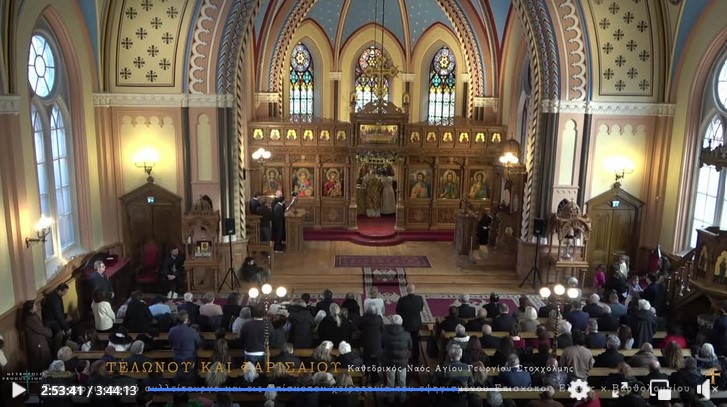
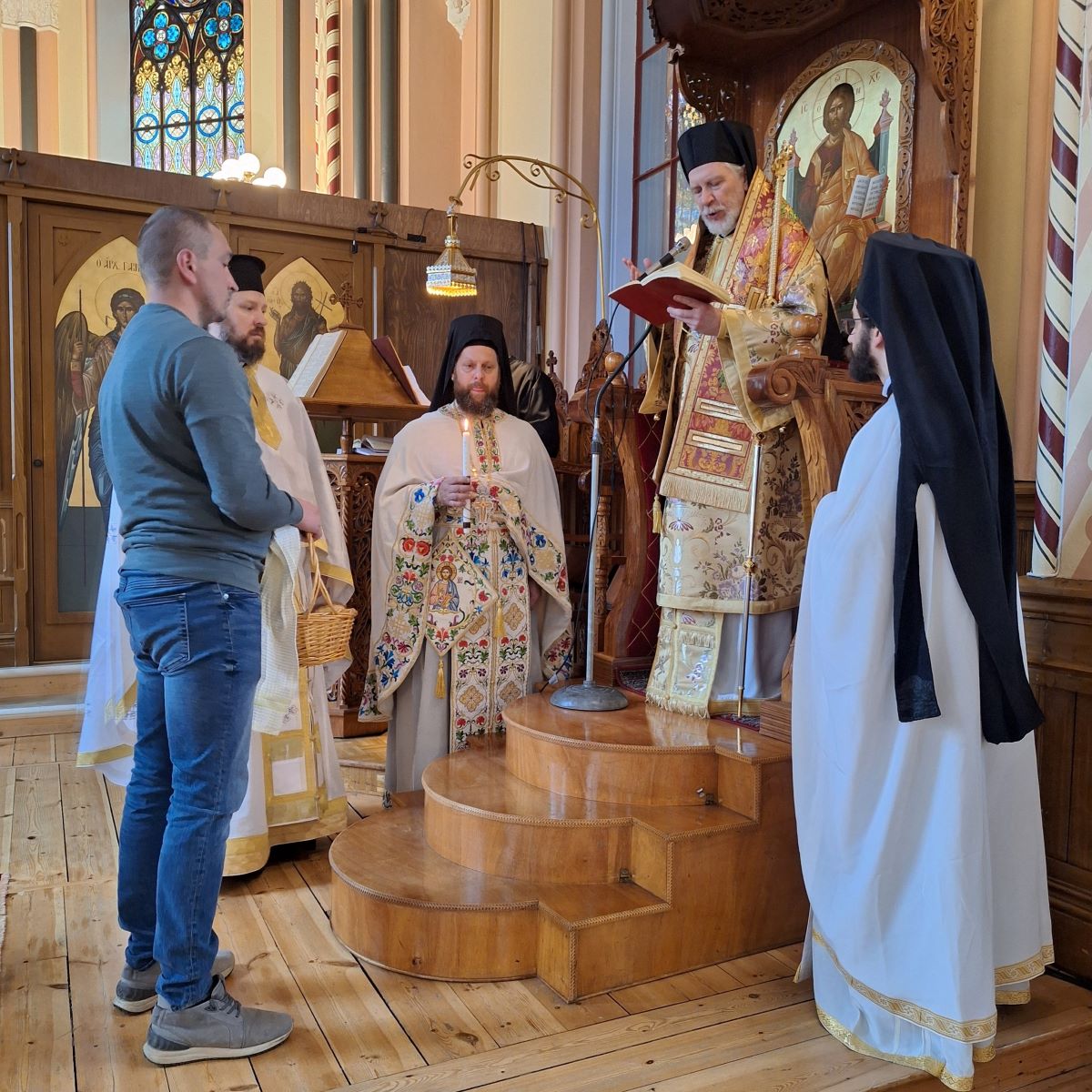
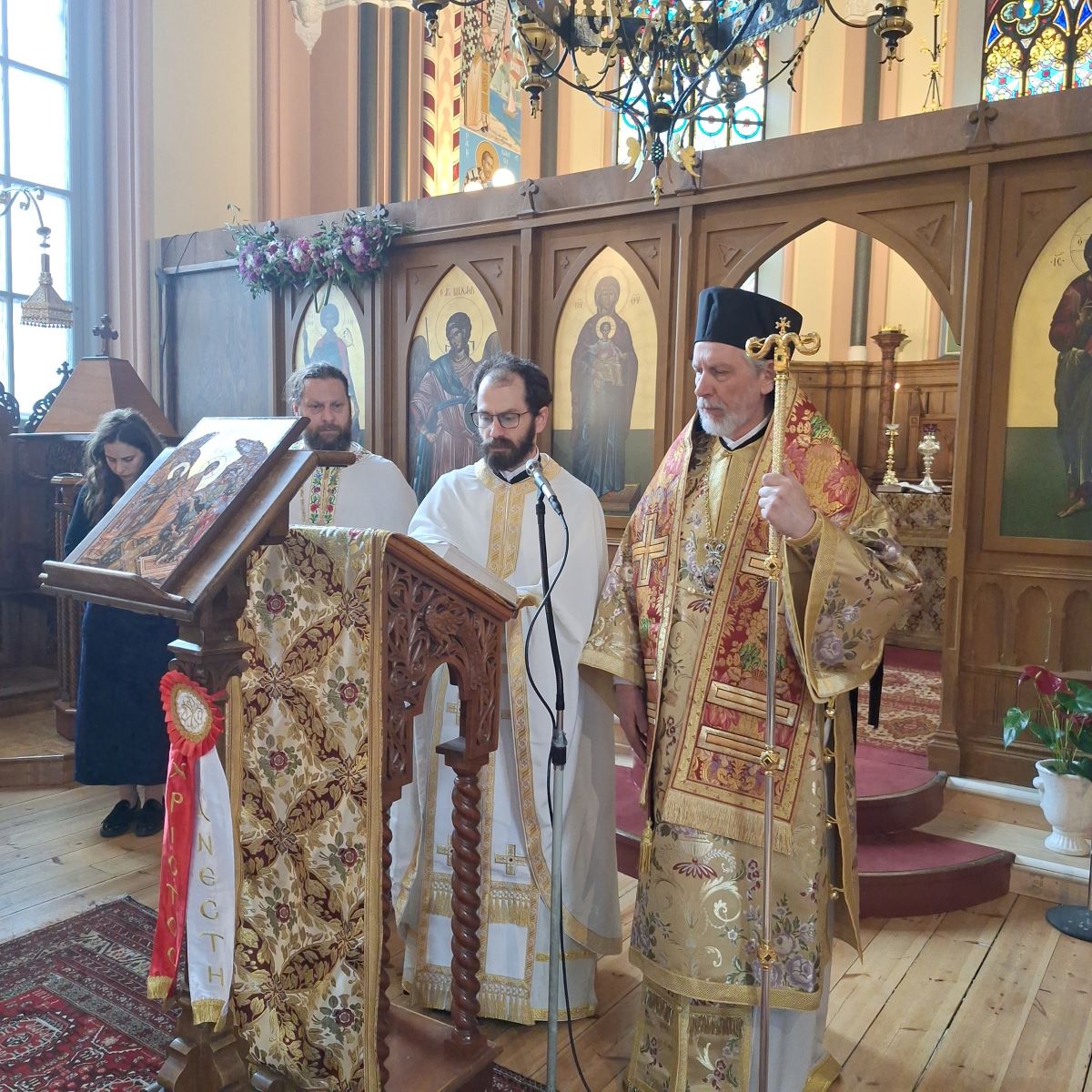
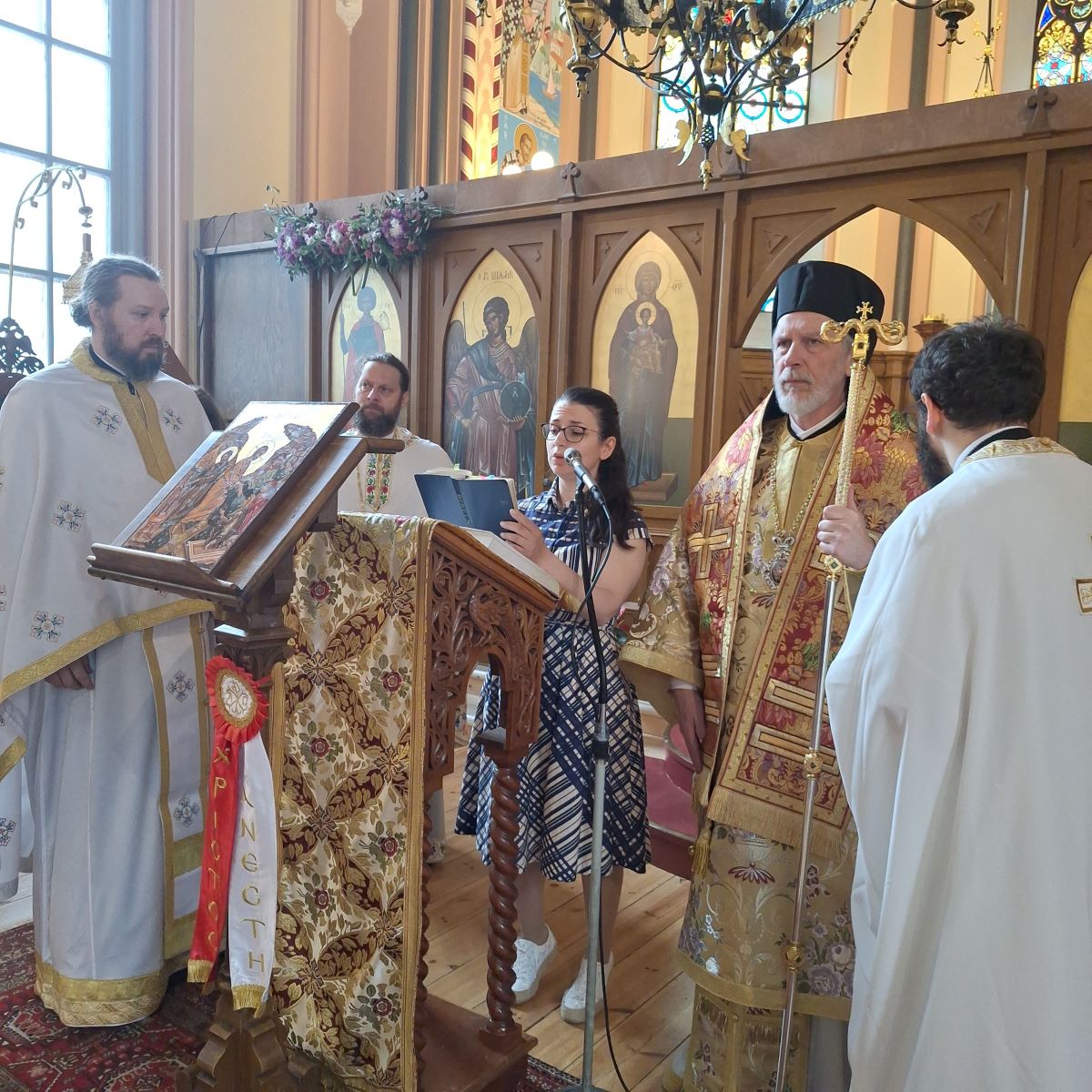
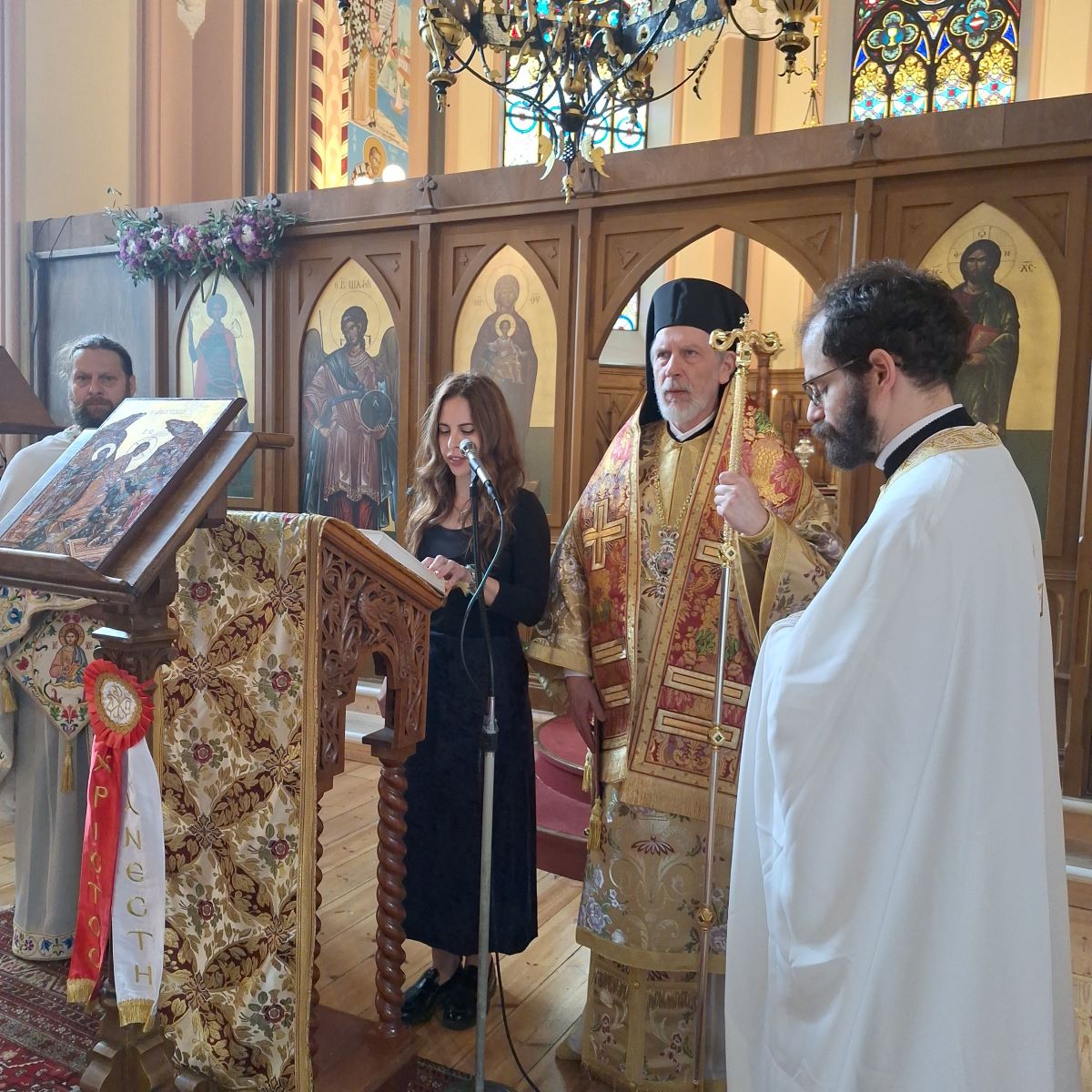
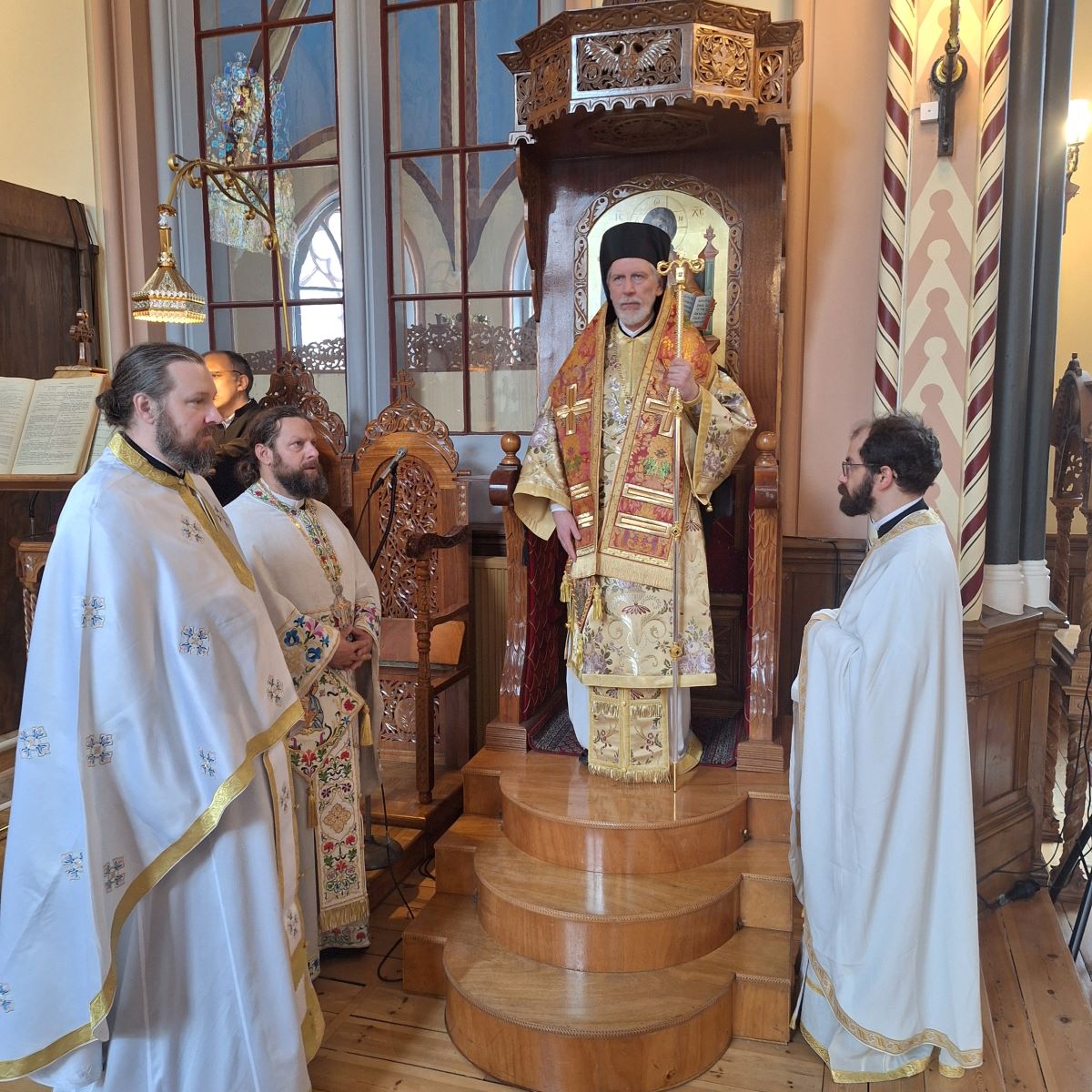
Τρειςαρχιερατικό συλλείτουργο και εις χειροτονία του εψηφισμένου Επισκόπου Ελαίας κ. Βαρθολομαίου.
Καθεδρικός Ναός Αγίου Γεωργίου Στοκχόλμης
Ελληνική Ορθόδοξη Ενορία Αγίου Ανδρέα Μάλμε
Greek Orthodox Parish of Saint Andreas Malmo – S:t Andreas Greek Ortodoxa Församling Malmö
Τρειςαρχιερατικό συλλείτουργο και εις χειροτονία του εψηφισμένου Επισκόπου Ελαίας κ. Βαρθολομαίου.
Καθεδρικός Ναός Αγίου Γεωργίου Στοκχόλμης
Του Σεβ. Μητροπολίτου Σουηδίας κ. Κλεόπα
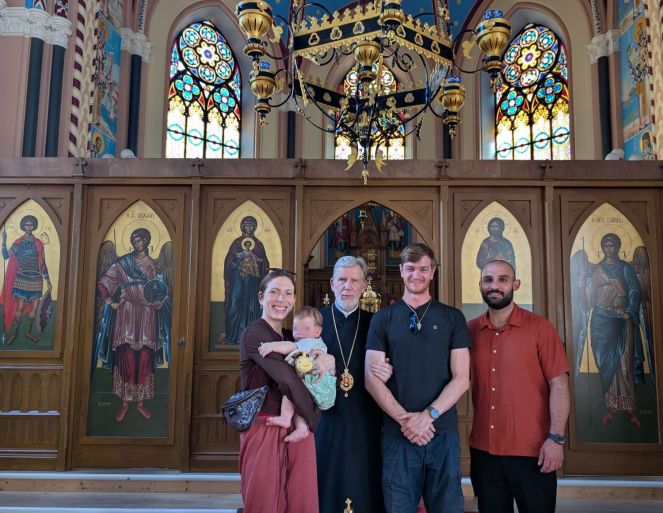
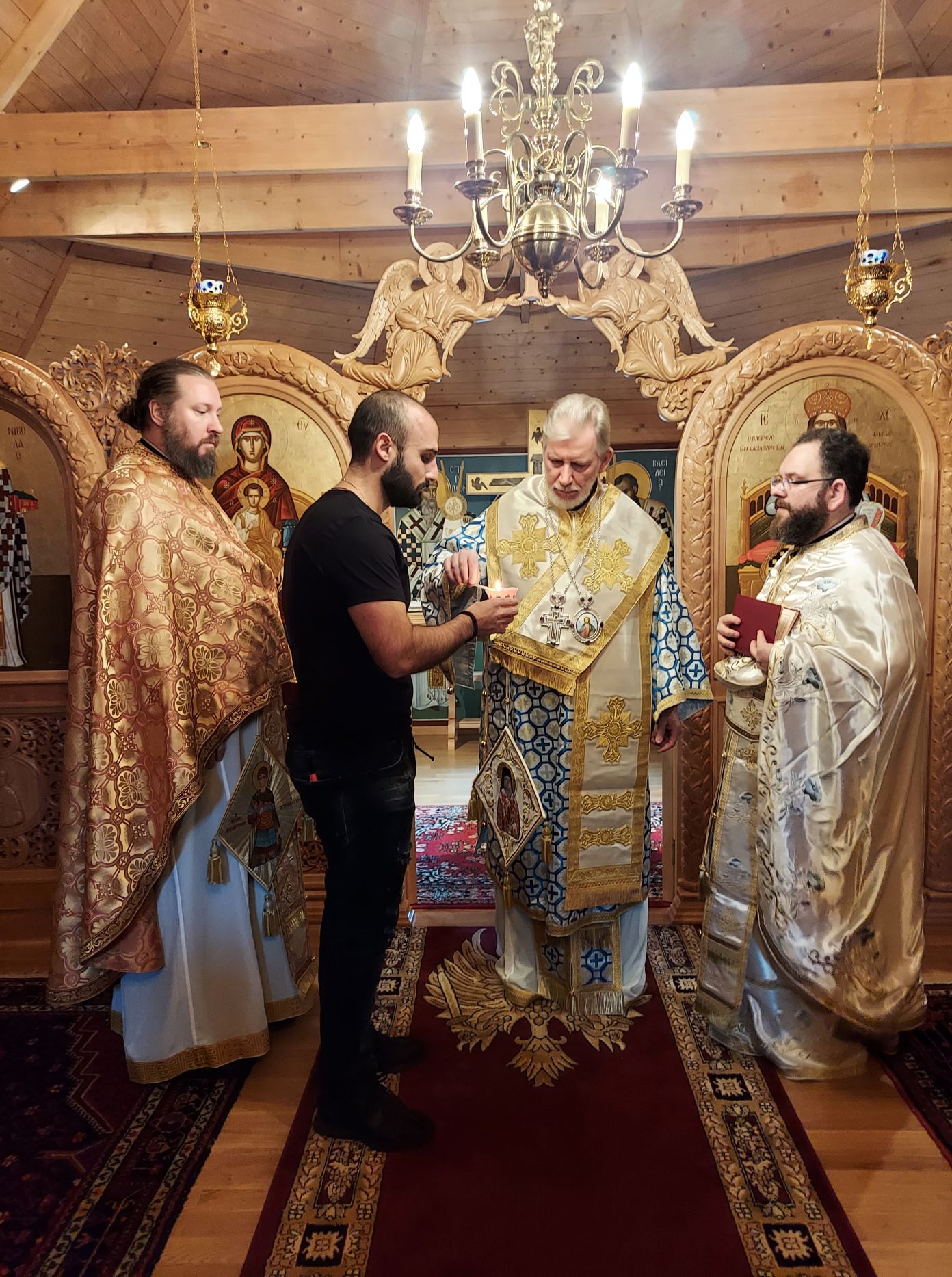
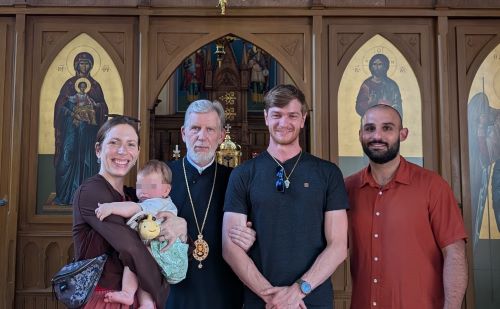
Για τις σκέψεις που παραθέτουμε κατωτέρω, αιτία στάθηκε το Μυστήριο του Χρίσματος, που ετελέσθη το μεσημέρι της Κυριακής, 20 Ιουλίου 2025 στον Καθεδρικό Ναό Αγίου Γεωργίου Στοκχόλμης, σε κατηχούμενο, ο οποίος ταξίδευσε με την μέλλουσα σύζυγό του και την κορούλα τους, από την Δανία, και έλαβε το όνομα Σίμων.
Το ιεραποστολικό έργο, όπως ευκαίρως ακαίρως επισημαίνουμε, είναι αναπόσπαστο στοιχείο της ζωής και της φύσεως της Εκκλησίας.
Δεν αποτελεί μια δραστηριότητα ανάμεσα σε άλλες, αλλά την ζώσα έκφραση της καθολικότητος και της σωτηριολογικής αποστολής του σώματος του Χριστού στον κόσμο.
Η Εκκλησία δεν φυλάττει το φως για τον εαυτό της, αλλ᾽ «ἵνα φωτίζῃ πάντας» (Ἐφ. 3,9).
Η ίδια η Σάρκωσις του Χριστού είναι η πρώτη και τελεία ιεραποστολή. Η θεία κάθοδος του Θεανθρώπου προς τον κόσμο, για την σωτηρία του ανθρώπου, συνεχίζεται διαρκώς μέσα στην Εκκλησία, την οποία ο Κύριος κατέστησε «φῶς ἐθνῶν» (Πρ. 13,47).
Η αποστολή της είναι να μεταδίδει «τὸ εὐαγγέλιον τῆς βασιλείας» (Ματθ. 24,14) μέχρι εσχάτων της γης.
Οι Πατέρες της Εκκλησίας αντιμετωπίζουν το ιεραποστολικό έργο, όχι ως διοικητική επιταγή, αλλά ως καρπό της εν Χριστώ ζωής και φυσική έκφραση της αγάπης προς τον συνάνθρωπο.
Ο Άγιος Ιωάννης ο Χρυσόστομος τονίζει ότι, «Οὐκ ἔστι δυνάμενον πιστεῦσαι καὶ μὴ ἐπιδείκνυσθαι ἔργα τοιαῦτα· ὡς ἀναγκαιότερον τὸ κηρύττειν ἢ ζῆν»
(PG 59, 260).
Η αληθινή πίστις δεν μπορεί να παραμείνει σιωπηλή· γίνεται μαρτυρία, φωτισμός και κάλεσμα. Αντιστοίχως, ο Άγιος Κύριλλος Ιεροσολύμων μας παροτρύνει,«Μὴ σιγήσῃς τὸν λόγον τοῦ Θεοῦ· σπείρε ἐπὶ τοὺς πάντας· οὐκ οἶδας τίνος ἐκ τούτων ἡ γῆ καρποφορήσει» (Κατηχήσεις, PG 33, 900).
Η ιεραποστολή είναι πράξις ελπίδος και εμπιστοσύνης στην ενέργεια του Αγίου Πνεύματος. Ο Χριστιανός καλείται να είναι συνεργός του Θεού στο σχέδιο της σωτηρίας.
«Πρέπει να γίνουμε συνεργοί τοῦ Θεοῦ, σωτηριοφόροι ἀνθρώπων, εἰ δυνατόν, τοῦ παντὸς κόσμου», κατά τον Άγιο Γρηγόριο τον Θεολόγο (PG 36, 240B).
Ο Άγιος Μάξιμος ο Ομολογητής ερμηνεύει το ιεραποστολικό έργο ως εκδήλωση της πληρότητος του μυστηρίου του Χριστού: «Τὸ μυστήριον τοῦ Χριστοῦ τελεῖται ὅταν ὅλος ὁ κόσμος ἔλθῃ εἰς τὴν ἐπίγνωσιν καὶ κοινωνίαν τοῦ Θεοῦ» (PG 91, 1088B.
Η σπορά του ιεραποστολικού έργου αποφέρει, με την συνεργία του Αγίου Πνεύματος, καρπούς διαφόρων ειδών, όπως είναι, οι σωτηριολογικοί καρποί, διότι κάθε ψυχή που εντάσσεται στο Σώμα του Χριστού, μέσω του Βαπτίσματος και της Θείας Ευχαριστίας, εισέρχεται στην οδό της σωτηρίας, της μεταμορφώσεως και της θεώσεως.
Εκκλησιολογικοί καρποί, διότι επεκτείνεται το Σώμα της Εκκλησίας, αναδεικνύοντας την καθολικότητά της, όχι γεωγραφικώς, αλλά πνευματικώς, «ἐν παντὶ τόπῳ τῆς δεσποτείας Κυρίου».
Πνευματικοί καρποί, διότι ο ίδιος ο ιεραπόστολος καλλιεργείται στην ταπείνωση, την υπακοή, την προσευχή και την αγάπη, αρετές που οδηγούν στην αγιότητα.
Ο Άγιος Νικόλαος ο Καβάσιλας σημειώνει ότι, «Ὅταν ὁ Χριστός ζῇ μέσα μας, δὲν μποροῦμε νὰ σιωπῶμεν· διὰ τῆς ἀγάπης μας ὁ ἄλλος ἀκούει τὴν φωνὴν Του.»
Από της καταστάσεώς μου στο πηδάλιο της Ιεράς Μητροπόλεως Σουηδίας και πάσης Σκανδιναυΐας, στις 14 Ιουνίου 2014, της θυγατρός Εκκλησίας της Μητρός εν Κωνσταντινουπόλει, διαπιστώσαμε, ότι κύρια προτεραιότητά μας είναι η καλλιέργεια του πνεύματος της ιεραποστολής, μία θεανθρώπινη πράξη, όπου η αγάπη του Θεού συναντά την ελευθερία του ανθρώπου, μέσα από την διακονία της Εκκλησίας.
Στον βαθμό που η Εκκλησία ζει την εμπειρία του Αναστημένου Χριστού, καλείται να την μεταδώσει στον κόσμο, όχι απλώς με λόγια, αλλά με το ήθος, την προσευχή και την σταυρική της, θυσιαστική αγάπη.
Όπως η Εκκλησία δεν υπάρχει χωρίς Ευχαριστία, έτσι δεν νοείται Εκκλησία χωρίς ζωντανή μαρτυρία και αποστολή, γι᾽ αυτό και ο μακαριστός Αρχιεπίσκοπος Αλβανίας κυρός Αναστάσιος δίδασκε ότι, “Εκκλησία χωρίς ιεραποστολή, είναι Εκκλησία χωρίς αποστολή”!
Με την χάρη του Κυρίου μας, ένδεκα έτη από της αναλήψεως των ενταύθα ποιμαντικών καθηκόντων μου, καταμετρούμε τους καρπούς αυτής της ιεραποστολικής διακονίας, που, με τον φωτισμό του Αγίου Πνεύματος, έχει αποφέρει μέχρι σήμερα 225 νέα μέλη (111 Βαπτίσεις ενηλίκων και 114 Χρίσματα).
Τα πρόσωπα αυτά συνειδητώς ενετάχθησαν στο Σώμα της Ορθοδόξου Εκκλησίας και σ᾽ αυτό συνέβαλαν, αναμφιβόλως, και τα μέλη της νεολαίας μας, τα κηρύγματα σε κάθε Θεία Λειτουργία, στην Ελληνική και Αγγλική γλώσσα, οι συναντήσεις των κατηχουμένων κάθε δεκαπέντε ημέρες, είτε με φυσική παρουσία στον Καθεδρικό Ναό Αγίου Γεωργίου Στοκχόλμης, είτε διαδικτυακώς, από όλες τις Χώρες που απαρτίζουν την Ιερά Μητρόπολη, όπου παραδίδονται μαθήματα και δίδονται απαντήσεις σε ερωτήματα, αλλά και με την εν γένει ποιμαντική παρουσία μας, ως κλάδου της Μητρός Εκκλησίας, που διαποτίζει τα ανά τον κόσμο διασπαρέντα τέκνα της.
Ας μην λησμονούμε την προτροπή του Κυρίου μας προς τον Απόστολο Πέτρο, «ἀπό τοῦ νῦν ἀνθρώπους ἔσῃ ζωγρῶν».
Ας είναι δοξασμένο το όνομα του Χριστού μας και Άγγελος Κυρίου ας διαφυλάττει την ποίμνη και την κληρονομία Του εις αιώνα αιώνος!
Κέρασμα στη νεολαία και τους κατηχούμενους, μετά την αποψινή συζήτηση στην Αγγλική, για το Πάσχα.
Η επόμενη συνάντηση καθορίστηκε για την Τετάρτη, 14 Μαΐου 2025, στις 6 μ.μ., στον Καθεδρικό Ναό Αγίου Γεωργίου Στοκχόλμης (Birger Jarlsgatan 92, 11420 Stockholm).


A treat for the youth and the catechumens, after tonight’s discussion, in English, for Easter/Pascha.
The next meeting has been set for Wednesday, May 14, 2025, at the St. George Cathedral of Stockholm, at 6 pm (Birger Jarlsgatan 92, 11420 Stockholm).
Την Α΄ Κυριακή των Νηστειών, 9 Μαρτίου 2025, ο Σεβ. Μητροπολίτης Σουηδίας και πάσης Σκανδιναυΐας κ. Κλεόπας ιερούργησε στον Καθεδρικό Ναό Αγίου Γεωργίου Στοκχόλμης, συμπαραστατούμενος από τον Πανοσιολ. Αρχιμανδρίτη κ. Βαρθολομαίο Ιατρίδη.


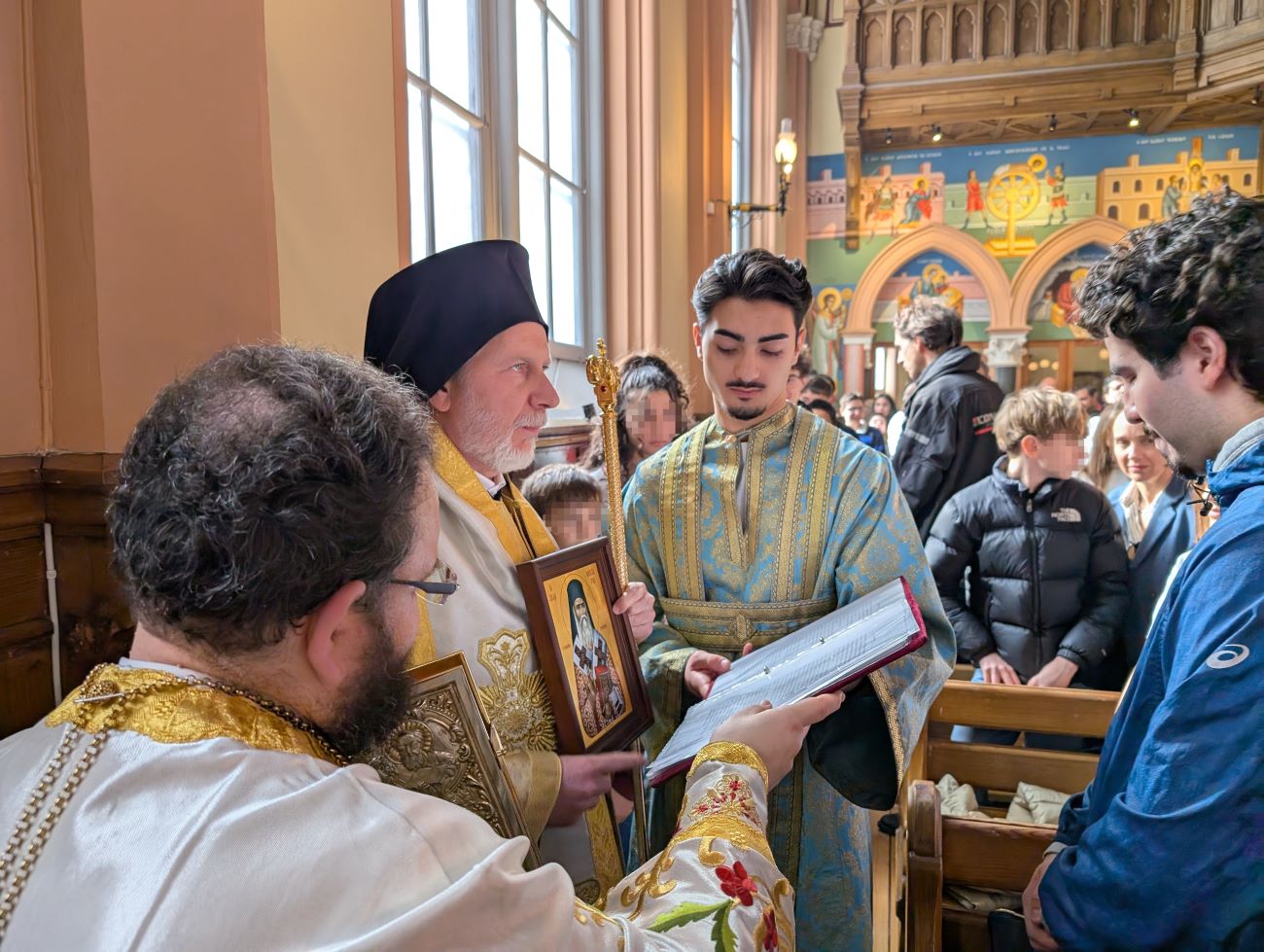
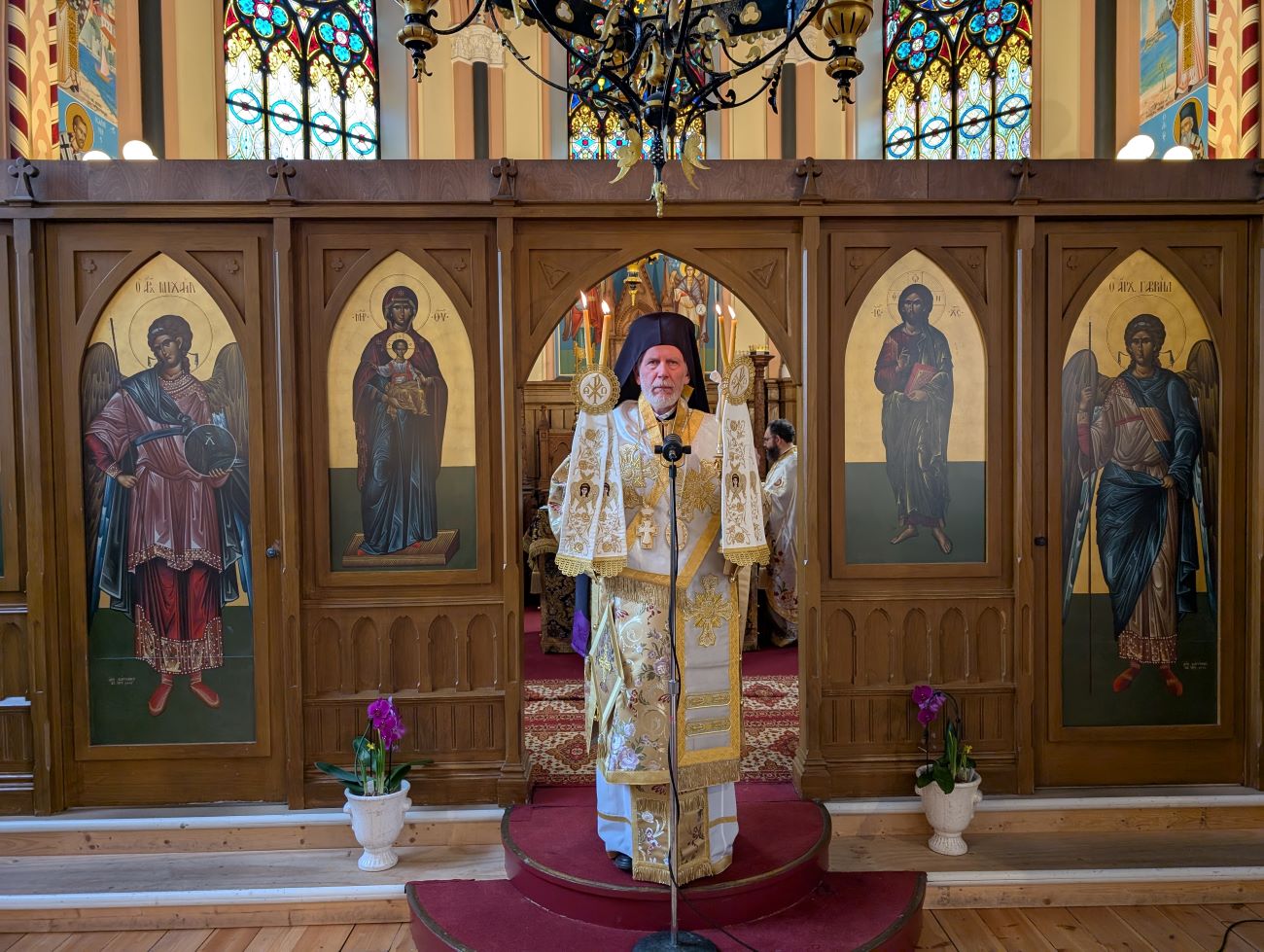
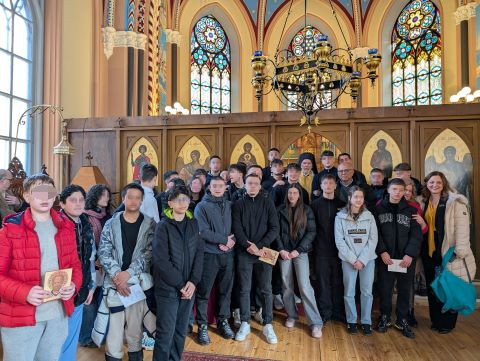
Σύμφωνα με το τυπικό της ημέρας, πριν την απόλυση της Θείας Λειτουργίας, πραγματοποιήθηκε, εντός του Καθεδρικού Ναού, η λιτάνευσις των ιερών εικόνων, προπορευομένων των ιεροψαλτών, πολλών παιδιών και της 25μελούς αντιπροσωπείας μαθητών του 1ου Γενικού Λυκείου Κηφισιάς, συνοδευομένων υπό των Καθηγητών τους κ.κ. Νικολάου Φουντά, Μαθηματικού, Θεοδοσίας Καβαρνού, Φιλολόγου, Υποδιευθύντρια 1ου Γενικού Λυκείου Κηφισιάς, και Παναγιώτας Τσεντούρου, Φιλολόγου.
Στο τέλος, ο Ποιμενάρχης μίλησε επικαίρως για τα πολλαπλά μηνύματα της ημέρας και καλωσόρισε τους μαθητές του 1ου Γενικού Λυκείου Κηφισιάς, δανειζόμενος δε ένα επίκαιρο σύνθημα, αναφέρθηκε στο πνευματικό οξυγόνο, περί του οποίου, ο Άγιος Μάξιμος ο Ομολογητής επισημαίνει την σπουδαιότητα της προσευχής, ως το πνευματικό οξυγόνο και την σημασία της για την πνευματική ζωή.
Συνεχάρη τα παιδιά, που αντί επισκέψεως άλλων αξιοθεάτων της Στοκχόλμης, συμμετείχαν στην πανηγυρική Λειτουργία της πανεπισήμου ημέρας, κατά την οποία διατρανώνεται η Ορθοδοξία και αποκαθίσταται η προσκύνηση των ιερών Εικόνων και η τιμή στα πρόσωπα που απεικονίζουν.
Κάλεσε τους νέους, να έχουν οραματισμό στην ζωή τους, να μην συμβιβάζονται με το μέτριο, αλλά με το άριστο και να δίδουν τον καλό εαυτό τους για την Πατρίδα μας.
Επίσης, ευχαρίστησε τους συνοδούς Καθηγητές και επέδωσε στον κ. Φουντά, για την βιβλιοθήκη του σχολείου, την μελέτη του: «Ἡ Ἱεραποστολική Διακονία τοῦ Ἀρχιμανδρίτου Εὐσεβίου Βίττη εἰς τήν Σκανδιναυΐαν, 1965-1980», εκδοθείσα υπό της Αποστολικής Διακονίας της Εκκλησίας της Ελλάδος, ενώ παρεκάλεσε τους κ.κ. Καθηγητές, να μεταφέρουν τον σεβασμό και την αγάπη του, στον Σεβ. Μητροπολίτη Κηφισίας, Αμαρουσίου, Ωρωπού και Μαραθώνος κ. Κύριλλο και στον Εντιμ. Δήμαρχο Κηφισίας κ. Βασίλειο Ξυπολυτά.
Ο κ. Φουντάς προσέφερε, εν συνεχεία, στον Ιεράρχη την Ελληνοαγγλική έκδοση του τόμου του Δήμου Κηφισίας: «Κηφισιά, όψεις της Ιστορίας της πόλης και του Δήμου – Αρχειακά Τεκμήρια».
Η ημέρα επισφραγίστηκε με ευχές για το υπόλοιπο της Αγίας και Μεγάλης Τεσσαρακοστής, παραδοσιακό νηστίσιμο κέρασμα, στο Μουσείο Ελληνοχριστιανικής Κληρονομιάς, στις εγκαταστάσεις του ως άνω ναού, κι έναν ενθουσιώδη διάλογο των επισκεπτών μαθητών με τον Μητροπολίτη, για τα οράματα και τις σκέψεις τους για τις μελλοντικές ακαδημαϊκές τους επιδιώξεις.
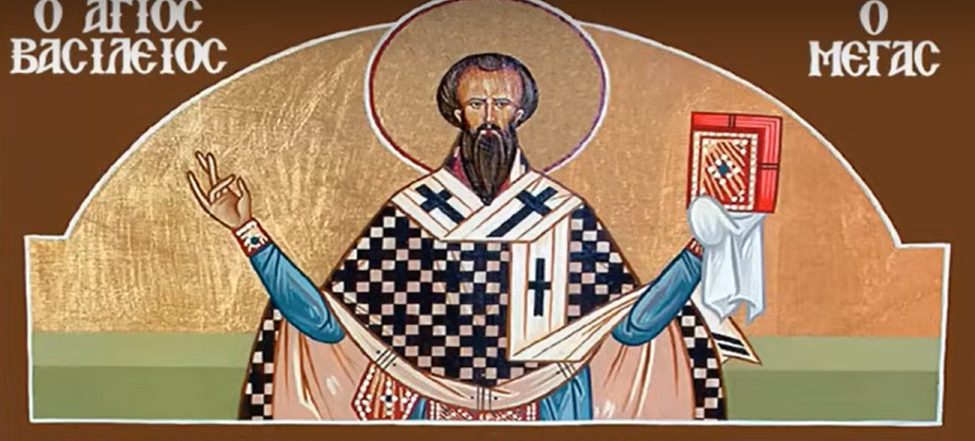
STOCKHOLM – Over the weekend of November 8-10, 2024, the Holy Metropolis of Sweden celebrated the consecration of the chapel named after St. Nicholas the Wonderworker, Archbishop of Myra of Lycia, located within the Hermitage established by the ever-memorable Archimandrite Eusebios Vittis.
On the Friday afternoon, November 8, His Eminence Metropolitan Cleopas of Sweden and All Scandinavia presided in chorostasia at the Vespers of the dedication, aided by the Very Rev. Archimandrite Dr. Bartholomew Iatridis, Parish Priest of the St. George Cathedral in Stockholm, and the Rev. Economos George Arvanitidis, Parish Priest of the newly established parish of Saints Demetrios and Nestor in Örebro, Sweden. Prior to the Vespers, in keeping with ecclesiastical tradition, the Metropolitan brought the relics in a silver reliquary and placed them inside a holy receptacle.
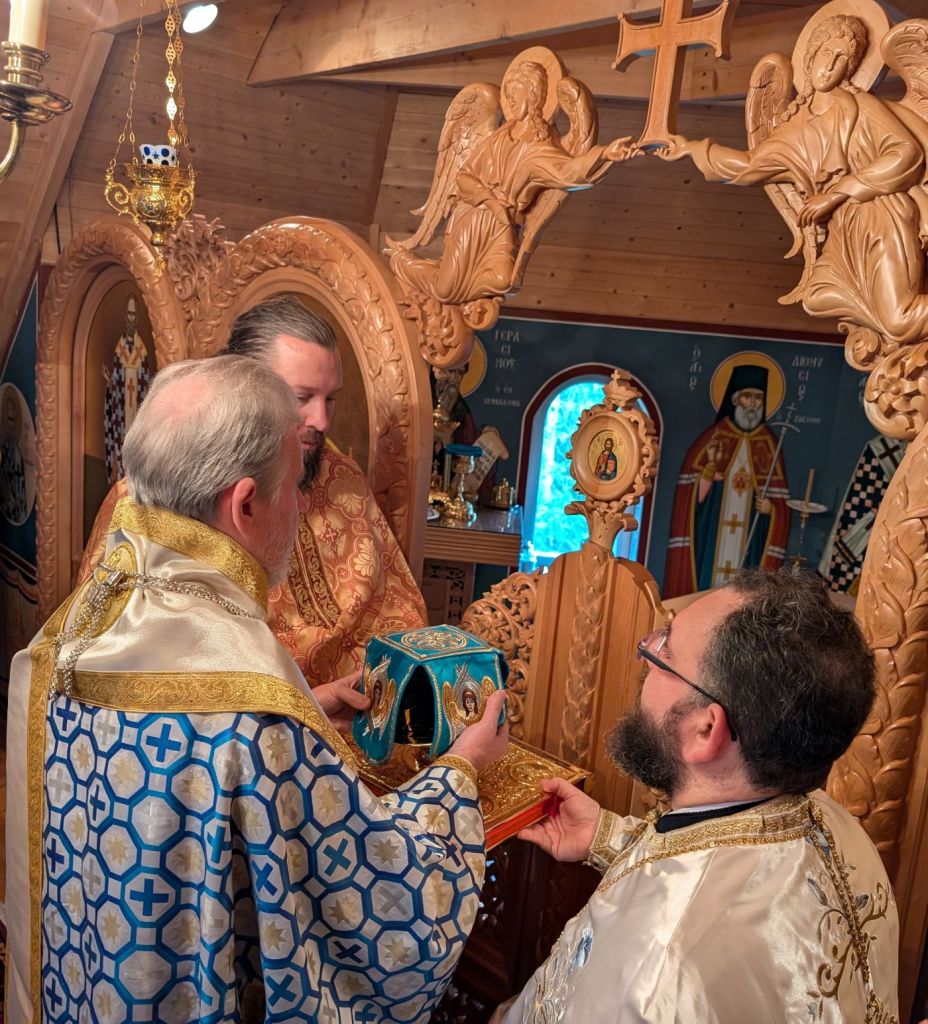
During the Vespers, the hymns in honor of Saint Nectarios of Pentapolis, the dedication ceremony, and Saint Nicholas – after whom the chapel was named – were chanted by members of the Byzantine choir of the St George Cathedral in Stockholm under the direction of Ms. Iliana Antoniou.
A reception was held after the service, courtesy of Mr. and Mrs. Benedict and Sultana Svedberg.
On Saturday morning, November 9, Metropolitan Cleopas, aided by the aforementioned clergymen, celebrated the Divine Liturgy at the Hermitage chapel, officiating its consecration according to the rites of the Eastern Orthodox Church.

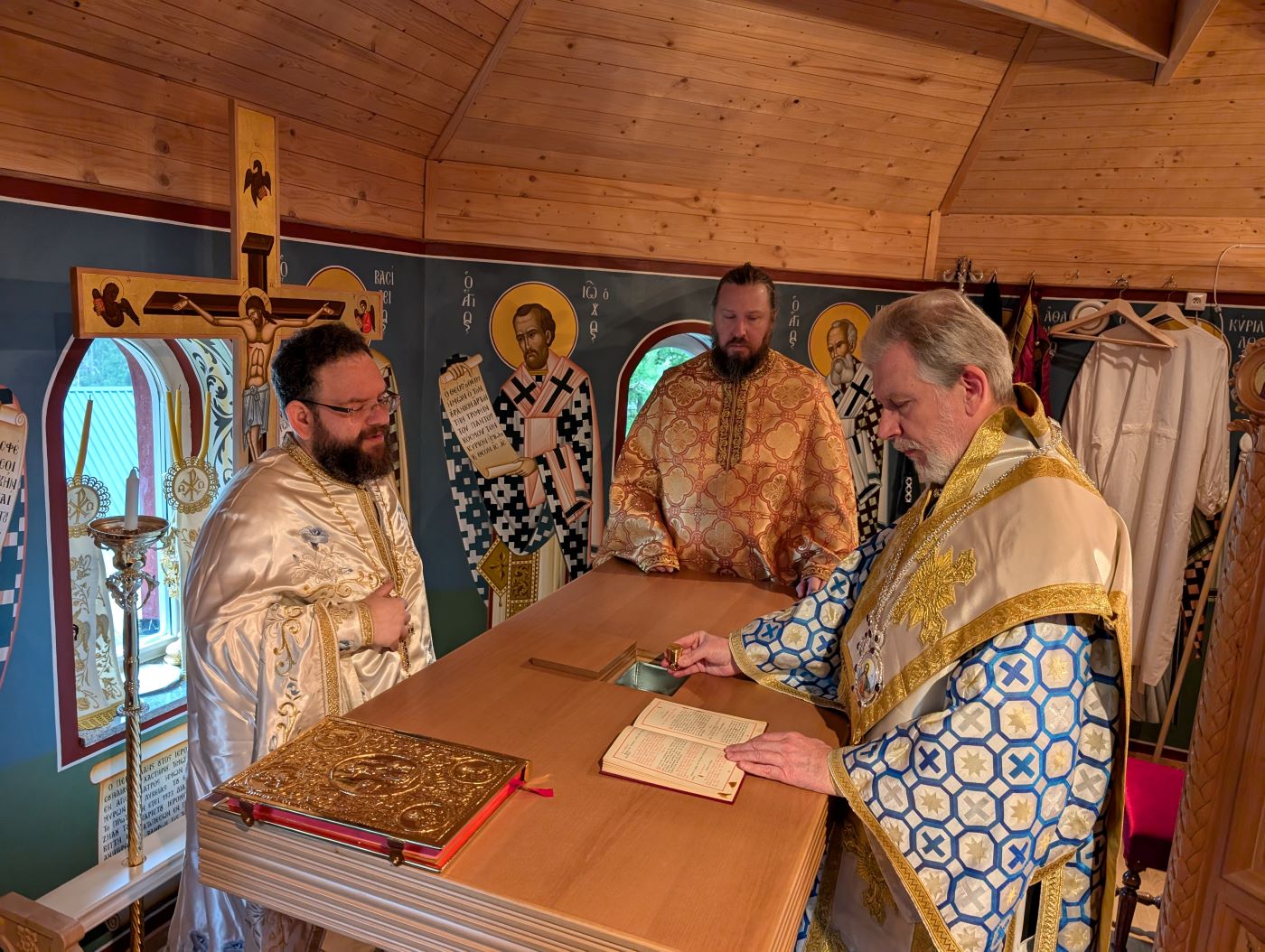
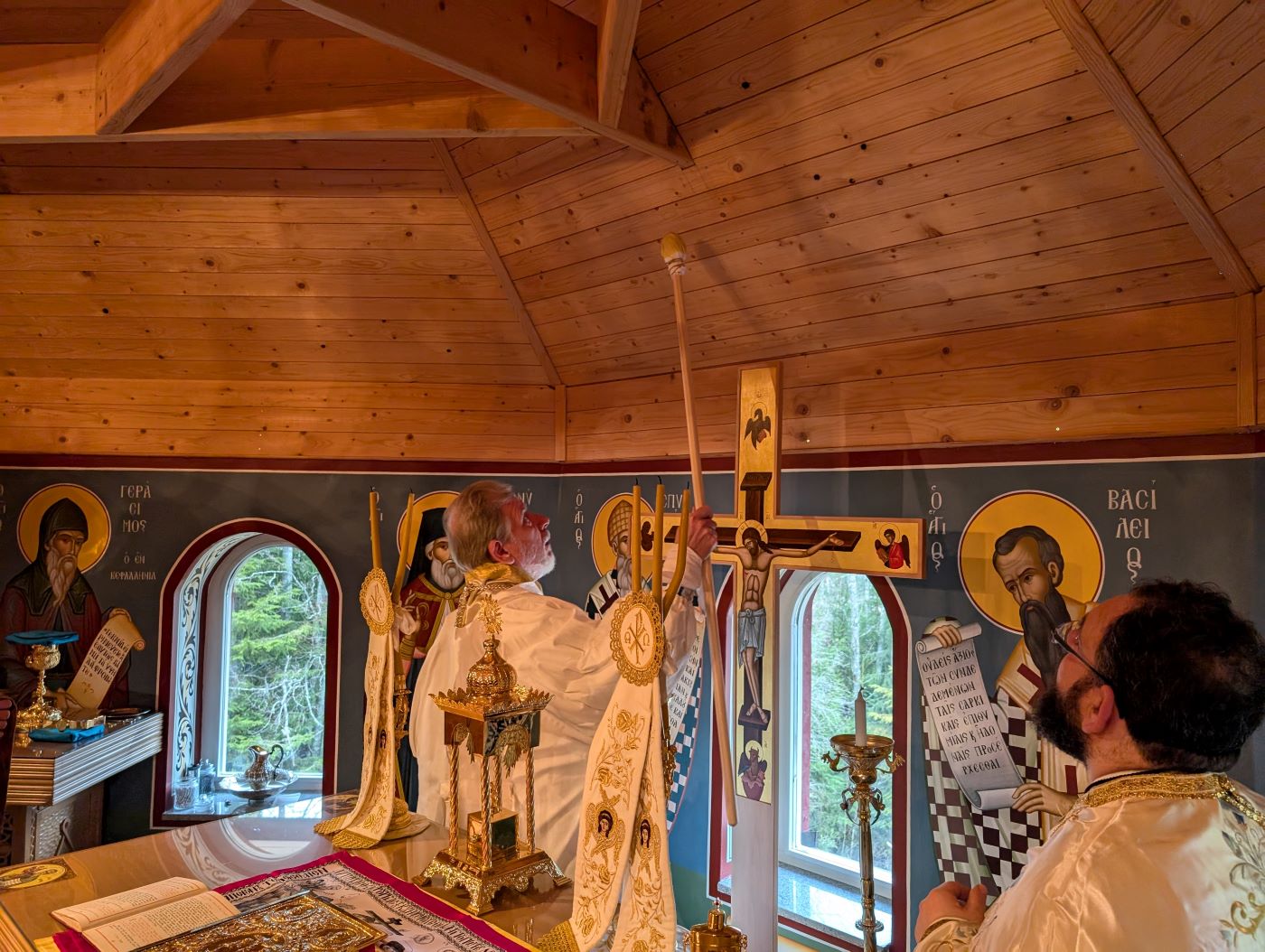

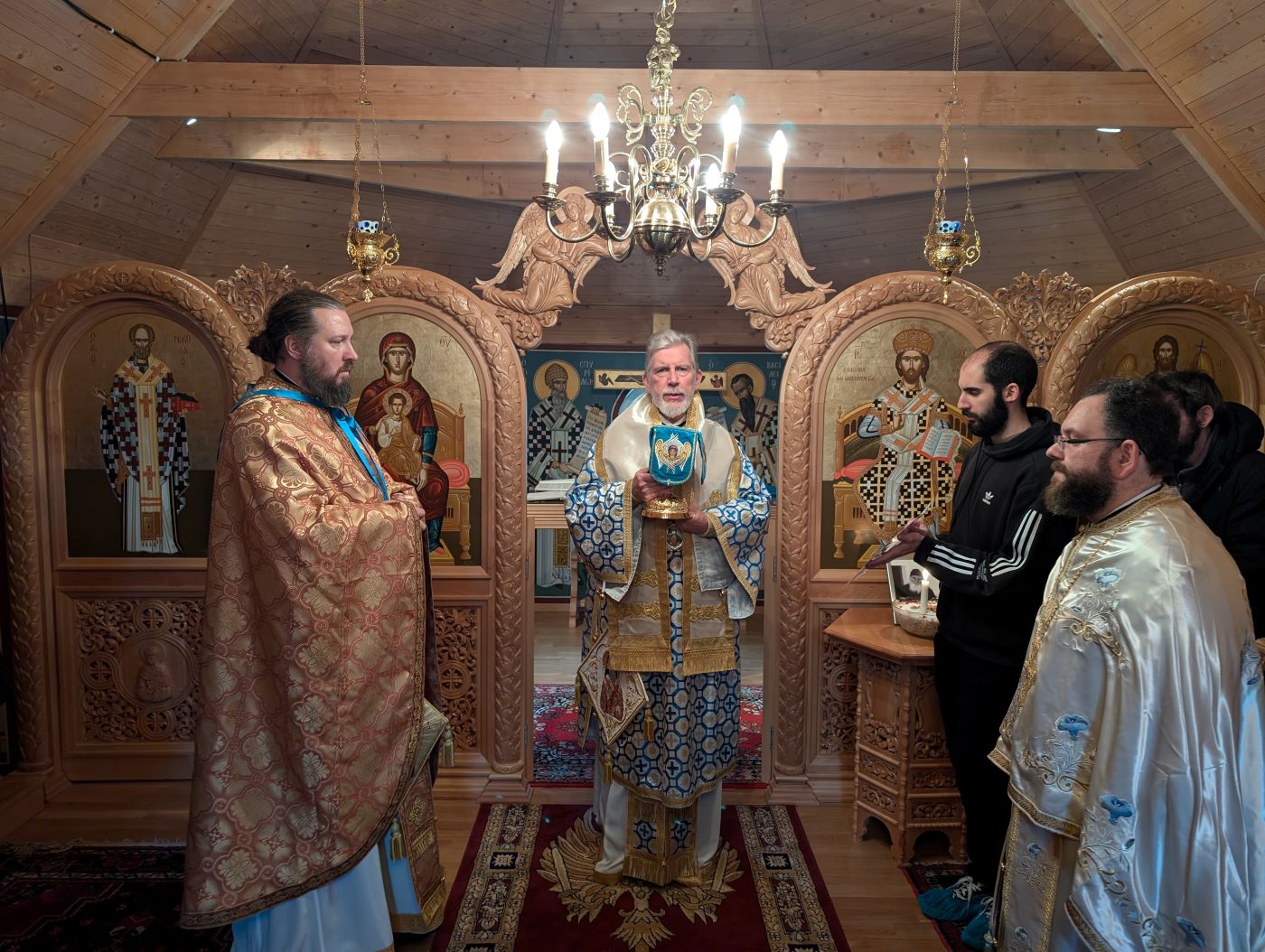
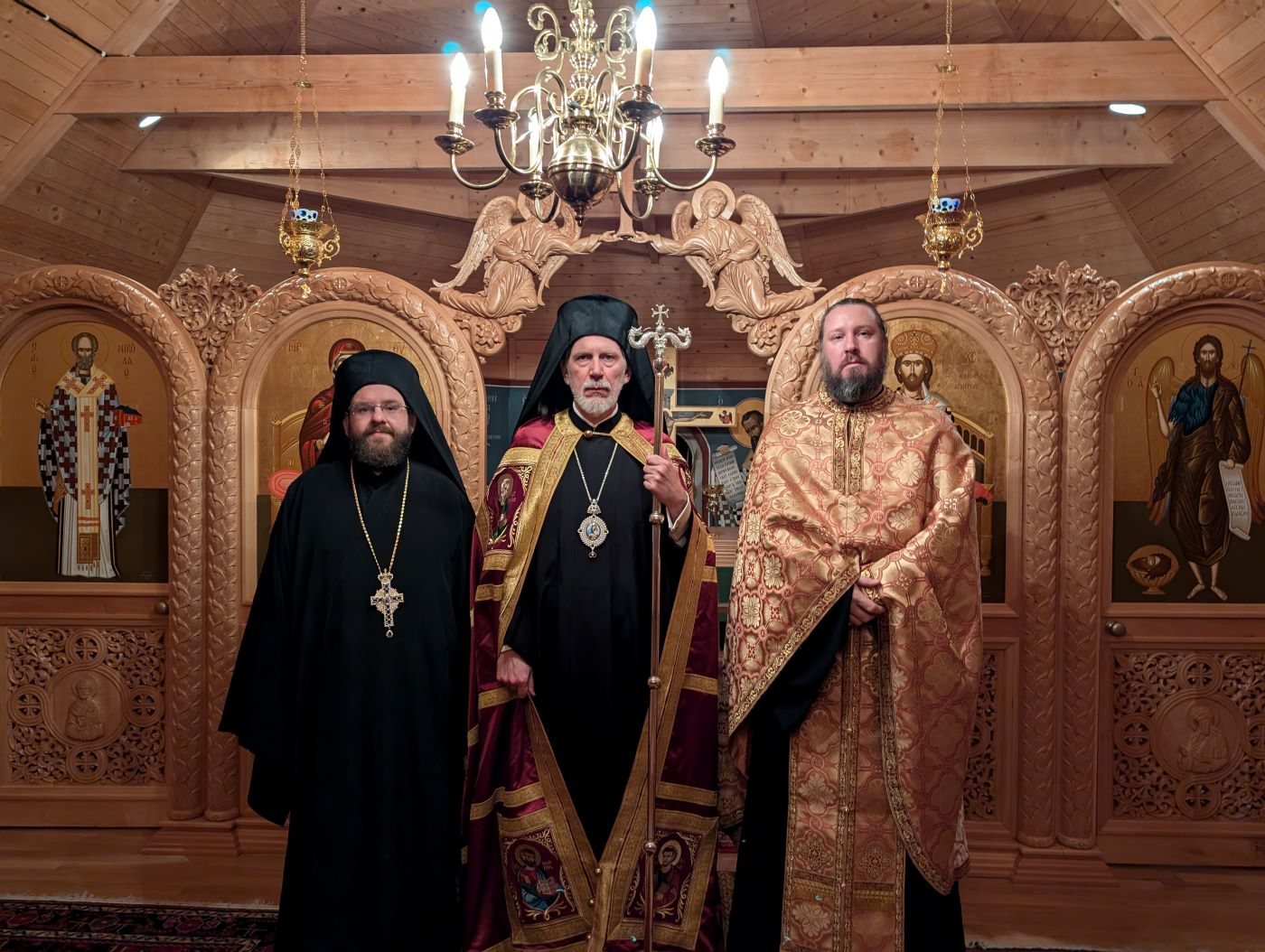
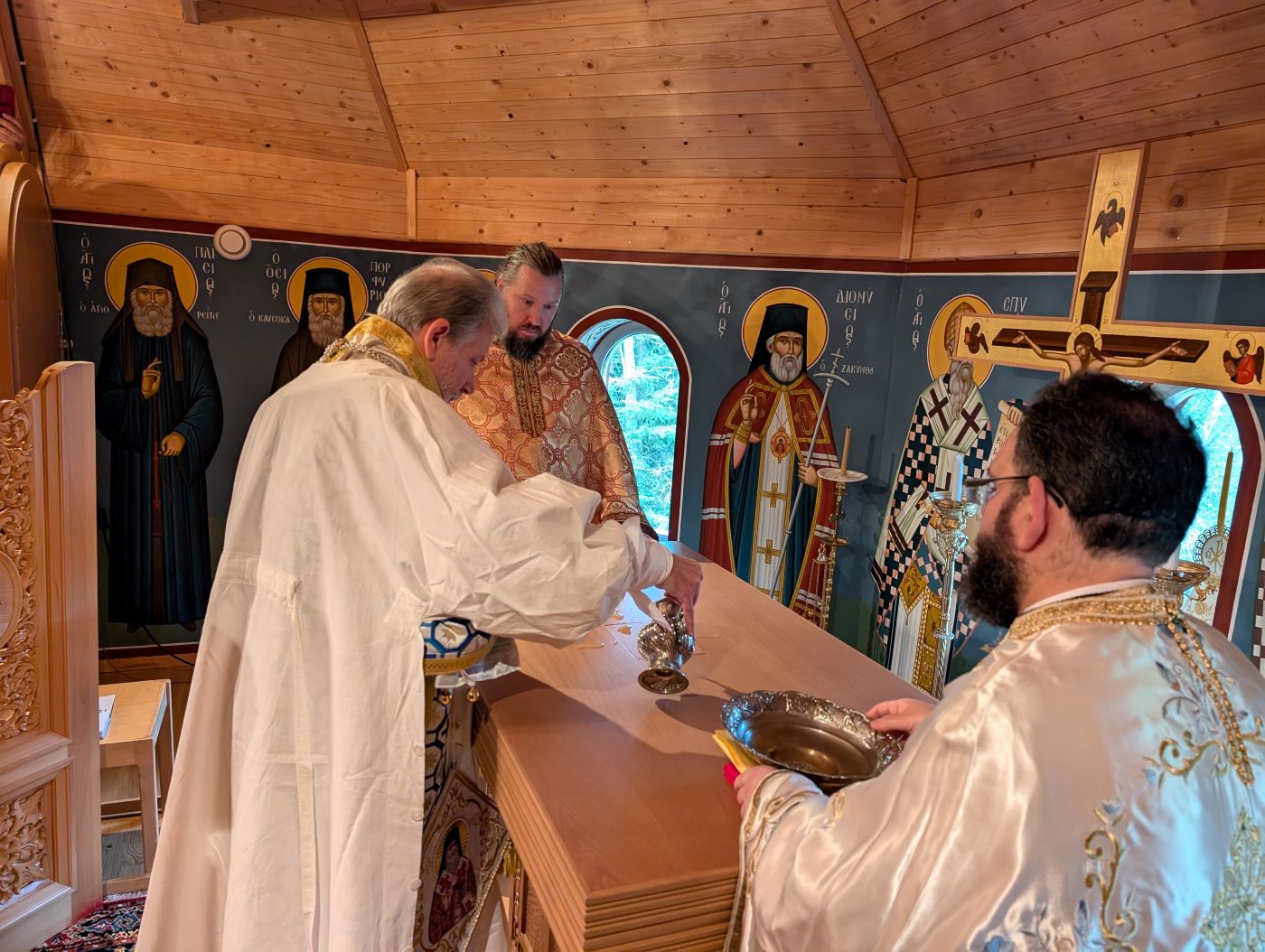



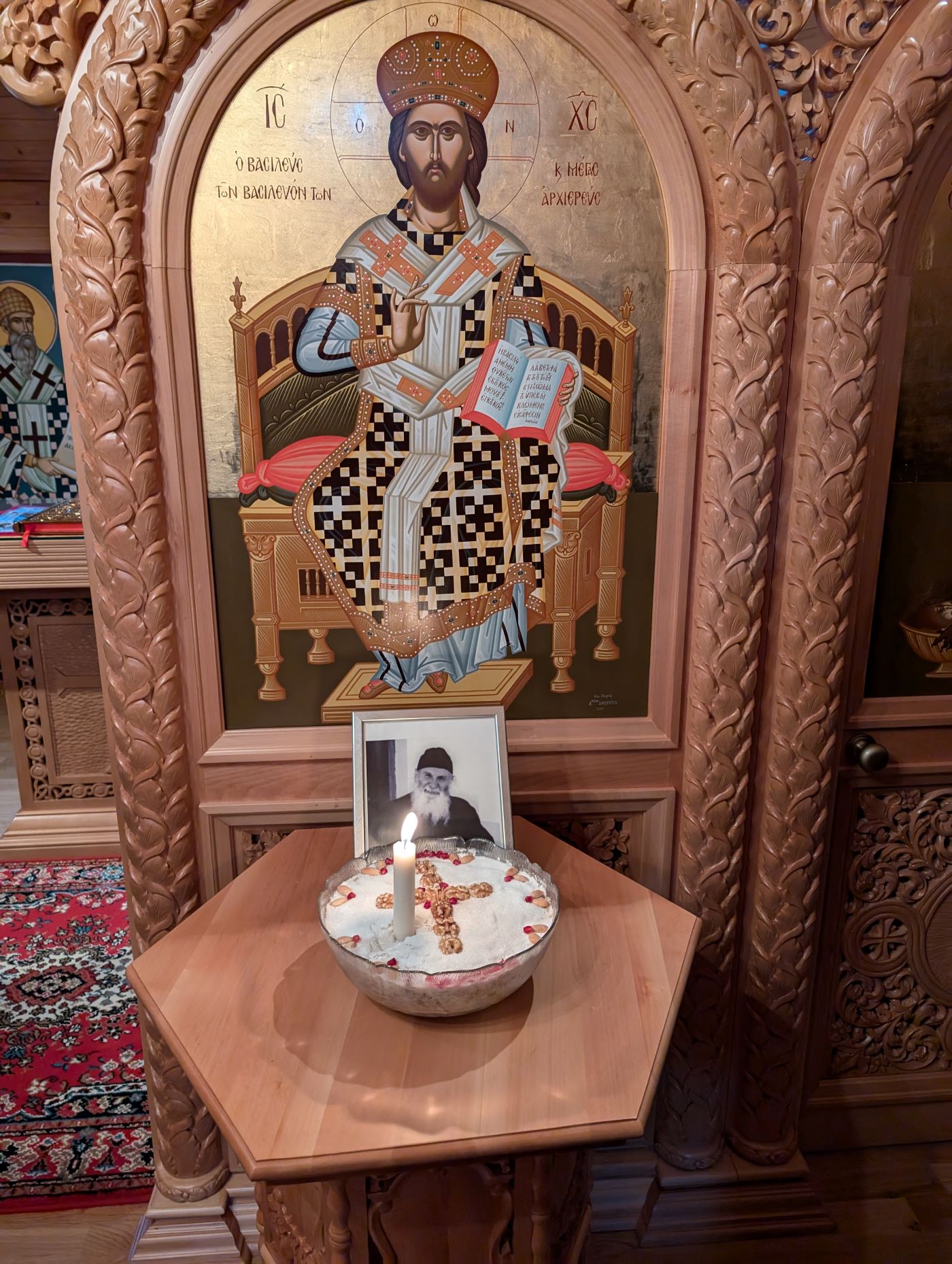
Prior to the conclusion of the festal Divine Liturgy, which was attended by a multitude of faithful from various cities in Sweden and Norway, the Metropolitan conferred upon Rev. Arvanitidis the office of confessor, while the people responded to this paternal gesture exclaiming “Axios!” (He is worthy!)
A memorial service was also held for the ever-memorable Archimandrite Eusebios Vittis, as this November marks the fifteenth year anniversary of his passing, with Metropolitan Cleopas referring to the late Elder’s character, his devoted pastoral and missionary ministry, and his literary contribution.
In his sermon, Metropolitan Cleopas noted that: “The grace of the Holy Spirit and the memory of the revered and beloved Saint Nectarios, Metropolitan of Pentapolis in Libya and patron of Aegina, have brought us together in a place of special significance for the Holy Metropolis of Sweden, for all Scandinavia, and for those who were blessed to be spiritually connected with a revered Elder, the Founder and builder of this Hermitage, the ever-memorable Archimandrite Eusebios Vittis.
This sacred space was established in 1973, and after Elder Eusebios’ permanent relocation to Greece in 1980, his passing in 2009, and its maintenance by the “Orthodox Brotherhood of Saint Nicholas,” it remained empty after its total destruction in a fire back in October 2010, until it was conveyed to the Holy Metropolis of Sweden, along with its surrounding facilities, on November 9, 2014, exactly ten years ago.
Three dates are milestones for today’s inauguration: 1) fifteen years since the passing of Elder Eusebios, 2) ten years since the transfer of the Hermitage to the ownership of the Holy Metropolis, and 3) fifty years since Elder Eusebios’ congratulatory letter to the late Metropolitan Paul, former Metropolitan of Amaseia, in which he mentioned, among other things, the following: ‘I deeply desire communion with You and, indeed, Your Eminence’s heartfelt blessing to support me in my difficult journey.
Furthermore, I indicate that the humble hermitage of Saint Nicholas, of which I consider myself an unworthy steward, is at Your Holiness’s full disposal.
You may henceforth consider it to be a place that is fully your own, where you will have every comfort to rest whenever, tired from the journey, you feel the need for solitude in a secluded place.
You will find in it all the devotion and genuineness of love that the undersigned’s poverty possesses.
It will be the greatest happiness for me if Your Eminence should see fit to dedicate the chapel of Saint Nicholas, which constitutes the spiritual hearth of this humble place.
Without the chapel, the hermitage would be entirely empty, utterly cold and dead.’
Today, the chapel of Saint Nicholas, renovated and equipped, reminds us that on December 6, 2015, its opening was celebrated by my Humility.
We were granted this great joy, as noted in a congratulatory letter by His All-Holiness Ecumenical Patriarch Bartholomew: ‘And now, with the passage of many decades, Father Eusebios enjoys in heaven the fruits of his labors, seeing the Hermitage in which he lived ascetically and in godliness, now transferred to the Holy Metropolis of Sweden and All Scandinavia, and renovated, so as to serve as a point of spiritual reference and a ladder of ascent to spiritual levels.’
The consecration of churches has its roots in the Old Testament and extends to Christian churches, featuring a completely different meaning and ceremony. In a purely allegorical manner, reference is made to consecrations that the Prophets Isaiah and Jeremiah mention, as well as to the dedication of the ‘Tabernacle of Witness,’ the kingdom of David, and Solomon’s Temple in Jerusalem.
Also, our Lord visited the Temple of Jerusalem during the Feast of Dedication, as recounted by St. John the Evangelist (Gregory the Theologian, “Oration XLIV,” PG 36, 608B).
The church, as the preeminent place of prayer, symbolizes the entire world, both intelligible and sensory. Within the church, the mystical relationship between God and humanity unfolds, on the one hand through the arrival of the latter and their need for prayer, and on the other, through the presence of God, Who as omnipresent, fills the church with Divine Grace!
Let us not forget that the Temple of Jerusalem during the Old Testament era symbolized the visible sign of God’s presence there. However, it serves as a temporary point of reference, which in the New Testament will be replaced by another sign, the Body of Christ, namely the Church.
In the four Gospels, Jesus had mentioned before His Passion to His disciples that He Himself and His Body constitute the temple of God.
Jesus’ reference to the demolition and reconstruction of the Temple of Jerusalem in three days does not pertain to the physical construction of the historical monument but rather to the Lord’s Resurrection on the third day, indicating His Body as the temple.
The resurrected Body of Jesus is the visible sign and the spiritual sustenance of the members of the Christian Church, and it constitutes the center of the mystery of the Divine Eucharist.
Christ, who is the preeminent temple of God, entering to dwell within the human body through Holy Communion, transforms the faithful into a temple of God. According to the teachings of the Church Fathers, the Theotokos and the saints are often described as temples of God.
The practice and description of the consecration of Christian churches have been significantly influenced by the description of the manner in which Solomon’s Temple was dedicated, as detailed in the narrative of the Old Testament (1 Kings 8:1).
My beloved brethren, we could speak for hours about the significance of the dedication of a church. Let us hold onto this: from this day forward, an Angel of the Lord will guard the Holy Altar, and we, when we approach and celebrate the bloodless sacrifice, will be transformed into a temple of the Holy Spirit, Who dwels within us.
Your Bishop’s concluding remark in his report for the year 2015 to the Ecumenical Patriarch remains my humble wish and prayer: ‘Please pray that this Hermitage may serve as a focal point attracting Christians and non-Christians alike, and may it become a spiritual center of prayer, asceticism, and spiritual contemplation for our Orthodox Christian brethren living in the regions under the spiritual jurisdiction of this Holy Metropolis.
Please pray also that the Lord our God may guide to this blessed place of asceticism pure souls, inspired by Divine zeal, a spirit of self-denial, obedience, and deep piety, who will in turn inspire and support those seeking assistance and spiritual guidance.’
I warmly thank my beloved Brothers, the Very Rev. Archimandrite Bartholomew Iatridis and Rev. Economos George Arvanitidis, for their kindness in accompanying me to the Hermitage and participating in the consecration of its chapel, Mrs. Fotini Batsela and Tania Svedberg, for the hospitality they extended to all of us, and the youth members of the St. George Cathedral in Stockholm for chanting the hymns at today’s worship service.
Finally, I express my deepest gratitude to His Excellency Metropolitan Agathangelos of Fanarion, Director General of the Church of Greece’s missionary arm Apostoliki Diakonia, for providing a) all the necessary items for the cosecration, b) the copies of the icon of Saint Nicholas, and c) the gracious holy relics of Saints Barbara and Raphael, the venerable martyr Agathangelos of Esphigmenou, and Agathangelos the martyr.”
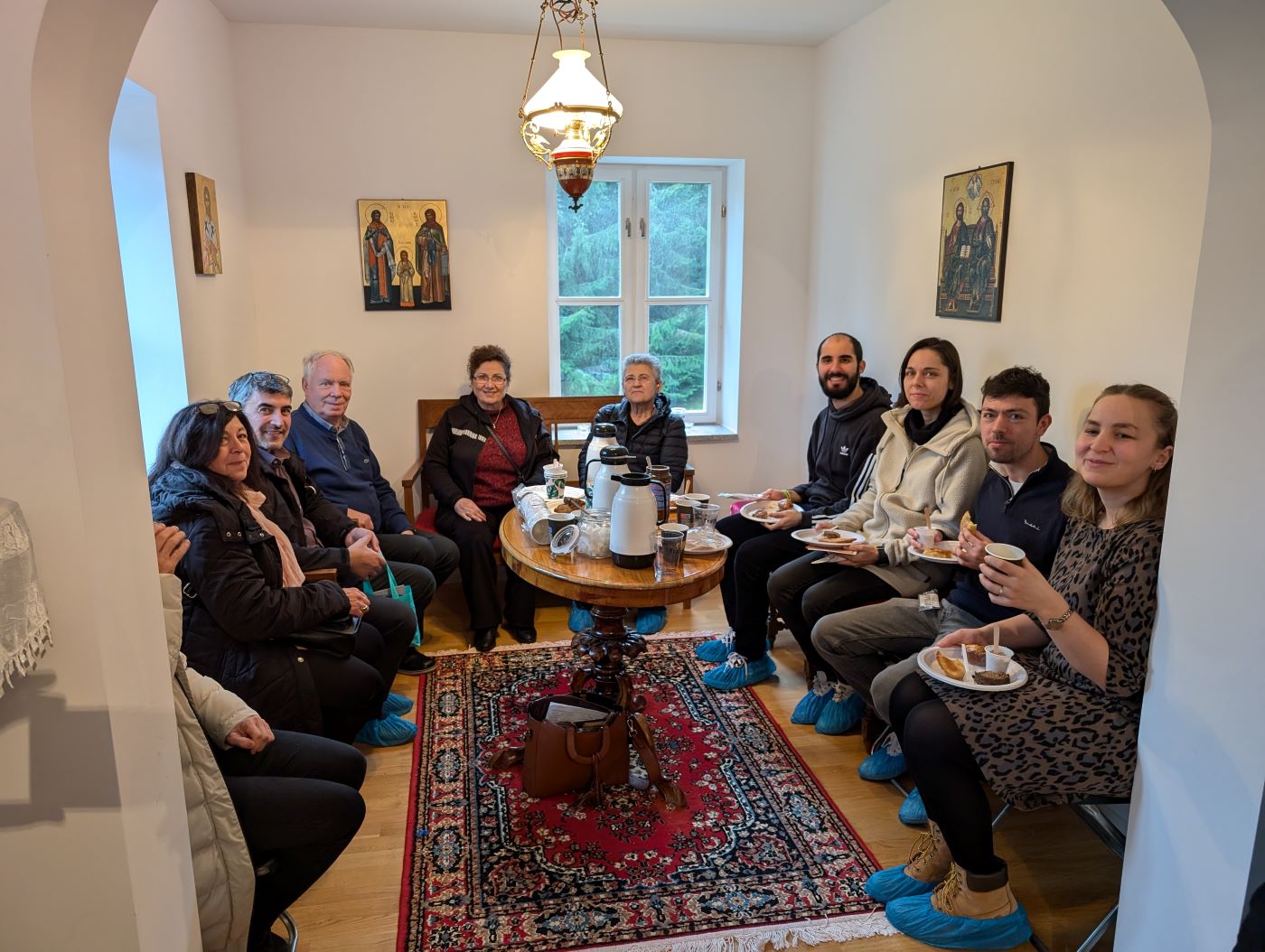
Following this, a meal was served in the Hermitage’s reception area, overseen by Mrs. Soultana Svedberg, with dishes and sweets also contributed by Mrs. Fotini Batsela, Ioanna Skondra, Georgia Gitzia, and many of the faithful who brought various items.
May the blessings of Sts. Nicholas and Nectarios be abundant in the lives of all, and may the consecration of the Chapel serve as the beginning of a new chapter in the life of the Hermitage, through the revelation of persons who, with missionary zeal and self-sacrifice, will continue the work of the late Father Eusebios, whose soul will rejoice as he sees his wish for the consecration of the chapel of his Hermitage fulfilled fifty years later.
Wilderness Hotel Nellim, Finland
Sunday, August 25, 2024
Your Eminence Archbishop Leo of Helsinki and All Finland,
Beloved Brother Hierarchs of the Holy Archdiocese of Finland,
Reverend Fathers,
Honorable State Representatives,
Esteemed Leaders and Members of the Skolt Sámi Community,
Dearly Beloved Brothers and Sisters in Christ,
It gives me great honor and pleasure to join you today, representing His All-Holiness Ecumenical Patriarch Bartholomew, to convey His paternal blessings and wishes at today’s auspicious occasion, commemorating the 75th anniversary of the resettlement of the Skolt Sámi people.
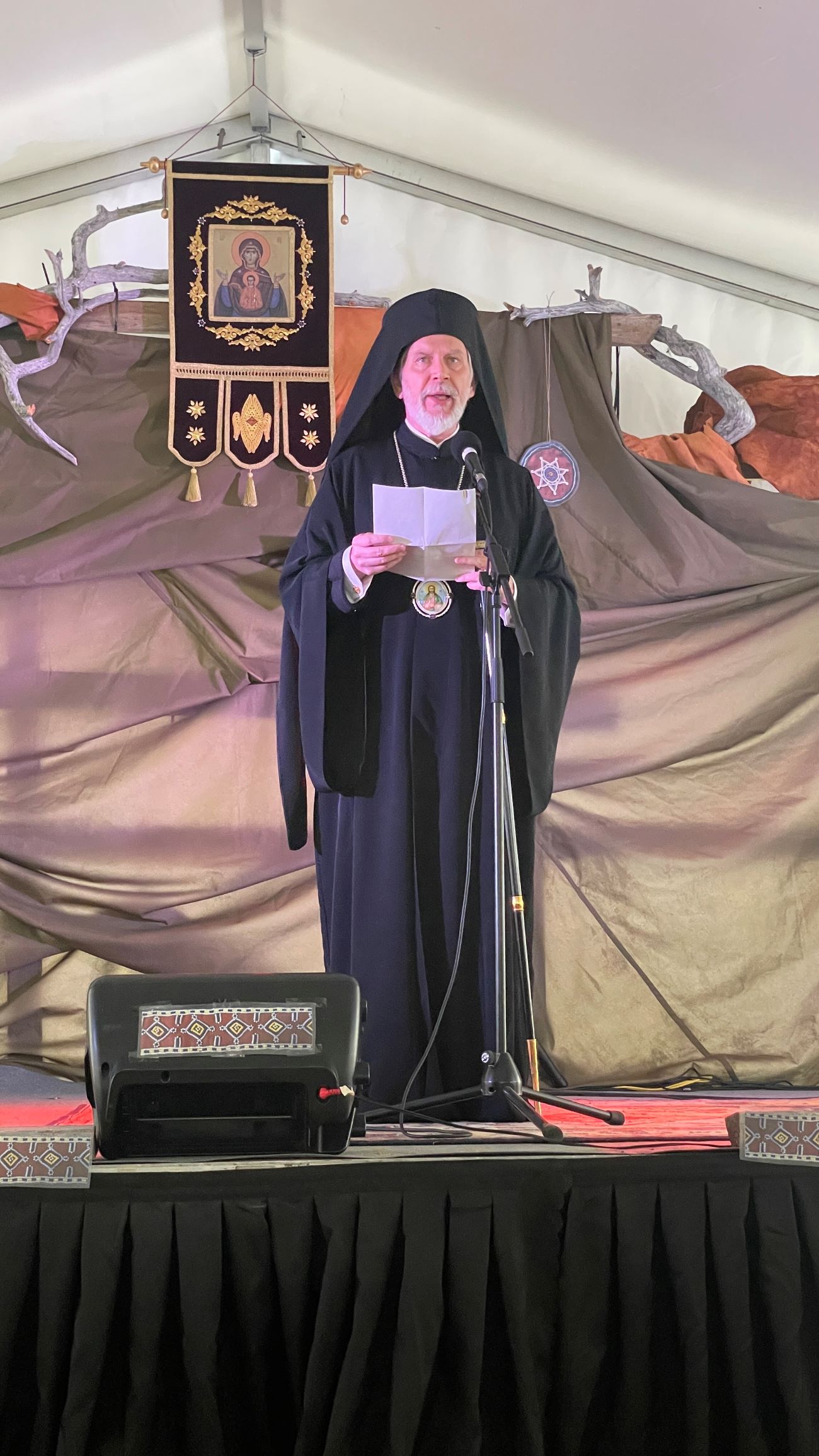

Having gathered here today with Christ in our midst, and worshipping Him with one mouth and heart, through our participation in communal holy services, we also give thanks and celebrate the resilience, culture, and faith of the Skolt Sámi, who have been united with us in our common Orthodox Christian faith since the 16th century, following the missionary ministry of St. Tryphon of Pechenga, the sweet fruits of whose spiritual toils and labors we continue to savor until today.
The commemoration of the 75th anniversary of the resettlement of this unique ethnic group is important because it enriches the local Church, authentically celebrating the presence of native minority groups in the life of the Church and engaging them, while also highlighting the lasting importance of work in spreading the testimony to Christ and “good news” across the world.
In carrying on this ancient command given by the Lord, we also celebrate
two characteristics of our holy Church – its apostolic and catholic nature. Our ministry is apostolic because it follows in the example of the Holy Apostles, who went out into the four corners of the ecumene to spread the good word of Christ’s Gospel.
Likewise, it is catholic, because it is directed to all and makes no distinction
between majority and minority ethnic groups and languages, but rather, endeavors to spread Christ’s teachings and bear witness to Him in the midst of all the people, so that all may participate in the unity of the faith, just as St. Paul explained: “There is neither Jew nor Greek, there is neither slave nor free, there is neither male nor female, for you are all one in Christ Jesus” (Galatians 3:28).
Therefore, the presence of the Skolt Sámi people in the Orthodox Christian Church, with whom we have shared the same baptismal font for over 400 years, since their illumination and embrace of the Christian faith in the 17th century, is a remarkable occasion.
This same faith has also blessed them with the courage and endurance to bear the crosses that this ephemeral life has in store for each of us, as we strive and struggle to attain the laurel crown that Christ awaits to bestow upon us.
The ethnic, political, social, and climatic changes that occur on the international, national, and regional level, often impact the smallest and most vulnerable, in a disproportionate manner. The most innocent often bear the burden for the decisions of their leaders and rulers. Often times, this translates into forced relocation, uprooting, sometimes even acts of violence designed to erase the historical presence of a group of people.
As Christians, we are no strangers to this cross. In fact, no sooner did our Lord make His miraculous entrance into human history through His Nativity according to the flesh, than He was forced to flee Bethlehem and seek refuge in Egypt.
Our Mother Church and Venerable Center of Orthodoxy, the Ecumenical Patriarchate, is also no stranger to this harsh reality. In the 20th century alone, it lost significant portions of its flock during the events leading up to the Asia Minor Catastrophe, over the first quarter of the 20th century.
Similar violent acts targeting its flock also led to the expulsion and mass exodus of much of its remaining flock who trace their historical presence in those lands since antiquity. However, as Christ Himself reveals to the Apostle of the Nations St. Paul, his “power is made perfect in weakness” (2 Cor. 12:9).
And while the faithful located in Asia Minor and other nearby areas bore this historic cross, the Mother Church of Constantinople saw its eparchies abroad, throughout Europe, the Americas, and Australia grow and prosper in a true testament to its ecumenical presence and nature.
Likewise, here in the northernmost part of Europe, it is a truly special blessing to commemorate and celebrate the resilience and faith of the Skolt Sámi people, who endured and overcame the historic challenges that they came across and prevailed.
Our gathering here today gives us occasion to glorify the Trinitarian God and praise His holy name, for “to each is given the manifestation of the Spirit for the common good. To one is given through the Spirit the utterance of wisdom … to another various kinds of tongues, to another the interpretation of tongues. All these are inspired by one and the same Spirit, who apportions to each one individually as he will” (1 Cor. 12: 7-11).
Having sampled this sweet fruit of the Holy Spirit, I share in the joy of our Orthodox Christian brethren who are natives of the Skolt Sámi people, as we join in prayer, to give thanks to the Lord for blessing their resettlement and enabling them to retain their unique customs, heritage, and traditions, which have become organically grafted into our common liturgical life.
Conveying the heartfelt congratulations and paternal blessings of His All-Holiness Ecumenical Patriarch Bartholomew on this milestone, I pray that through the intercessions of the Holy Evangelists and Apostles, and our Most Glorious Lady the Theotokos, you may receive the just reward from our Lord and Savior Jesus Christ and proclaim the Gospel to the coming generations of the Skolt Sami people for many years to come, enjoying the abundant gifts of God.
In conclusion, knowing that, God willing, the election of the new Archbishop of Helsinki and All Finland will take place this November, I pray that the Lord our God will reveal a worthy successor to His Eminence Archbishop Leo, to whom the Holy Metropolis of Sweden and All Scandinavia and my humility owe eternal gratitude for his wholehearted paternal support toward our Finnish parish in Stockholm named after St. Nicholas of Myra, to which he regularly sends his worthy and devoted clergymen to celebrate holy services.
Your Eminence, we thank You for Your paternal love and we pray that God may grant You many years in physical and spiritual health.
Thank you.
τοῦ κυρ-Ἀλεξάνδρου Παπαδιαμάντη
Ἀπὸ το Πάσχα ἀρχίζει ἡ ἑβδομὰς τῆς Διακαινησίμου ἢ Ἑβδομὰς Νέα. Οὕτω δὲ καλεῖται, διότι εἰς τὴν ἀρχαιότητα τὸ Πάσχα ἐβαπτίζοντο οἱ κατηχούμενοι, ὡς εἴπομεν προχθές, καὶ οὕτως ἤρχιζε δι᾿ αὐτοὺς καὶ τὴν Ἐκκλησίαν νέα χριστιανικὴ περίοδος καὶ ἐποχή. Οἱ Λατῖνοι τὴν ἔλεγον ἑβδομάδα in albis (ἐν λευκοῖς), διότι οἱ βαπτιζόμενοι ἐνεδύοντο κατὰ τὸν τύπον λευκὰ ἐνδύματα, εἰς δήλωσιν τῆς ψυχικῆς καθαρότητος.
Πάσχα εἶναι ἀραμαϊκὴ λέξις, ἑβραϊστὶ δὲ λέγεται Πεσάχ, σημαίνει δὲ διάβασις καὶ ἀναφέρεται εἰς τὴν διήγησιν τῆς Π.Δ., καθ᾿ ἣν οἱ Ἑβραῖοι διέβησαν τὴν Ἐρυθρὰν Θάλασσαν καὶ ἠλευθερώθησαν τῶν Αἰγυπτίων. Γνωστὸν δὲ ὅτι πρὸ τῆς διαβάσεως ἑώρτασαν τὸ Πάσχα.
Περὶ τῆς ἑορτῆς τοῦ Πάσχα διαφωνία ὑπῆρχεν ἐν τῇ ἀρχαιότητι, τῆς Ἀνατολῆς ἑορταζούσης, κατὰ τὸν τύπον τῆς ἐν Ἐφέσῳ Ἐκκλησίας, (ὅπου ὁ Εὐαγγελιστὴς Ἰωάννης ἐδίδαξε), κατὰ τὴν ἡμέραν τοῦ Ἰουδαϊκοῦ Πάσχα, τὴν 14 τοῦ μηνὸς Νισάν· (ὁ Νισὰν συμπίπτει μεταξὺ Μαρτίου καὶ Ἀπριλίου καθ᾿ ἡμᾶς), ἐνῷ ἡ Δύσις δὲν ἀνεγνώριζε τὸν τρόπον τοῦτον τῆς ἑορτῆς. Τὸ πρᾶγμα ὡρίσθη ἐν τῇ α´ Οἰκουμ. Συνόδῳ (325 μ.Χ.), καθ᾿ ἣν ἡ ἑορτὴ ἐτέθη τὴν α´ Κυριακὴν μετὰ τὴν πανσέληνον τῆς ἐαρινῆς ἰσημερίας.
Ἡ Κυριακὴ ἀρχῆθεν ἐλέγετο πρώτη σαββάτων ἢ μία σαββάτων· ἦτο ἡ πρώτη ἡμέρα τῆς ἑβδομάδος. Κυριακὴν ὠνόμασαν οἱ χριστιανοὶ (ἡμέραν τοῦ Κυρίου), καθ᾿ ἣν ἡ Ἀνάστασίς του ἑορτάζεται. Κατὰ τὸν Ἰουστῖνον φιλόσοφον, ἐλέγετο καὶ ἡμέρα τοῦ ἡλίου· ἥλιος δὲ νοητὸς καὶ φωτίζων ἡμᾶς νοεῖται ὁ Σωτήρ.
Σάββατον εἶναι λέξις ἑβραϊκὴ (σαμπά), δηλοῖ δὲ ἀνάπαυσιν. Γνωστὸν ὅτι ἡ Π.Δ., περιγράφουσα ἐπὶ τὸ εἰκονικώτερον τὴν Δημιουργίαν τοῦ κόσμου, λέγει μεταφορικῶς ὅτι τὴν ἑβδόμην ἡμέραν (σάββατον) ὁ Θεὸς ἀνεπαύθη ἀπὸ τῆς Δημιουργίας. Ἐν τῇ Π.Δ. Σάββατον κατόπιν ἐσήμαινε ἐνίοτε καὶ ἑβδομάδα.
Περιττὸν νὰ εἴπωμεν νομίζομεν, ὅτι οἱ σφαζόμενοι ἀμνοὶ τοῦ Πάσχα εἶναι εἰκὼν τοῦ ἀκάκου ἀμνοῦ Ἰησοῦ Χριστοῦ καὶ ἀναφέρεται εἰς τὸν ἀμνόν, ὃν ἔθυον οἱ Ἰουδαῖοι ἑορτάζοντες τὸ Πάσχα. Τὰ ᾠὰ βάφονται κόκκινα, διότι τὸ κόκκινον χρῶμα ἐν τῇ Χριστιανικῇ Ἐκκλησίᾳ εἶναι ἑορτάσιμον· κόκκινον εἶναι τὸ χρῶμα τοῦ αἵματος· ἡ δὲ Ἐκκλησία ἐθεμελιώθη ἐπὶ τοῦ αἵματος τοῦ Ἰησοῦ Χριστοῦ καὶ τῶν μαρτύρων κατόπιν.
Τὴν Διακαινήσιμον ἑβδομάδα μνημόσυνα καὶ νεκρώσιμοι ἀκολουθίαι δὲν τελοῦνται· ἀντικαθιστῶσιν αὐτὰς αἱ ἀναστάσιμοι. Ἐπ᾿ ἐκκλησίας τὰς ὀκτὼ ταύτας ἡμέρας ψάλλονται οἱ 8 ἀναστάσιμοι ἦχοι ἢ ἄλλως Ὀκτώηχος τοῦ Ἰω. Δαμασκηνοῦ, εἷς ἦχος ἀνὰ πᾶσαν ἡμέραν.
Τό Πάσχα, ἐν τῷ ἑσπερινῷ, τὸ Εὐαγγέλιον ἀνεγνώσθη εἰς διαφόρους γλώσσας. Εἶναι τοῦτο λείψανον τῆς ἀρχαιότητος· ἦτο τὸ πρῶτον Εὐαγγέλιον ὃ ἠκροάζοντο οἱ βαπτισθέντες χριστιανοί. Ἐπειδὴ δὲ οὗτοι ἦσαν διαφόρων ἐθνικοτήτων, ἀνεγινώσκετο, ὅπως τὸ νοήσωσιν, εἰς τὰς διαφόρους αὐτῶν γλώσσας.
Τὰς ἱστορικὰς καὶ ἀρχαιολογικὰς ταύτας σημειώσεις, ἐκ τοῦ προχείρου γραφείσας, εὐχαρίστως πιστεύομεν θὰ ἀναγνώσωσιν οἱ φίλοι τῆς Ἐφημερίδος.
(1881)

Agape & St. George Vespers at the St. George Cathedral of Stockholm 2024.
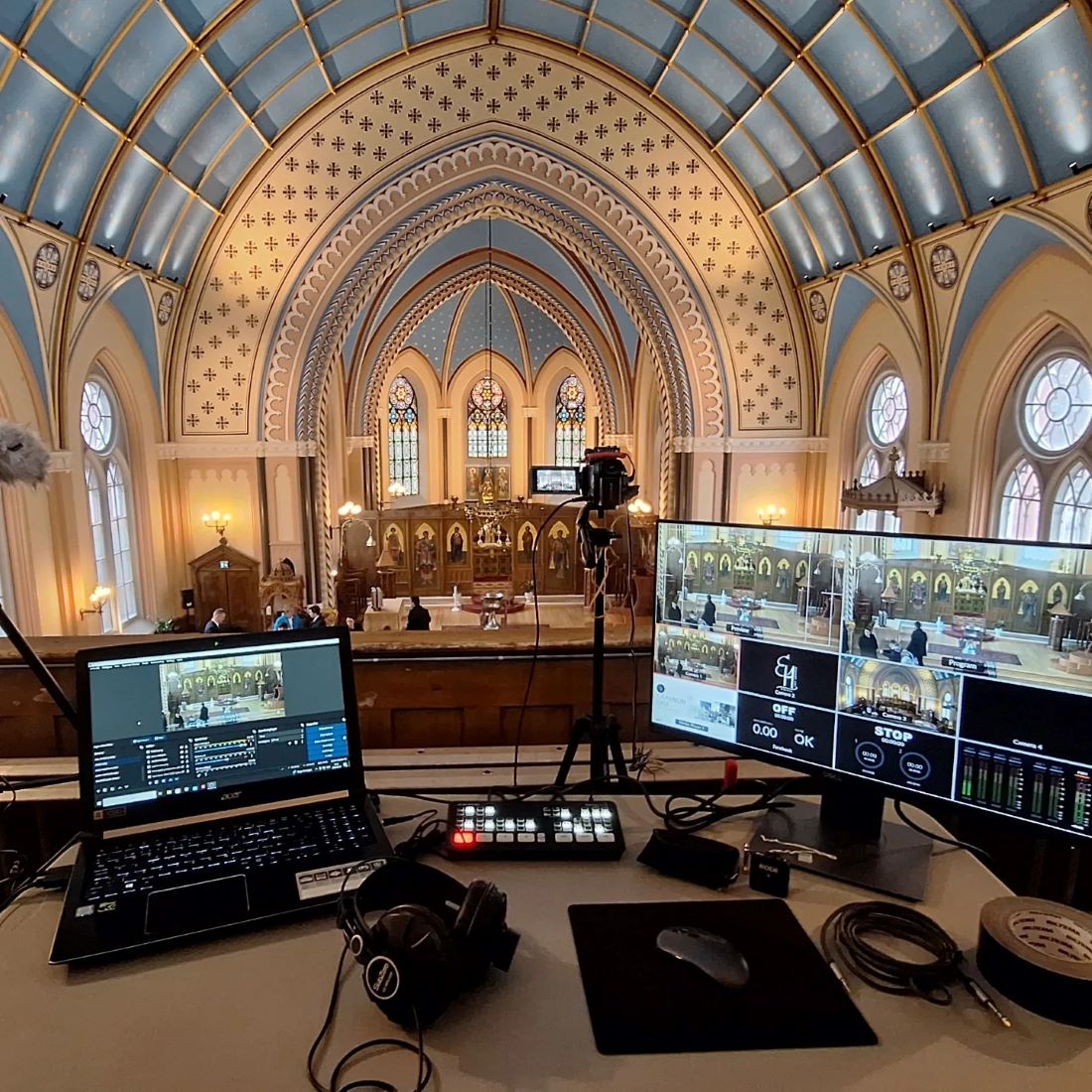
Many thanks to Mr. Nikolaos Kitsios for the beautiful photos & the church services live broadcasting, via the Metropolis of Sweden facebook page.
Εσπερινός της Αγάπης και του Αγίου Γεωργίου στον Καθεδρικό Ναό Αγίου Γεωργίου Στοκχόλμης 2024.
Πολλές ευχαριστίες στον κ. Νικόλαο Κίτσιο για τις όμορφες φωτογραφίες και την ζωντανή αναμετάδοση των Ιερών Ακολουθιών, μέσω της Facebook page της Ι. Μητροπόλεως Σουηδίας.




On the afternoon of Thursday, June 8, 2023, His Eminence Metropolitan Cleopas of Sweden and All Scandinavia received at the Headquarters of the Holy Metropolis the Member of the Swedish Parliament Hon. Mr. Yusuf Aydin, on the occasion of assuming his duties. He was accompanied by Mr. Georgios Gultidis.


His Eminence initially congratulated Mr. Aydin on his election, as he comes from the Syrian-Aramean Community of Stockholm and wished him strength and illumination from above in the exercise of his duties and every success in his multifaceted work.
Afterwards, the Metropolitan guided the distinguished visitor to the Cathedral, informed him about the history and the restoration work, while receiving him in an audience at the Museum of the Hellenic-Christian Heritage, where they developed a very constructive conversation, which focused on the issues of youth and the youth involvement in the Community and Church Affairs, and then the discussion turned to contemporary and burning emerging issues.
At the end, the Bishop offered Mr. Aydin publications of the Holy Metropolis and thanked him again for his willingness to support the work carried out by the Holy Metropolis of Sweden and the fulfilment of the local Church’s vision.



 Ελληνική Ορθόδοξη Ενορία Αγίου Ανδρέα Μάλμε