Metropolis

The Feast of Saint Nicholas at the Finnish Parish of Stockholm

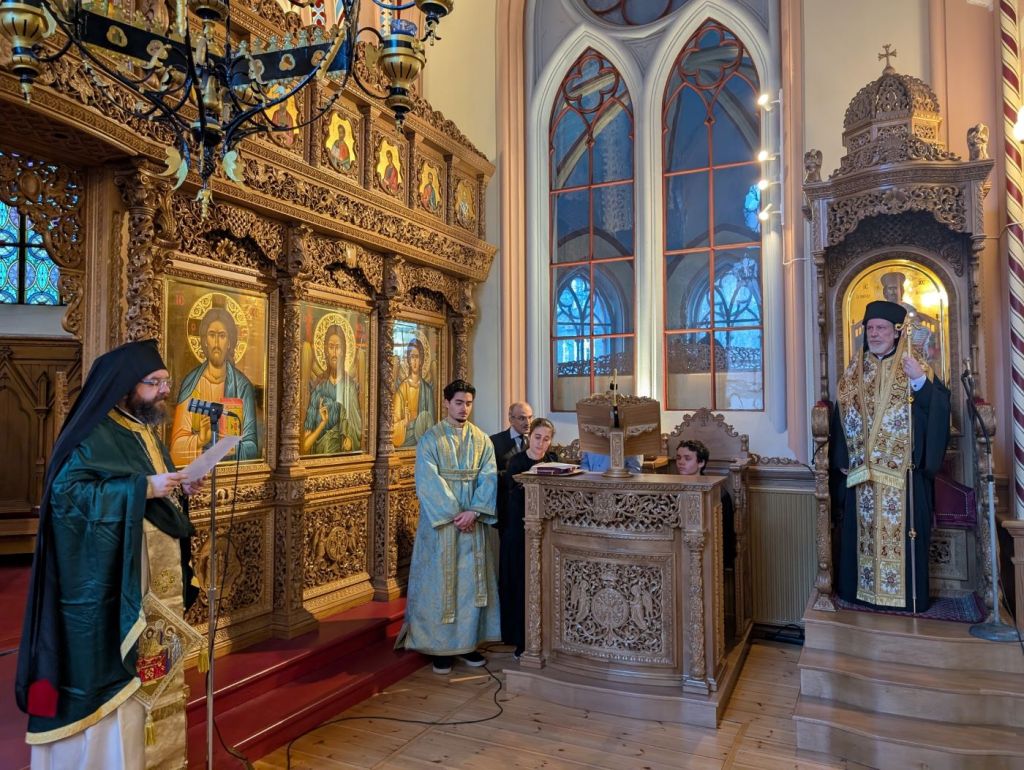
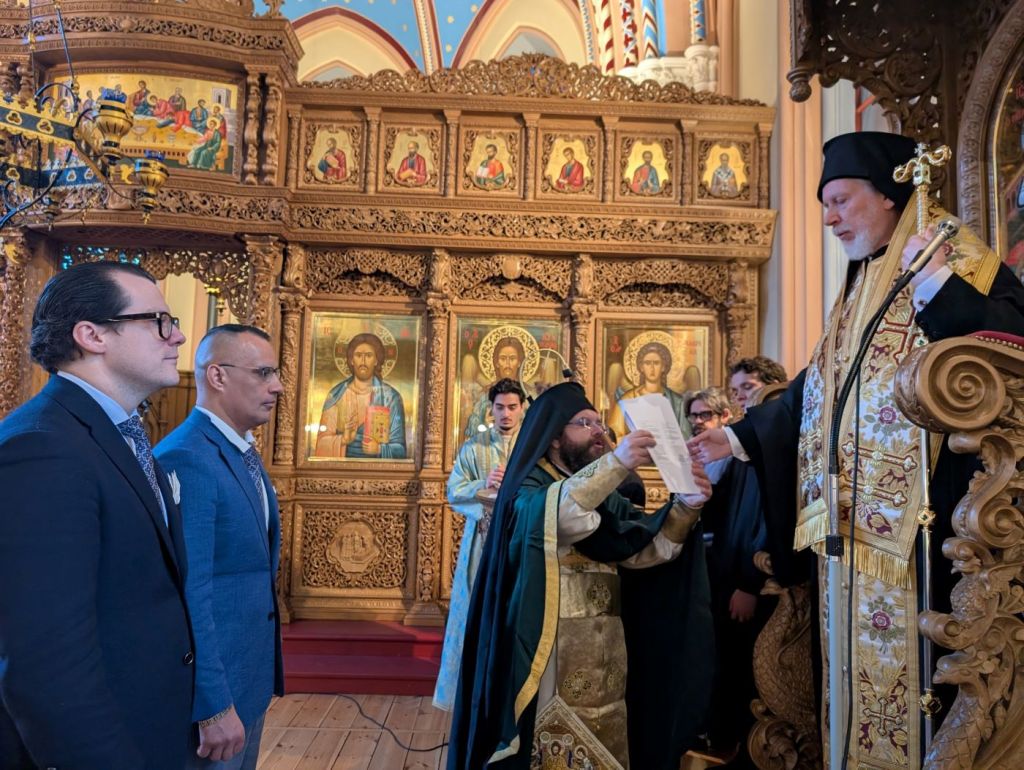
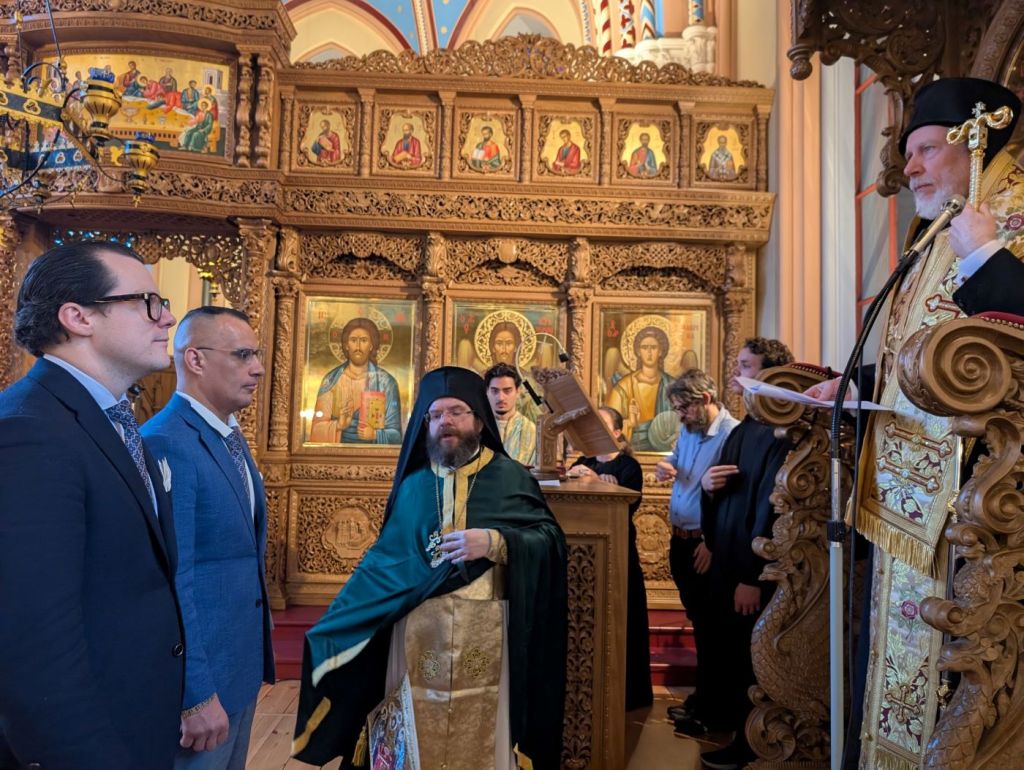
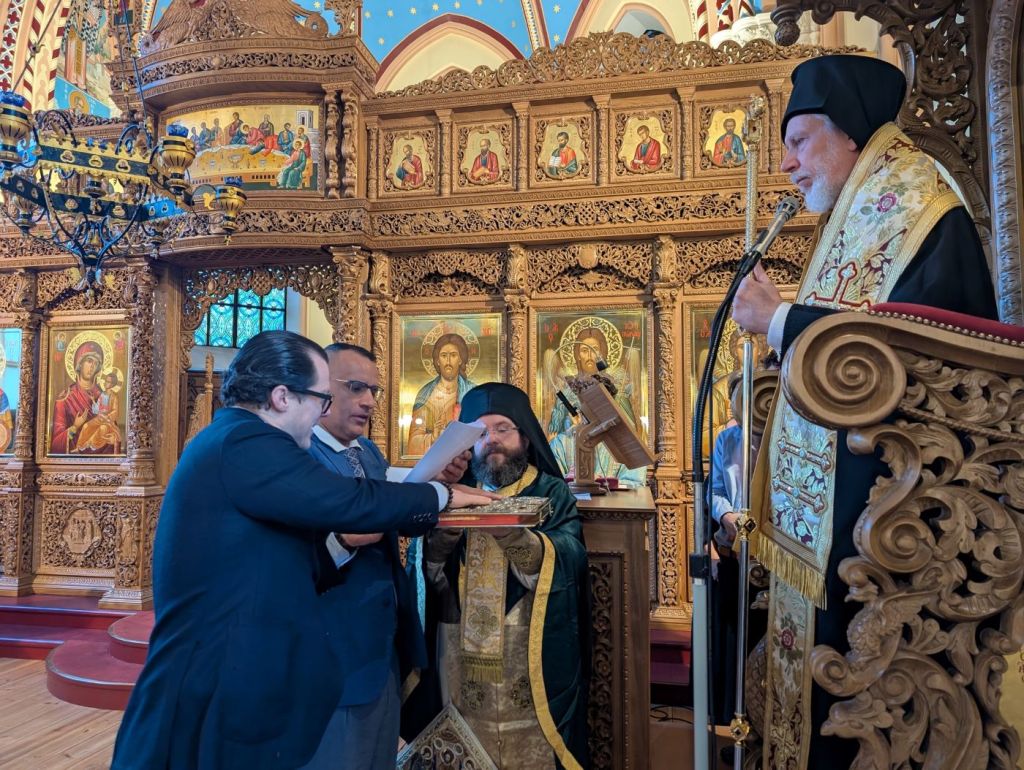
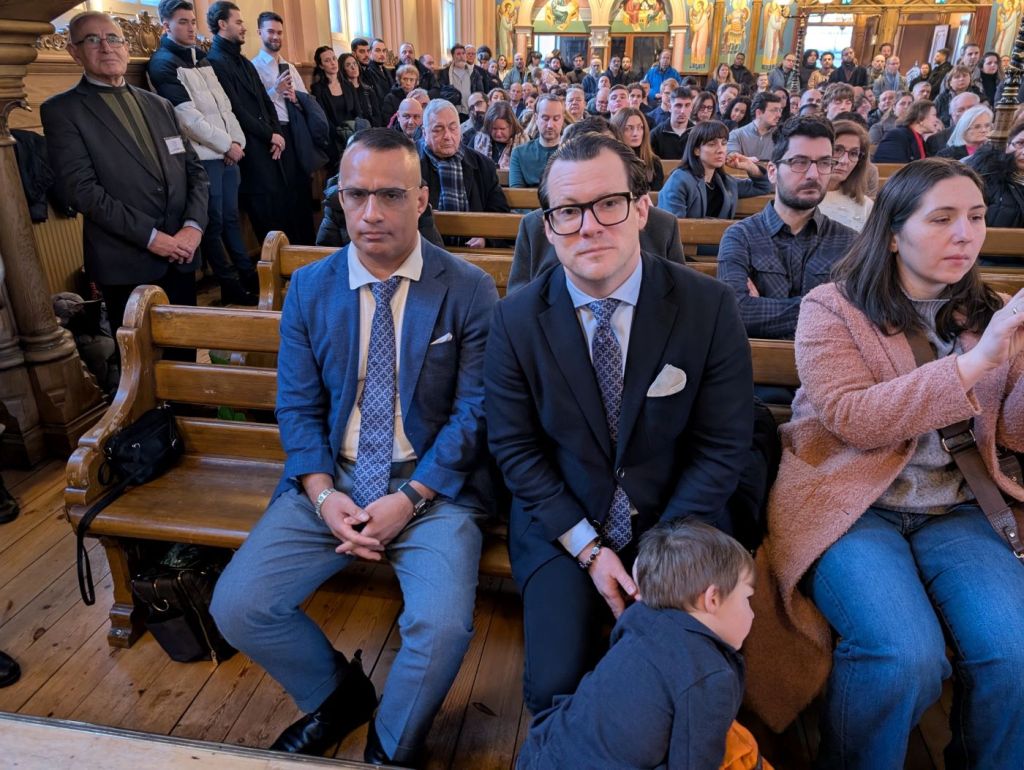
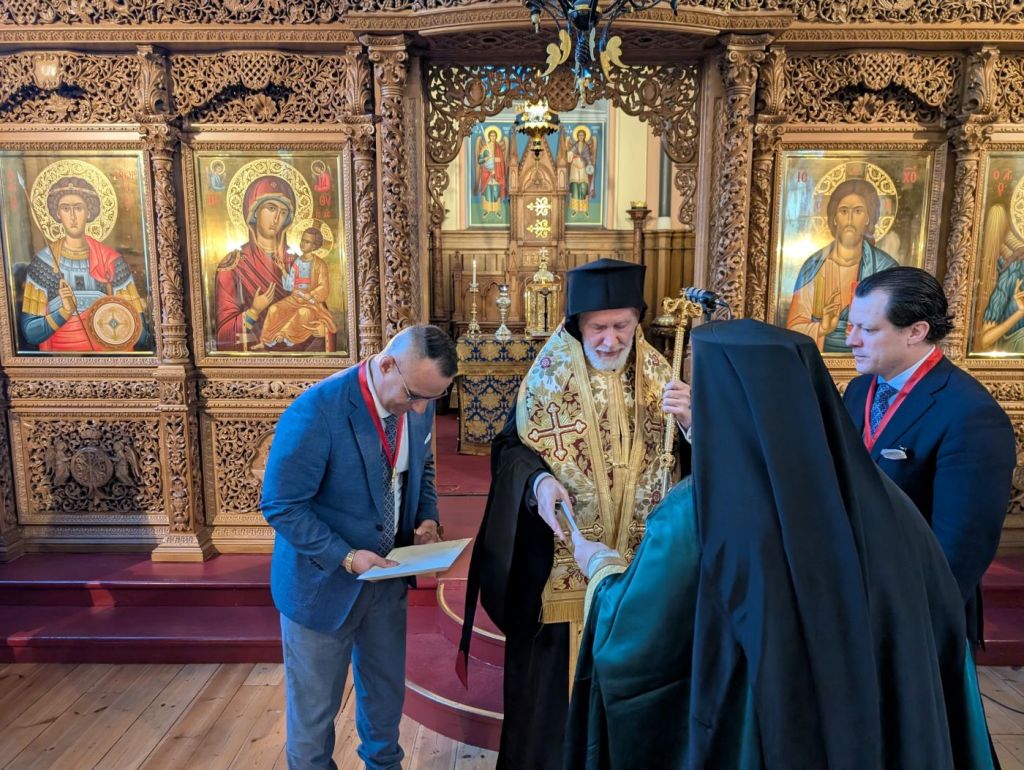
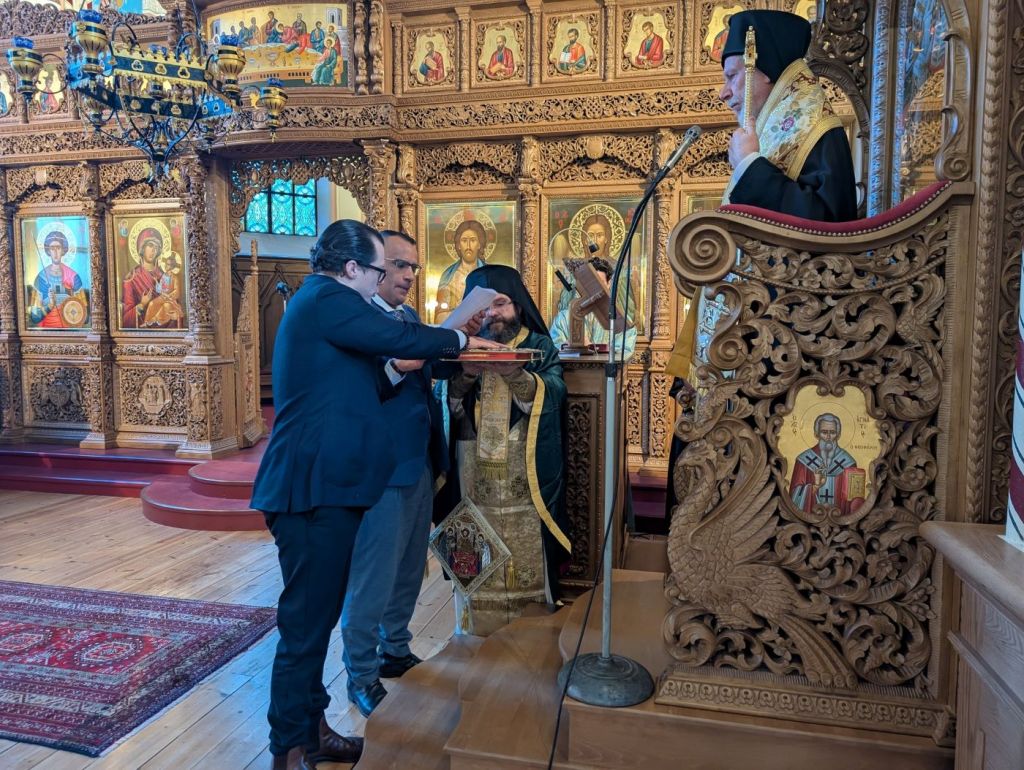
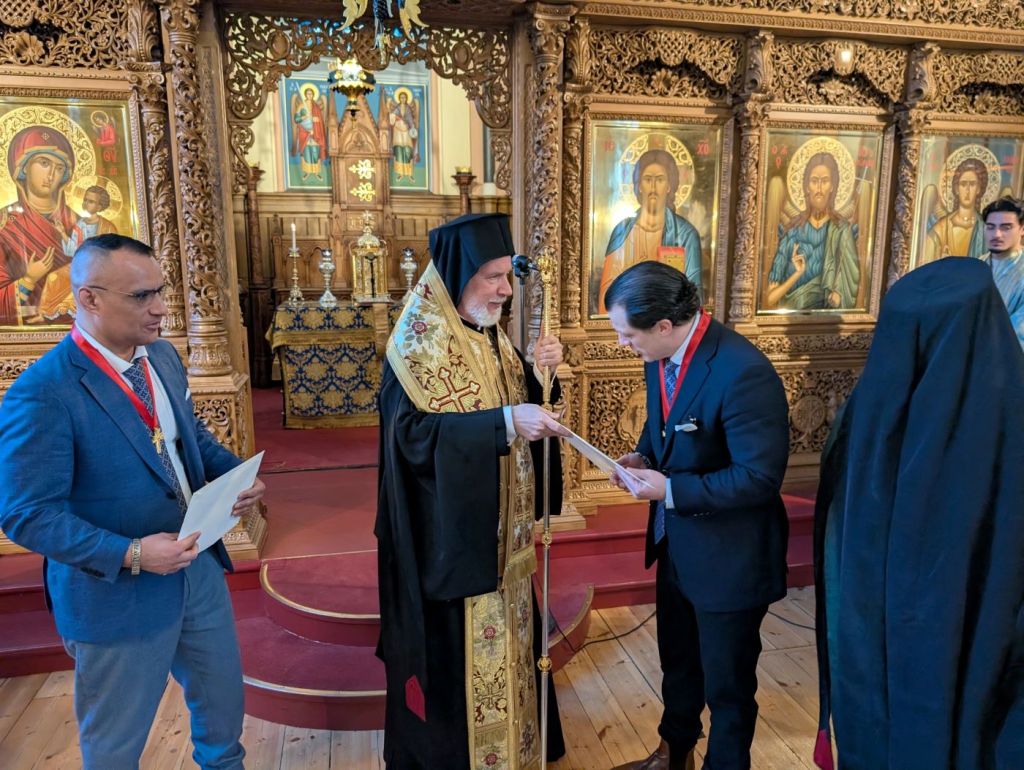
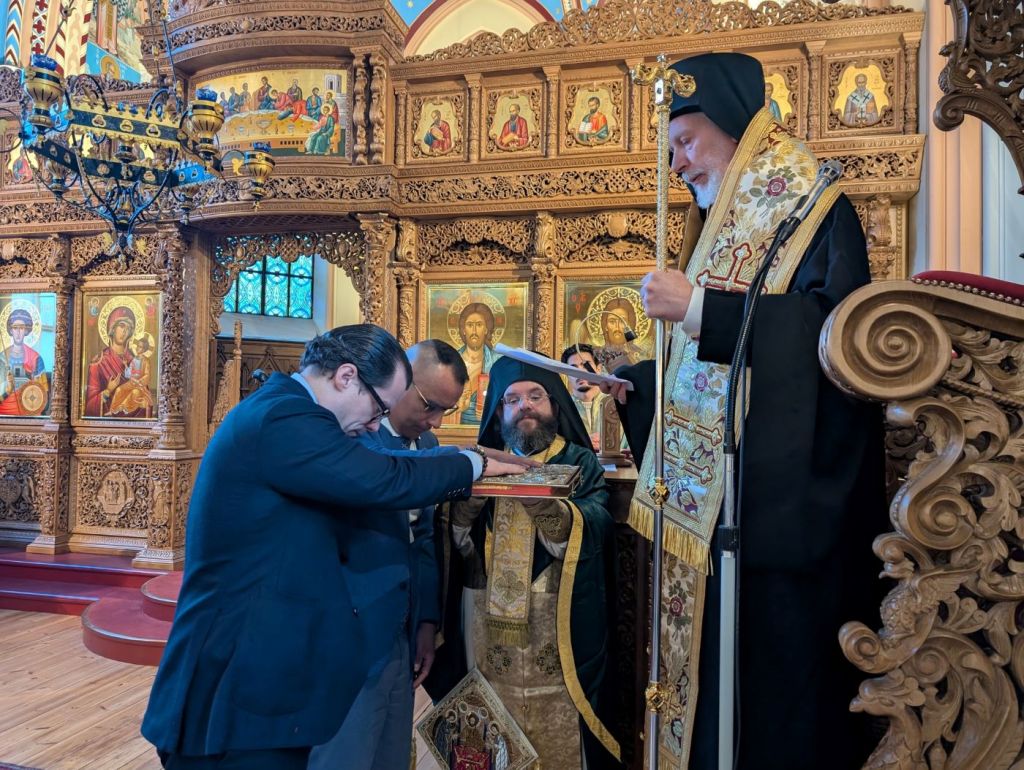
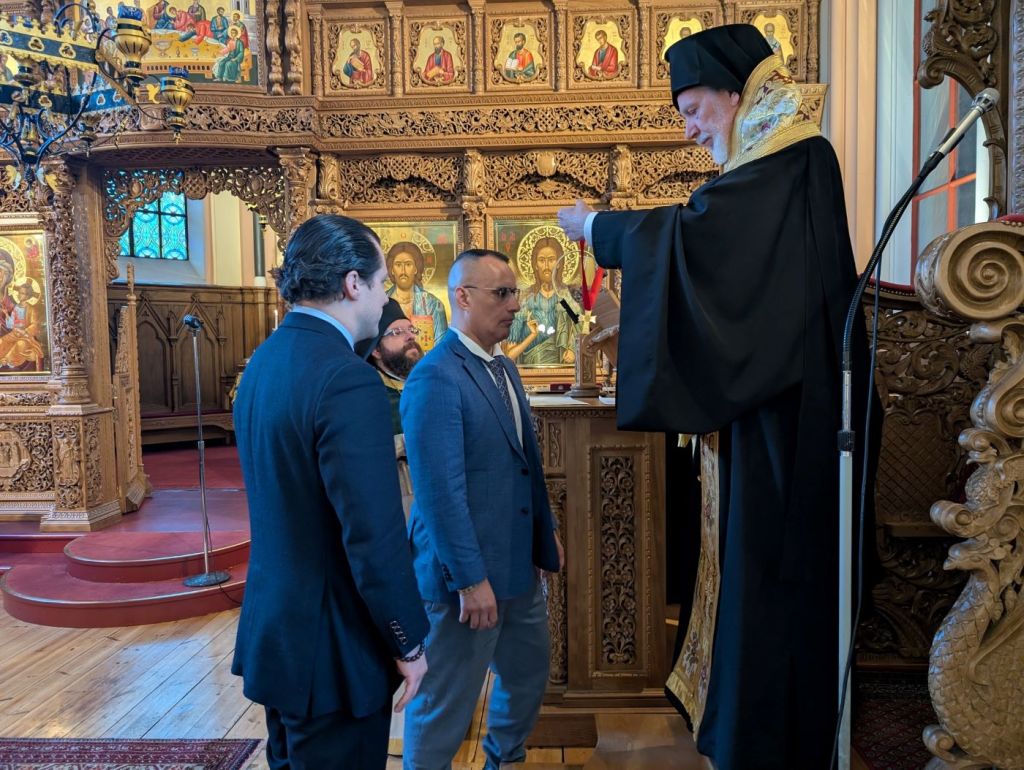
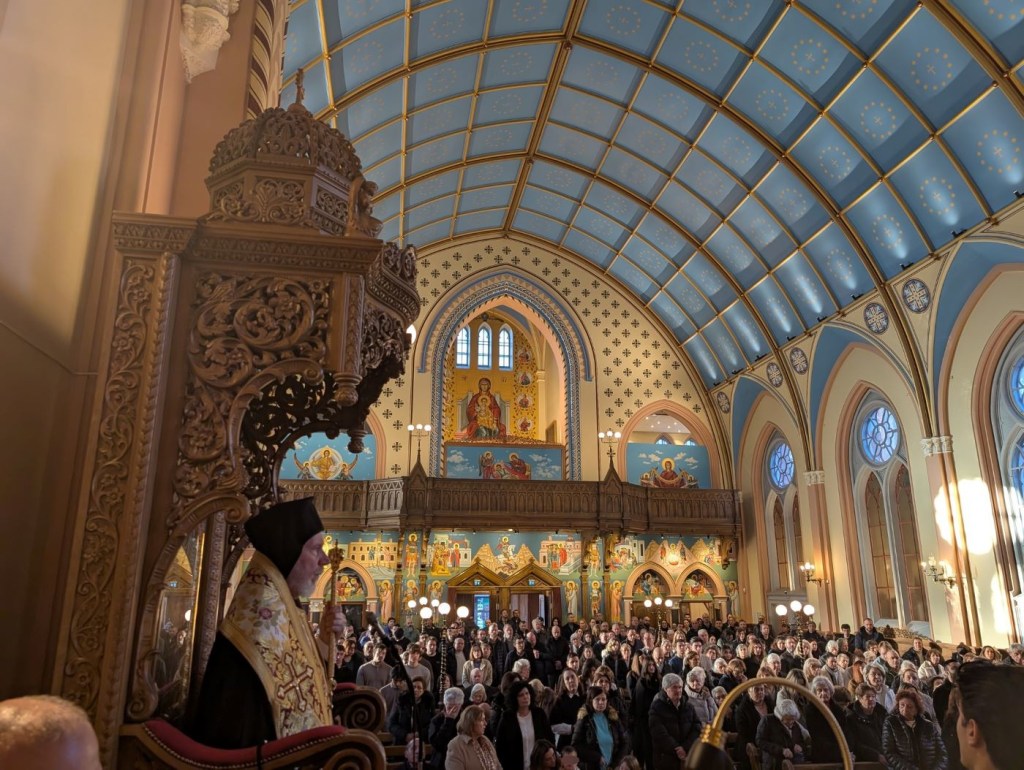
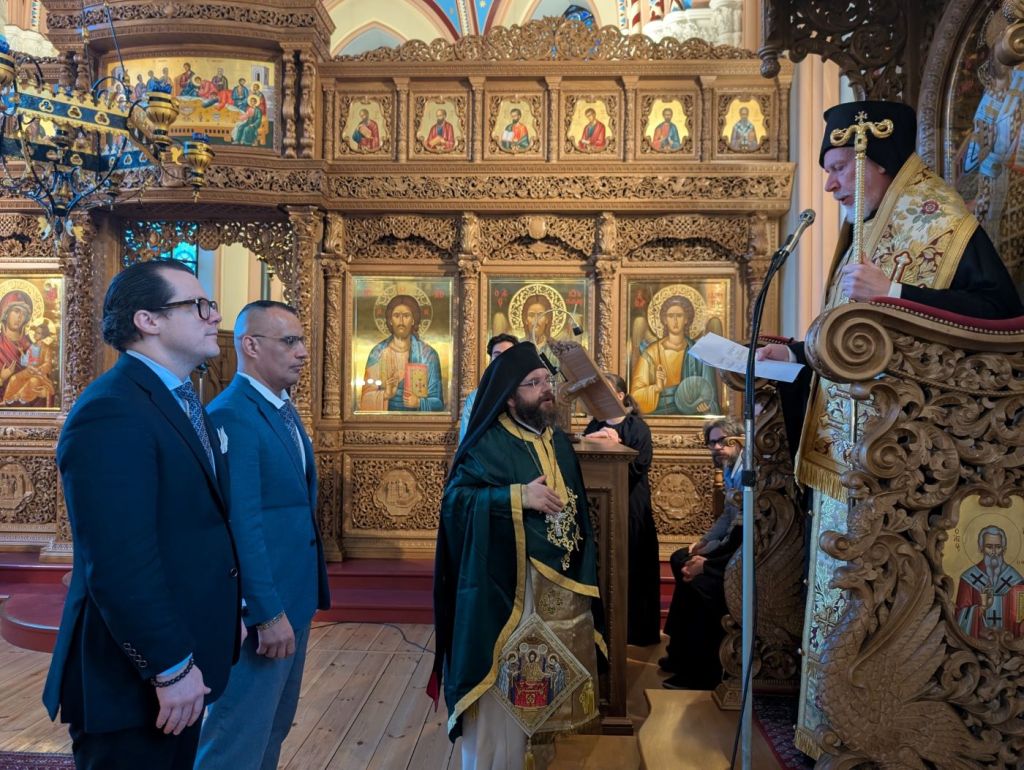
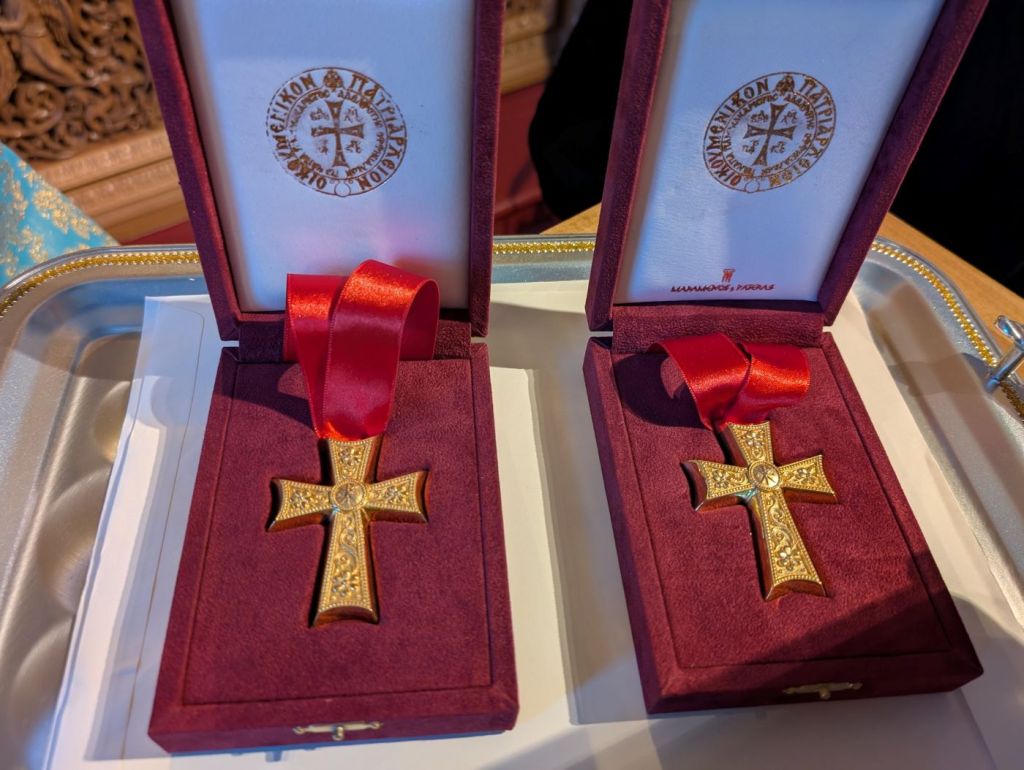
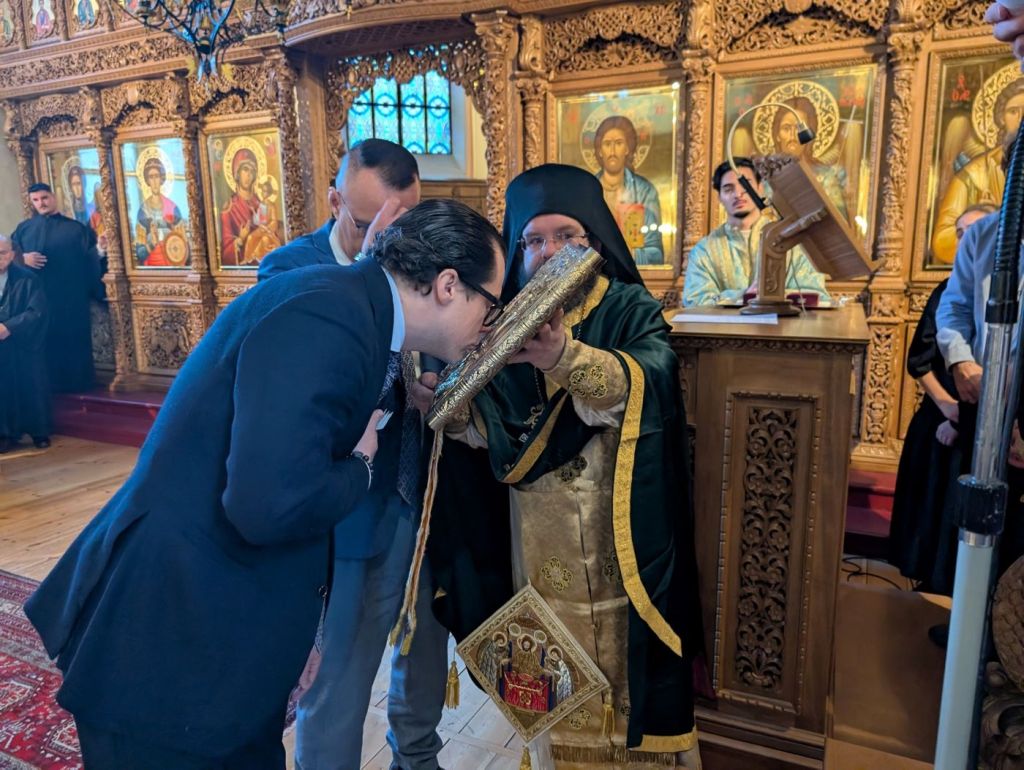
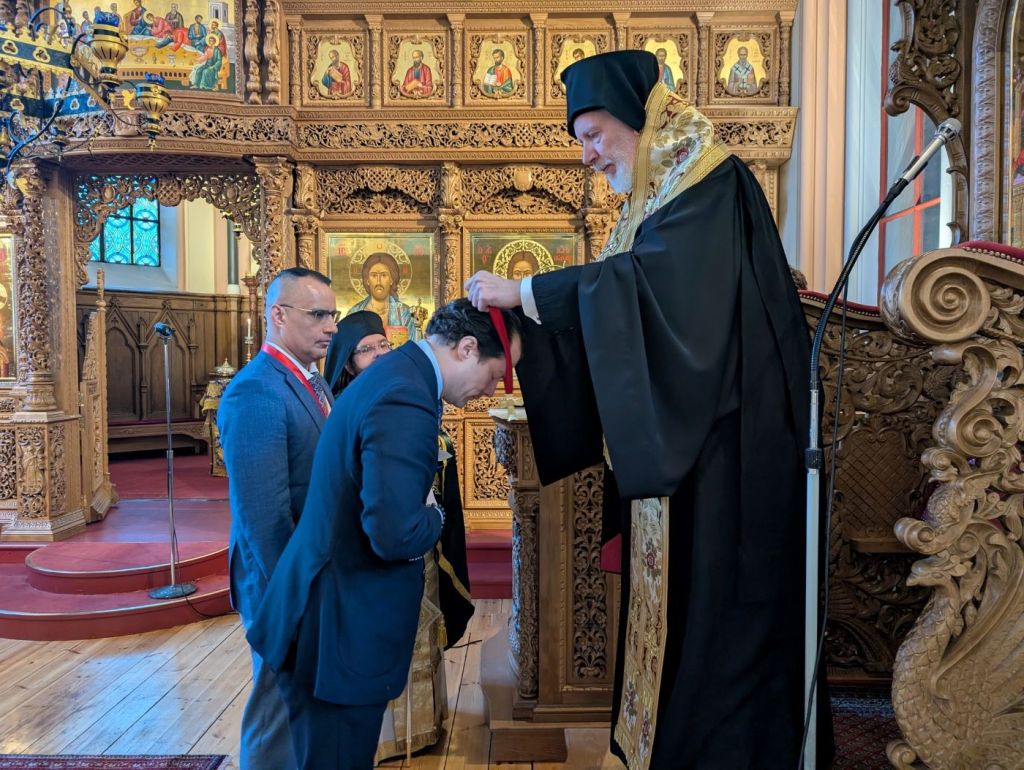
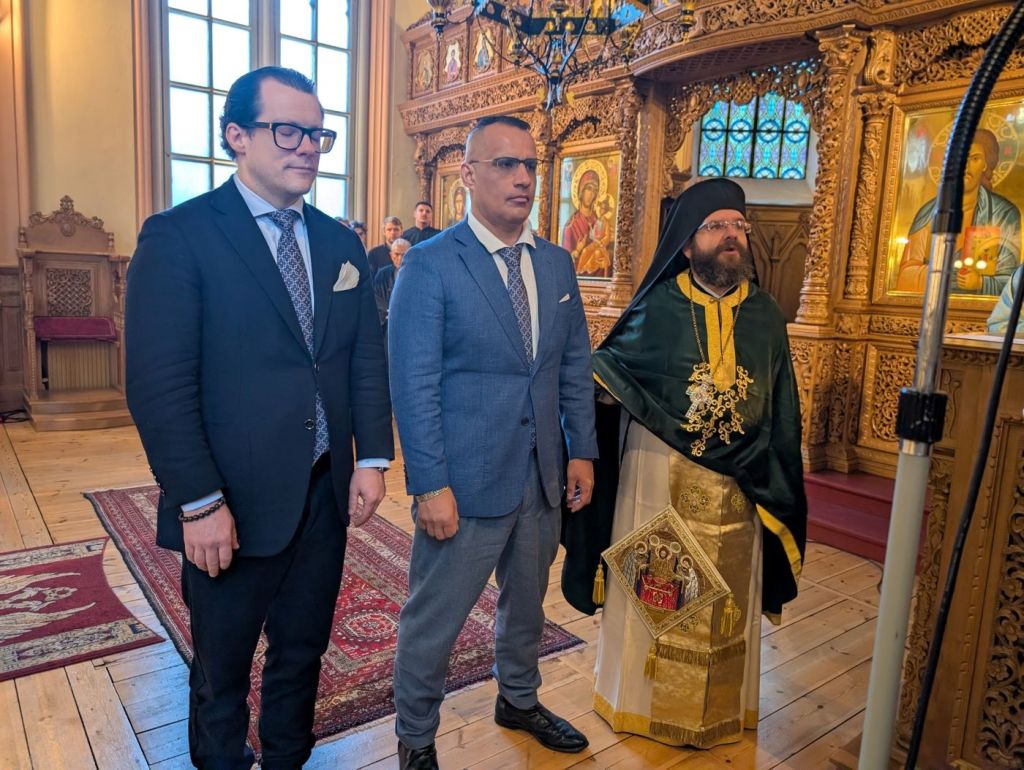
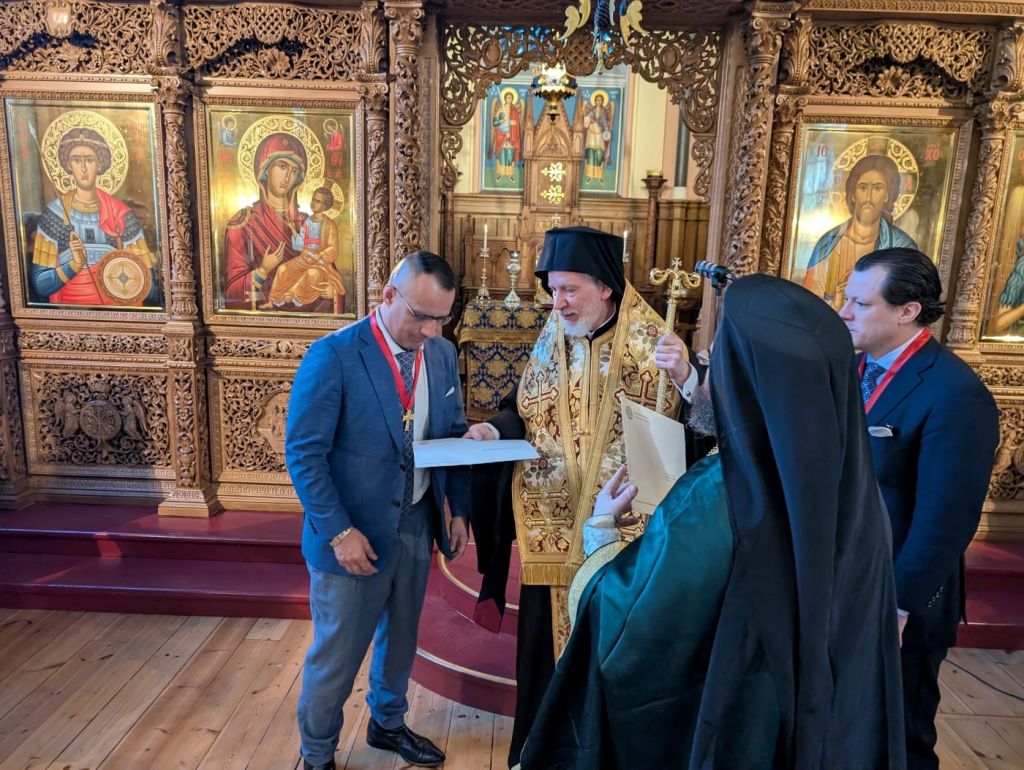
On the morning of Saturday, December 6, 2025, His Eminence Metropolitan Cleopas of Sweden and All Scandinavia presided over the Divine Liturgy in Chorostasia at the festal Finnish Parish of Saint Nicholas in Stockholm.

Concelebrating with him were the Very Rev. Archimandrite Bartholomew Iatridis, Parish Priest of Saint George Cathedral in Stockholm, and the visiting cleric from the Holy Archdiocese of Helsinki and All Finland, the Rev. Protopresbyter Mikko Leistola.

The hymns of the day were chanted in Finnish, Karelian, Swedish, Greek, and Church Slavonic by the parish choir, together with members of the Byzantine choir of Saint George Cathedral in Stockholm.

At the conclusion of the service, His Eminence Cleopas conveyed the greetings and blessings of His All-Holiness Ecumenical Patriarch Bartholomew to the Primate of the Church of Finland Archbishop Elia, as well as to the clergy and faithful of the Finnish Church.

He also addressed the congregation with the appropriate homily for the feast and offered his best wishes to those celebrating their name day. In his address, the Hierarch stated the following:

“Today our Church honors Saint Nicholas, the protector of sailors, of children, and of all those who seek his help with faith.

The life of Saint Nicholas is a living testimony to the words of Christ that we hear in the Gospel of the Beatitudes; words which reveal the true meaning of holiness and of the Kingdom of God.

“Blessed are the poor in spirit…”! Saint Nicholas, although born into a wealthy family, was truly poor in spirit, that is, humble. He did not keep his wealth for himself but offered it with love to the poor and the oppressed.

“Blessed are the merciful…”! The whole of his life was a life of mercy. He secretly supported those in need, comforted the sorrowful, and stood as a pillar of strength for all who endured hardship. His compassion knew no bounds, because in every person he saw the face of Christ.

“Blessed are the meek…”! Saint Nicholas was a peaceful and gentle man, as the hymnographer also proclaims in his dismissal hymn; indeed, he was truly an image of meekness. Yet his faith was so deep that he defended the truth of the Church with courage, without hatred or desire for revenge.

“Blessed are those who hunger and thirst for righteousness…”! He defended the innocent, cared for the poor, resisted injustice, and became a symbol of justice for all Christians.

Every Beatitude finds its practical expression in the person of Saint Nicholas. He did not live for himself, but for God and for others. This is the essence of holiness: that our lives reflect the teaching of Christ.

In today’s world, which is often dominated by competition, selfishness, and indifference, Saint Nicholas calls us to look around us with kindness. He teaches us to forgive, to help, to stand beside those who are suffering, and to live out the Beatitudes; not merely in words, but in deeds, as he did.

May Saint Nicholas become a beacon of faith and love, especially for our sailors, who have him as their protector and companion on their difficult journeys.

I wish many happy returns to all members of our parish who celebrate today their name day! May Saint Nicholas guide us, so that we may become truly “blessed” as people of peace, love, faith, and hope. Amen!”

Ανακοινώσεις · Θεία Λειτουργία

Θείες Λειτουργίες εν όψει των Χριστουγέννων σε Helsingborg και Malmö

Με την κανονική άδεια, ευλογία και προτροπή του Σεβ. Μητροπολίτου Σουηδίας και πάσης Σκανδιναυΐας κ. Κλεόπα, θα πραγματοποιηθούν δύο Θείες Λειτουργίες εν όψει των Χριστουγέννων στις πόλεις Helsingborg και Malmö, από τον Αιδεσιμολ. Οικονόμο κ. Γεώργιο Αρβανιτίδη, κατά το ακόλουθο πρόγραμμα:

Την Τρίτη, 23 Δεκεμβρίου 2025, στην πόλη Helsingborg, στον Ιερό Ναό Helige Basilius den Store (Nedre Eneborgs vägen 7, 252 68 HELSINGBORG), στις 10 π.μ.

Την ημέρα των Χριστουγέννων, 25 Δεκεμβρίου 2025, στην πόλη Malmö, στον Ιερό Ναό S:t Maria kyrka (Södervärnsgatan 8, 214 27 Malmö), στις 10 π.μ.

Καλούνται οι κάτοικοι των εν λόγω πόλεων και των περιχώρων, να προσέλθουν στους ως άνω Ιερούς Ναούς και να συμμετάσχουν προσευχητικώς στην Θεία Λειτουργία.

Metropolis

Pastoral Visit of Metropolitan Cleopas to Västerås, Sweden

On Saturday, following the Feast of the Entry of the Theotokos into the Temple and the commemoration of our Venerable Saint Iakovos, the new Ascetic of Evia, 22 November 2025, His Eminence Metropolitan Cleopas of Sweden and All Scandinavia, accompanied by the Very Reverend Archimandrite Bartholomew Iatridis, Pastor of the St. George Cathedral of Stockholm, and the Reverend Oikonomos George Arvanitidis, Pastor of the Saints Demetrios and Nestor Parish of Örebro, presided at the service held in the Gideonsbergskyrkan in Västerås, Sweden, which was graciously made available by the Lutheran Church.

The hymns of the day were rendered by a five-member youth choir under the direction of Dr. Andreas Selamsis, Protopsaltis of the Stockholm Cathedral.

In his homily, the Hierarch of the Northern Lands of the Mother Church referred to the significance of the Feast of the Entry of the Theotokos into the Temple as a prelude to the Great Feast of Christmas, stating:

“Only yesterday our Church celebrated the Entry of the Theotokos, a feast that opens before us a window looking directly toward the joy of Christmas.

The Entry is not simply a feast of the Virgin Mary; it is the first light of the Birth of Christ, the dawn before the Sun of Righteousness appears.

Without the Entry, there would be no Christmas. Without the preparation of the Theotokos, there would be no Incarnation. Without the sanctification of the Mother, the Savior would not have come into the world.

Christmas is the moment when ‘the Word became flesh.’ The preparation for this moment begins with the entry of the Virgin Mary into the Temple. The three-year-old Mary enters the Holy of Holies to become herself the ark of the new Law, the living Temple, the sanctified earth from which Christ will spring forth.

Just as the earth must be cultivated before it receives the seed, so too the Virgin is prepared before receiving Christ. The Entry is therefore the first chapter of Christmas.

Christmas means ‘Emmanuel—God with us.’ And for God to dwell among us, there had to be a place free of any shadow of sin. That place is the Theotokos.

The Church sings: ‘The Temple of God is led into the Temple of God.’ The Virgin enters the handmade temple to become the uncreated Temple—the place where the eternal God will take on human flesh. This is why the Entry is the mystical beginning of the Incarnation.

What is Christmas? It is the condescension of God, who descends into poverty, into flesh, into human life. This condescension already begins with the Entry. God sees the childlike soul of Mary, purer than the angels, and finds in her a place of rest. Before God takes on human flesh, He prepares the heart that will contain Him. This is why the Fathers of the Church call the Entry ‘the forefeast of the Nativity.’

What begins today is completed in Bethlehem. The Entry is the opening of the gate; Christmas is the entrance of God into the world.

Today the Theotokos enters the temple. Tomorrow, at Christmas, Christ calls us to allow Him to enter the temple of our own hearts. But for this to happen, we must do what she did; purify our hearts, pray, humble ourselves, fast, and allow Grace to sanctify us. Only then will Christmas not be an external celebration but an inner Birth of Christ within us.

The Entry is the Divine preparation. Christmas is the Divine revelation. At the Entry, the Theotokos enters the Temple. At Christmas, God enters the world. Today the Mother of Life is brought into the Temple. In a few days, the Giver of Life will be born.

Let us also prepare ourselves, so that when Christmas night arrives, Christ may find within us a pure temple, a humble heart, a soul filled with love. May the Theotokos, who today opens the way of salvation, lead us to the Christ who is coming in flesh. Amen.”

In conclusion, the Metropolitan thanked the priests who accompanied him, the choir members, and the congregation, especially Mrs. Britt Marie Zotos, who worked diligently in preparing and offering the refreshments that followed in the hall adjacent to the church.

He also presented his recently published study, issued by the Apostoliki Diakonia of the Church of Greece, on the late Metropolitan Polyefktos of Sweden, to Professor Dr. Christos Papachristodoulou of Västerås University.

In the church’s reception hall, His Eminence had the opportunity to converse with members of the Greek community of Västerås, who repeatedly expressed their gratitude for the spiritual opportunity of the day’s gathering.

In the afternoon, Metropolitan Cleopas returned by train to the headquarters of his Metropolis in Stockholm, accompanied by Fr. Bartholomew.

Πνευματικά · Metropolis

H.E. Metropolitan Cleopas’ Homily on the Entrance of the Theotokos into the Temple and the Nativity of Chirst

St. George Cathedral of Stockholm

Sunday, November 23, 2025

Dearly Beloved Brothers and Sisters in Christ,

Let us reflect upon two radiant feasts that illuminate the entire mystery of salvation, the Entrance of the Most Holy Theotokos into the Temple and the Nativity of our Lord Jesus Christ.

At first glance, these feasts may appear to stand far apart—one in November, the other at the brink of winter. Yet the Fathers teach us that they form a single arc in the divine story: the preparation and the fulfillment, the quiet beginning and the glorious revelation, the sowing and the harvest of salvation.

In the Entrance of the Theotokos, the Church shows us the quiet and hidden preparation of salvation. St. Gregory Palamas says that in her, “all the ages found their perfection,” for she is the one through whom God will enter creation. Her footsteps into the Temple are the first earthly signs of the “coming of the fullness of time.”

In the Nativity of Christ, that which was hidden is revealed. St. John Chrysostom proclaims that on this day “the earth becomes heaven,” for God Himself takes flesh. What the Entrance begins, the Nativity completes; what is offered in purity within the Temple becomes incarnate as the Savior of the world.

At her Entrance, the three-year-old Mary enters the Temple, but the Fathers repeatedly remind us that she is herself the true Temple. St. Andrew of Crete calls her “the Temple that contained God not in shadow, but in truth.” The Temple receives her, but only as a symbol receives its fulfillment.

At Christmas, we see this fulfilled when the Temple gives birth to the God who dwells within it. The one who entered the Temple now becomes the Mother of the Temple’s Lord. St. Ephraim the Syrian says, “The heavens cannot contain Him, yet a pure maiden’s womb has received Him.”

The Entrance reveals the Temple being prepared; the Nativity reveals the God who sanctifies the Temple.

In the Entrance, Mary is offered freely by her parents, Joachim and Anna, as a gift to God. St. Germanos of Constantinople writes that in her entrance, “humanity offers back to God its first truly spotless fruit.”

In the Nativity, God offers Himself as a gift to humanity. What Joachim and Anna did in symbol, God does in reality. The Fathers stand amazed: the one offered in the Temple becomes the one who offers Himself on behalf of all. The Entrance is the offering of the pure vessel; the Nativity is the outpouring of the divine treasure.

The Entrance is shrouded in silence. No crowds, no trumpets—only the quiet marvel of the angels, who, according to tradition, feed the child Mary with heavenly bread. St. Gregory of Nyssa tells us that “God delights to work in secret that which He later reveals in glory.”

The Nativity, by contrast, resounds with proclamation—angels singing to shepherds, a star calling magi, heaven and earth rejoicing. The silence of the Temple prepares the song of Bethlehem. What begins in stillness ends in cosmic praise.

In the Temple, Mary is formed—physically, spiritually, and mystically. The Fathers describe her upbringing as a continual ascent into holiness. St. John of Damascus writes that she “grew like a lily in the midst of thorns.”

At the Nativity, she becomes the fulfillment of that formation. The one formed in holiness now brings forth “the Holy One of Israel.” All her preparation leads to this moment when she becomes not only the Temple but the Gate through which God enters the world.

During the Entrance, little Mary ascends the steps of the Temple, climbing toward the Holy of Holies. This ascent is the icon of humanity rising slowly toward God, yearning for communion with Him.

At the Nativity, in a divine paradox, God descends the steps of heaven, born in a cave, laid in a manger, clothed in humility. What Mary does in miniature—ascending—Christ does in majesty—descending. The Entrance shows humanity seeking God; Christmas shows God seeking humanity.

In her Entrance, Mary is preserved in virginity as a living sign that God is preparing something utterly new. The Fathers emphasize that she is the “ever-virgin” not merely for purity, but to show that the coming salvation is not of human effort but of divine grace.

In the Nativity, this mystery reaches its summit: the Virgin gives birth, and her virginity remains intact. St. Ambrose famously teaches, “He entered the world through closed doors, and He left the tomb in the same way.” The Entrance reveals the virgin prepared; the Nativity reveals the virgin overshadowed by the Holy Spirit.

Therefore, the Entrance and the Nativity are not two separate stories but one mystery of love: The Temple is prepared; the Lord enters it. The Virgin is offered; God offers Himself. Silence prepares the hymn; the hymn reveals the mystery. Humanity ascends; God descends.

The Entrance gives us Mary, ready to receive God. The Nativity gives us Christ, ready to save humanity. In both feasts, God shows His humility and His lavish love; and in both feasts, humanity is invited to respond.

May we, like the Theotokos, become temples prepared for Christ. May we, like the shepherds, hasten to meet Him. And may the One born in Bethlehem also be born in our hearts. Amen!

Metropolis

5th Meeting of Catechumens and Newly Illumined at the Stockholm Cathedral

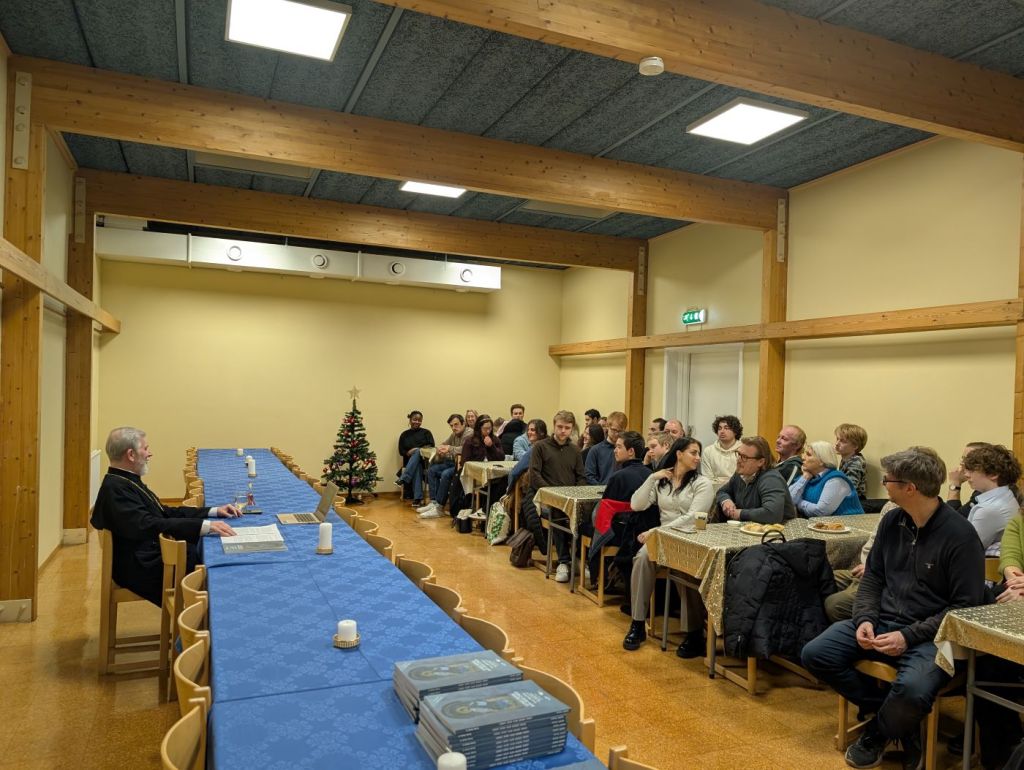
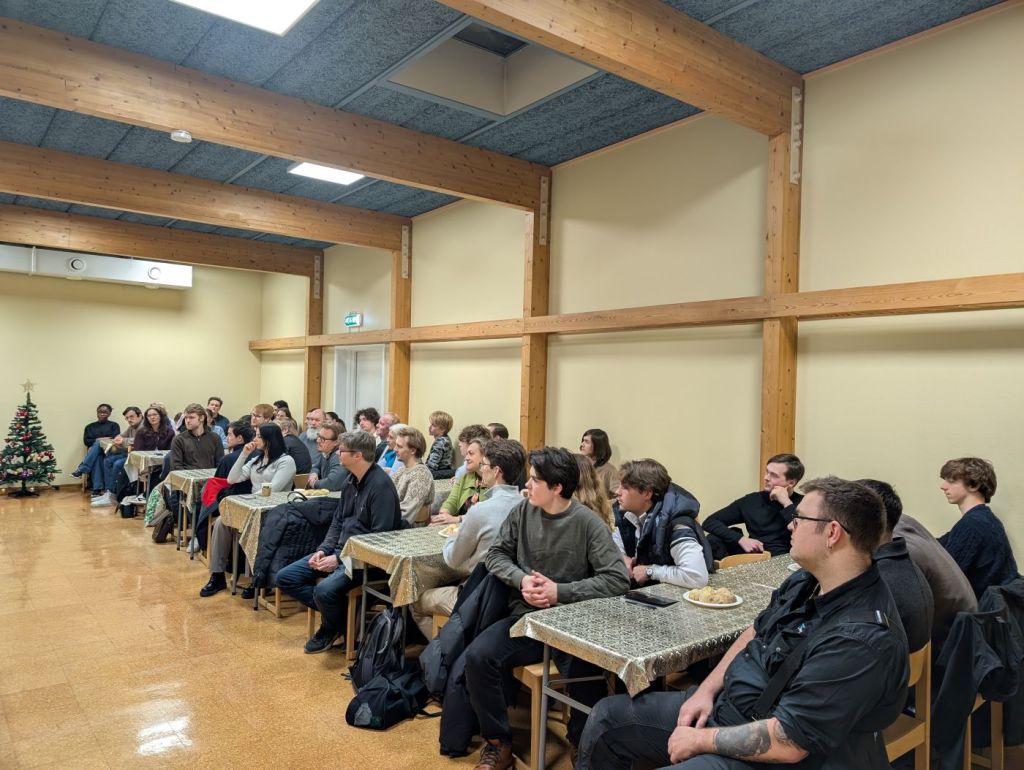
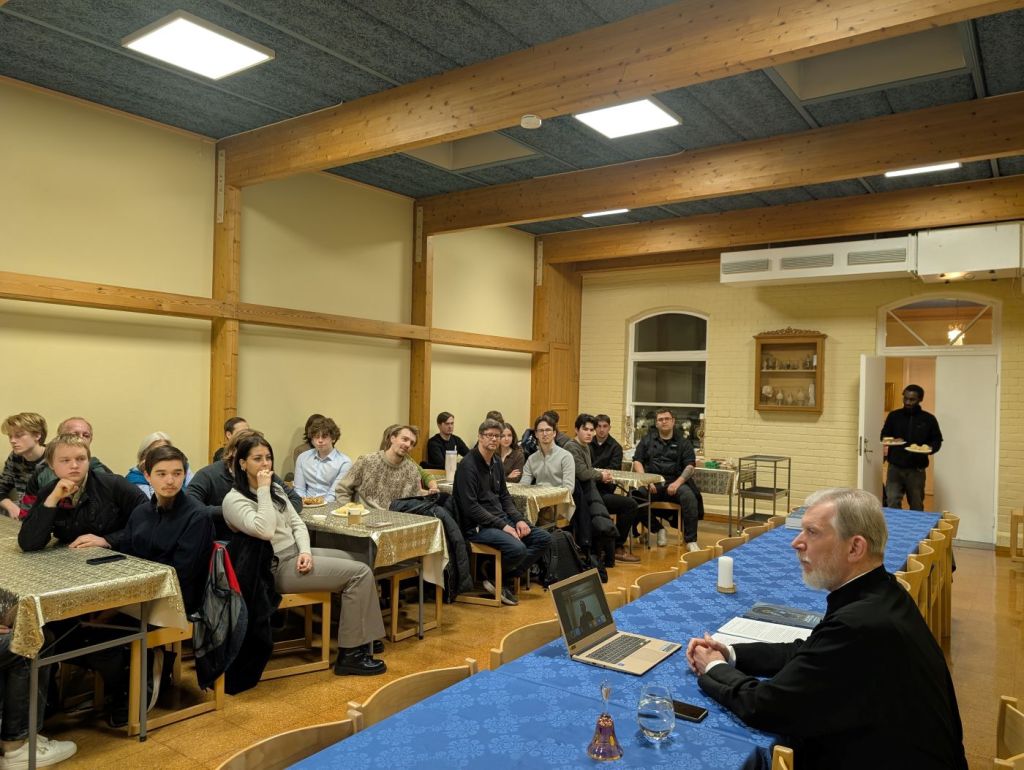
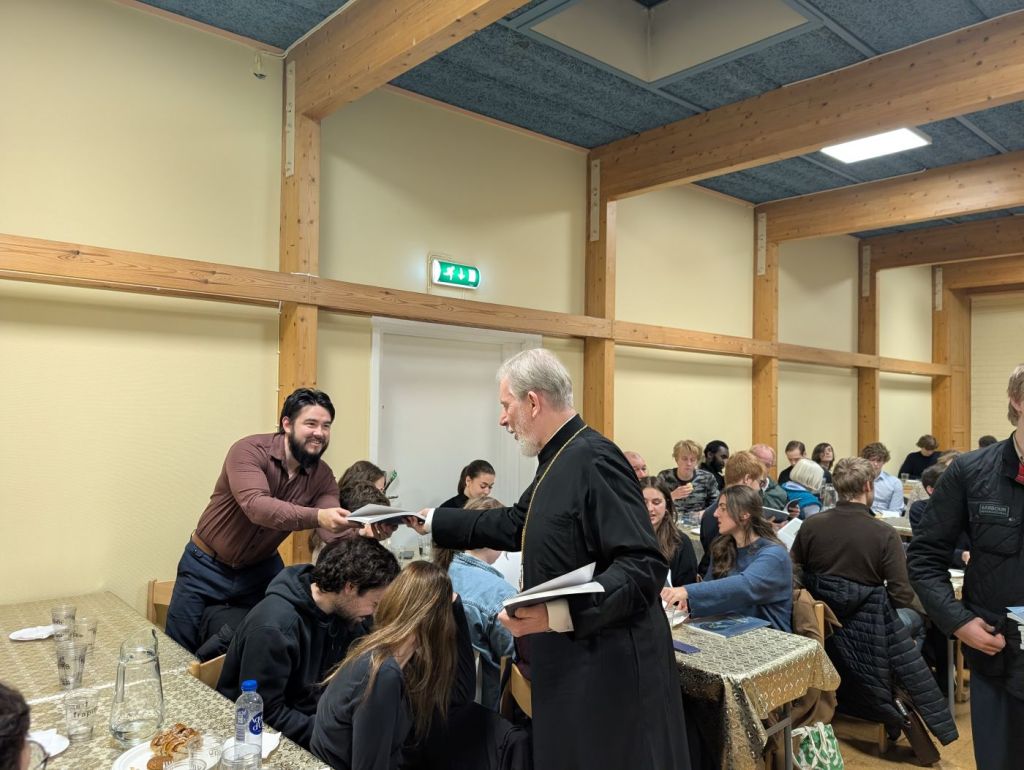
On the afternoon of Thursday, November 20th, 2025, the fifth consecutive meeting of Catechumens and Newly Illumined of the Holy Metropolis of Sweden took place in the welcoming premises of the St. George Cathedral of Stockholm (Birger Jarlsgatan 92, 114 20 Stockholm), with the participation of 50 young people in person and another 25 online.

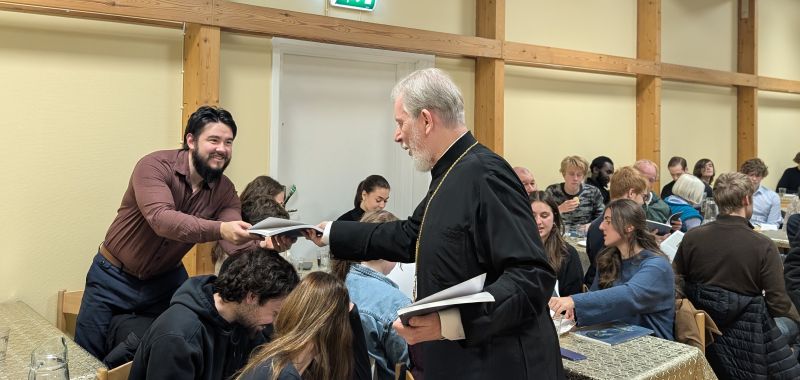
Once again, His Eminence Metropolitan Cleopas of Sweden and All Scandinavia served as the speaker, addressing the participants in the English language, in order to accommodate the diverse group of Catechumens and newly baptized faithful who come from various countries and cultural backgrounds.

The topic of the presentation was the continuation of the lecture entitled:

“The Missionary Work of the Evangelist Matthew.”

During the session, participants once again posed thoughtful and insightful questions, to which His Eminence offered well-founded and pastoral responses.

At the conclusion of the meeting, refreshments were offered in honor of all who were present, particularly the young people who serve the local Church faithfully and with dedication in various ministries.

The next meeting will take place on Thursday, December 18th, 2025, at 6:00 p.m., in the same location, and will inaugurate a new cycle of thematic presentations. (The entrance is from the church drive way.)

At the upcoming meeting, the catechumens will be given the catechetical support books in Greek and English, which were kindly offered on behalf of the organization ‘Agape Hellas’ by Mr. Emmanouil Toufexis. The books are titled: ‘A Deeper Acquaintance with Jesus Christ’ (‘Going Deeper with Jesus Christ’).

Those residing outside Stockholm may follow the meeting online at the link below:

For further information, please contact: +46 73 542 9745 or at metropolisofsweden@gmail.com

Πνευματικά · Metropolis

The Evangelist Matthew and American Cinema

By His Eminence Metropolitan Cleopas of Sweden

Allow me to begin not from a Patristic text, but from a world we often consider distant from the Church: the world of cinema – the world of art, of images, of contemporary storytelling.

The Church is not afraid of modern culture; whatever bears seeds of truth, she embraces, illumines, and transforms. As Saint Justin the Philosopher says: “Πάντες οἱ σπερματικοὶ λόγοι τοῦ Θεοῦ εἰσί” – “All the seeds of truth belong to God.”

Today, we will take such a “seed” from contemporary cinema and plant it beside the Gospel: a modern, unpretentious, moving American film, “Beauty in the Broken.”

It is a film which, without knowing it, speaks the language of the Gospel. A story which, without intending it, mirrors the story of a great Saint: the former tax collector Matthew, who became Evangelist, Apostle, martyr, and guide of generations.

In this film we meet a young girl. A girl living on the margins: homeless, afraid, deeply wounded. A human being who, in the eyes of the world, is not worth paying attention to. People walk past her as if she does not exist; some pity her, others avoid her, others almost fear her. A “broken” life.

But then something unexpected and ultimately saving happens. Someone sees her. Looks at her deeply. Not as others look at her, but as God looks at the human being: beyond clothing, beyond poverty, beyond wounds.

A psychiatrist, a man with an open heart, sees in this girl not a ruined life, but a life that hides within itself an invaluable treasure: the gift of art, the gift of creativity.

And from that single look, the transformation begins. Not because the girl suddenly becomes perfect, but because someone has recognized her worth. This person has seen the beauty within the broken.

Which figure in Scripture most brings this girl to mind? Who so closely resembles an existence on the margins, misunderstood, condemned? Who also lived in fractures, in social disdain, in moral loneliness? The tax collector Matthew.

The one who became the author of the first Gospel. The one who wrote about Christ, because Christ first “wrote” upon his own heart.

Before becoming an Evangelist, Matthew was a tax collector. And tax collectors in that era – as the Fathers of the Church describe – were dishonored people.

Saint Cyril of Alexandria says: “Οἱ τελῶναι ἦσαν τοῖς πολλοῖς βδελυκτοί” – “Tax collectors were abominable to the many,” that is, repulsive to most people, and “ἄνθρωποι ἄδικοι” – “unjust people,” because they were considered collaborators with the Roman occupiers, people of shame.

Saint John Chrysostom notes that “tax collector” meant “ἄδικος κατ᾽ ἐπάγγελμα” – “a professional in injustice.”

Saint Gregory the Theologian underscores that people of this sort were regarded as “ἀνίατοι τῇ κακίᾳ” – “incurable in their wickedness.”

This is how the world saw Matthew. Just as the world in the film sees the young girl: a lost cause.

And yet, Someone passes by in front of him. Not just anyone – Christ, the God-Man. The only One who can see into the soul more deeply than anyone else.

And Christ sees him. He looks at him without contempt, without disgust, without suspicion, but with love. With that love which Saint Basil the Great calls “ἀγάπη ἡ ἁγιάζουσα τὰ ἀμαρτωλά” – “love that sanctifies even what is sinful.”

And then Christ says to Matthew two words that changed the history of the world: “Follow Me.”

He does not ask him to correct his mistakes first. He does not say, “Become better and then come.” He gives him neither deadline nor conditions. He says: Come as you are. With your cracks. With your mistakes. With your wounds. And I will transform you.

Saint John Chrysostom comments: “Οὐκ ἐκ λόγων μακρῶν, ἀλλ᾽ ἐκ μιᾶς ῥήσεως ἡ κλῆσις.” – “His calling did not come through long speeches, but through a single phrase.”

And elsewhere: “Εἷλκεν αὐτόν οὐ λόγων πλήθει, ἀλλὰ τῇ δυνάμει τοῦ βλέμματος.” – “He drew him not by a multitude of words, but by the power of His gaze.” Christ attracted him with the power of His divine look.

And Matthew rose up “immediately” and followed Him. From this moment onward, everything changes. The broken becomes strong. The margin becomes mission. Shame becomes glory.

Here the life of Matthew meets the film we mentioned. For what Christ does to Matthew is precisely what the doctor does to the girl in the film: He sees him. He recognizes him. He honors him. He lifts him out of insignificance. He gives him hope. He gives him identity.

In the film, when the girl paints, when she allows her soul to express itself, when her art gushes forth out of her wounds, we see something astonishing: the cracks do not disappear – they are transformed. They become color. They become lines. They become beauty.

So too with Matthew: his old self does not vanish, but is sanctified. His mistakes are not erased, but redeemed. His past is not cancelled, but transformed into Gospel.

Saint Gregory the Theologian says this in a striking way: “Ὁ Θεός μεταποιεῖ τὰ ταπεινὰ εἰς ὑψηλά, καὶ τὰ ἀτιμασμένα εἰς τίμια.” – “God transforms what is lowly into what is exalted, and what is dishonored into what is honorable.” He “sees the being of the heart and not the seeming.”

This is what He does with Matthew. He does not see a sinner, but a hidden Evangelist. He does not see an unjust tax collector, but a future Apostle. He does not see the sin; He sees the beauty hidden within the broken.

This is what happens with Matthew. This is what happens in the film. This is what can happen for each one of us.

After his calling, Matthew does not simply become a believer. He becomes an Evangelist. He writes the first Gospel in order.

Saint Jerome says that the Gospel according to Matthew is the “Gospel of the prophecies,” because it shows that Christ fulfills the entire Law and the Prophets.

Saint Athanasius the Great calls Matthew’s Gospel “a fountain of truth and a treasury of wisdom.”

Saint Chrysostom says that the Sermon on the Mount – which only Matthew records in such detail – is “the Constitution of the Kingdom of God.”

The once “unjust tax collector” writes the Constitution of the Kingdom of God!

But he does not stop there. He becomes an Apostle. He becomes a missionary. He reaches distant nations. He preaches Christ to peoples unknown. He endures persecutions. And finally, he offers his life.

Chrysostom says: “Οἱ ἀπόστολοι ἐσφράγισαν τὸ εὐαγγέλιον οὐ λόγοις, ἀλλ᾽ αἵματι.” – “The Apostles sealed the Gospel not with words, but with blood.”

This is what Matthew does as well. He gives what he had: his life. This entire journey of holiness begins from a single look and two words. From the fact that Christ saw the beauty within the broken.

We all have cracks. We all have weaknesses, fears, wounds. No one is perfect, but Christ does not ask for perfection. He asks for a heart. He asks for a will. He asks that we open for Him even a small window so that He may enter and dwell within us.

Saint Basil says: “Οὐκ ἀπαιτεῖται τέλειος ἀρετή, ἀλλὰ προαίρεσις ἁγία.” – “What is required is not perfect virtue, but a holy disposition.” God does not wait for us to become saints in order to love us. He loves us so that we may become saints.

Just as, in the film, the girl discovers the power of art through the love of someone who believed in her, so too we discover our own gift when we allow Christ to see us.

Today, Christ says to us the very words He spoke to Matthew: “Follow Me.” Come. With your wounds, with your past, with your mistakes, with your weaknesses, with your “cracks,” because it is there, in the cracks, that the light enters.

Saint Nicholas Cabasilas says that the grace of God enters “ἐν ταῖς χαραγμαῖς τῆς ψυχῆς” – “into the cuts of the soul.” Into the scratches of the soul. Where we hurt. Where we are weak. There God opens a way.

We honor a Saint who teaches us that Christ does not see as the world sees. The world sees what is broken. Christ sees the beauty within the broken. The world sees sin. Christ sees a mission. The world sees the past. Christ sees the future.

This is why the message of Saint Matthew is so contemporary. Matthew – like the heroine of the film – teaches us that you are not what others, the ill-intentioned and toxic, say you are. You are not your mistakes. You are not your wounds. You are not your fears. You are what God sees within you!

Saint Gregory the Theologian says: “Τῷ Θεῷ οὐ τὸ τέλειον ἀρέσκει, ἀλλὰ τὸ προσφερόμενον.” – “What pleases God is not what is perfect, but what is offered.”

So let us also become people who see beauty. Let us learn to see others as Christ sees them. Let us learn to see ourselves as Christ sees us.

If a tax collector became an Evangelist, if a girl on the margins became an artist, then we too, by the grace of God, can become something we cannot yet imagine.

And if you allow Christ – if you open even a small chink in your heart – then you will see that what you consider cracks are in reality the very points where the light will enter. Because in the life of the Christian, as in art, the most beautiful designs are painted on surfaces that have been wounded.

Let us therefore be inspired by this film, by this parable of our age. Let us be inspired by the story of Saint Matthew. Let us learn to see others not through their fractures, but through their gifts. Let us learn to see beauty where the world sees only failure. And above all, let us learn to see ourselves as Christ sees us – through the promise of transformation.

The tax collector became an Evangelist. The weak became an Apostle. The broken became beauty. May our own life likewise become a wondrous story of transformation. May it become a small continuation of the Gospel. For, as Saint Basil the Great says: “Every Christian is called to become a living Gospel!”

Metropolis

16/11: Expression of Solidarity for Today’s Traffic Accident in Stockholm

The Holy Metropolis of Sweden and All Scandinavia and His Eminence Metropolitan Cleopas express their deepest sorrow for the tragic accident that occurred this afternoon in Stockholm, on a central avenue above the Cathedral of Saint George, when a public transportation bus veered off course and crashed into a stop, resulting in the loss of human life and the injury of our fellow citizens.

Metropolitan Cleopas conveys his sincere and heartfelt condolences to the families of the victims, sharing in their profound grief and praying for the repose of the souls of the departed. At the same time, he wishes a swift and full recovery to all those injured.

The Holy Metropolis of Sweden affirms its practical support to those affected, offering every possible spiritual and psychological assistance during these difficult hours, and calls upon all the faithful to unite their prayers for the victims and their families.

May the All-Good God grant comfort to the mourners and peace to every heart.

Metropolis

4th Meeting of Catechumens and Newly Illumined at the Stockholm Cathedral

On the afternoon of Thursday, November 6th, 2025, the fourth consecutive meeting of Catechumens and Newly Illumined of the Holy Metropolis of Sweden took place in the welcoming premises of the St. George Cathedral of Stockholm (Birger Jarlsgatan 92, 114 20 Stockholm), with the participation of 50 young people in person and another 25 online.

Once again, His Eminence Metropolitan Cleopas of Sweden and All Scandinavia served as the speaker, addressing the participants in the English language, in order to accommodate the diverse group of Catechumens and newly baptized faithful who come from various countries and cultural backgrounds.

The topic of the presentation was the continuation of the lecture entitled:
“The Missionary Work of the Church throughout the World.”

His Eminence presented the full content of his address, referring to the apostolic identity of the Orthodox Church, as well as the contemporary witness of the faith across all continents.

During the session, participants once again posed thoughtful and insightful questions, to which His Eminence offered well-founded and pastoral responses.

At the conclusion of the meeting, refreshments were offered in honor of all who were present, particularly the young people who serve the local Church faithfully and with dedication in various ministries.

The next meeting will take place on Thursday, November 20th, 2025, at 6:00 p.m., in the same location, and will inaugurate a new cycle of thematic presentations. (The entrance is from the church drive way.)

Those residing outside Stockholm may follow the meeting online at the link below:

For further information, please contact: +46 73 542 9745 or at metropolisofsweden@gmail.com

Metropolis

Celebration of Saint Nectarios at the Stockholm Cathedral

On Sunday morning, November 9, 2025, His Eminence Metropolitan Cleopas of Sweden and All Scandinavia celebrated the Divine Liturgy at the Saint George Cathedral of Stockholm, in honor of the feast of our Father among the Saints, Nectarios, Metropolitan of Pentapolis of Libya, patron saint of the island of Aegina. On this occasion, His Eminence also brought a relic of the Saint to bless and sanctify the faithful.

Serving together with the Shepherd of the Scandinavian Lands were the Very Reverend Archimandrite Bartholomew Iatridis, Pastor of the Cathedral, as well as visiting clergy: the Reverend Hieromonk Hieronymos (José Quintero) of the Holy Metropolis of Mexico, and the Reverend Protopresbyter Nectarios from Syria, a clergyman of the Holy Metropolis of Nea Krini and Kalamaria.

Both guest clergy speak the Greek language fluently and are distinguished for their extensive learning and missionary zeal. Because of their presence, the Divine Liturgy was celebrated in Greek, Swedish, English, Spanish, and Arabic.

Following his bilingual sermon and introduction of the visiting clergy, Metropolitan Cleopas presented them with the liturgical edition of the Divine Liturgy of St. John Chrysostom in Greek, Swedish, and English, published by the Apostoliki Diakonia of the Church of Greece.

The Metropolitan then welcomed Mrs. Agnetha Hilding Qvarnström, representative of the Kyrkvädsföreningen i Stockholms Stift organization. He presented her, as well as members of the organization who were seated in the front rows as honored guests, with the same liturgical edition.

After the customary Sunday fellowship gathering in the Cathedral Fellowship Hall, His Eminence provided the Swedish visitors with an overview of the history of the Holy Metropolis in Scandinavia, the Cathedral, the presence of the Ecumenical Patriarchate in the Northern Lands, and the missionary and pastoral work being carried out. He also answered questions and concluded the visit with a guided tour of the Museum of Hellenic-Christian Heritage.

Πνευματικά

Οι Αγγελικές Δυνάμεις κι ο άγγελος φωτός π. Ευσέβιος Βίττης

Ομιλία Σεβ. Μητροπολίτου Σουηδίας κ. Κλεόπα
στην Σύναξη των Παμμεγίστων Ταξιαρχών
Ιερό Ησυχαστήριο Αγίου Νικολάου Ρέττβικ Σουηδίας
Σάββατο, 8 Νοεμβρίου 2025

Αιδεσιμολογιώτατε π. Γεώργιε,
Μουσικολογιώτατοι,
Ευλαβείς προσκυνηταί και φιλέορτοι Χριστιανοί,

Σήμερα, η Εκκλησία μας τιμά τους Αρχιστρατήγους Μιχαήλ και Γαβριήλ και όλες τις Αγγελικές Δυνάμεις. Είναι ημέρα φωτός και ουράνιας ευφροσύνης, ημέρα που ο ορατός και ο αόρατος κόσμος ενώνονται σε κοινή δοξολογία του Θεού.

Οι άγγελοι, οι αόρατοι λειτουργοί του Υψίστου, είναι πνεύματα αγάπης και διακονίας. Ο Αρχάγγελος Μιχαήλ στάθηκε με ανδρεία εναντίον του κακού, λέγοντας το αιώνιο «Στῶμεν καλῶς, στῶμεν μετά φόβου» κι ο Αρχάγγελος Γαβριήλ έγινε ο φορέας της χαρμόσυνης αγγελίας προς την Θεοτόκο, αναγγέλλοντας την σωτηρία του κόσμου.

Στην παρουσία των Αρχαγγέλων, βλέπουμε το πρότυπο της υπακοής, της πίστεως, και της ιεραποστολής, διότι κι οι ίδιοι είναι «αποστελλόμενοι», δηλαδή ιεραπόστολοι του ουρανού, που μεταφέρουν το μήνυμα της σωτηρίας στους ανθρώπους.

Mε βαθιά συγκίνηση, συνδέουμε αυτήν την εορτή με το μνημόσυνο του μακαριστού Γέροντος π. Ευσεβίου, του και κτήτορος του παρόντος Ησυχαστηρίου, ενός αληθινού ιεραπόστολου που υπηρέτησε τον Θεό στα ευλογημένα εδάφη της Σκανδιναυΐας, αποτελώντας ζωντανή εικόνα της αγγελικής αποστολής μέσα στον κόσμο.

Ο πατήρ Ευσέβιος υπήρξε άνθρωπος, με φτερά πίστεως. Άφησε την άνεση του τόπου του κι ήρθε στα μακρινά εδάφη της Σκανδιναυΐας, για να μεταφέρει την ζεστασιά του Ευαγγελίου, σε τόπους, όπου η Ορθοδοξία ήταν σχεδόν άγνωστη. Έγινε άγγελος φωτός, τελώντας την Θεία Λειτουργία, διδάσκοντας, εξομολογώντας,  παρηγορώντας, συγγράφοντας κι αγκαλιάζοντας όλους με πατρική αγάπη και ενδιαφέρον.

Με την σεμνότητά του και την βαθιά θεολογική του καλλιέργεια και κατάρτιση, έγινε σημείο αναφοράς για πλήθος ανθρώπων, Ελλήνων μεταναστών και Σκανδιναυών, που γνώρισαν μέσα από εκείνον την ζωντανή παρουσία της Ορθοδοξίας.

Όπως οι άγγελοι, έτσι κι εκείνος δεν ζούσε για τον εαυτό του, αλλά για τον Χριστό και τον συνάνθρωπο. Η πίστη του ήταν ήρεμη, σταθερή, η ζωή του σιωπηλή, καρποφόρα.

Σήμερα, που τον μνημονεύουμε υπέρ αναπαύσεως, νιώθουμε πως ενώνεται με τις ουράνιες Δυνάμεις που τιμούμε. Ο πατήρ Ευσέβιος συνεχίζει την διακονία του ενώπιον του Θεού, ως πρεσβευτής υπέρ πάντων ημών. Η επίγεια ιεραποστολή του ολοκληρώθηκε, η ουράνια όμως έχει αρχίσει από την εκδημία του, εδώ και 16 έτη.

Ας τον θυμόμαστε με ευγνωμοσύνη και διάθεση για μίμηση.Να αγαπούμε, να συγχωρούμε, να προσευχόμαστε, να εργαζόμαστε ταπεινά για το Ευαγγέλιο, όπως κι εκείνος κι έτσι, θα γίνουμε κι εμείς μικροί άγγελοι μέσα στον κόσμο, φέροντας το φως του Θεού στις ψυχές που το αναζητούν.

Ας είναι αιωνία η μνήμη του μακαριστού πατρός Ευσέβιου, του γλυκέως αυτού ιεραποστόλου και πνευματικού πατρός και ας πρεσβεύει μαζί με τους Αγίους Αρχαγγέλους για όλους μας, ώστε κάποτε κι εμείς να αξιωθούμε να ψάλουμε μαζί τους το «Άγιος, Άγιος, Άγιος Κύριος Σαβαώθ». Αμήν!